
The COVID-19 pandemic and the National Education Policy of India have led to the emergence of phygital education in the country. India has been following the traditional schooling method for ages. Now, however, with the advancement of technology, the government has made tremendous transitions in its education system.
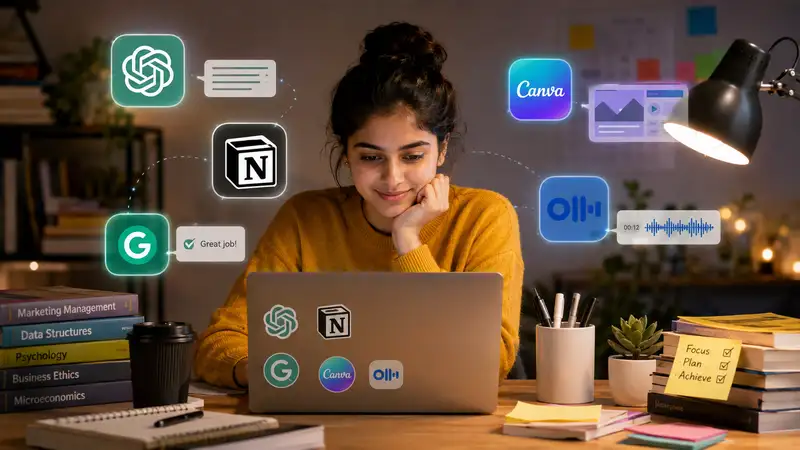
Educational institutions no longer rely on textbooks alone to impart knowledge to students. Today, complex concepts are taught using animated audio-visuals displayed on classroom screens. Further, the hybrid mode of learning also has been seen to cause great improvements in students’ academic performances.
This is what phygital education is. It is the combination of physical and digital learning. Online or classroom learning alone is doing very little to help students learn better. However, a perfect blend of the two has shown great progress in every student. Phygital education not only helps students to learn better but is also a great way to upskill as it encourages skill-based learning too.
While the pandemic remains to be one prime reason behind the rise of phygital learning, it is important to note that the monotonous nature of learning was dwindling students’ interest in learning. Thanks to technology, the teaching faculty could revive the interest in learning.
In 2020, Kerala became the first state in the country to have high-tech classrooms in all its public schools. This transformation took place in 2018 itself, way before the pandemic, but gained momentum in 2020. Over 3.74 lakh digital equipment were distributed in 16,027 schools for the smart classroom project. This led to over 5 lakh students joining government schools since the launch of this project.
Phygital education has especially helped the young to grasp concepts better. Since their attention span is shorter than the teens, using strong and vibrant audio-visuals improves focus and keeps the young students engaged.
Further, as an extension to phygital education in the country, the Ministry of Electronics and Information technology has created O-lab or online laboratories. These labs enable students to carry out laboratory experiments online with the help of the internet without having the need for a physical lab or any equipment. Due to this, those students who do not have access to schools with sufficient and quality educational infrastructure can also learn the same concepts with ease and become competitive.
Similarly, many Indian ed-tech startups in India are treading on the same path to educate students in the best ways possible. With this, it is quite evident that although the lockdown has been lifted a long time back, and schools and colleges have reopened, phygital education is here to stay for a long time.