






















The difference between merely knowing a fact or a concept and deeply understanding it is quite a lot. The International Baccalaureate (IB) curriculum revolves around this distinction, and it is evident in the way students learn.
Generally, education systems function on a simple basis: students take in information, spit it out during an exam, and that’s it. The IB program, however, is quite different from this. Students are taught not to simply write down the facts and then forget them after the test, but rather to question those facts. They even question whether the information is true or not. They work out how the concepts fit their personal lives and the world around them.
Inside the IB Classroom
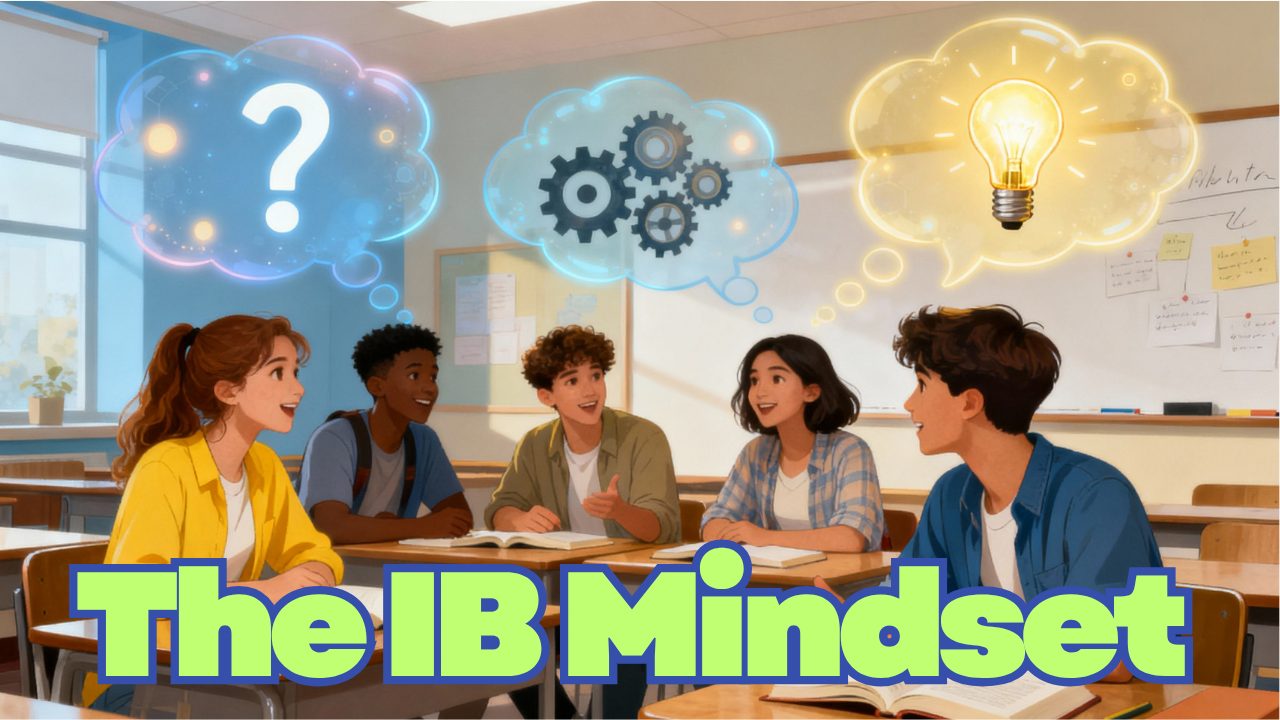
Walking through an IB classroom looks different. You might see students arguing about the ethics of a scientific discovery rather than just memorising what it was.
In economics, kids are doing more than just understanding supply and demand—they’re dissecting actual markets and questioning why the changes in policies have different impacts on various communities. A history class is not just about a series of dates; rather, it’s an examination of how we know what we know and whether sources can be trusted.
Building Thinkers
This shift matters because it trains a particular kind of thinking. The International Baccalaureate refers to them as the “IB learner profile,” a set of characteristics that describe the students beyond their test results. According to the IB, students must be inquirers, critical thinkers, and open-minded individuals who can understand a problem from different perspectives. They are the very basis of the program, which is organised around them.
Consider, for instance, the Theory of Knowledge course, which is only available in the IB program. It is a class that is entirely focused on the examination of our thought processes and the reasons for our beliefs. Students investigate such questions as: What is knowledge? Can we ever really be objective? How do emotions affect reason? These aren’t abstract philosophy questions—they’re ways of training the mind to be more careful about assumptions.
This way of thinking spreads to every subject. In English literature, simply recognising a symbol in a novel is not sufficient. Students ought to inquire why the author employed that symbol, what it signified in the historical context, and if their interpretation is correct. In science, lab work is not just for getting the “right answer.” It is about coming up with hypotheses, verifying them, and gaining insight, even if the experiment fails.
Connecting Ideas Across Subjects
One of the prominent aspects of the IB is that it requires students to pull together the different pieces from various subjects. A student could be learning colonialism in the history department while, at the same time, reading postcolonial literature in the English department and studying economic inequality in the economics class. The program is designed in such a way that it urges students to figure out how these issues are interconnected and support each other. The idea is not to gather the knowledge in different boxes; rather, it is about constructing a consistent framework for understanding the world.
Even though there are some traditional exams, the emphasis is more on the application and the reasoning of the students rather than their memory. The essay questions require students to analyse, compare, and evaluate. Moreover, in the case of mathematics, the IB has introduced internal assessment parts through which students have to carry out independent research projects. Students are not simply solving equations; they are formulating their own questions and seeking the answers.
What IB Prepares Students For
This mentality prepares students differently for what comes after high school. University professors aren’t impressed by students who memorise everything. They want people who can read an academic paper and critically evaluate its arguments. They want students who can spot flawed reasoning and think across disciplines. They seek individuals who can handle the intricacies of a situation instead of those who try to find simple answers.
Similar skills are required in the workplace as well. Employers want people who can come up with solutions to problems that don’t have straightforward answers. They also want employees who can adjust to changes in situations, understand issues from the customers’ points of view, and be able to collaborate with other teams that have different skills. These are precisely the habits that the IB system educates.
The Realities of Choosing the IB Path
However, the program is not flawless and is not for every type of person. It is quite challenging. Students devote more time to fewer subjects in the higher-level courses, which means less breadth. The amount of work is very demanding, especially during the last two years. Some students are motivated by it; others feel that it is too much. Besides, the cost and the limited number of IB schools make it less accessible to many students who might benefit from this approach.
For sure, students who dedicate themselves to it experience a change. They no longer view education as a way of acquiring answers but rather as a means of developing judgment. They get the skills of reading between the lines, questioning authority in a respectful manner, and being able to hold complex ideas in their minds without quickly coming to simple conclusions.
This, in fact, is the main aim of the IB mindset. It’s not about producing the highest test scores or winning the most college scholarships, although IB students usually perform well in these areas. It’s about creating people who think carefully, question wisely, and understand that the world is complicated in ways that matter.
The mission is not only to get students ready for their next test. It is to prepare them for a life where they will have to understand the changing world. This is an entirely different kind of education.