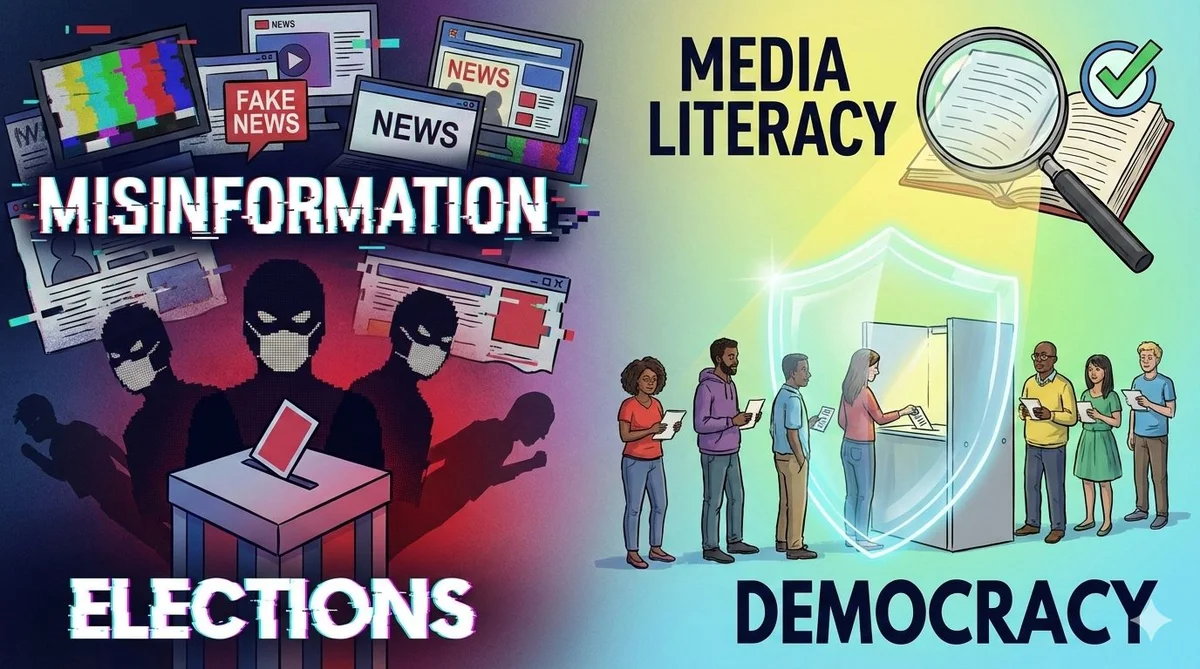
During the 2024 Lok Sabha elections, a video of Ranveer Singh asking people to vote spread fast online. It looked real. It sounded real. It was fake. Around the same time, edited photos of political rallies began circulating on WhatsApp, with crowd sizes altered to suit different narratives.
These were not isolated stunts. They pointed to a bigger issue. Our elections now run on information that is often unclear, manipulated, or flat-out false.
The Problem Is Old. The Scale Is New.
Political rumours are not new to India. Long before smartphones, misinformation travelled through gossip, pamphlets, and one-sided reporting. What has changed is speed. A false claim can now reach millions in minutes. By the time fact-checkers step in, the story has already shaped opinions.
Studies during recent state elections in Karnataka and Madhya Pradesh found that a large share of viral political posts online were misleading. Some were crude edits. Others were smarter. Old videos passed off as recent—real quotes stripped of context. Half-truths dressed up as breaking news.
WhatsApp makes this harder to deal with. Messages move through private networks, shared by people we know. A forwarded message from a relative feels more trustworthy than a post from an unknown account. Personal trust is easily misused.
Why Smart People Still Fall for Fake Content
Most of us believe we can spot fake news. That confidence is part of the problem. Misinformation is built to feel convincing. It supports what we already think. It plays on fear, anger, or pride. And it nudges us to share before we pause.
In India, false political content often taps into existing fault lines. Religion, caste, language, and region are common pressure points. A made-up quote or a twisted clip spreads fast because it fits a story people already believe.
There is also sheer volume. During elections, timelines overflow with posts, videos, and voice notes. Nobody has the time to verify everything. So we rely on shortcuts. Does this match my views? Did someone I trust send it? Does it trigger a strong reaction? If yes, we pass it on.
Media Literacy, Without the Jargon
Media literacy is not about becoming a detective. It is about slowing down and asking basic questions.
Who created this content, and for what reason?
Where did it first appear? Vague phrases like “sources say” should raise doubts.
When was this recorded or written? Old material often returns as new.
What is missing? Short clips and cropped screenshots rarely tell the full story.
How does this make me feel? Strong emotional reactions are often the hook.
These checks take seconds but they make a difference.
What Has Helped So Far
Many countries have tried to control misinformation through laws. India’s IT Rules ask platforms to remove false content, but enforcement is uneven. At times, genuine criticism gets flagged while misleading content stays up.
What shows more promise is helping people spot misinformation on their own.
Fact-checking groups like Boom, Alt News, and Factly play a key role. They cannot cover everything, but their work has made many users more careful.
Another idea is prebunking. Instead of correcting lies after they spread, people are taught common tricks used to mislead. Once you know how emotional bait or edited visuals work, they are easier to spot.
User-added context, like community notes on social platforms, has also helped. It does not catch everything, but it adds friction to viral falsehoods.
In the long run, digital literacy in schools and colleges matters most. Young voters need to understand how online information moves and mutates, just as earlier generations learned to question ads and headlines.
The WhatsApp Challenge
With over 500 million users in India, WhatsApp is central to political communication. It is also the hardest space to monitor because messages are private.
The platform has limited forwarding and added labels for frequently shared messages. These steps help, but they do not stop determined campaigns.
What matters more is behaviour. Treat forwards with doubt. Look things up before sharing. Ask who sent this and why. Choosing not to forward can break the chain.
Responsibility Goes Beyond Voters
Political leaders matter here. When they share false claims or ignore misinformation spread by supporters, it signals approval.
Media outlets also need restraint. Not every viral claim deserves coverage. Even debunking can sometimes spread a lie further.
Social media companies have the tools and data to slow misinformation early. Too often, action comes only after damage is done.
What You Can Do
This is not about distrusting everything. It is about better habits.
Check before you share.
Search for the source.
If you cannot verify it, let it stop with you.
Correct false claims politely when you see them, even in family groups.
Democracy depends on people making choices based on facts. When lies flood the system, voters end up reacting to fiction.
Media literacy will not fix everything. But it gives us a fighting chance. With fake content getting easier to create and harder to spot, that chance matters.
Another election is on the way. The misinformation is already being prepared. The real question is whether we will be better prepared, too.