
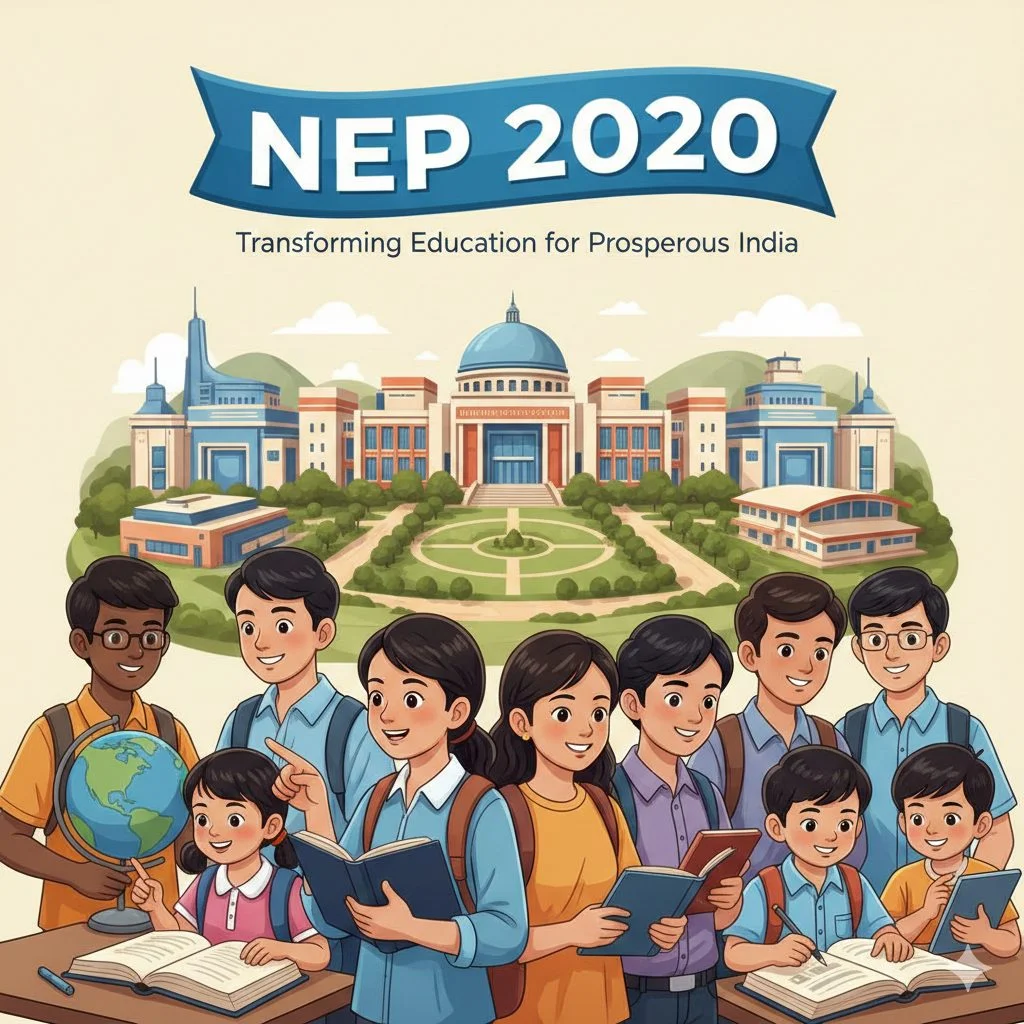
The National Education Policy (NEP) 2020, approved on 29 July 2020, is India’s first major education overhaul in more than three decades. It replaces the 1986 policy and re-imagines the entire education ecosystem from early childhood to university level. It is currently transforming the Indian education system.
The NEP 2020’s key goals include ensuring foundational literacy and numeracy for all children shifting from rote learning to student-centric and multidisciplinary learning, restructuring higher education with flexible degrees and multiple entry-exit options, promoting instruction in the mother tongue (at least till Grade 5), introducing an Academic Bank of Credits, strengthening research orientation, expanding digital learning, and creating a unified regulatory body for higher education. According to the Press Information Bureau (PIB), 153 universities offer multiple entry options, benefiting 31,156 UG and 5,583 PG students. 74 universities have implemented multiple exit pathways, aiding 25,595 UG and 2,494 PG students.
The policy also places strong emphasis on inclusivity improving access for marginalized groups, integrating vocational education, expanding capacity, and breaking rigid barriers between arts, science and commerce. In short, NEP 2020 aims to transform India’s education system from an exam-driven, siloed model into a flexible, innovation-ready ecosystem aligned with global standards.
Why NEP’s Promise Is Still Pending
Five years after its introduction, NEP 2020 remains only partially implemented. Although the policy is ambitious and visionary, several challenges continue to slow its rollout across the country. Here are a few challenges that are hindering the process of the complete implementation of the NEP.
1. Slow, Uneven Implementation Across States-
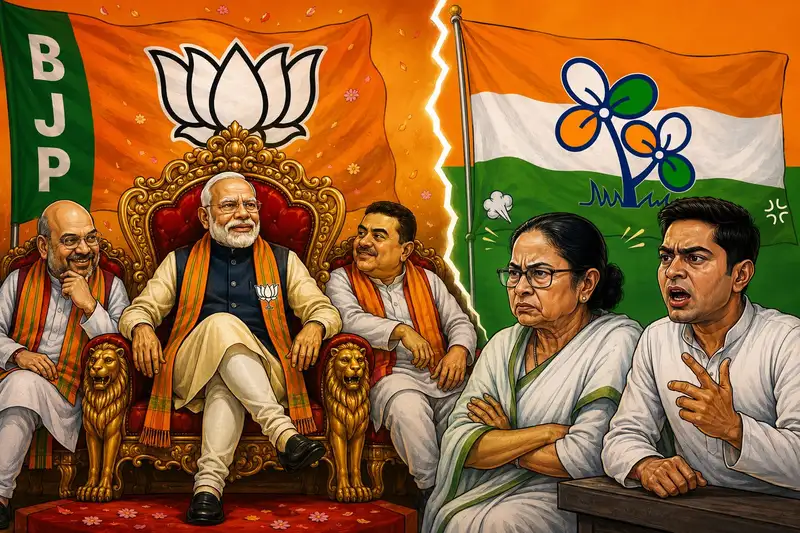
While the government states that the policy is for all. There are many states in India that have faced difficulties implementing it. Implementation has differed sharply from state to state. While some states have adopted NEP reforms swiftly, many others, especially rural and resource-constrained regions are lagging. Implementing a policy in regions where lack of basic facilities exist and expecting a full fledged working policy is difficult to adapt in many regions. State autonomy, varying capacities, political differences and local priorities contribute heavily to this uneven rollout.
2. Funding Shortfalls
NEP recommends raising public investment in education to 6% of GDP. In reality, India continues to spend around 2.7–3%. This financial gap severely affects infrastructure upgrades, teacher training, digital readiness, research facilities, and curriculum transformation — all of which are crucial to NEP’s success. Achieving 50% GER by 2035 requires 26 million additional enrolments, necessitating massive investments
3. Shortage of Faculty and Institutional Capacity
Many universities and colleges lack adequate qualified faculty to deliver multidisciplinary, research-oriented programmes. Teachers are often unfamiliar with newer pedagogy such as project-based learning or credit-based flexibility, requiring large-scale retraining. Institutions in semi-urban and rural pockets face even more acute shortages. A report suggests India needs 83 million additional enrollments by 2035 to meet NEP targets that is almost an 85% jump. Institutions also struggle with inadequate infrastructure, limited resources for students with disabilities, and insufficient training systems, resulting in superficial learning instead of deep understanding.
4. Weak Monitoring and Coordination
For NEP to work nationwide, robust data systems and coordinated oversight are essential. But many states lack strong mechanisms to track learning outcomes, enrolment, teacher readiness or infrastructure development. Coordination between the Centre, states, boards and institutions is often inconsistent, resulting in superficial or partial implementation.
The current credit-based 8-semester system is putting unnecessary pressure on students, forcing them to handle seven to eight exams at once while juggling multiple non-core subjects. Instead of allowing them to build real expertise in their main field, this structure scatters their attention and drains their focus. As a result, students spend more time surviving deadlines than actually learning, leaving little space for deep understanding, creativity, or meaningful academic growth.
5. Ground Realities vs. NEP’s Scale
NEP assumes large-scale expansion of infrastructure, digital ecosystems, new universities, flexible courses, and vocational training centres. However, in many places, basic needs such as internet access, adequate classrooms, bilingual resources or trained staff remain unmet. The gap between ambition and reality keeps progress slow. The Indian Knowledge System (IKS) in NEP 2020 means integrating India’s rich traditional wisdom like Yoga, Ayurveda, math, astronomy, philosophy, and indigenous practices into modern education at all levels (school, higher ed) to create a holistic, culturally relevant curriculum, fostering national pride, sustainability, and global competitiveness, moving beyond purely Western models by incorporating Indian ethos and values.
There is also confusion around IKS and how it should be taught. Multidisciplinary programs and major-minor choices often clash with class schedules, and credit systems for internships/extracurriculars sometimes hurt attendance, as pointed out by educator Pooja Gupta (media.mentor).
6. Policy Overlaps and Resistance
Existing laws such as the Right to Education Act create administrative ambiguities. Many institutions accustomed to the old, rigid systems resist change. Parents and communities, too, express concerns especially regarding language policy or shifting exam structures. Frequent new rules add more confusion for both teachers and students.
7. Learning Outcomes Remain a Concern
Independent assessments continue to show gaps in foundational literacy and numeracy. Despite curriculum changes, many children still struggle with basic reading or arithmetic — especially in rural areas. This undermines public confidence in NEP’s effectiveness.
The 2035 Challenge: 86 Million More Students
A recent analysis shows that India needs over 86 million additional higher-education enrolments by 2035 to achieve NEP’s target of a 50% Gross Enrolment Ratio. This requires an 85% expansion from current levels — one of the largest education expansions ever attempted globally.
To accommodate this, India must build new universities and colleges, expand digital and distance-learning platforms, hire vast numbers of faculty, update curricula, and ensure quality — not just quantity. This massive requirement highlights why the NEP remains “pending”: the transformation it demands is unprecedented in scale.
State-Wise Progress: A Clear Case of Uneven Adoption
States Lagging or Partially Implementing
Several large and influential states have either delayed implementation or adopted only select components of NEP 2020, especially at the higher-education level. In these regions, major reforms like the four-year undergraduate programme, the Academic Bank of Credits, multidisciplinary restructuring, and the unified regulatory framework remain inconsistent or limited. Digital readiness, teacher training, and infrastructure gaps also slow down progress, especially in rural districts.
Examples include:
- Tamil Nadu: The state has openly opposed several provisions of NEP, citing concerns about centralisation, language policy, and its impact on state autonomy. As a result, Tamil Nadu continues to follow its own State Education Policy, leading to limited NEP alignment.
- West Bengal: Implementation has been slow, with delays in restructuring school levels, digital readiness, and higher-education reforms. Some initiatives exist, but statewide adoption remains uneven.
- Kerala: While strong in literacy and school infrastructure, Kerala has been cautious and selective in NEP adoption, especially regarding higher-education restructuring and the four-year degree format.
- Punjab: Many institutions still follow older curricula and lack adequate digital infrastructure for NEP-aligned changes. Higher-education reforms remain partial, and teacher training capacity is stretched.
- Bihar: Though willing to adopt NEP in principle, Bihar struggles with severe resource shortages, digital divides, and lack of institutional capacity. Rural schools especially face challenges in teacher training, infrastructure, and technology support.
- Rajasthan: Implementation at school level has progressed only in phases, while higher-education reforms such as multidisciplinary colleges or credit banks are still in early or partial stages.
In these states, differences in political priorities, financial constraints, administrative capacity, and digital access all contribute to slow or selective implementation, creating a patchwork of progress across India.
Why the Variation?
Differences arise from:
- Fiscal constraints
- Administrative capacity
- Political differences
- Legacy systems
- Rural-urban digital divides
- Institutional resistance
- Varying socio-economic contexts
As a result, NEP’s rollout is fragmented — with progress in some pockets and near-stagnation in others.
Why This State-Wise View Matters
Looking only at national-level policy masks the real challenge: the unevenness between states. This uneven progress could widen educational inequality if not addressed quickly. Policymakers must provide targeted support to lagging regions, build capacity where needed, and ensure quality where implementation has begun.
For parents, students and educators, understanding this variation sets realistic expectations and helps them navigate the new system more effectively.
What Needs to Happen for NEP to Truly Take Off
To convert NEP from a document to a reality, India must:
- Increase education funding toward the 4–6% of GDP goal
- Boost teacher training and recruit qualified faculty
- Strengthen digital and physical infrastructure in underserved areas
- Create strong monitoring and accountability systems
- Empower regulatory reforms like HECI
- Expand flexible, multidisciplinary and vocational education
- Focus on inclusion through scholarships, access and local-language resources
- Engage stakeholders to build consensus and reduce resistance
The Road Ahead, A Wake-up Call for India
NEP 2020 remains “pending” not because of lack of intent but because the transformation it demands is massive, complex and deeply structural. Implementing the NEP is no longer optional, it is essential for India’s future workforce, global competitiveness, and demographic dividend.
If India commits to investment, reform and accountability, NEP can genuinely reshape the future of millions. If not, the country risks settling for incremental changes that fall short of its potential.