
Your brain is getting lazy, and it’s not entirely your fault.
We live in a time where Google not only answers your questions but also predicts them, GPS shows you the next turn, and algorithms decide what you watch next. Every ease has its shadow: the slow wearing away of our brain muscles. Just like your body gets weak if you do not exercise, your mind also loses its sharpness if you let a machine do every single cognitive task for you.
And the consequence? A generation is being raised that is reliant on technology for navigation, performing simple arithmetic such as calculating the tip of a bill, and watching movies without constantly checking social media. We have become mental tourists in our own lives, guided continuously but never really thinking.
However, the thing about brains is that they are very flexible. With the proper method, you can actually regenerate those cognitive pathways and regain your mental freedom.
The Outsourcing Problem
Think about last week. How many decisions did you actually make versus how many were made for you? Your streaming service picked your shows. Your map app chose your route. Your phone organises your photos. Even your social media feed got curated by an algorithm that thinks it knows you better than you know yourself.
This isn’t just convenience anymore. It’s cognitive outsourcing on a massive scale. We’re trading our ability to think independently for the comfort of having machines think for us. The problem isn’t the technology itself; it’s that we’ve stopped exercising the mental skills that make us human.
Consider navigation. Before smartphones were around, one had to observe notable places, memorise street names and create mind maps of the city. Today, people can drive the same route for a long time, yet they still require the use of GPS to get there.
The same thing happens with memory. Why remember anything when you can just look it up? Why learn when you can Google? Why think when you can ask an AI?
The Doomscrolling Epidemic
Social media has turned distraction into a full-time job, literally. In a move that perfectly captures our cultural moment, Monk Entertainment recently posted a job opening for “professional doomscrollers.” The requirements? Proof of more than six hours of daily screen time on Instagram and YouTube. We’ve reached the point where chronic phone addiction has become a marketable skill.
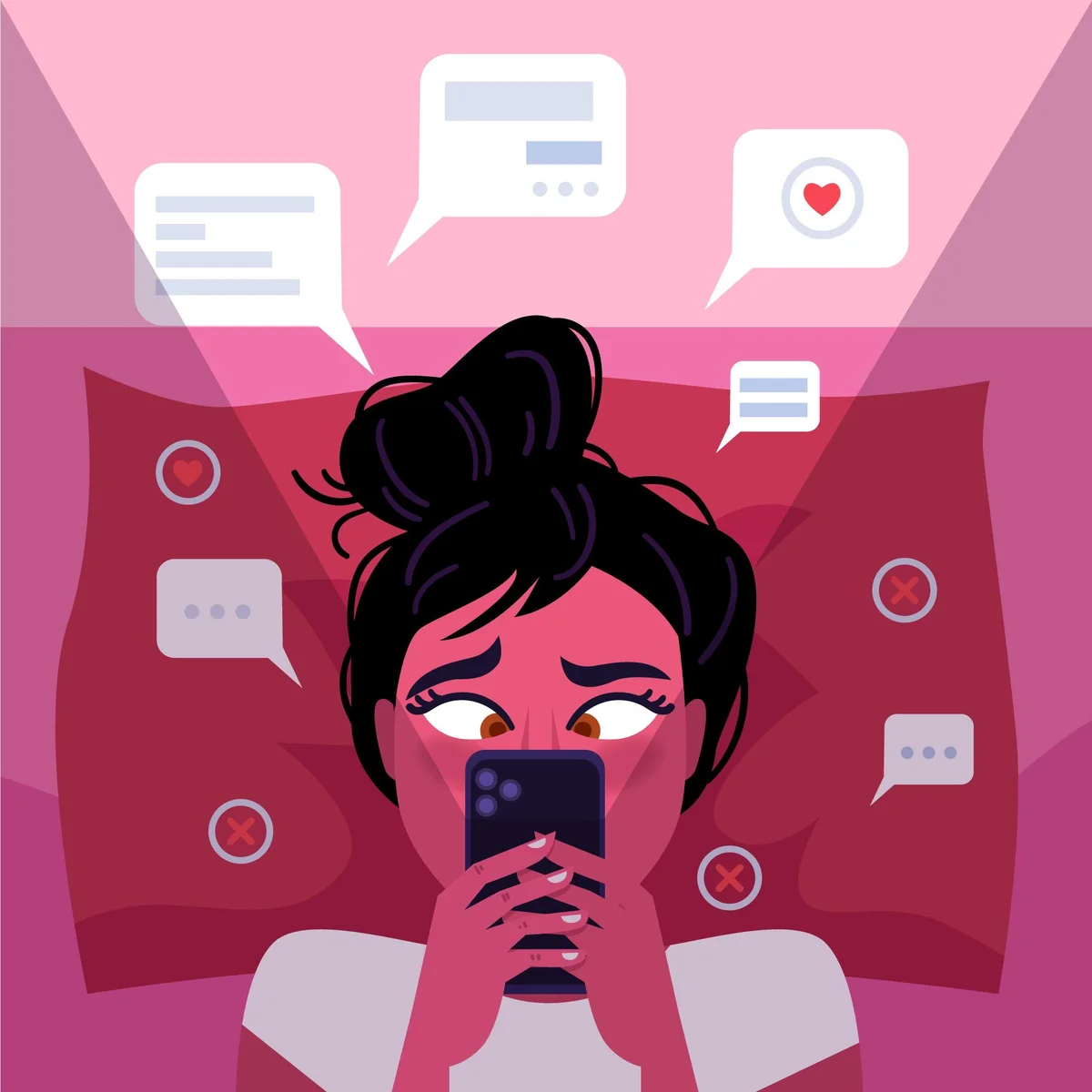
A human being, on average, looks at their gadget 96 times a day or every 10 minutes while they are awake. In the meantime, we have turned into expert doomscrollers without breaking a sweat, basically feeding on content that makes us feel anxious, angry, or numb.
This never-ending intake of information not only consumes a person’s time, but it also changes the structure of the brain to one that is geared towards superficial thinking. Every notification triggers a dopamine hit that makes focused work feel boring by comparison. Your attention span shrinks. Your patience disappears. Deep thinking becomes as foreign as speaking Latin.
You start treating serious problems like entertainment. World events become content to scroll through rather than issues to understand. Complex topics get reduced to headlines and hot takes. Your brain learns to skim the surface of everything while diving deep into nothing.
Practical Steps to Reclaim Your Mind
Start with navigation. Disabling your GPS would be a great idea if you’re driving on routes that you already know. Notice the street signs, landmarks and the vibe of the different neighbourhoods. Allow yourself to be lost and find your way back. Your spatial intelligence will thank you.
Next, tackle calculation. Do math in your head instead of reaching for your phone. Calculate tips, figure out sale prices, and estimate distances. Your numerical reasoning is like a muscle—use it or lose it.
Create phone-free zones in your life. It could be the first hour after waking up, or during meals, or before bed. Start small but be consistent. Your brain needs time to process without new information constantly flooding in.
Practice sustained attention. Read long articles without checking other tabs. Watch movies without your phone. Have conversations without looking at screens. Your focus is trainable, but it requires practice.
Try to learn something complex and complicated that requires the accumulation of knowledge over a period of time. Pick up an instrument, study a foreign language, or challenge yourself with a difficult book. Do not pick something that can be learned in a few YouTube tutorials only; rather, choose something that requires patience and persistence.
Building Mental Resilience
It is not about totally ditching technology. Rather, it is about employing it as a tool instead of being overly dependent on it. When you can get around without using GPS, do math without a calculator, and even entertain yourself without an endless stream of content, then technology becomes a convenient tool rather than being indispensable.
This kind of mental autonomy comes with some real, tangible perks. The decisions you make are better because you have thought them through on your own. The problem-solving skills you have become more creative as you haven’t sought the solution from someone else. You also get a feeling of confidence because you know your brain functions well.
Nevertheless, the main advantage is of a deeper and psychological nature. If you practice and master the concept of trusting your own thoughts and ideas, then you will become less vulnerable to the tricks of manipulators. Rather than just taking in information, you will be able to critically assess it. You will form your own opinions, rather than just receiving the ones the algorithm presents.
Cognitive Activities That Keep You Sharp
Learn new things: Take a class that interests you, whether it’s pottery, programming, or philosophy. Learning a new language is particularly powerful—it forces your brain to build entirely new neural pathways. If you’ve always wanted to play an instrument, now’s the time. These activities challenge your brain in ways that scrolling never will.
Read and write regularly: Read widely across different topics—fiction, history, science, whatever grabs you. Don’t just consume; create. Writing forces you to organize your thoughts clearly. Keep a journal, start a blog, or write letters to friends. The act of putting thoughts into words is mental exercise at its finest.
Solve puzzles that make you think: Crosswords, Sudoku, and jigsaw puzzles aren’t just for killing time. They’re brain training. Each type targets different skills—crosswords build vocabulary and lateral thinking, Sudoku sharpens logic and pattern recognition, jigsaws improve visual-spatial reasoning. Mix it up to work different cognitive muscles.
The key is variety. Your brain thrives on new challenges, not repetition. Rotating between different activities prevents mental plateaus and keeps your mind agile.
The Long Game
The process of changing your thought patterns is quite a long one. You will undoubtedly feel frustrated when simple tasks become difficult and you are not permitted to use your digital tools. Boredom may also make you feel like quitting, or maybe when your phone starts buzzing with notifications.
Still, persistence yields results. The same brain plasticity that had you adapting to technology can operate in the opposite direction. Through diligent practice, you are capable of regaining the cognitive faculties that make you truly self-reliant.
Your mind is not a passive vessel that receives whatever life throws at it. It’s an active, trainable, impressively flexible organ that changes according to your use of it. The question is: Are you going to let it decline in an ultra-convenient world, or are you going to develop it to be self-reliant?
They say that the choice is yours to make. But that is only true if you still remember how to make a choice.