



















India is at a difficult juncture. The country that was once referred to as the ‘hungry ghost’ because of malnutrition is now facing a completely different kind of health crisis. 40.3% of India’s population is suffering from obesity, which has changed a historically underweight nation into a country that is fighting an obesity epidemic that is threatening to overload its healthcare system.
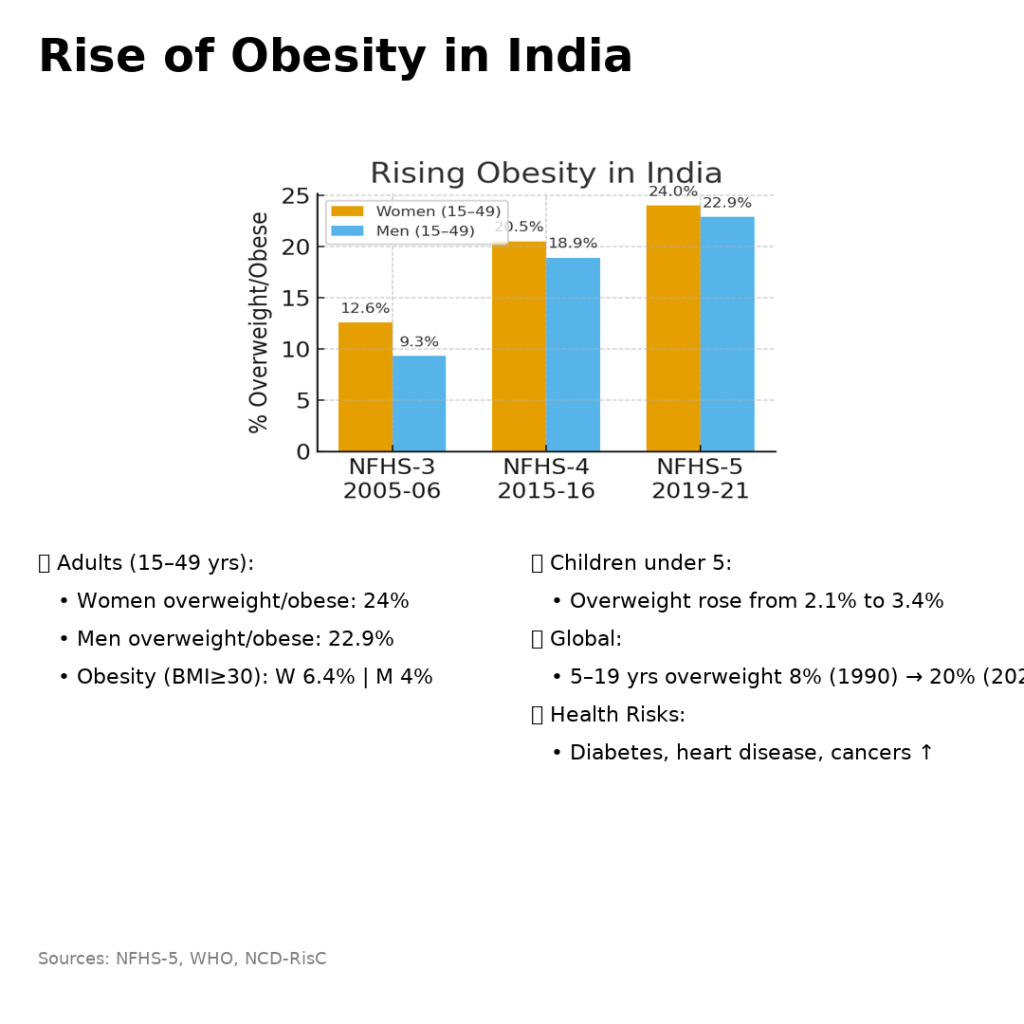
The numbers speak a lot. Between 2005 and 2020, obesity prevalence in Indian women aged 15-49 years doubled from 12.6% to 24%, and the same age group has seen the trend increasing from 9.3% to 22.9-% for males. These statistics are not only numbers—they are indicative of millions of people’s lives that are being shortened due to unnecessary health issues.
The Geography of Obesity in India
The obesity crisis in India is going great guns, but not uniformly. The southern part of India is at the forefront with obesity rates having escalated to 46.51% while the eastern regions are showing the lowest with a figure of 32.96%. The metropolitan areas are particularly more affected, as the percentage of city dwellers suffering from the problem is 44.17% as opposed to 36.08% in the countryside.
The difference between urban and rural areas, this time, reflects the changes in Indian society that are much more profound. Cities provide the opportunity of having less active jobs, more consumption of processed foods and lifestyles that are centred around convenience rather than physical activity. But the rural areas are not invincible. As villages become more connected to the cities, dietary habits change, and processed food becomes more affordable.
Women suffer more in this case and give a disproportionate share of the burden. Obesity in women (41.88%) is higher than in men (38.67%) due to cultural, social, and biological factors specific to India. Traditionally, women are homemakers, giving them less time for physical activity, while pregnancy and age-related hormonal changes can also contribute to weight gain.
Childhood Obesity: A Growing Crisis
The most frightening example of the crisis is child obesity. Reports suggest that, number of Indian children aged 5-19 classified as obese was half a million in 1990 but has risen to 12.5 million in 2022. These figures indicate a generational shift and, therefore, endanger India’s future in the long run.
Youth are consuming high-calorie, low-nutrient foods, while processed snacks, fast food, and sedentary lifestyles make this trend inevitable. Children are spending more time on smartphones than playing outdoors. The situation is now common in Indian cities, creating what nutritionists call a perfect storm of poor diet and inactivity.
The Processed Food Revolution
These statistics cohere with the major change in the eating habits of Indians. Unhealthy and processed foods now dominate Indian diets. This is due to global market access and the growing purchasing power of the middle class.
If you pass through any Indian city these days, you cannot miss the signs. International fast food franchises are on every corner, packaged snacks fill village stores, and carbonated drinks are replacing traditional beverages. India is now facing rapid overconsumption of processed foods, significantly increasing obesity risks.
The traditional Indian diet of grains, legumes, and vegetables is being replaced by convenience foods high in sugar and fats. This shift, happening faster in India than in the West, leaves little time to restructure habits or take intervention measures.
Health Consequences of Obesity
The obesity epidemic is not only transforming the Indians visually, but also slowly poisoning them. India tops the list of countries with the highest number of diabetics worldwide (101 million), and obesity has been identified as one of the major reasons for the occurrence of Type 2 diabetes by inducing insulin resistance.
The obesity problem has led to a chain of diseases whose effects are going beyond diabetes. Cancer cases in India are likely to increase from 1.46 million in 2022 to 1.57 million by 2025, with obesity being one of the factors. The rates of joint disorders, heart diseases, and strokes are going up along with the country’s widening waistlines.
These are not distant threats; they are current realities putting pressure on India’s overburdened healthcare system. Young adults are now suffering from chronic diseases once seen only in the elderly.
Time for Action
Obesity in India is not only a cause of concern for the medical fraternity, but it is also an economic and societal crisis that requires the authorities’ immediate intervention. The nation that had problems feeding its population is now facing the consequences of feeding them with unhealthy food.
The answer is complicated, yet it begins with acknowledgement. India cannot treat obesity as a natural outcome of progress and simply focus on treating it. On the contrary, it needs policies that promote healthy diets, regulate processed food industries, and encourage physical activity among the population.
The statistics might scare us to death. But on the other hand, they serve as an alarm that calls for action. India has a chance to benefit from the errors other countries have made and to take the right path. The real question is whether India will be able to take steps forward fast enough to stop obesity from becoming as deeply rooted as the malnutrition it is replacing.
The hour is late, and the health of India is at stake.