
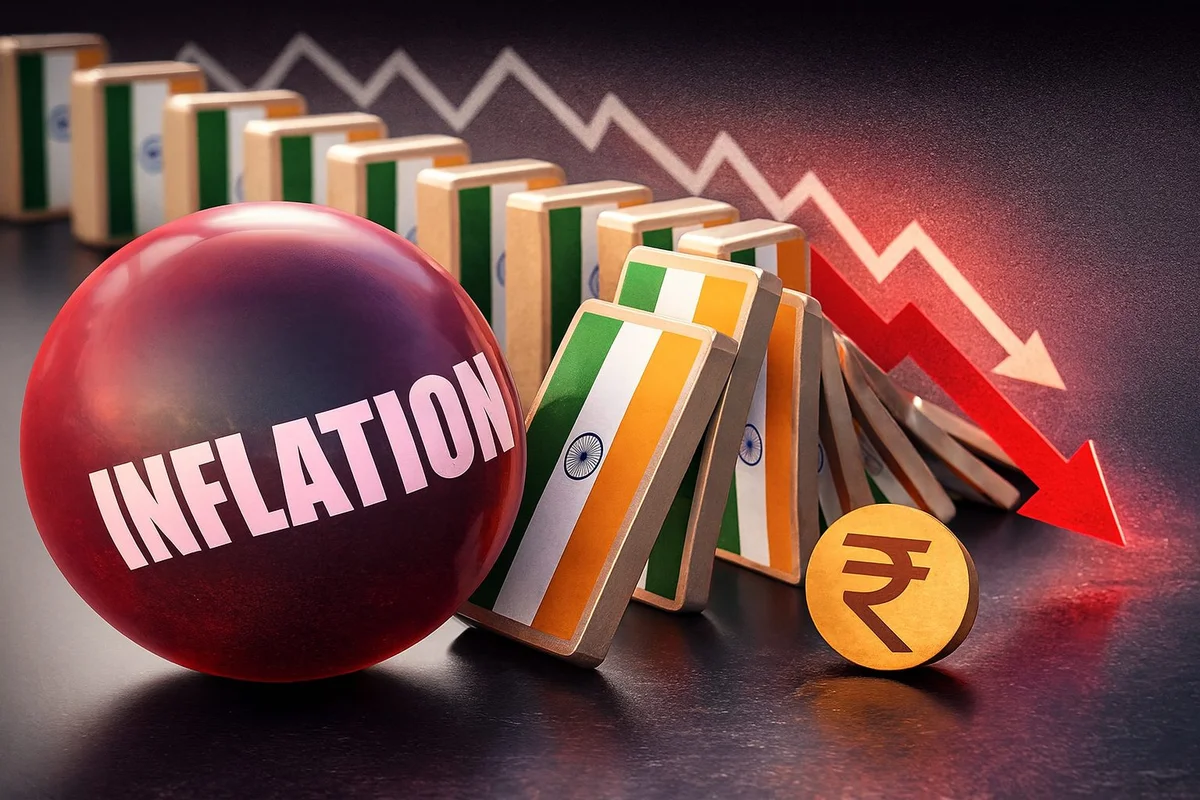
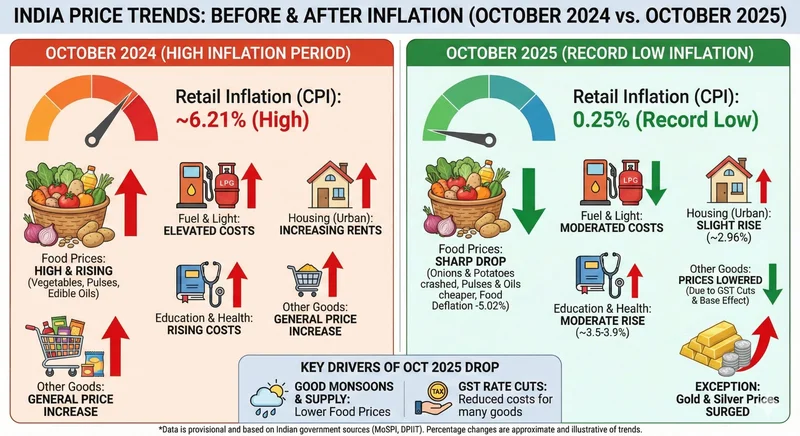
In October 2025, India achieved a landmark moment: retail inflation was only 0.25 per cent year-on-year, which is the lowest level that has ever been recorded since the current inflation monitoring system was introduced in place from 2012.
To compare, a year ago, the prices of food were increasing at a rate of 10 per cent. At present, they are declining. This is not only a matter of discussion by economists; it actually changes the way you spend money, the value of your assets, and how you map out your future.
What Actually Happened?
The rapid decline of inflation was a surprise to economists themselves. They had anticipated a drop only to 0.40 per cent, but the rate went down far beyond the expected values. Food was the main reason for the deflation in prices, as it went down by 5.02 per cent year-on-year in October, which is the biggest drop ever. The prices of vegetables, oils, cereals, and pulses went down significantly as good weather made the harvests abundant, and the supply chains were stabilised.
Besides that, the government reduced the GST (goods and services tax) rates in September on a number of necessary items, which contributed to the fall in consumer prices. Even the fuel inflation was kept at a low level compared to the global oil prices increase due to government interventions and the stable exchange rate.
Why Should You Care?
For the majority of Indians, this is simple and clear good news. Your everyday necessities are becoming more affordable. A household that allocates half of its budget to food will experience an instant relief when the prices of vegetables and milk decrease. The savings, although they may appear insignificant for each item, become substantial if you are buying food weekly.
However, there is still a lot more going on underneath. When prices are not increasing as fast, your income has more purchasing power. People have more flexibility in their monthly budgets to spend on other things, be it education, healthcare, or saving for a rainy day. This additional spending power, slowly but surely, is coming into the whole economy, businesses are being supported, and growth opportunities are being created.
In case you are someone who has debt, particularly loans that are tied to interest rates, lower inflation might be beneficial to you. The Reserve Bank of India, which was increasing rates to fight inflation, can now lower them. It will become less expensive to take a loan for a car, house, or business expansion if the rates are lower.
The Investment Angle
For those watching their investments, this matters significantly. Falling inflation usually means bond prices go up, which is good news if you own them. Equity investors should also sit up and pay attention. Business enterprises that produce daily necessities, soap, shampoos, and packaged food manufacturers will not be compelled to continually increase the prices of their products to maintain their profit levels. Consequently, such companies become more appealing as investment opportunities.
Real estate, which is often bought as an inflation hedge, might see shifting dynamics. If inflation remains at such a low level, the need to purchase real estate as a way of safeguarding against inflation will be less strong. Nevertheless, the demand for loans could increase if the interest rates are lowered as anticipated, and the home loan EMIs become more affordable.
The Caution Flag
Here’s where you need to think carefully: this level of inflation is unusually low, possibly too low. Normally, economists consider 4 per cent a healthy target, not zero. When inflation gets this tight, it can actually signal problems. It may show that businesses lack confidence to raise prices because they aren’t seeing strong demand. It can also mean firms aren’t investing in new machinery or expanding their workforce much.
Additionally, there is a risk of deflation, which means that the prices could decrease not only in one sector but in the whole economy. Though it may look like a good thing at first, it is actually quite harmful. When people anticipate that prices will continue to fall, they refrain from spending and postpone their purchases.
What About Your Savings?
This is a tricky period for savers. If you keep money in a regular savings account earning 3-4 per cent interest, but inflation is near zero, you’re actually earning real returns. That’s a win. However, if the RBI cuts rates significantly to stimulate the economy, that interest will drop too.
Fixed deposits and bonds look relatively attractive right now. Locking in current interest rates before they fall makes sense if you think rate cuts are coming.
Looking Ahead
The government and the Reserve Bank have achieved something notable; they’ve brought inflation under control without completely crushing economic growth. It is really not easy to accomplish.
Still, it is a moment that demands handling with great care rather than celebrating. The people in charge of the policies need to see if this low inflation stays stable or goes back up. They must weigh the economic push a rate cut offers against the chance of inflation returning if global prices or supply chains worsen.
The best advice for you is that you should take the relief at the checkout counter as a short-lived occurrence. Do not expect that it will be like this forever. Take this breathing space very seriously. You can do so by paying off high-interest debt, starting an emergency fund, and making long-term investment decisions. The quiet period could be just a fleeting one. The smarter move would be to get ready for what comes after.