



















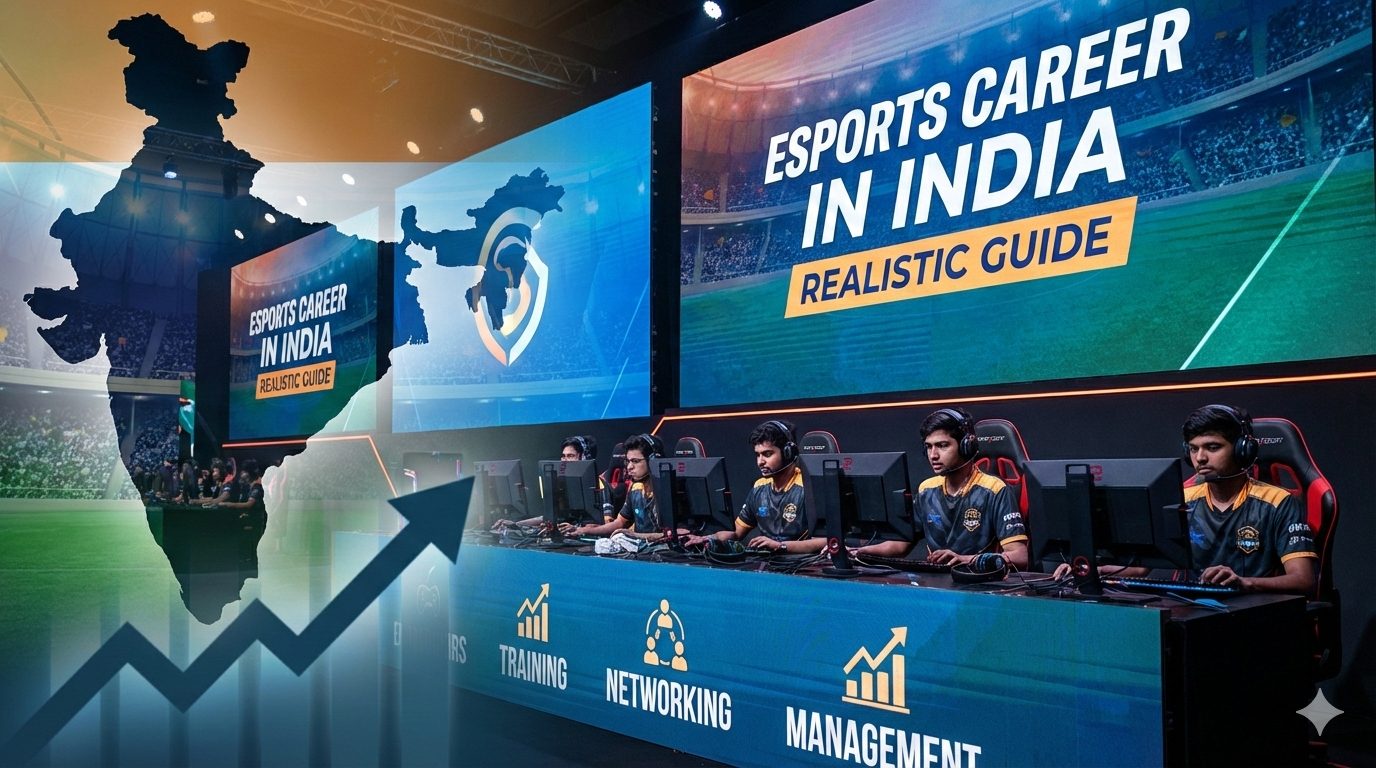
If your parents kept telling you to “stop playing games and do something useful,” you’re not alone. Gaming has long been considered a distraction. That notion is no longer valid. Esports is not just a hobby anymore but a rapidly developing industry in India. The industry is forecasted to exceed $1 billion by 2025 and reach about $1.4 billion by 2028. Tournament prize pools alone are expected to reach ₹100 crore.
That said, Esports is not only about being a pro gamer. In fact, Most people who have a career in esports don’t perform in the arena at all. The industry runs on coaches, managers, analysts, content teams, event staff, developers, and marketers. If you’re thinking about a career here, you need to look at the full picture.
What Esports Actually Means
Esports means competitive video gaming. Individuals or teams compete in organised tournaments, often streamed live to huge online audiences. Think of it like cricket or football, just played on a screen instead of a field.
In India, popular competitive titles include BGMI, Valorant, FIFA, Call of Duty Mobile, and Free Fire MAX. These games run on mobile, PC, or console, and matches are watched by millions on platforms like YouTube and Twitch.
India had nearly 488 million online gamers in 2024, and that number is still climbing. A large audience brings sponsors, advertisers, and brands. And once money enters the picture, jobs follow.
Esports Salaries in India: What Can You Actually Earn?
Income in esports depends heavily on what you do and how good you are. There’s no single pay scale, and that uncertainty is something you should be prepared for.
Professional Players
At the starting level, players usually earn between ₹40,000 and ₹75,000 a month. This includes team salaries, small tournament winnings, and occasional brand deals. It’s decent money, but it’s not glamorous.
Well-known Indian players can earn anywhere between ₹5 to ₹15 lakhs per month. Those who compete internationally and also stream regularly may earn ₹70–85 lakhs a year. But these are exceptions, not the norm. A large number of players never cross ₹50,000 a month.
For example, top BGMI players like Destro reportedly earn ₹3–5 lakhs per month as team salary alone. Add streaming and sponsorships, and the number goes up. But reaching that level takes years of practice and consistency.
Non-Player Roles
If you don’t want to compete, there are more stable options:
- Esports coaches earn around ₹6–8 lakhs a year
- Game developers earn ₹5–7 lakhs a year
- Esports managers earn ₹4–6 lakhs a year
- Other roles fall between ₹2–5.5 lakhs a year
These roles don’t depend on winning tournaments and usually offer steady pay.
If You Want to Be a Player
Being a professional player is closer to a high-pressure job than casual gaming. It demands time, discipline, and mental strength.
Competitive Esports Games in India
Right now, the main competitive titles are:
- BGMI
- Valorant
- FIFA
- Call of Duty Mobile
- Free Fire MAX
Pick one game and stick to it. Trying to master multiple titles at once rarely works.
What Teams Look For
Teams don’t just want raw skill. They look for players who:
- Understand strategy and teamwork
- Communicate clearly
- Perform well under pressure
- Keep up with updates and changes in the game
- Take practice and feedback seriously
How Players Usually Move Up
Most players start small. You pick a game, practice daily, watch top-level matches, and compete in online or local tournaments. Early tournaments may only pay a few hundred or a couple of thousand rupees, but they help you build a name.
Teams often scout talent from these events. Once you join a semi-pro team, you’ll get a basic contract and access to bigger competitions. From there, strong performance can take you to national or international teams.
Esports Jobs Most People Overlook
A lot of jobs in esports sit behind the scenes.
Coaching and Analysis
Teams rely on coaches and analysts to break down gameplay, study opponents, and help players improve. If you understand a game deeply but don’t want to compete, this is a strong option.
Content and Broadcasting
Streamers and creators earn through ads, sponsorships, donations, and brand partnerships. Casters and analysts handle live commentary during tournaments, explaining plays and keeping viewers engaged. Think of them as cricket commentators, but for games.
Events and Operations
Every tournament needs people handling logistics, production, sponsors, schedules, and teams. Event managers make sure everything runs smoothly, both online and offline.
Game Development
With more gaming companies setting up in India, there’s demand for testers, developers, designers, and marketers. If you like coding or design, this is a practical way into the industry.
Marketing and Sponsorships
Brands want access to young gaming audiences. Sponsorship managers connect companies with teams and events, negotiate deals, and manage partnerships.
How Do You Learn All This?
You don’t need a traditional degree to enter esports, but you do need skills.
Training Programs in India
Esports academies are slowly growing. Some work with international organisations, and a few state-backed initiatives exist, like the MP State Esports Academy, which offers structured training to selected players.
There are also courses focused on esports management, broadcasting, and game design. Platforms like Desportz, Weare1 Academy, and Hero Vired offer programs that cover both gameplay and the business side.
What Training Covers
Most programs focus on:
Game mechanics and strategies
Team coordination
Mental fitness and stress handling
Physical health and posture
Performance tracking
Marketing, sponsorships, and operations
Learning on Your Own
If formal courses aren’t an option, you can still build skills:
Watch pro matches and study decisions
Review your own gameplay
Join Discord servers and online forums
Track updates and changes in the game
Practice specific situations instead of random matches
What the Job Market Looks Like Right Now
Esports hiring in India is still small but growing. At the moment, there are around 80+ esports-related jobs listed on LinkedIn.
Where Jobs Are Based
Bangalore, Mumbai, Hyderabad, and Delhi have the most openings. Employers include esports organisations, tech firms, and media companies. Roles range from developers and marketers to media sales and operations staff.
India’s participation in global events like the Esports World Cup and Olympic Esports Games is also bringing in more attention and funding.
Freelance Work Is Common
Many people work on contract:
- Coaching teams
- Casting tournaments
- Managing social media
- Editing videos
- Designing graphics
This flexibility helps people build income from multiple sources.
Making a Career Last
What separates people who last in esports from those who burn out is planning.
Don’t Rely on One Income
Players combine salaries, tournaments, streaming, and brand deals. Coaches offer group and one-on-one sessions. Creators work across platforms. One source of income is rarely enough.
Build a Reputation
No matter your role, visibility matters. That means posting regularly, interacting with your audience, behaving professionally, and networking within the industry.
Think Beyond Your Prime
Most players don’t compete forever. Many move into coaching, casting, or management. Thinking about that transition early helps.
- The Honest Challenges
- Breaking into esports isn’t easy.
- Competition is intense
- Practice hours are long
- Early income is unstable
- Mental pressure is real
Many players practise 8–10 hours a day. Losses, criticism, and online toxicity take a toll. That’s why wellness and mental support are becoming part of serious training setups.
Is The Esport Career Worth Trying?
Esports in India is growing quickly, with strong year-on-year growth and increasing government and corporate support. The industry is real, and it’s not going away.
But success looks different for everyone. You might not become a star player. You might become a coach, event manager, developer, or creator. All of those are valid careers.
The safest way to start is while you still have support. Keep studying or working. Compete on weekends. Stream in your free time. Take online courses. If things take off, you can commit fully. If not, you still have options.
What You Can Do Right Now
If you want to play professionally:
Choose one game and focus
Join online communities
Enter small tournaments
Start streaming
Study top players
If you want a support role:
Learn skills like marketing, editing, or design
Volunteer at events
Create esports-related content
Apply for internships
For everyone:
Follow the Esports Federation of India
Check LinkedIn and job portals
Join Discord and Reddit groups
Stay patient and consistent
Final Thoughts
Esports in India is no longer just about “playing games all day.” It’s a serious industry with real work, real pressure, and real opportunities. Treat it like any other career. Learn the skills, understand the risks, and don’t put all your hopes into one role.
Gaming for fun is still just entertainment. Gaming with structure, discipline, and a plan is something else entirely. That’s the space esports now occupies in India.