



















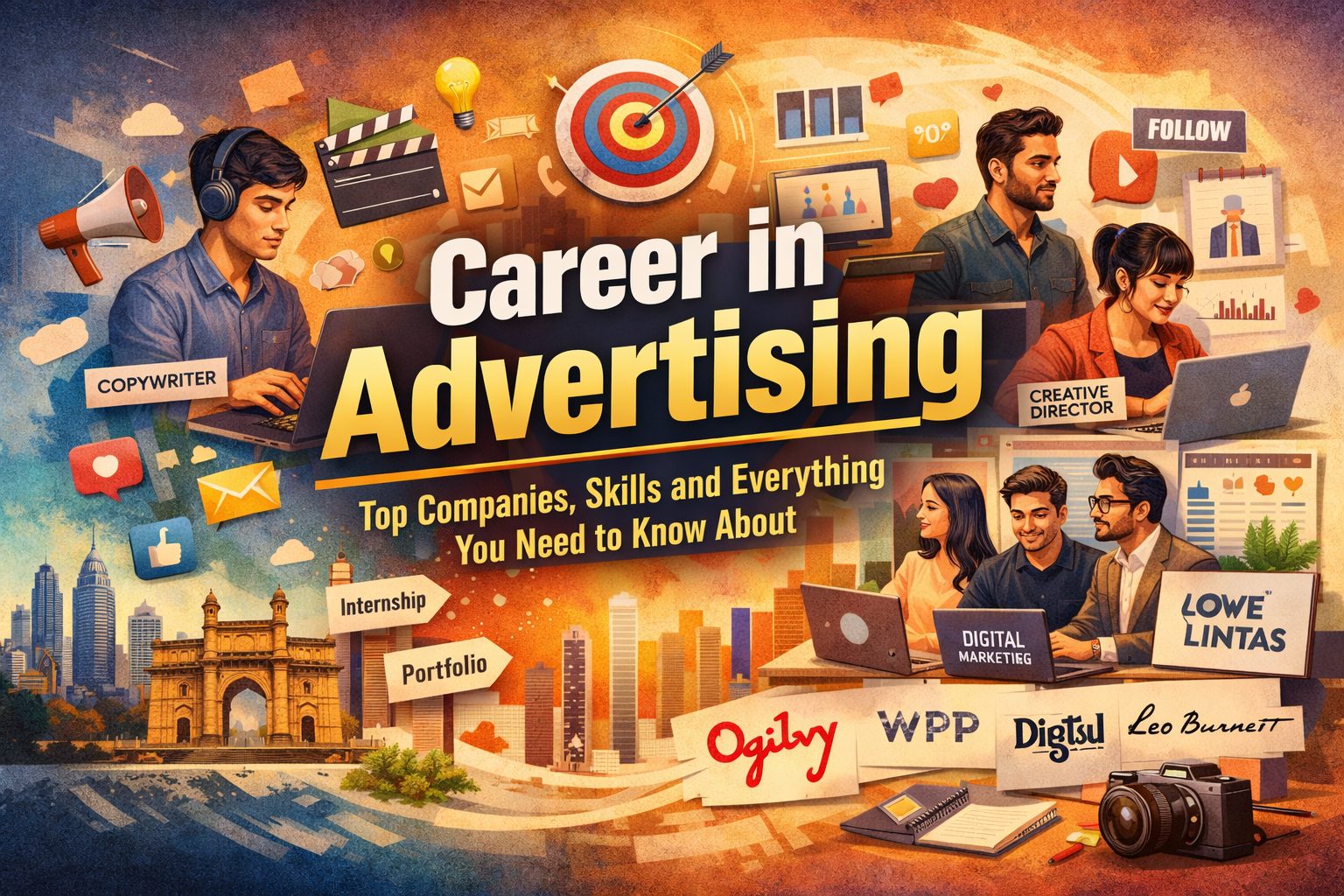
In India, advertising continues to flourish with bold concepts, well-known campaigns, and clever phrases that become part of our daily language. On the exterior, however, the actual work appears quite different. In contrast to popular culture, advertising in India today is quick, challenging, digital-first, and far less glamorous. But there are more opportunities to join and develop than ever before.
This article explores what a modern advertising job truly involves. The jobs individuals perform, how they enter the field, the talents that are now in demand, and how the sector is changing as brands start acting more like content organisations.
What Advertising Looks Like Today
Over the past ten years, Indian advertising has seen a significant shift. Print and traditional television are still important, but they are no longer at the centre of all that is. Nowadays, a large portion of the job is driven by digital platforms, social media, influencers, short-form video, and branded content.
It is required of agencies to think beyond advertisements. They collaborate directly with producers, create Instagram pages, organise YouTube series, oversee meme accounts, and reply to tweets instantly. In a matter of days, several initiatives are tried, adjusted, and occasionally discontinued.
It moves at a fast rate. There are strict deadlines. Feedback is continuous. Speed and quantifiable outcomes are what clients desire. In addition to being exhilarating, the task may be messy and draining.
Common Roles Inside an Agency
Most agencies are split into a few broad teams, though titles and structures vary.
Creative
This is the most visible side of advertising. Copywriters and art directors work together to shape ideas. Copywriters focus on words: scripts, headlines, captions, brand tone. Art directors handle visual direction: layouts, films, and design choices. Senior creatives often move into creative director roles, guiding teams rather than writing every line themselves.
Strategy and planning
Planners study the brand, the audience, and the market. They turn research into a clear problem statement and a sharp brief for the creative team. In India, good planners are in demand because many brands still struggle to define who they are speaking to and why.
Client servicing or account management
These teams sit between the agency and the client. They manage timelines, budgets, approvals, and expectations. It is a people-heavy role that requires calm under pressure and strong communication skills.
Media
Media teams decide where ads appear and how money is spent across platforms. This includes television, digital video, search, social media, and influencer partnerships. Data and performance tracking play a big role here.
Production
Producers manage the making of ads, from shoots to post-production to digital assets. With content volumes rising, production teams now handle far more than one big film a month.
Digital, social, and content roles
Many agencies have separate teams focused on social media, community management, and always-on content. These roles suit people who understand internet culture, platform formats, and fast-turnaround work.
How to Enter Advertising
There is no single route into advertising in India.
Some people attend advertising or communication schools like MICA, Symbiosis, or Xavier Institute of Communications. These programmes offer structure, industry exposure, and alumni networks, but they are not the only option.
Others enter through internships. Many agencies hire interns for copy, art, social media, or accounts. A strong portfolio often matters more than formal education, especially for creative roles.
Digital has opened new doors. People with backgrounds in design, filmmaking, journalism, meme pages, or content creation often move into agencies laterally. Freelancing and project-based work can also lead to full-time roles.
Skills that Actually Matter
Advertising is less about natural brilliance and more about practical skills.
Clear writing remains essential, even for visual or digital roles. So does the ability to explain an idea simply.
Cultural awareness is key. The best work reflects how people speak, joke, argue, and spend time online. This is especially true in India, where language, class, and region shape how messages land.
Adaptability matters more than polish. Platforms change. Formats die quickly. People who can learn fast and let go of old habits survive longer.
Collaboration is non-negotiable. Advertising is group work, often with conflicting opinions and tight deadlines. Thick skin helps.
How Digital and Content-led Brands Changed the Job
Brands today behave like publishers. They post daily and react to trends. They expect agencies to do the same.
This has blurred the line between advertising, entertainment, and media. A copywriter might write a film one day, and Instagram captions the next. A planner might study YouTube comments instead of survey data.
Performance metrics shape decisions more directly now. Likes, shares, view-through rates, and sales data influence creative choices, sometimes within hours.
This shift has created new roles, but also more pressure. There is less time to sit with an idea. Work is judged quickly and publicly.
Top Advertising Agencies Hiring in India
India has a mix of global networks and strong homegrown agencies. Some of the most active and well-known include:
- Ogilvy India
- McCann Worldgroup India
- DDB Mudra Group
- Lowe Lintas
- Leo Burnett India
- FCB India
- Grey India
- Wieden+Kennedy India
- BBH India
- BBDO India
Digital-first and content-led agencies also play a big role:
- WATConsult
- Schbang
- Social Panga
- Kinnect
- FoxyMoron
- The Glitch
- White Rivers Media
- Famous Innovations
Smaller independent shops often offer more responsibility early on, though resources can be limited.
Important Advertising Personas to Know
Making sense of the sector requires an understanding of the individuals who work there.
For decades, creative geniuses like Piyush Pandey, Prasoon Joshi, and Rajdeepak Das defined Indian advertising via emotionally charged storytelling. Younger management and digital specialists, such as Harsh Kapadia, Amit Akali, and Swati Bhattacharya, have pushed agencies to look outside of traditional forms.
The Reality Check
Although it might be lucrative, not everyone is cut out for advertising. Long hours are possible. Feedback may be straightforward. Market cycles and clientele affect job security.
It also provides unique exposure to various sectors, individuals, and concepts. You discover the intersections of communication, business, and culture. It may be an excellent fit for people who enjoy thinking, writing, observing others, and responding swiftly to change.