
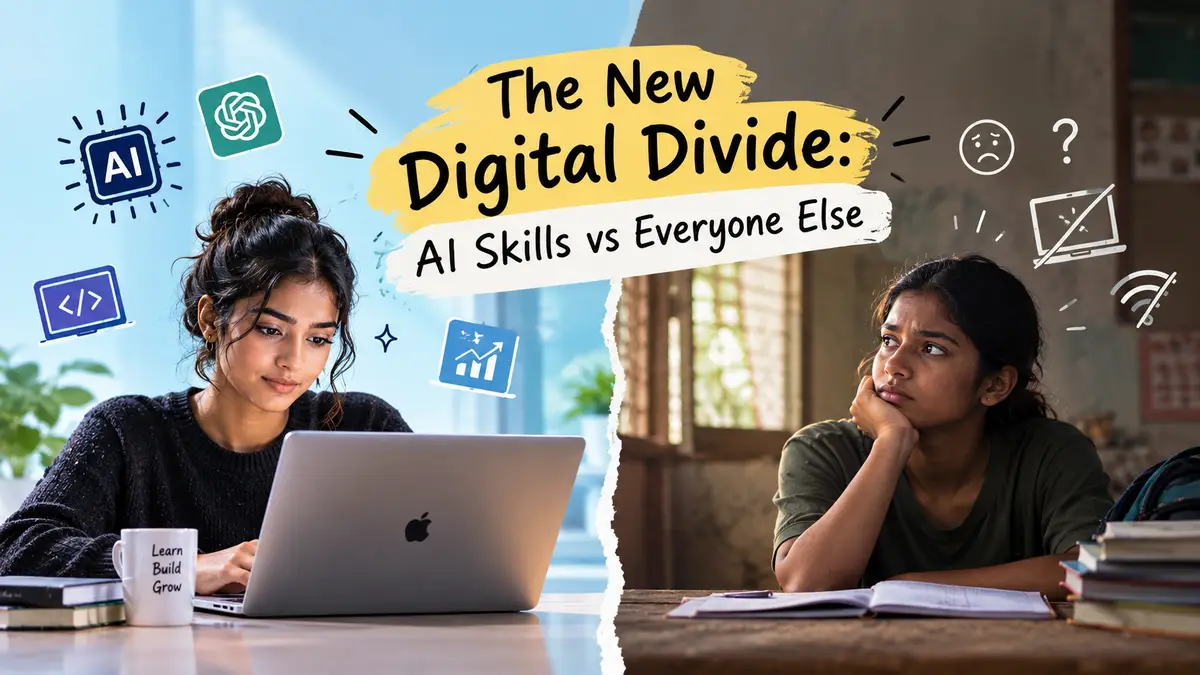
A few years ago, the digital divide was a fairly easy concept to understand and spot. It was basically the gap between the person with access to smartphones or the internet and the person without a smartphone, the student without reliable internet, or the family that could not afford a laptop. Today, almost everyone seems to be online. We have smartphones in our pockets, Wi-Fi at home, apps for almost everything, and Google answers just a few taps away, and yet, a new gap is quietly taking shape. This new divide is not necessarily about who has access to technology anymore. It is about who knows how to use AI well and who doesn't.
Two people can sit at the same desk, use the same laptop and have access to the same AI tools, yet walk away with completely different results. One knows how to ask the right questions, check the answers, refine the output and use AI to speed up their work. The other may open the same tool, type a vague prompt, get a disappointing answer and decide that AI is not very useful. That difference could become one of the defining inequalities of the digital age.
The Digital Divide Has Changed
For years, digital literacy meant knowing how to send an email, use a spreadsheet, search for information or navigate online services. Those skills still matter, but AI is changing what it means to be digitally capable. Knowing that ChatGPT or another AI tool exists is no longer the same as knowing how to use it.
Someone who understands AI can use it to summarise a long document, brainstorm ideas, analyse data, learn a difficult concept, improve a presentation or automate repetitive work. More importantly, they know that the first answer is rarely the final answer. They can give better instructions, provide context, ask follow-up questions and spot when something does not sound right. That last part is particularly important.
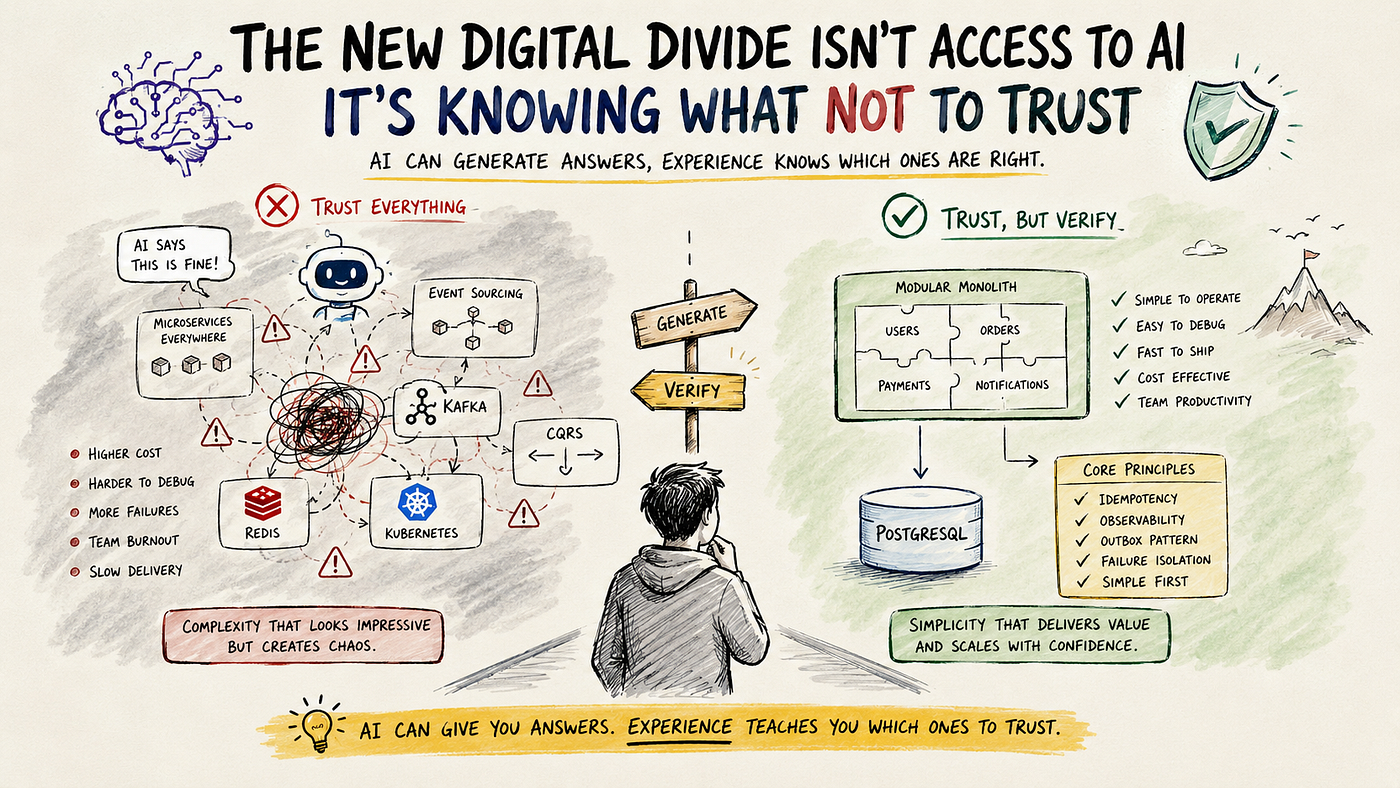
AI can produce an answer in seconds, but speed does not guarantee accuracy. A person who blindly accepts whatever appears on the screen may actually be less informed than someone who takes a little longer to verify it. The emerging divide, then, is not simply AI users versus non-users. It is increasingly a divide between people who can work with AI and those who are still figuring out how to make it useful.
Why AI Skills Could Matter at Work
Walk into almost any workplace today, and you will find people experimenting with AI. Some are using it openly for everyday tasks. Others are quietly using it to write first drafts, organise information, create presentations or solve problems. The difference can add up. Imagine two employees are given the same assignment. One spends three hours starting from scratch, while the other uses AI to organise their thoughts, create a rough framework and identify gaps before spending their time improving the final work. The second employee is not necessarily more talented. They may simply have learned how to use a new tool effectively.
This is where the conversation around AI and employment becomes more complicated than the familiar fear that “AI will take our jobs.” In many cases, the immediate advantage may go to people who know how to use AI alongside their existing skills.
It’s Not Just About Knowing Prompts
There is a tendency to treat AI literacy as being good at writing clever prompts. That is only part of the picture. Real AI literacy involves knowing what to ask, when to ask it, what information to provide and whether the answer deserves to be trusted. A good writer still needs to understand writing. A designer still needs an eye for design. A marketer still needs to understand people. AI can help with the work, but it does not automatically provide judgement. In fact, the more AI becomes capable of producing things quickly, the more valuable human judgement could become.
The People Being Left Behind May Not Look “Technologically Behind”
This new divide is especially interesting because it does not always follow the old pattern. Someone can own the latest phone and spend hours online but still have little understanding of how AI can actually help them. Meanwhile, someone with fairly ordinary technology skills may have learned a handful of AI workflows that make a major difference to their studies or work.
There are also obvious differences in access to learning. A student whose school encourages AI experimentation may have an early advantage over one whose school treats AI only as a cheating problem. A young professional whose workplace provides training may learn skills that another employee is expected to figure out alone. People with more time, better education or professional networks may also have more opportunities to discover useful AI tools.
That creates a strange situation: the technology itself may be widely available, while the knowledge required to use it effectively is not. And unlike buying a better device, developing that knowledge takes time and practice.
Closing the Gap
If AI skills become as important as basic digital skills, simply giving people access to AI tools will not be enough. Schools, colleges and workplaces will need to teach people how to use them responsibly and effectively. That means learning how to verify information, protect personal data, recognise bias, understand limitations and use AI without handing over every decision to it.
It also means making AI education less intimidating. Not everyone needs to become a programmer or an AI expert. A student should be able to use AI to understand a difficult lesson. A small business owner should be able to use it to organise routine work. A teacher should be able to explore ways of making lessons more engaging. An employee should be able to figure out which repetitive tasks can be made easier.
The goal is not to turn everyone into an AI enthusiast; it is to make sure that people are not disadvantaged simply because nobody showed them what these tools can actually do. The first digital divide was about having access to technology. The next one may be about knowing what to do with it. And that is a much harder gap to see because, from the outside, everyone may look equally connected.