Imagine having so many questions but no Google, no YouTube tutorial, no Reddit thread and no ChatGPT. What did people do? Let’s ask a simple question: how did our grandparents know so much? They knew which home remedy to try when you had a cold, which neighbour could fix a broken appliance, where to find the best doctor, how to get somewhere without opening Google Maps, and somehow remembered phone numbers we now save without even trying to memorise them.
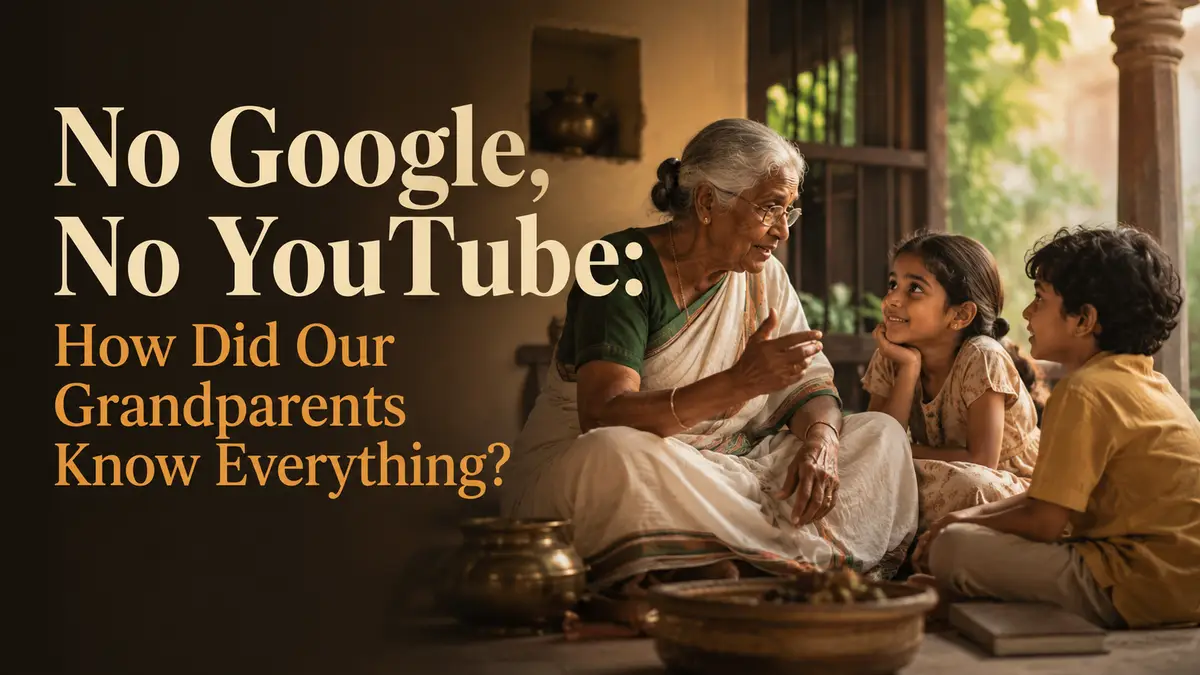
They didn't have Google. They didn't have YouTube tutorials or ChatGPT to answer every random question that crossed their minds. Yet, when we were growing up, “Ask Grandma” or “Ask Grandpa” often worked just as well. But where did they get all that information? Before search engines put billions of answers at our fingertips, people relied on books, libraries, newspapers, radio, teachers, neighbours, experts, and most importantly, each other.
Let's take a look at how our grandparents found answers before Google changed the way we search, learn and remember.
Grandparent's super-power
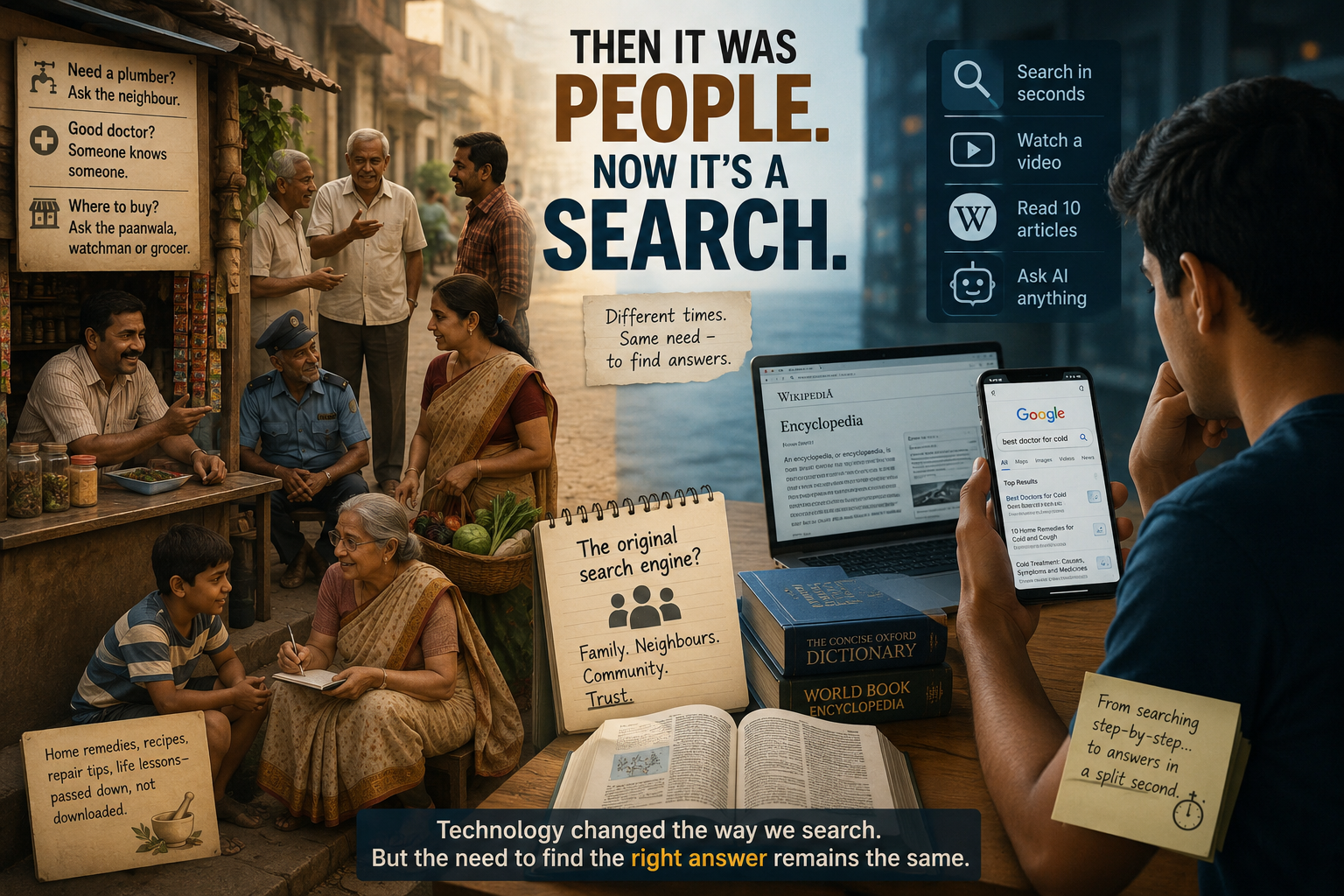
Ages ago, knowledge was often social rather than digital. Instead of asking “Hey Siri, suggest the best doctor for a cold”, they went out and asked their friends and neighbours. The original search engine for our grandparents was the family and society. We often ask our grandparents for home remedies; they would have asked their grandparents. For repairs, they took help from their parents and neighbours. Your favourite dish that your mother makes might be a recipe passed down through generations. They did not have a search engine but a notebook full of tips from their elders and knowledge that was passed down from one generation to another.
Before smartphones and search engines, information usually travelled through people. Need a plumber? Ask the neighbour. Looking for a good doctor? Someone in the family probably knew one. The local paanwala, watchman, barber or grocer often knew exactly where to find what you needed, or who could help. Even shopkeepers seemed to have an answer for everything. It was a simple system built on trust, familiarity and connections. In many ways, “everyone knows someone who knows someone” was India’s original social network.
Sometimes, while reading or scrolling, we might stumble upon a new word unaware of its meaning; we instantly open Google to find it, which takes mere seconds. However, our grandparents had to follow a step-by-step routine just to find the word, since they relied on encyclopedias and dictionaries. From finding the right volume, then the letter, to find the entry and then read it, this is how they found it, while a person in the current generation would have even forgotten what the word was by then. They did have an advantage, though, because unlike Google, you couldn't accidentally fall into 17 unrelated search results.
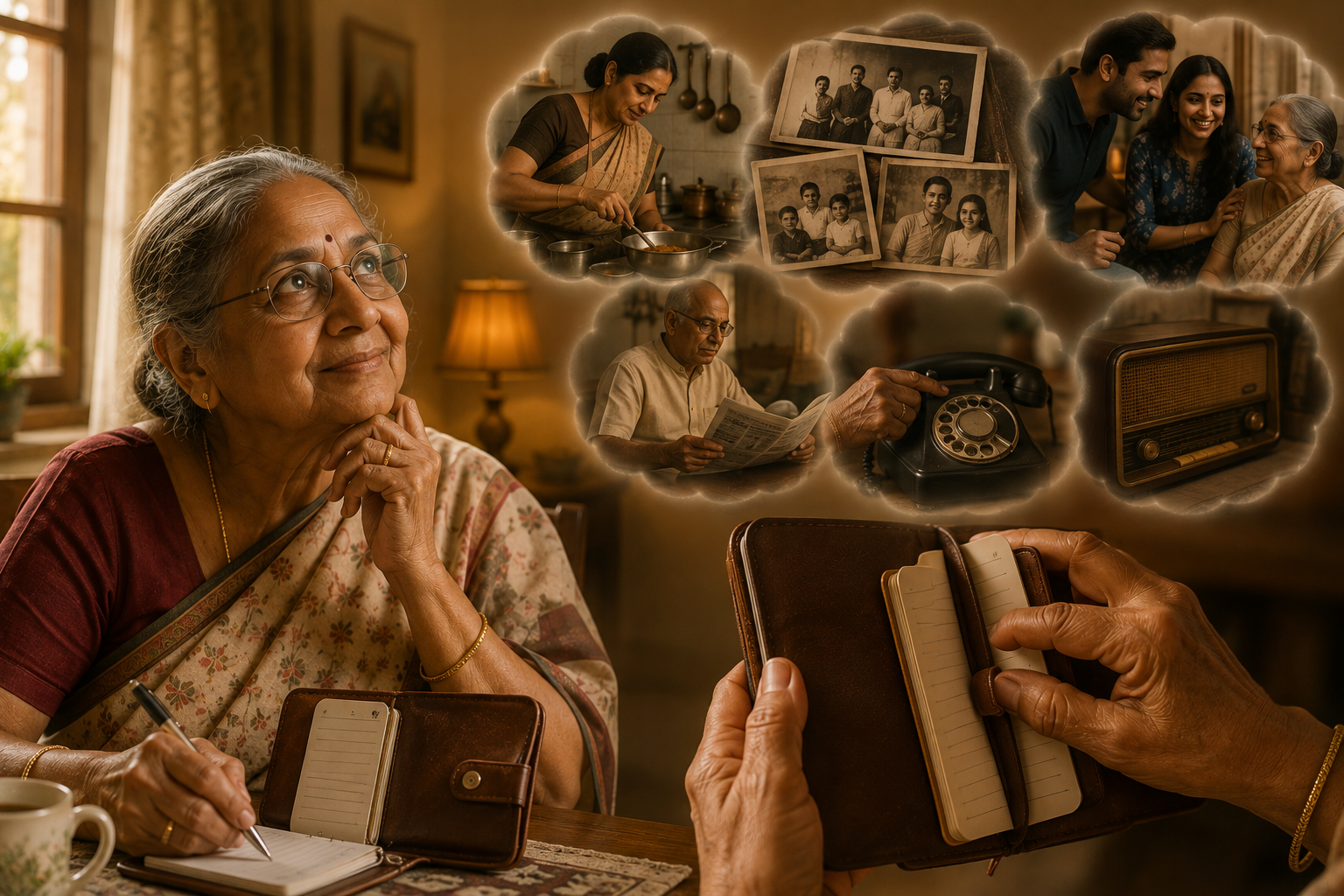
One of the superpowers of our grandparents' generation is their ability to remember everything. Unlike our generation, they did not have the internet to access information at any time. They had to search for the information physically and then remember it throughout their lives. From recipes to phone numbers, they stored all of it in their head and maybe in a small portable diary. Today, we often do not need to remember the information, but where and how to find it. They might know the phone number; we know where the contact is saved. Similarly, they might know how to navigate somewhere from memory, and we know how to open and use Google Maps. Previous generations often had to remember information because accessing it was difficult. Today, we often don't need to remember the information; we need to remember where/how to find it.
Maybe we're asking better questions, not knowing more
The biggest difference isn't that our grandparents knew more. They simply had to work harder to find out. Google, YouTube, Wikipedia and AI have made knowledge more accessible than ever. The challenge today isn’t memorising everything—it’s knowing how to navigate the information around us. What should I search for? Who should I trust? Is the information reliable? And perhaps most importantly, what am I missing? In a world where answers are always a few clicks away, curiosity, critical thinking and the ability to ask better questions may be more valuable than knowing every answer. Our grandparents may not have had Google, but they had something we sometimes forget to use: people, patience, books, experience and the willingness to figure things out.