
We have grown up viewing traditional museums as places that preserves the ancient artefacts, paintings, sculptures. People visit museums to understand the past and learn more about our heritage, culture and civilization. For decades we have viewed museums as spaces that protect the past for future generations. Today however Artificial Intelligence is transforming industries around the world and it is no longer limited to the technology sector. Today fields like healthcare, education, entertainment and now even the art world is being reshaped by AI to help create, experience and interact with the world around us.
Dataland is the world's first Museums of AI Arts and digital ecosystem, where human imagination meets the creative potential of machine intelligence. Instead of displaying centuries-old masterpieces, Dataland presents AI-generated, data-driven artworks that continuously evolve, offering visitors an entirely new way to experience art. Is this now the future of museums? Let's find out.
What is Dataland and where is it located?
Located inside the Grand LA in downtown Los Angeles, Dataland officially opened its doors to the public on June 20, 2026 after years of development. The 25,000 square foot museum is designed by renowned architect Frank Gehry. The museum combines technology, data, architecture and creativity into one immersive experience.
Unlike conventional museums, Datalad represents itself as a Museum of AI arts and a digital ecosystem, where human imagination collaborates with machine intelligence. Dataland promises unparalleled, multisensory experiences at a scale and quality never before realized with real-time interactions between museum and audience.
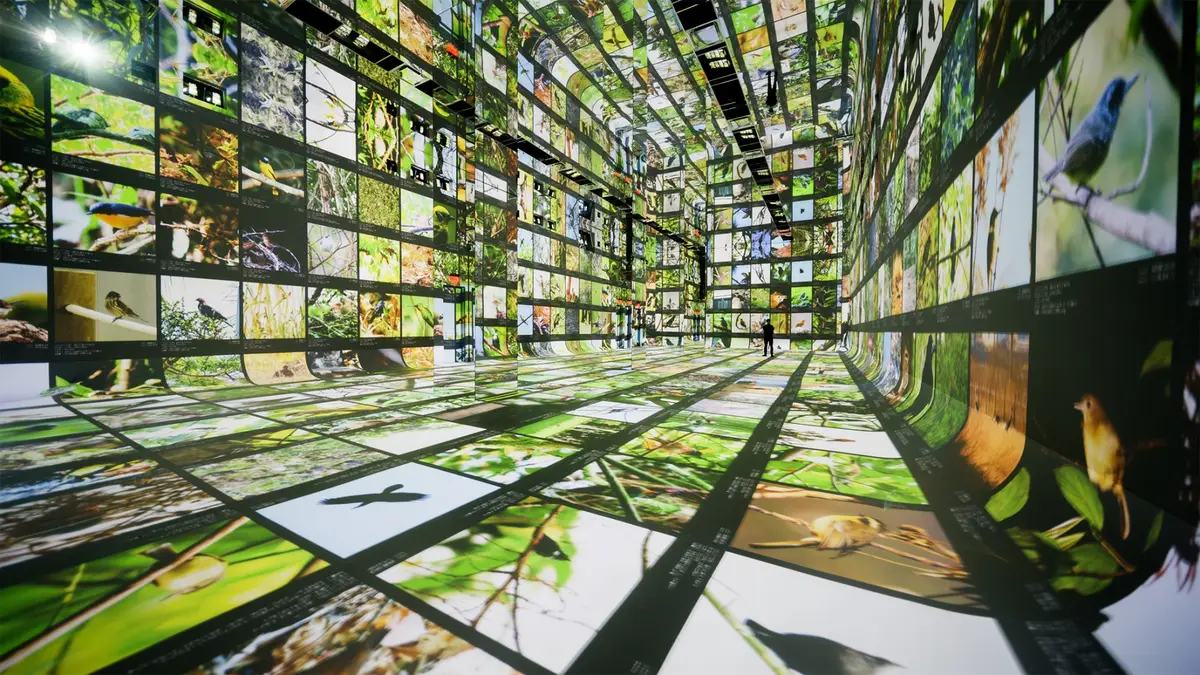
The exhibition is powered by Google’s Large Nature Model, which has transformed extensive environmental data into 1.2 billion pixels, resulting in vibrant and interactive artworks displayed on giant screens.
The Vision behind Dataland:
Dataland was founded by Refik Anadol, a Turkish international media artist, designer and director widely recognised as one of the leading figures in AI-generated and data-driven art. He is the co-founder of Refik Anadol Studio in Los Angeles. His worl explores how Artificial Intelligence can become a creative partner rather than simply a technological tool.
There have been many concerns around copyright, originality and whether AI can truly create art continue to dominate public debate. Artist Refik has positioned Dataland as a space that explores these questions rather than answers them. Rather than a gallery he views the space as a dynamic artwork. In response to the broader controversies surrounding AI datasets, Anadol emphasizes that Dataland uses ethically gathered environmental data. He relies on his custom "Large Nature Model," trained on verified datasets from institutions like the Smithsonian, the Natural History Museum in London, and the Cornell Lab of Ornithology.
Refik Anadol has positioned Dataland as a space that explores these questions rather than answering them. His vision is to create a "living museum" where art continuously evolves through data, algorithms, and audience interaction. Instead of static exhibitions, visitors encounter dynamic environments that change in real time.
Meanwhile, Efsun Erkılıç is a visionary artist, cultural researcher and co-founder of Refik Anadol Studio. She has spent over a decade in her career, managing multidisciplinary artworks at more than 70 venues around the world. Together they built Dataland in a motive to bring together artists, scientists, AI Researchers, technologists and the public under one roof.
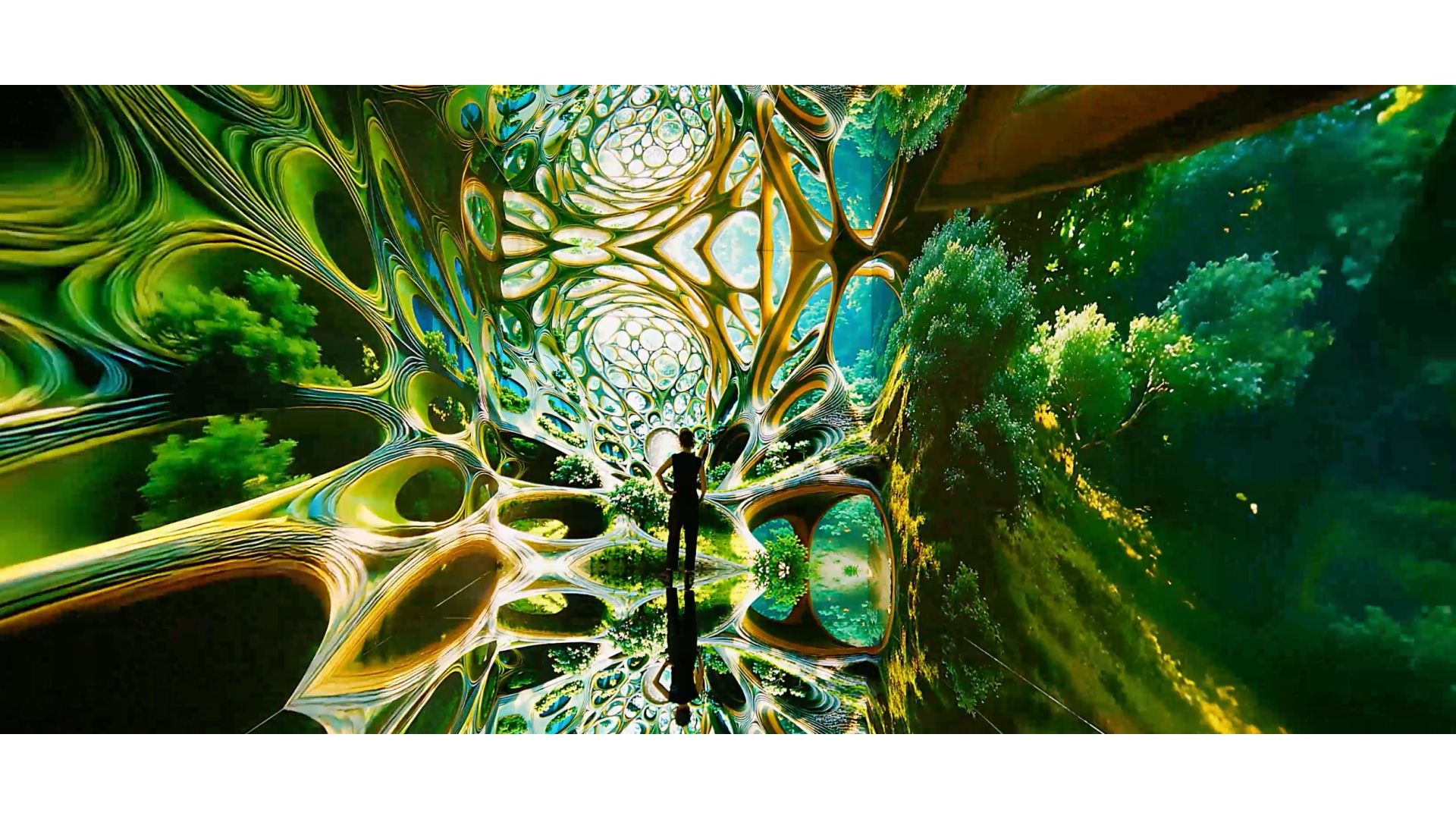
Inside the Exhibition
Machine Dreams is divided into several immersive environments, each exploring a different relationship between nature, artificial intelligence and human perception.
Connectome introduces visitors to the Large Nature Model, showing how AI learns from enormous ecological datasets and forms connections between different elements of nature.
Data.Token explores how environmental information is transformed into digital building blocks that artificial intelligence uses to generate artwork.
The breathtaking Infinity Room surrounds visitors with rainforest-inspired visuals, light and sound, creating the feeling of standing inside a living digital ecosystem.
One of the exhibition's most unique experiences is Data.Chocolate, which combines AI-generated visuals with flavours and aromas inspired by cacao and rainforest biodiversity, blending technology with the senses.
Together, these installations transform scientific data into immersive storytelling, encouraging visitors to experience nature through the eyes of artificial intelligence.
The Technology Behind the Museum
At the heart of Dataland is the Large Nature Model (LNM), a custom-built AI model trained using ethically curated environmental datasets collected from leading research institutions worldwide.
Rather than generating simple images, LNM analyses biodiversity records, satellite imagery, wildlife photography, climate data and field recordings to understand patterns found in nature. It then transforms this information into continuously evolving visual, audio and sensory experiences.
The museum itself functions almost like a living organism. The central Data Pavilion uses 84 synchronised projectors and a 200-channel spatial sound system to create an environment that responds to visitors. Wearable biosensors monitor movement and heartbeat, allowing the installation to change in real time, while AI-generated scents recreate the smell of rainfall, tropical plants, forest floors and rainforest air.
Instead of observing art from a distance, visitors become active participants in its creation.
Beyond the Museum: Living Encyclopedia
Dataland also extends beyond its physical galleries through Living Encyclopedia, described as the world's first AI system dedicated entirely to nature.
Rather than presenting static facts like a traditional encyclopedia, Living Encyclopedia allows users to explore biodiversity through AI-powered visualisations, conversations and creative experiences. It features three interactive modes—Research, Create and Dream—allowing users to study ecological information, generate AI-assisted artwork and explore imaginative interpretations of nature.
The platform is supported by research and technology partners including Google, NVIDIA, Stanford University, UCLA, MIT Media Lab, the Natural History Museum, the Smithsonian Institution and the Cornell Lab of Ornithology.
A Museum for the Future
Dataland represents a significant shift in how museums may evolve in the age of artificial intelligence. Rather than preserving objects behind glass, it creates experiences that continuously change through data, technology and human interaction.
Whether AI-generated art becomes the next major artistic movement remains to be seen. However, Dataland has already achieved something remarkable—it has challenged the centuries-old definition of a museum.
In doing so, it raises an important question: in the future, will museums simply preserve history, or will they create it?
For those interested in experiencing Dataland firsthand, general admission tickets range from $49 to $79, depending on the date and experience selected.
The museum also offers three annual membership tiers:
Explorer – $350/year
Dreamer – $750/year
Pioneer – $1,500/year
Each membership includes unlimited museum access along with entry to Living Encyclopedia, Dataland's AI-powered digital platform dedicated to exploring nature through interactive experiences. Members can access three AI modes—Research, Create, and Dream—allowing them to study biodiversity, generate AI-assisted artwork, and explore imaginative interpretations of the natural world beyond the museum walls.
For those who cannot visit Los Angeles, Living Encyclopedia is also available as a standalone subscription for $10 per month, providing access to Dataland's AI ecosystem from anywhere.
Dataland is more than a technological showcase—it reflects how cultural institutions are evolving alongside artificial intelligence. As AI becomes increasingly integrated into creative industries, museums like Dataland could reshape not only how art is exhibited, but also how audiences engage with creativity, science and the natural world.