

What Has India Announced?
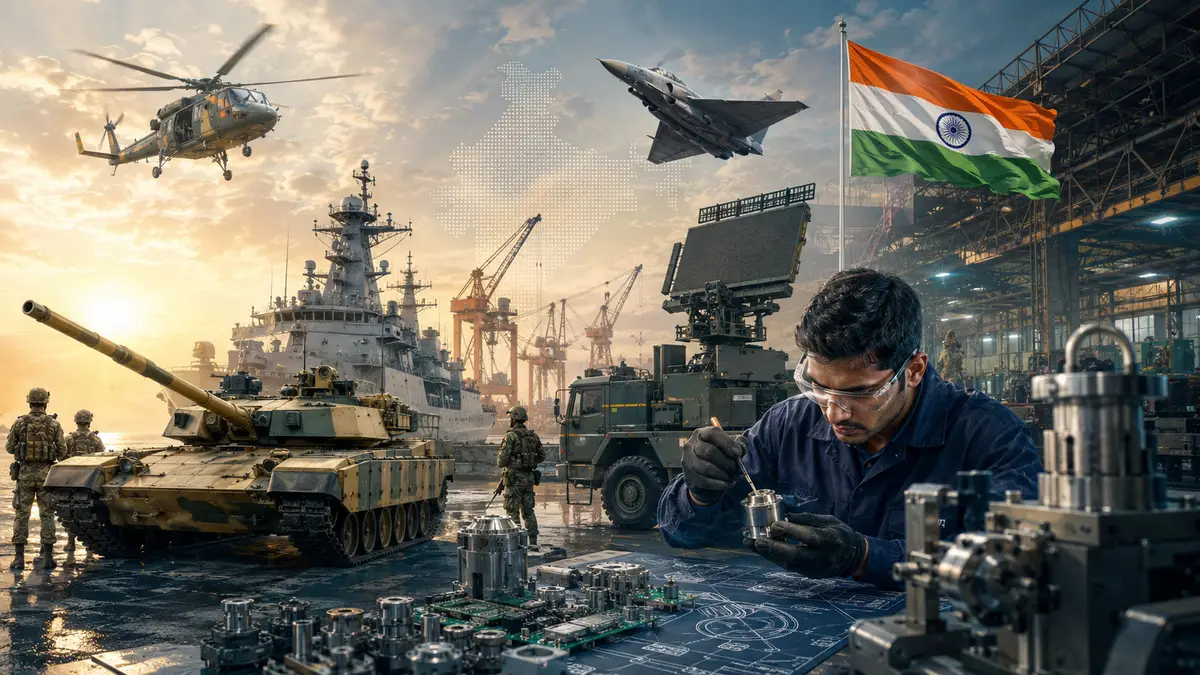
A total of 405 defence articles have been added to the sixth Positive Indigenisation List [PIL]. This list is like a book of accounts for the military equipment or spare parts being manufactured in the country. The armed forces can use it to reduce the country’s dependence on imports and increase domestic businesses.
The Ministry of Defence releases these lists in phases. Equipment and other materials are categorised in simple formats, sometimes even complex ones. The items added this year include 396 things related to Defence Public Sector Undertakings and 16 related to the Indian Coast Guard.
India, under the leadership of PM Narendra Modi, has seen a lot of growth in becoming a nation that does not heavily rely on imports. The idea of ‘Atmanirbhar Bharat’ has taken over a lot of industries and sectors. With this PIL, India is potentially generating a business of ₹3070 crores, a step ahead in its dream.
What Is the Positive Indigenisation List?
The Positive Indigenisation List [PIL] is the government's register of equipment used by the military, weapons used by the army and raw materials or spare parts that India has started manufacturing on its own to reduce dependency on imports. Local companies manufacture them instead.
The process moves in a simple direction. India first imports the required gear. Then it researches and designs the technology within the country, builds them in local factories and then the military purchases them from domestic businesses.
There are two ways to do this. We can look at it with a simple example. Let’s say India needs some fighter jets. They can either buy one batch of fighter jets from a country and sign a transfer of technology agreement with them, and a private company can get the blueprints of the technology to make the remaining batches inside the country, or they can use the complete Indian manufacturing set-up. This means that it is Indigenously Designed, developed, and manufactured. They impose a ban on the import of fighter jets, forcing local companies to make them from scratch. Once they are tested, the armed forces are legally required to buy them from Indian manufacturers. The smaller parts can still be imported from outside the country in all cases.
Instead of targeting just big weapons, this strategy changes the entire supply chain. Military equipment requires constant maintenance, and by building those small spare parts, screws or circuit boards locally, the armed forces can depend on the nation and work without help from outside. It builds a strong domestic network.
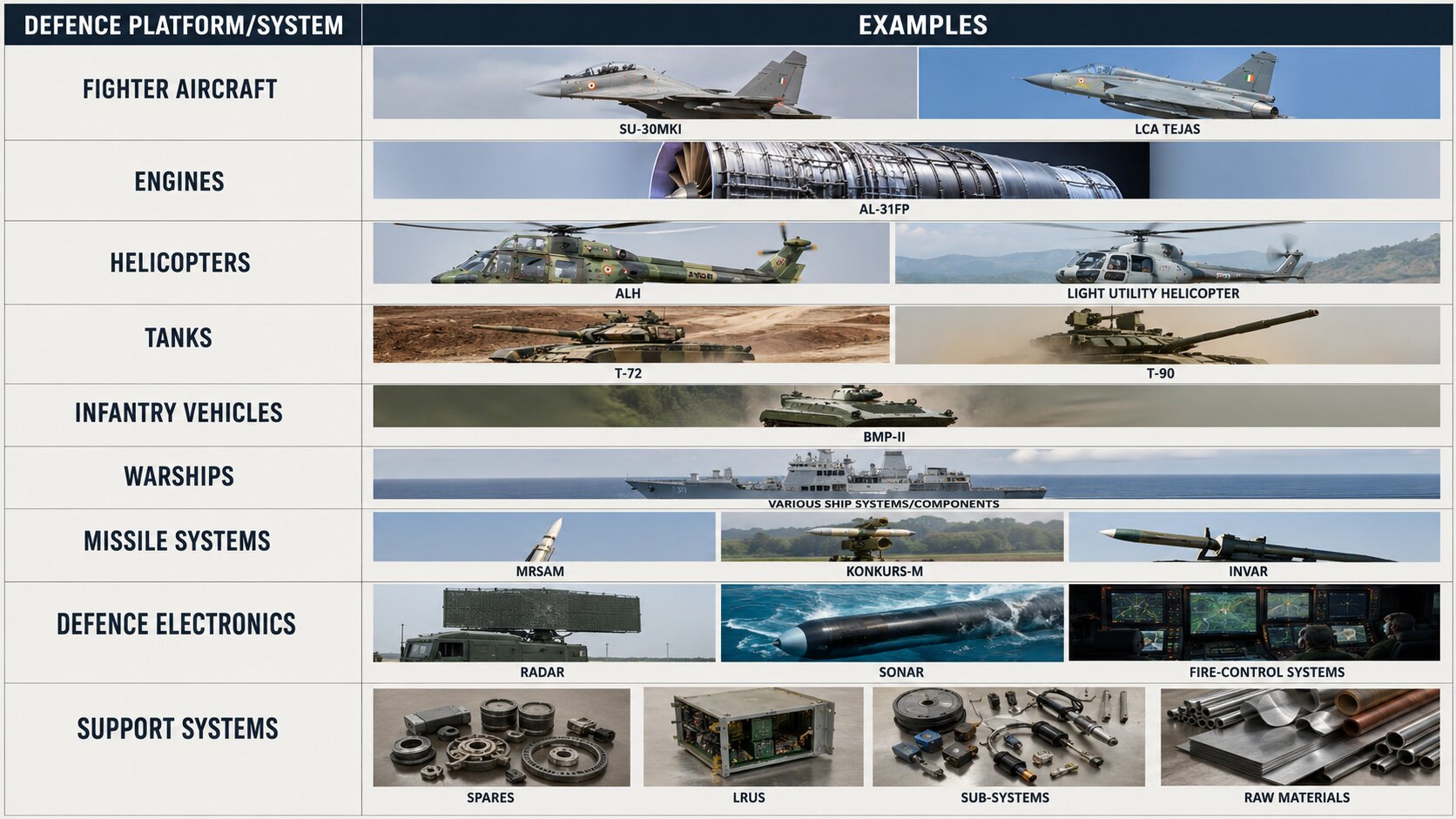
The current list includes items associated with:
Fighter aircraft
Helicopters
Tanks
Infantry combat vehicles
Warships
Missile systems
Radar/sonar and defence electronics
Maintenance and replacement components
What Are the 405 Defence Items?
Not all, but the specific ones are listed below:
Why Is India Bringing These Items Into Domestic Production?
Less dependence on foreign suppliers: Importing anything from outside the country is subject to currency fluctuations, export restrictions from the supplier country, supply chains not running smoothly, geopolitical tensions like the ongoing war situations, and unnecessary delays in getting foreign spares. National security is also always under scrutiny. It is necessary because acquiring equipment is not a win; it also needs to be constantly taken care of.
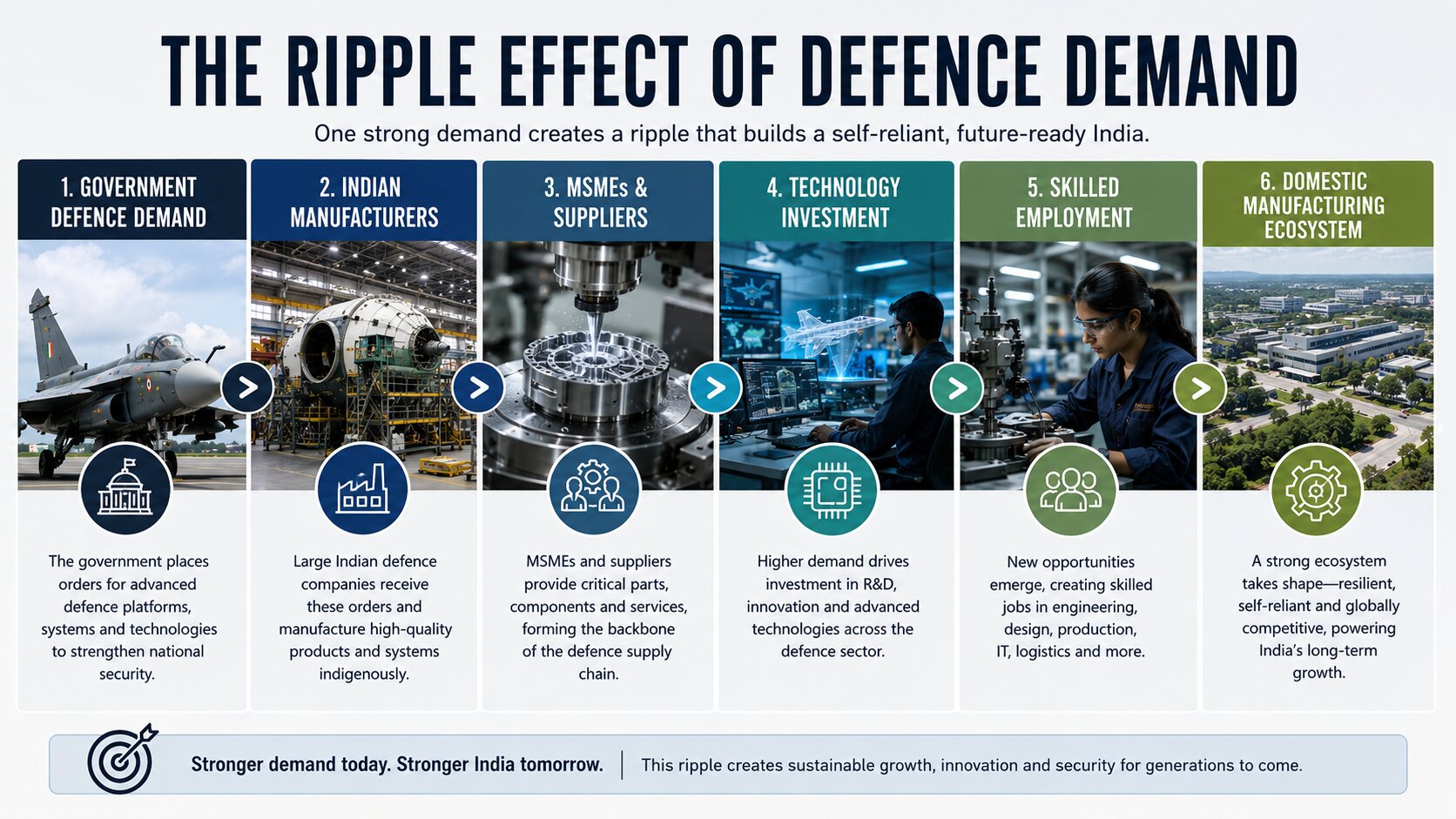
Bigger opportunity for Indian companies: The ₹3070 crore is not a one-time budget. It is just a door opener. With this, the companies get to be a constant source of parts and mechanics required by the military through India’s Defence manufacturing system. Gates will open for MSMEs, Defence PSUs, Private Defence Companies, Component manufacturers, Electronics companies, Engineering firms, Research and technology companies and a lot of start-ups.
Technology & innovation would get a push: Sensors, electronics, communications, radar, fire-control systems, advanced materials, precision manufacturing are the base for modern defence systems. Domestic manufacturing for this will create spillover benefits for civilian industries too. The current list includes many parts from these.
Strengthening defence manufacturing ecosystem: Over the past 5 years, this strategy has helped India save ₹9000 crores in imports, and for March 2026, ₹10000 crore worth of orders were in the pipeline by the armed forces towards Indian manufacturers. More than 15700 items are already indigenised. This shows that the sixth list is part of a much larger multi-year indigenisation programme.
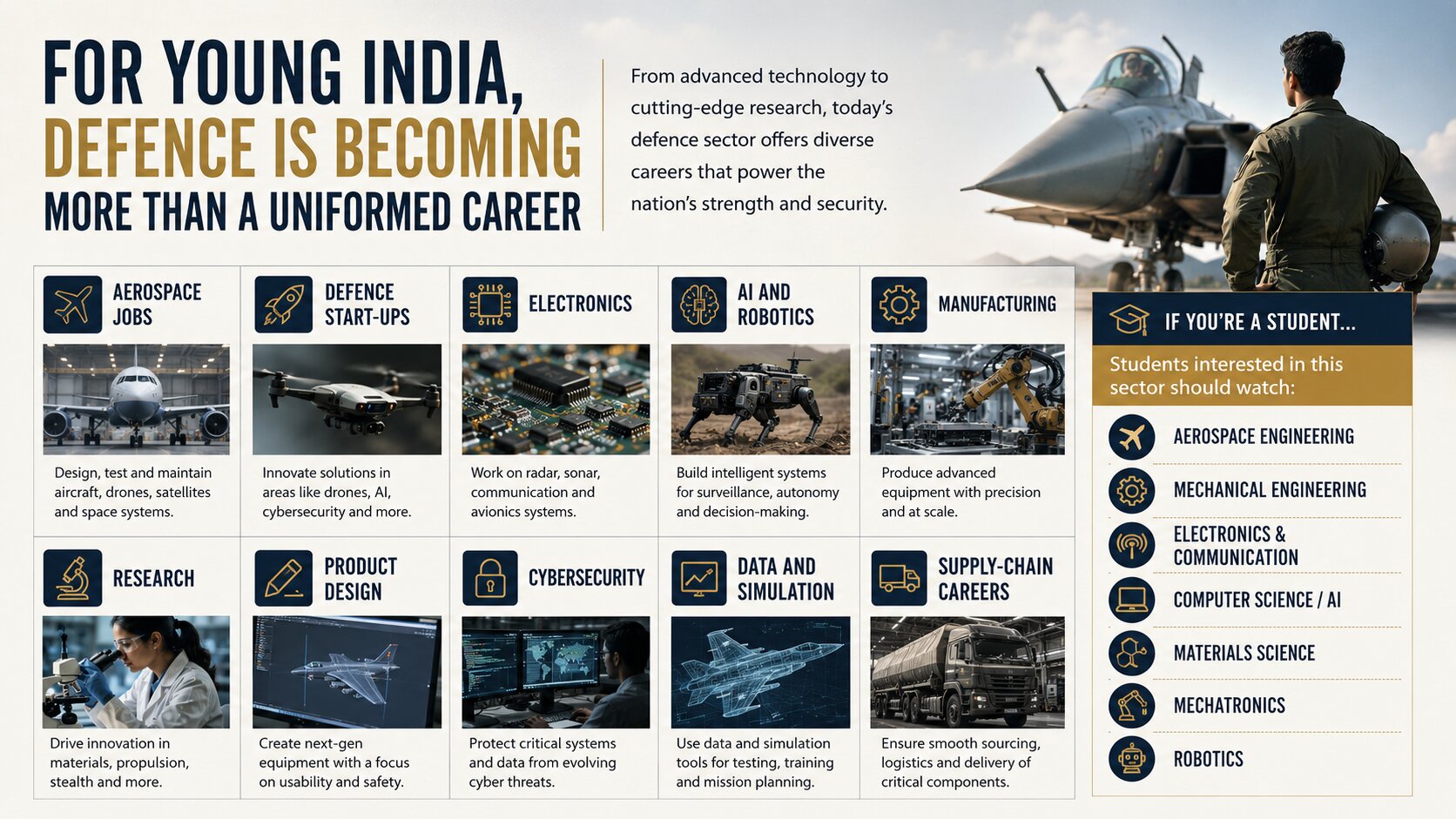
More opportunities for engineers and skilled workers: Manufacturing and developing in-house requires the best talent and skills. That makes an interesting opportunity for young Indians. Many sectors will have vacancies, and it will surely create a good economy for the nation.
What Does It Change for India’s Defence?
Supply Security: With the type of geopolitical conditions that the world is facing at the moment, there is no guarantee of what will happen where. In such complex situations where imports and exports are always unreliable, it is best to have critical components inside the country to ensure the complete maintenance of defence equipment. It strengthens our defence entirely, making it ready for every attack at all times.
Faster Maintenance: Since the parts and materials are available inside the country, there is no delay in usage. It becomes much easier to get the required things from within the country than to go through the entire process and harassment of getting them from across the borders.
Strategic Autonomy: This system gives India an upper hand in making/maintaing and using the defence articles as per its choice and timeline. It does not have to depend on external suppliers and their chain of work.
What Does It Mean for Indian Businesses?
The government has specifically carved this path for manufacturers in India to boost their markets. It can help:
MSMEs: They can become suppliers of specific components.
Start-ups: They can venture into making drones, sensors, defence technologies, electronics and advanced manufacturing relating to AI.
Large Private Companies: They can help with larger projects of manufacturing with system-integrated programmes.
Engineering Companies: For precision manufacturing and specialised components and parts, these companies can give a major boost.
Could It Create More Jobs for Young Indians?
The Economic Angle
What Are the Challenges?
The headlines make you smile and hope, but the process is equally difficult, filled with hurdles of all kinds. With no prior experience, it is viable that we question whether Indian manufacturers can match the quality. For the defence of the nation, the equipment requires high reliability; can we match that level of precision?
Another challenge is time sensitivity. Even if all the possible resources are available, are we fast enough to build it? And if we are fast enough, what cost are we willing to pay for it? If the manufacturing cost is higher than the cost of importing, we fail.
Hence, the bigger question here should be whether we can innovate. Instead of making imported designs locally, we should design and develop competitive products that can match the global standards.
The Bigger Picture: From Defence Buyer to Defence Manufacturer
This push towards self-reliance comes as India is also widening its defence partnerships and global footprint — from joint exercises with the US and deeper defence ties with Armenia to its missile systems gaining international orders.
With the country targeting ₹50,000 crore in defence exports by 2029 and steadily reducing its dependence on Russian arms from around 70% to 35%, alongside sustained defence budget allocations, the 405-item list signals a larger shift: India is not just trying to build more at home, but to emerge as a globally competitive defence manufacturer and exporter.
This shift is also being backed by a growing defence manufacturing ecosystem, with PSUs such as Hindustan Aeronautics Limited (HAL), Bharat Electronics Limited (BEL), Bharat Dynamics Limited (BDL) and Mazagon Dock Shipbuilders playing key roles across aerospace, defence electronics, missiles, warships and submarines, alongside private-sector players such as Larsen & Toubro, Tata Advanced Systems, Bharat Forge and Adani Defence & Aerospace. As India expands domestic production, defence partnerships and exports, these companies could become central to its ambition of moving from a major defence importer to a globally competitive defence manufacturer and exporter.
The real test won't be how many items India places on an indigenisation list. It will be how many of those items Indian companies can successfully design, manufacture, scale and eventually sell to the world.