
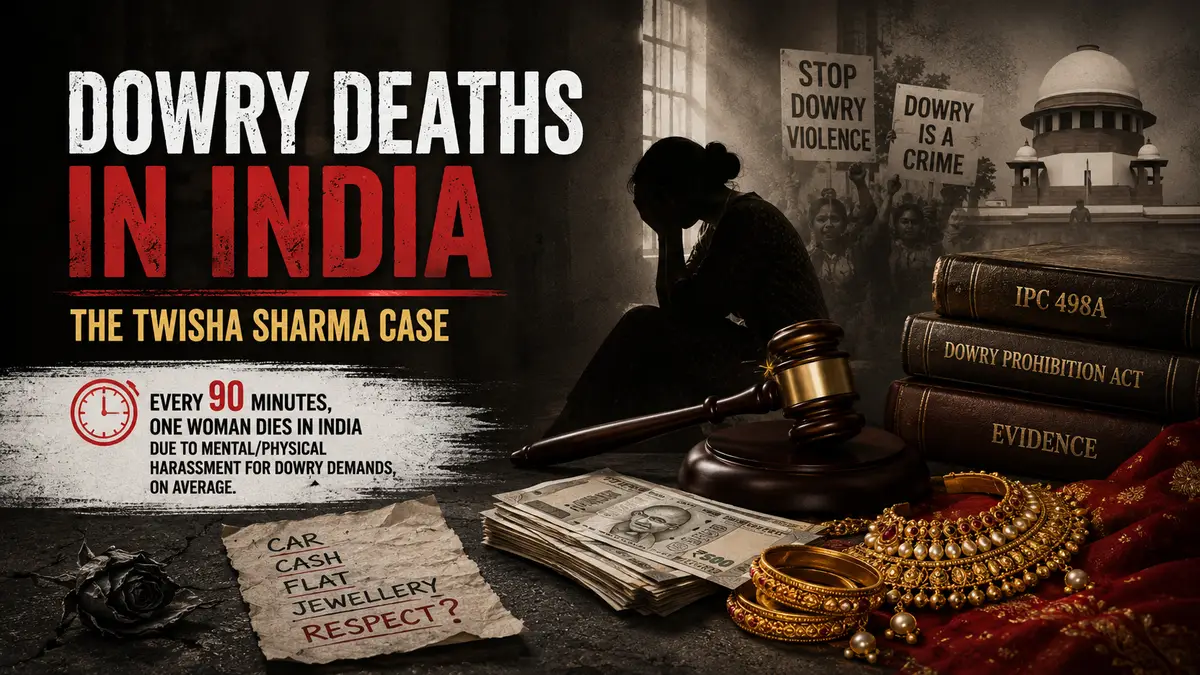
Every 90 minutes, one woman dies in India due to mental/physical harassment for dowry demands, on average.
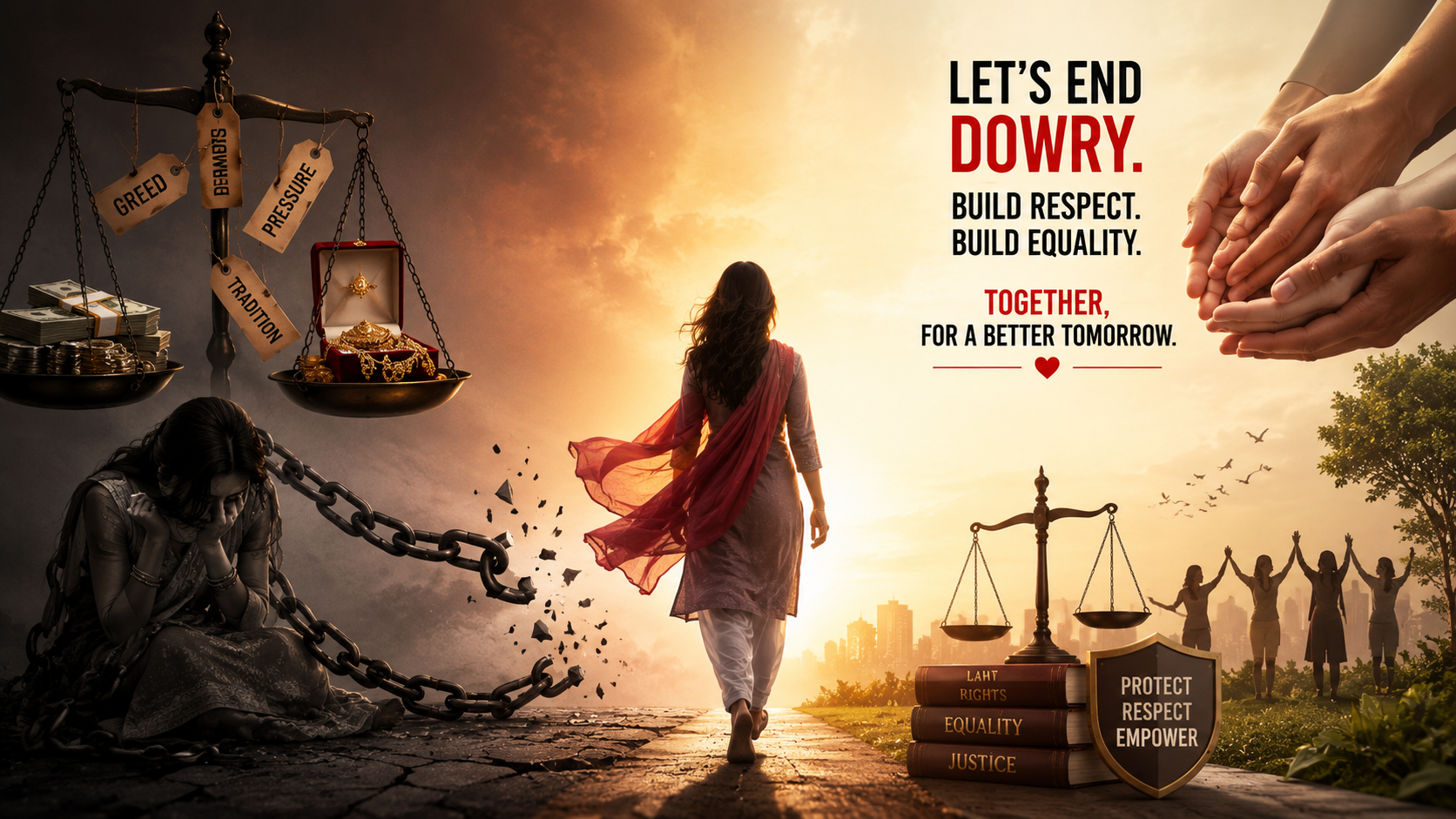
Despite being prohibited under Indian law, Dowry is still very actively practised in many parts of our country. The English word ‘dowry’ comes from a French word ‘douaire’, which means property given to the woman at the time of her marriage. The Hindi word ‘dahej’ comes from the Persian and Urdu word ‘jahaz’, which is now commonly used.
In ancient times, this concept was famous in the name of ‘stridhan’, which was the wealth provided to a woman in the form of property and gifts, for her financial security. This stridhan quietly changed to demands under the pretext of a better lifestyle for the woman, and eventually became dowry - the extreme kind that is practised nowadays, where the groom and his family ask for dowry as a condition to marriage.
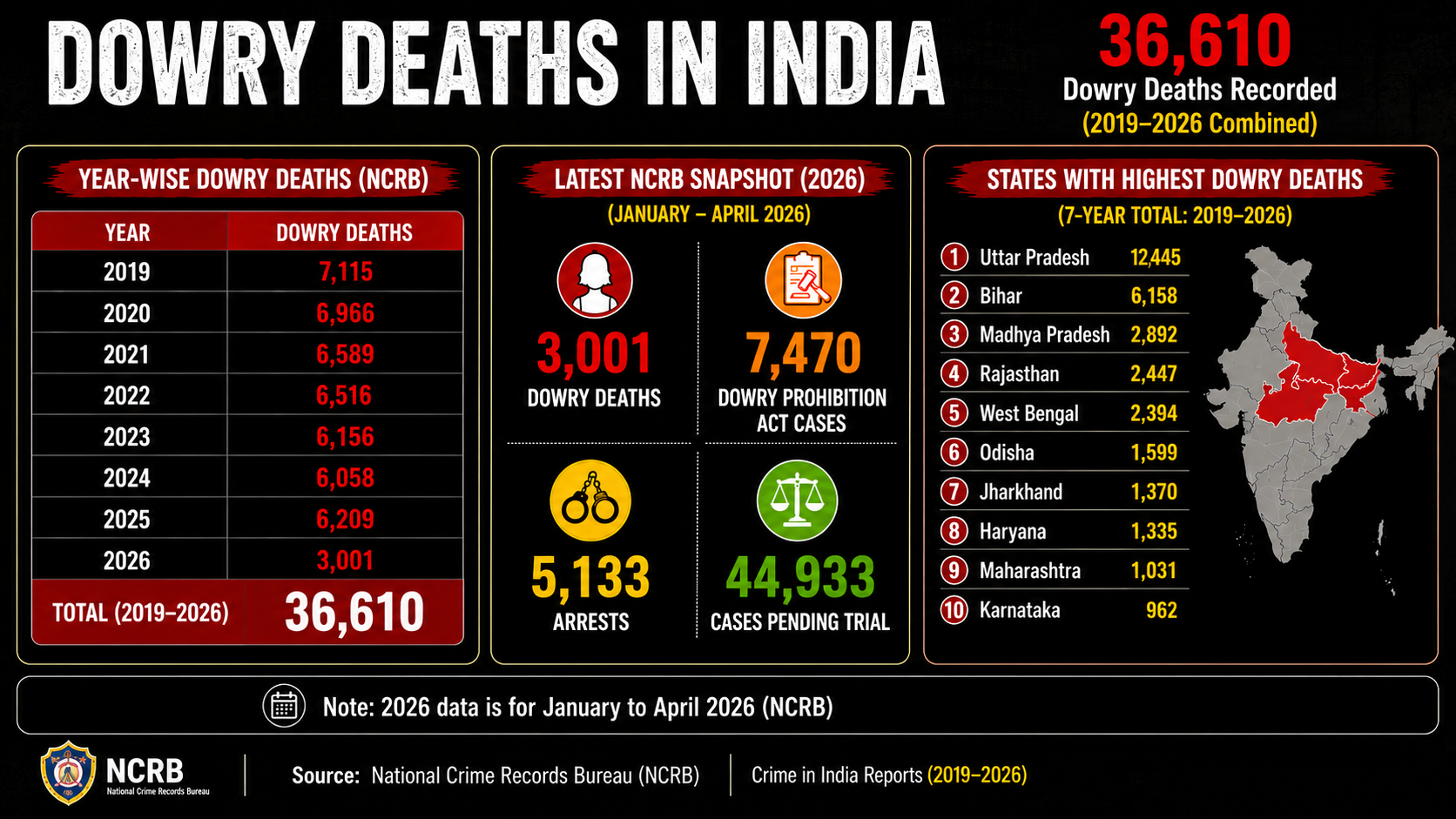
As per the NCRB statistics, India still succumbs to 4000-7000 dowry deaths every year. These dowry deaths in the nation are not restricted to specific economic or educational background. Dowry deaths are reported in both urban and rural areas.
The Timeline Of The Twisha Sharma Case
After getting engaged in May 2025, in December 2025, a woman got married to a man, and 6 months later, she committed suicide.
The said woman, Twisha Sharma, was a former beauty pageant winner [Miss Pune], a model and a promising actor. She was 33 years old. Her husband, Samarth Singh, was a lawyer, the son of Mrs Giribala Singh, a retired judge. So what went on behind the scenes, and how did another dowry death in India grab media headlines?
After her wedding in December to this Bhopal-based lawyer, the former pageant queen shifted to Bhopal to stay with her in-laws, a common custom in Indian households. As per the reports, this is when the pressure for dowry was initiated by the groom’s family.
From January 2026 to April 2026, Twisha Sharma was in constant contact with her parents and brother, allegedly expressing constant distress about the list of things for dowry and mental harassment.
By the first week of May 2026, Twisha’s distress turned into fear and a lot of digital conversations were later cited as evidence of torture after her death. Her fears took full control as she was found dead on 12th May 2026 at that same place she called her home after the wedding.
While Twisha Sharma’s in-laws initially said that it was a suicide, her parents were quick enough to label it as a murder, and that gave rise to the full-blown trials in the court. An FIR is registered, and an SIT [Special Investigation Team] is appointed. A suo motu cognisance is taken by the Supreme Court with CBI support in the investigation, citing bias due to Mrs Giribala Singh’s link to the judicial system.
With that, by June 2026, several loopholes were found in the initial case proceedings. A police officer was even fined for lapses in the early probe. After following the post-mortem procedures, Twisha Sharma was cremated. The accused, Samarth Singh, was also said to have fled during the early days, some reports claimed.
There has been no conclusion to the case as the victim’s family waits for justice. The retired judge and her son are in police custody.
Dowry Death Statistics In India
Because many cases remain unreported, NCRB data is just a measurable picture of the data. There are so many cases that go unreported because of fear of police involvement, societal judgment, and a lack of communication.
However, with the judicial changes, several people have come forward to file reports; justice, however, has never been guaranteed. Even if justice arrives, it is seldom on time. In the last decade, Bollywood films like Dawaat-E-Ishq [2014], Shaadi Mein Zaroor Ana [2017], Badrinath Ki Dulhania [2017] and Rakshabandhan [2022] have also explored this theme, showing how it still resonates with the audience.
The states recording most dowry deaths are:
Uttar Pradesh
Bihar
Madhya Pradesh
Rajasthan
West Bengal
Jharkhand
Haryana
Common Modern Forms Of Dowry Demands
Decades ago, dowry was openly demanded, and the needs were met. Regardless, with the advancement in time, the ways of asking for dowry - ‘len den ki baat ’-also changed. Dowry was first demanded in the following ways. We have compared them to the modern demands:
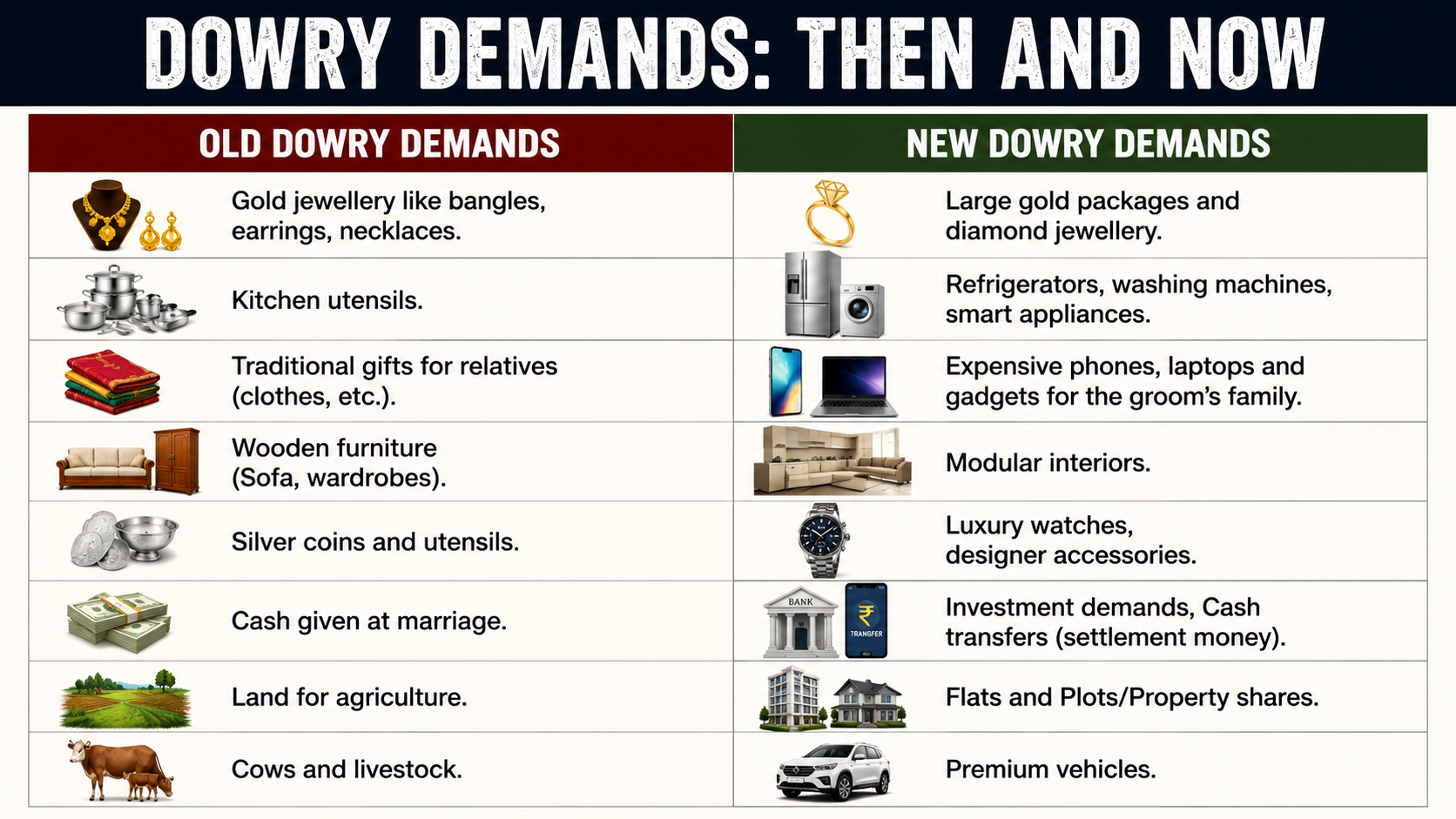
A car would be nice for the couple to move in the city. Parents should help their daughter and son-in-law to buy a house. The groom’s education deserves something. We are not demanding anything, but just want to make sure our respect stays intact in front of friends and family. It is a gift from the bride’s family.
These tactics are used to demand dowry, without making it obvious. It is a shame that in a country that is celebrated for treating women like goddesses, we still have some elements in society that treat women like a burden.
What To Do If You Face Dowry Harassment?
How to save yourself from dowry harassment? What are the laws relating to dowry deaths in India?
If you are harassed for dowry in India, there is a law to protect you. You can first ensure your safety. If there is any form of physical abuse, you can directly call 112, an emergency helpline number and reach the nearest police station. You can then connect with your family/friends whom you can trust and seek medical help if injured.
Dowry cases highly depend on evidence. So you need to document everything. Every WhatsApp message, email, voice recording, and social media handle can be crucial at the time of trial.
For example: Messages/Recordings like ‘Your father should have given a car’, ‘Your family gave less jewellery’, ‘Bring 10 lakhs from your father’, ‘We will not keep you without the money’.
Collect financial evidence from day one. Keep track of wedding expenses, gifts from relatives, and jewellery bills/copies of the bills. Keep photos of all the jewellery and its bills. Keep a record of all UPI payments and bank transfers too. If a loan is taken for the wedding, keep track of that too.
If the surroundings permit, keep a diary and note everything about the torment. Write down the date, what happened, who was present, what words were used and if there were any witnesses. This can help in establishing the pattern of harassment.
Understand your legal rights very well. A dowry does not have to be successful to be proven as a crime. Even demanding counts as a crime. Giving, taking and advertising dowry is also an equal crime.
Laws Against Dowry In India
Under Section 498A of the Indian Penal Code, cruelty by a husband or his relatives is punishable by law. Dowry-related deaths are addressed under Section 304B IPC, while the Dowry Prohibition Act, 1961 criminalises the giving, taking and demanding of dowry.
The court can provide you with protection in case of dowry problems by stopping the violence and threats by order, and even stop the communication harassment. The court can provide you access to your matrimonial home or provide an alternative accommodation in some cases.
With these, you can get monetary compensation for medical expenses, loss of earnings and financial harm caused by the abuse. Monetary compensation in dowry cases will also be available for mental torture, emotional distress and physical abuse.
Once the FIR is filed, the investigations and court proceedings begin. Despite such good norms, conviction remains a challenge because proof and evidence are difficult to manage. Evidentiary support is very crucial and often missing in these cases, and that leads to the problem being stretched instead of being solved. Because a woman goes to the system because she is harassed right now, she needs support right now, and she needs justice right now. But court requires documents, evidence, hearings and appeals.
Why Dowry Cases Often Struggle In Court?
Many cases rely heavily on witness testimony, digital conversations and financial records, making evidence preservation crucial for successful prosecution.
Under the pressure of parents’ reputation, neighbours' advice, societal stares and remarks, and the delayed justice from the judicial system, a woman often breaks down. They are always advised to find a middle ground, compromise or even bear a child to make things better. Under this pressure, women with a weak financial background, less/no support from their own parents or siblings, choose to endure the suffering. They pay the hidden cost of silence by giving up their own life, getting murdered, getting tortured/beaten every day, or by bearing a child that grows up in such horrific households with the same mental health and values.
Apart from Twisha Sharma, hundreds of others are suffering till they reach a breaking point. Sudha Goel, in 1983, was set on fire by her husband while being pregnant for not bringing enough dowry. Vismaya Nair in 2021 was harassed because her husband didn’t like the car he was given; he wanted cash. She sent photos of the abuse and injury marks to her relatives through WhatsApp and committed suicide. Court verdicts after appeals, evidence, hearings and proceedings take years or decades to come.
What women in India need to understand is that the significance is to be financially independent. Parents need to accept that dowry and gifts in the name of dowry are all crimes. Learn to identify the red flags in a groom/groom’s family before accepting any such demands. If the groom and the family are educated, it does not make them liberal or ethical.
Dowry survives because society continues to disguise greed as tradition. Cases will spark outrage, be the talk of the town and then go silent. The real change will only come when families refuse to give dowry, refuse to demand it, and the witnesses refuse to stay silent when they witness it. Until then, India will continue to be outraged by more cases like Twisha Sharma.