

We live in a time where healthy living is promoted in an expensive way. We scroll through social media and see influencers promoting fruits and veggies that are exotic in nature. Many people see healthy living as a lifestyle that requires expensive gym memberships, organic foods, and costly wellness products. In reality, good health is built on consistent habits, not a large budget. During the olden days there were no premium gyms, imported products or expensive wellness items yet they maintained a healthy lifestyle. Today with the rise of e-commerce platforms, junk food, different cuisine our eating habits have changed. However, eating exotic fruits and vegetables and buying flavoured food in the name of super foods such as flavoured makhanas, protein powders and similar products has become increasingly common.
While you can certainly consume expensive grocery and wellness products if you have the money, what about the middle class and lower-income groups? Is health a priority only for the rich?
Recent data confirms a massive global shift toward healthy living, with the worldwide wellness economy now valued at over $6.8 trillion. Today, Generation Z and millennials are focusing on health which is a positive change, although it shouldn't come at the cost of unnecessary spendings.
Lately there has been a noticeable difference between affluent and middle-class neighbourhoods. In many middle class regions, if you ever notice, vendors mainly sell fruits that we Indians have been eaten since generations. However, in wealthier neighborhoods, vendors are increasingly stocking up exotic fruits and vegetables. We also find restaurants that now promote expensive food using exotic imported produce in their healthy menu and charge Rs. 500 and above for a small dish. While new high end cafes now promote fancy drinks like turmeric chai latte whereas plain turmeric milk has always been a staple in Indian households.
The appetite for imported produce is growing rapidly in India. According to customs data, the country imports nearly 4 lakh tonnes of exotic fruits every year, worth approximately ₹4,000 crore. These fruits are often sold at a premium of 50% or more over local varieties, with imported avocados retailing between ₹200 and ₹400 per piece.
The Expense That Comes In The Name Of Healthy Eating
Today, we see an increase in prices of fruits, vegetables, meat, and other essential commodities. Foods such as chickpeas, edamame, avocado, dragon fruit, mangosteen, quinoa and brown rice are promoted in the name of wellness. While some of these foods have been consumed in certain regions for a long time, today they are being marketed as premium health products.
We visit markets in search of healthy food items, only to find many products being sold at prices that the middle class consumers cannot. Social media has created this trend of now having avocados with eggs and sourdough, but many find that avocado prices itself range from ₹150 to ₹300 per piece and can soar up to ₹1,500 per kg for imported Hass avocados.
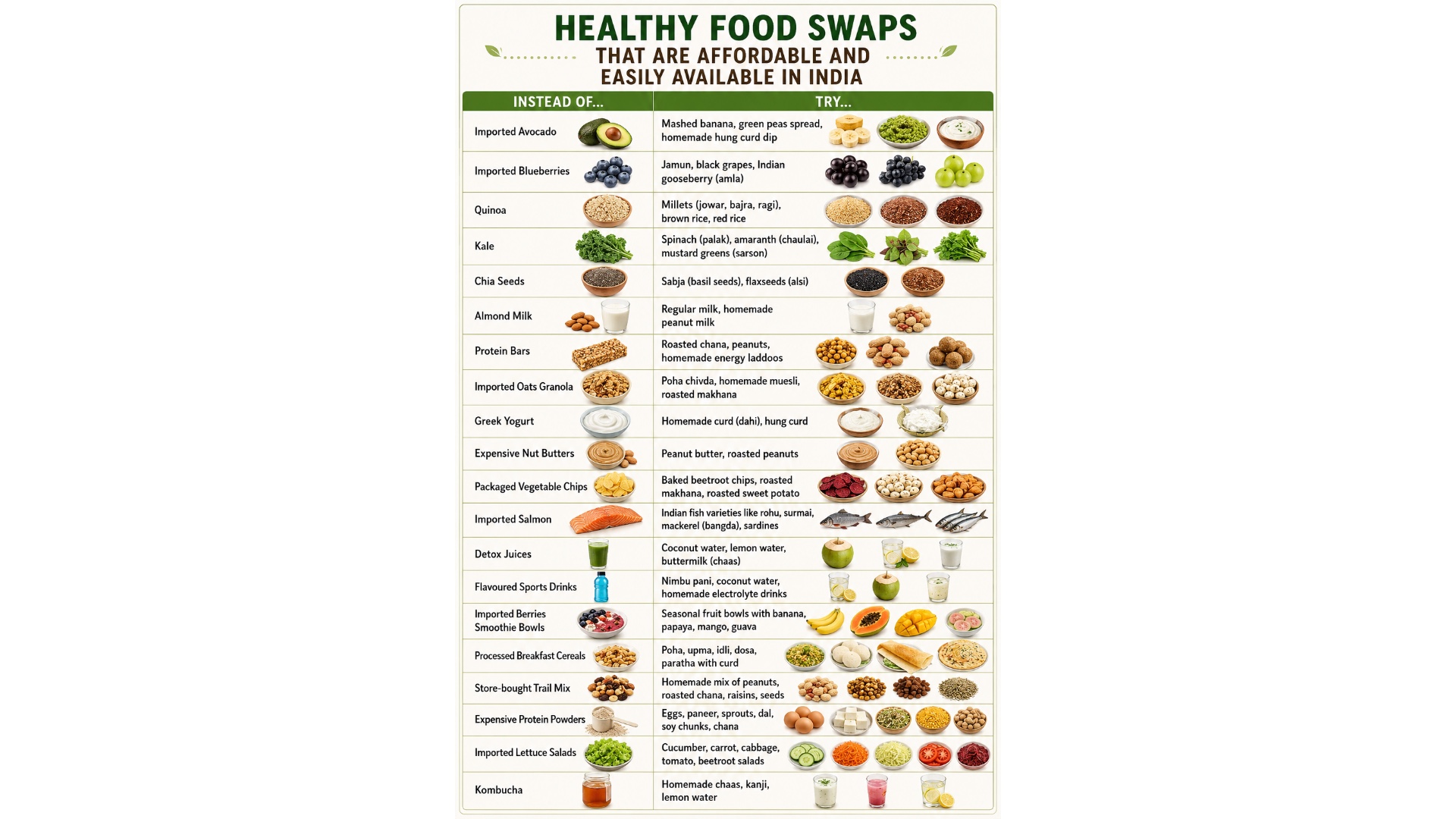
Low calorie, 100% natural, No palm oil, healthy, zero sugar, baked not fried are among the many labels given to new products in the market today. However, when you have a closer look at the ingredients list you realise that these claims are just marketing gimmicks. In today's time, we have become more aware of the importance of protein-rich foods, and while protein is an essential nutrient, consuming expensive protein products daily can be very costly for many. In a country like India, where basic salary is less than the expense we face daily, maintaining a healthy diet can often feel challenging especially when you are convinced to eat fancy produce in the name of health. Many people rely on having chai and biscuits for breakfast as it is cheaper and convenient compared to foods such as oats, eggs, or other healthy breakfast options. However, there are several alternatives that can provide better nutrition, which is listed below and often come at a lesser cost.
While this trend is visible in food, it is also becoming increasingly evident in fitness. Today, many people are joining gyms than ever before. Everyone is prioritizing health, focusing on themselves and aiming to become the best version of them. While joining gyms can be encouraging, the rising cost of fitness is now turning into a concern.
Many premium gyms with modern infrastructure, luxury facility, personal trainers are now charging higher fees. For example, premium gyms in big cities like Mumbai, Delhi, Pune and Bangalore cost ₹15,000 to ₹25,000 per month and sometimes even higher. Whereas in smaller towns and rural areas with lesser facilities the cost ranges from ₹3,000 to ₹6,000 per month.
Another wellness trend that has been significantly gaining popularity in India is the demand for dietary supplements. Health influencers are now promoting the need for multivitamins, protein powders, probiotics, collagen and immunity boosters. However, the question remains: Are consumers relying too heavily on supplements in attempt to follow wellness trends? Many influencers are launching their own supplement brands, promoting them as convenient solutions for better health. However health experts often caution that supplements should complement and not replace a balanced diet.
For many individuals, supplements may not be a daily necessity unless prescribed to address a specific nutrionial deficiency or health concern. According to a report in the Print, 70% of 36 popular protein powder supplements sold in India are mislabeled, 14% contain toxins and 8% showed results of pesticide residues. The reports also showed that some brands contained only half of protein information with some brands offering only half of what they claimed and advertised.
While supplements are widely consumed by young adults and fitness enthusiasts, unnecessarily or higher dose range can posse health risks. Taking them without a medical professionals guidance can lead to liver or kidney damage and other health issues.
As lifestyle changes continue to happen, consumers are increasingly exposed to imported products, protein snacks, energy bars, wellness supplements, detox products and premium organic labels. While some of these products can be useful, health experts such as Rujuta Diwekar and Luke Coutinho often emphasize that health is not something that can simply be purchased.
Here are ways to alternate healthy living without making it expensive:
1) Eat local, Eat seasonal -
Every season has a fruit, the summers bring the King of Fruits i.e the Richness of the Alphonso Mangoes, peaches, plums, jackfruit, watermelons and litchis. The monsoons bring cherries, pears, apples, jamuns and custard apples. While the winters bring grapes, strawberries, oranges, figs and chickoos. While other fruits like bananas, guava, pomegranates and papayas are grown all round the year. You do not need to suspend 200 or 300 a day for an avocado when you can get a good amount of fruit at the same rate that can last for a few days.
Nutritionist, Rujuta Diwekar always requests Indians to refrain from buying expensive imported foods and return to local, seasonal and traditional foods. She shares videos of health, recommending food and their benefits, advocating for having home-cooked meals, regional and traditional food. She recently shared on how your grandmother would approve of these winter foods that are now forgotten. 1) Gond, 2) Green Garlic, Shalgam (Turnip). Remember Health starts with your local market, not an expensive health-food store.
She talks about how 15- 20 years ago we used to have this culture of Maharaj where people would come to your house and one would make snacks that would last for a week or 10 days, no labels required because they used ingredients from their kitchen. She went on to say we can revive the old ghar ka dabba culture or gharghuti (homemade) businesses where people would bring home cooked food or you could buy home cooked food. If we need to reverse our waistlines we need to reverse the trend of eating packaging foods or else we will only end up buying pricier products, eating more junk and leaving behind more junk on the planet. For example, eating mangoes in summer instead of imported berries. Choosing poha, idli, dal-rice, khichdi, or bhakri over expensive packaged health foods. Consuming local fruits such as jamun, phalsa, karvanda, and jackfruit when in season.
2) Choose Nutrient-Dense Foods Over Processed Options -
We enjoy the taste of spicy chips, deep fried snacks, sugary chocolates, frozen meat, and overall highly processed food. They all may seem convenient but they often cost more over time and provide little to no nutritional value. Most of these snacks are filled with 80% of additional ingredients and preservatives which we do not know of. While the 20% will be the actual benefit of the product. These foods must be swapped for nutrient dense foods that offer better vitamins, minerals, protein and fiber. Some of the swaps you can make are of affordable healthy snacks like fresh fruits, roasted chickpeas, yogurt, baked beetroot chips, makhana, etc. These options are filling, nutritious, and often cheaper than packaged snacks.
3) Stay active without an expensive gym membership -
Who ever said staying active means buying a gym membership? For people who have no time to go to gyms, a 15 - 30 minute workout before leaving their house or even after work can go such a long way. Today, fitness has become heavily commercialized, with luxury gyms offering different packages, personal trainers, different types of fitness studios and premium gym equipment that cost you a bomb. For someone that earns basic wages between the range of 15,000 to 30,000, how can they manage to pay expensive gym memberships? Yes, while some facilities cannot be equipped at homes and are only confined to a gym, yet that is not the only way to work on a healthy lifestyle.
We have gardens, parks, jogging arenas, etc that offer a place to exercise completely free of cost where one can walk, jog, cycle, practice yoga and other exercises. One can also always practice strength training, yoga, cardio, squats, pushups, from their own personal space in the homes. Even dedicating 20 minutes from the day can help improve strength, endurance and cardiovascular health. The WHO recommends at least 150 minutes of moderate physical activity per week, that can be achieved by simple movement in the day. Best practice instead of taking public and private vehicles for short distances, try walking as it is the best way to remain fit for a simple 30 minute walk for a week, work on household chores, take stairs instead of the elevator, small changes can contribute to daily physical activity.
4) Focus on Better Sleep and Rest -
We scroll through social media for 5 minutes before sleeping and that 5 minutes turns into 2 hours. We assume that sleeping at 12am or 1 am is early and getting 6 hours of sleep too is a huge thing. Yet we assume less. Getting less sleep can affect our overall body. Health coach Luke Coutinho frequently emphasizes that quality sleep is just as important as nutrition and exercise. According to him, wellness is built on the foundations of balanced nutrition, movements, emotional well-being, and restorative sleep.
Today's lifestyle of excessive screentime, work stress, irregular sleep patterns, late night binge watching series has led to poor sleep quality. We think it's normal but its far from normal as thai affects our weight gain, weakens immunity, causes hormonal imbalance, reduces concentration at work and increases cortisol levels. It can also increase the risk of anxiety, depression, and irritability. Instead of searching for expensive solutions, individuals can improve their health by maintaining a consistent sleep schedule, limiting screen exposure before bedtime, and creating a calm sleeping environment.
5) Avoid Sugary Drinks -
In the name of packaged 100% fruits juices with no added sugar, we still consume highly concentrated amounts of natural fruit sugars that lack natural fiber and contain high sugar. A single serving packaged fruit drink contains 13 to 14 g of sugar per 100 ml. Often marketed as daily nutritional supplements for children, these products can contain high amounts of added sugars, detracting from the added vitamins and minerals.
One of the best ways to consume natural sugar is just to have the whole fruit instead of the fruit juices. Soft drinks, packaged fruit drinks, energy drinks like Sting, Redbull, etc, flavored coffees, sweetened milkshakes topped with loads of ice-creams, chocolate, syrups, etc. These all are marketed as healthy in the market but provide little nutritional value. Instead of detox shots have amla juice or instead of electrolyte powders best to have is coconut water or homemade ORS.
Many consumers especially in the age group of 14 - 30 years now consume expensive wellness drinks and energy drinks without knowing what's inside. Why are fruit juices, detox juices, flavoured beverages sold for a higher price in the Indian market. When we have water as the healthiest option However, simple and traditional options can be equally refreshing and far more affordable. Plain water, coconut water, lemon water, chaas (buttermilk), nimbu pani (lemon water), aam panna, and homemade fruit-infused water are excellent choices. Remember to stay hydrated, stay healthy.
6) Use Local and Natural Resources -
The glamourous wellness industry often markets imported ingredients, exotic herbal products, and expensive natural remedies. However, Padma Shri awardee Smt. Yanung Jamoh Lego, popularly known as the 'Adi Queen of Herbs', has spent decades protecting the rich knowledge about medicinal plants and indigenous healing practices in Arunachal Pradesh.
Her work brings attention back to the value of local resources which communities have depended on for centuries. Traditional herbs, medicinal plants, seasonal foods, and natural cures have always been an important part of India’s health and wellness practices. They are affordable, accessible, and deeply rooted in our culture.
Smt. Yanung Jamoh Lego reminds us that you don’t always need fancy imported products or costly treatments to take care of your health. Sometimes, the best and most sustainable solution lies right here – in our communities, cultures, and nature.
7) Focus on smarter shopping habits -
Stop buying imported fruits, veggies, junk items, and healthy snacks just because they are imported from abroad like blueberries, raspberries. Enjoy the ones that are locally sourced. Stop going behind expensive avocados instead substitute it for mashed banana.
Final Word:
Not everything deserves a fancy lifestyle and not every social media influencer's life has to be copied. Some days even a simple home-cooked balanced meal with less oil, sugar and spices with a bowl of salad and proteins can go a long way. Similarly, a 20 walk around the neighborhood, a good 8-9 hours of sleep, daily 2-3 litres of water and simple daily practice of yoga or other exercise at homes can do more wonders than expensive supplements, imported fruits or trendy wellness products. While lately everyone is focusing on health, it has also created an illusion amongst the people that healthy living comes with an expensive price tag. It was and will never be about the expensive foods and drinks but always about the the choices you make for yourself. Reach out to your parents, grandparents and look back at the habits they made of eating seasonal and traditional foods, staying active, not relying on quick commerce for our meals, getting adequate rest and making the most of local resources available on the market. Sometimes, the simplest habits are still the healthiest ones.