


From Karan Johar, Sohail Khan, and Salman Khan in Bollywood to Oprah Winfrey, Eric Stonestreet, and James Corden in Hollywood, many celebrities have recently been in the headlines relating to the use of Ozempic for weight loss.
While the Western industry is mildly open to this idea, the Indian audience is scrutinising every aspect of it. As soon as we spot someone who has gotten thinner, we immediately start questioning them about the effects and side effects.
Many Indian celebrities have faced these speculations, and some even openly denied using it. The conversation today is: what is this Ozempic? How does it differ from GLP-1 and other medically supervised weight-loss treatments?
What Exactly Is Ozempic?
Far from the idea that Ozempic is a substance for weight loss, Ozempic is actually a brand name for a medication called semaglutide. Ozempic sells semaglutide in different formats. Semaglutide is the product formed by a chain of 31 amino acids, mimicking the human GLP-1 hormone.
It is made from yeast cells and combined with other ingredients that make it suitable for injection into the human body. This product is used for treating type 2 diabetes, managing weight, and lowering the risk of heart or kidney disease. Just like GLP-1, it helps with digestion, appetite control and blood sugar management.
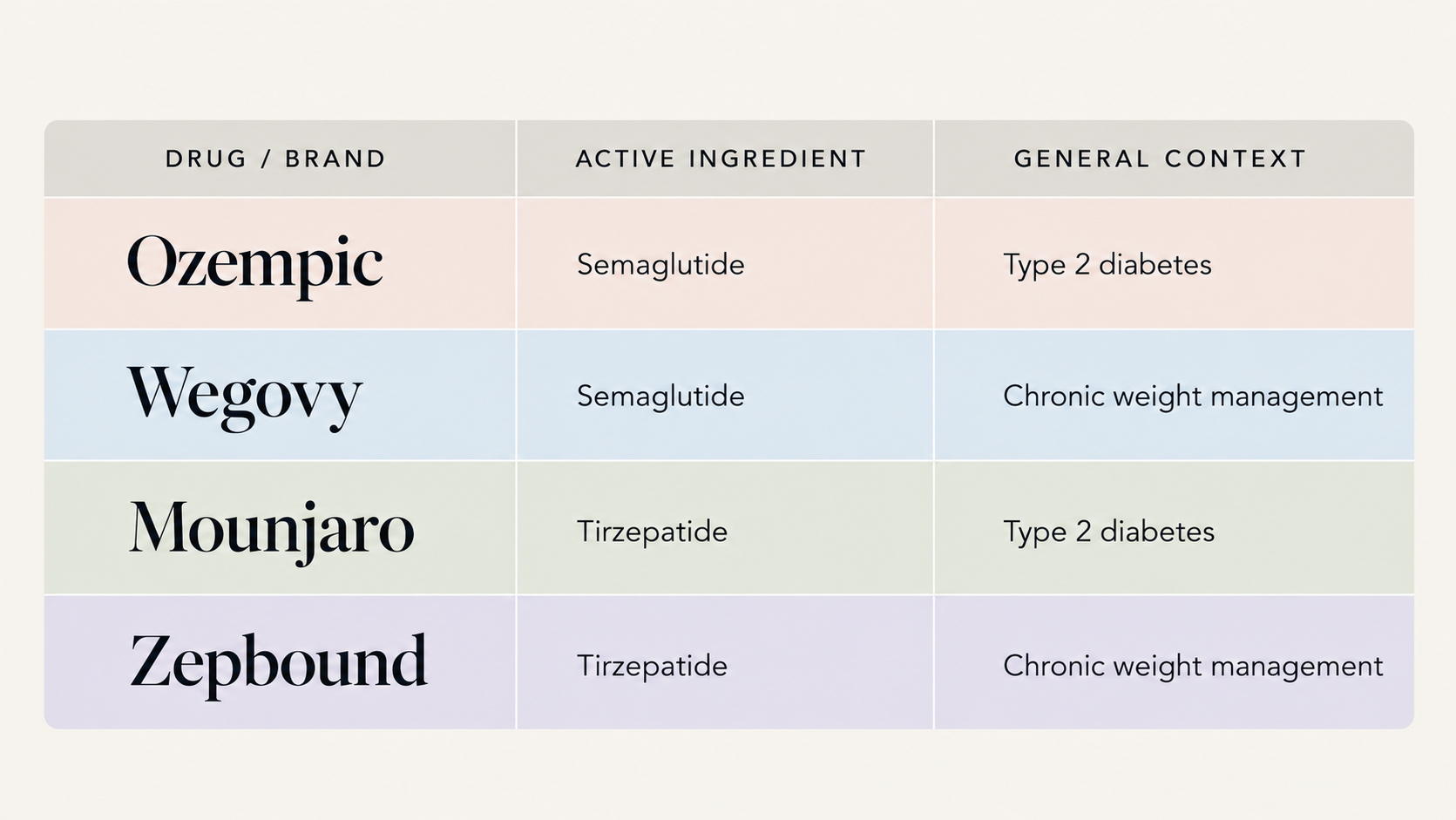
Semaglutide is the same active ingredient used in Ozempic and Wegovy, but it functions differently. For Ozempic, it mainly focuses on diabetes and blood sugar levels. For Wegovy, it focuses on reducing weight and managing heart health for obese people.
Ozempic is also recommended at a 2 mg weekly dosage, while Wegovy is at a 2.4 mg weekly dosage. And since the dosage is high, the side effects are a tad bit more severe, with nausea, diarrhoea, and vomiting.
How Does Ozempic/Semaglutide Cause Weight Loss?
GLP-1 hormone in our small intestine functions by signalling the brain that we are full and by breaking down food to control blood sugar levels. So if this hormone is absent, naturally the brain would not get the signal to reduce appetite, stop eating, and empty the stomach.
Semaglutide comes to the rescue. It mimics the exact functions of the GLP-1 hormone and tricks the brain into thinking that we are full, limiting food intake and emptying the stomach more slowly. This is a perfect recipe for weight loss. It works exceptionally well for obese people.
Of course, this comes with side effects, especially with the high dosage, but many people who have tried this type of treatment are positive about the results, including Oprah Winfrey. In one of her interviews, she said that it was a gift of life. She always thought of medicated weight management as an easy way out. But her doctors explained the core ideas and problems relating to biological obesity, and she has now adopted a healthy lifestyle after losing weight.
Comparing GLP-1 Drugs
Why are celebrities being questioned about Ozempic?
Every beloved celebrity is always under the public eye for what they wear, what they eat, where they visit and with whom. Minor changes in their looks or behaviour create a chain of reactions, and everyone starts discussing it. So naturally, if they look like they have lost weight, people assume it would be for a role or because of sickness.
The constant quiz keeps going on for days. This makes people notice each move in more detail. With the use of Ozempic, the fat loss is very visible. That makes targeting celebrities with even minor changes in their body, very easy. People start spreading rumours. Celebrities like Ram Kapoor and Kusha Kapila have also been targeted with the same.
Unless and until the person in question agrees to using Ozempic or Semaglutide in any form, it is absolutely wrong to assume that they have used it to lose weight. Losing weight could come from many different things.
Ozempic is not a shortcut to weight loss. It requires appropriate nutrition and exercise, as well as living a healthy life. It only suits some people. Only under proper consultation with doctors should this product be used. Weight loss can also come for different reasons, like genetics, hormones, environment, diet, physical activity or sleep.
The Bigger Question
Food habits are not the only source of weight gain for obese people. And nowadays, because of celebrity influence, everyone wants to look at a certain standard weight. Medications like Ozempic with semaglutide are very useful for curing diabetes, but with their properties of managing weight and inducing a GLP-1-like hormone, it is only fair that they are used only if necessary.
Ozempic should be taken by people who have certain limitations and problems. It should sit well in the clinical criteria. Using these drugs just because some celebrity used them is not correct. It can severely harm the body. Weight-related health risks can change how the medication works in the body. It should be significant to visit a doctor for the correct dose.
Ozempic, semaglutide or anything similar to it, also comes with side effects. Nausea, diarrhoea, vomiting, constipation and abdominal discomfort are the most commonly listed ones. It is very important to be assessed by healthcare professionals to avoid severe side effects.
Social media often narrates this as weight gain - Ozempic - Weight loss - problem solved, but this is far from reality. Ozempic does not work that way. Weight regain is common after stopping treatment. In clinical research, people who discontinued semaglutide regained a substantial portion of the weight they had lost, highlighting that obesity treatment often requires long-term management.
GLP-1 medications have transformed the medical approach to obesity, but their growing popularity also raises questions about accessibility, medical supervision, body image and the pressure to become thinner.