

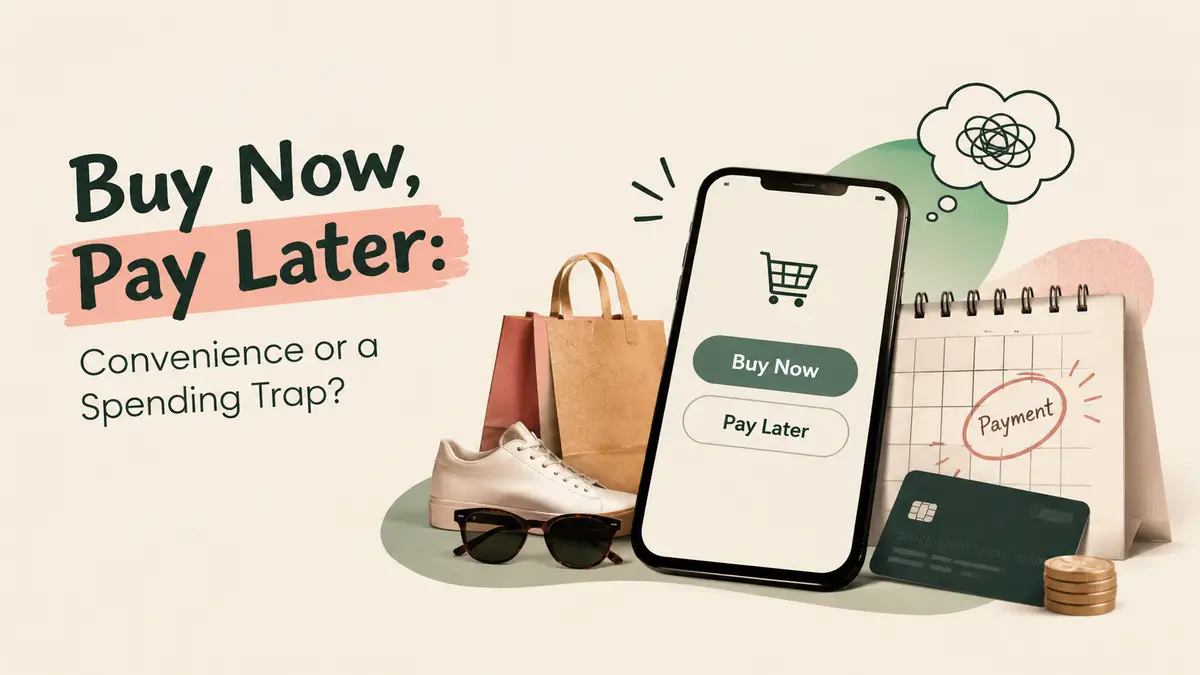
Buying an iPhone, a double-door fridge, or even an AC required months of financial planning a few years ago. Saving every little spare bit of money from monthly spending was the only way to buy luxury things. The introduction of Buy Now, Pay Later has made these purchases way easier. This idea gave consumers the convenience of buying things as they please without worrying about their financial situation, since they can pay it off as months go by. But is it really just a convenient way to buy things or a spending trap?
Why Is BNPL So Tempting?
What does Buy Now, Pay Later (BNPL) actually mean? In simple terms, it refers to the idea of buying something now and splitting the payment of the product over the upcoming weeks or months. This allows consumers to purchase products that might otherwise not fit their budget with a one-time payment plan. This feature has mainly appealed to young consumers, especially when they do not have the full amount upfront, as some of them might've just started working or are figuring out their finances.
There are some psychological aspects too that make us choose BNPL services. Spending 500/month on a product seems better than paying 3000 upfront. This is because our brain sees the instalment amount and assumes that paying less every month is better than paying a large amount at once. Even though the end amount is going to be the same 3000 rupees, BNPL tends to give us some flexibility and allows us to buy things without sacrificing our other commitments.
The monthly payment plans give customers the illusion that they aren't spending much, which therefore results in unplanned purchases. Since customers feel they can make the payment gradually without worrying too much about their finances, they tend to buy and spend more than they originally planned.
The Hidden Cost of “Small” Payments
Everyone sees the convenience, but have we ever seen the hidden cost of these ‘small’ payments? The convenience of paying in instalments tends to make people buy a lot of products impulsively without checking if it is actually a requirement. These multiple small EMIs can quickly add up to a bigger sum even before people realise how much they are spending. Furthermore, a missed payment can add to the amount since every time you miss a payment, you will be charged late fees or penalties; there might even be interest or other charges depending on the provider.
Let's use a hypothetical situation to understand this.
Suppose. I went shopping and bought some clothes for ₹2,500. I wanted headphones too, so I bought them for ₹2000 and splurged around ₹4000 on shoes. Each purchase looks manageable if we split it into small payments. But if we look at them together, it might feel impossible for us to buy with a one-time payment. These small payments on various products every month can create a significant monthly obligation but might also make you feel like you have the capacity to buy more things.
Are You Actually Saving Money?
Paying in instalments might make things easier to pay off; however, it doesn't make them cheaper. You are buying the products at the given price; the only catch is that you can pay them easily with smaller amounts going out of your pocket every month instead of all at once. BNPL doesn't necessarily reduce the cost of an item; it simply changes when and how you pay.
When BNPL Becomes a Spending Trap
Initially, when BNPL services were introduced, they helped people buy necessary items without having to worry about immediate payments. However, we can see a shift as these services are used for everyday wants or impulsive buying rather than planned purchases. This also makes people buy things that they wouldn't usually do, because credit makes these things seem affordable, therefore trapping them into spending more than they normally would.
A ₹2,000 purchase can feel harmless when divided into smaller payments, making it easier to buy things you might otherwise skip. Over time, multiple instalments can pile up, and using one credit facility to manage another payment can make the situation even harder to control. Missed payments may lead to fees or other consequences, while some providers may report repayment activity to credit bureaus, potentially affecting your credit history. The convenience isn't necessarily the problem. It's when convenience starts disguising the real cost.
So, Should You Use BNPL?
BNPL isn't automatically a bad financial decision. Like any credit product, it depends on why you're using it and whether you can comfortably repay it. It can make sense when you're buying something you had already planned for, have a predictable income, and know exactly how and when you'll repay it. But if you're using BNPL because you can't afford the purchase otherwise, it may be time to pause.
A simple question can help: Would I still buy this if I had to pay the full ₹5,000 today? Before clicking “Buy Now", check the total repayment amount, processing or late fees, due dates and the terms of the plan. A seemingly small instalment can feel very different from seeing the full price upfront. That is the psychological trick at the heart of BNPL. ₹5,000 can feel expensive. Five payments of ₹1,000 can feel manageable, even though you're still spending ₹5,000.
So the real question isn't whether BNPL is good or bad. It's whether it's helping you manage the money you have or spending money you don't.