
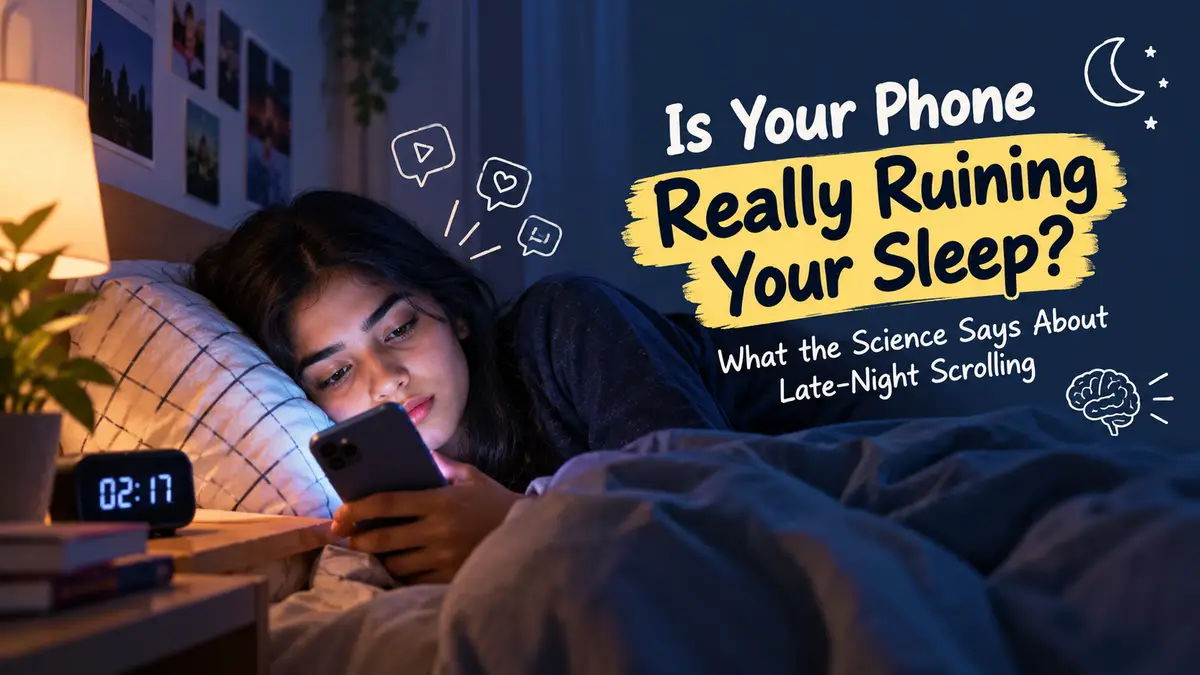
It is 11:30 pm; you have set your alarm, switched off the lights and settled into bed, ready to sleep. Then you pick up your phone to check one message. A few minutes later, you are watching a stranger's travel vlog, reading comments under a news post or scrolling through videos you never intended to watch. When you finally look at the time again, it is well past midnight.
Most people have experienced some version of this. The strange part is that you may not even feel particularly tired while scrolling, yet getting to sleep afterwards can take longer than expected. The next morning, waking up feels harder, and the first instinct may be to reach for the same phone.
But is the screen itself to blame, or is there more to the story? Research suggests that late-night phone use can interfere with sleep, although the reasons are more complicated than the popular claim that blue light alone keeps everyone awake. The content we consume, the time we spend on it and the sleep we sacrifice to keep scrolling can all make a difference.
What Happens to Your Body When You Scroll at Night?
Our bodies follow an internal timing system known as the circadian rhythm, which helps regulate when we feel awake and when we feel sleepy. Light is one of the strongest signals that keeps this system aligned with the day-night cycle. As evening approaches, the body normally prepares for rest, including the release of melatonin, a hormone involved in regulating sleep timing.
The light from a phone can interfere with this process, particularly when the screen is bright and used close to the eyes in a dark room. Research has found that evening exposure to light can affect melatonin and shift the timing of sleep. However, the impact depends on factors such as brightness, duration, timing and individual sensitivity; it is not the same for everyone.
That is why a phone used in bed at midnight may affect sleep differently from one checked briefly in a well-lit room earlier in the evening. The concern is not that every glance at a screen will destroy your sleep, but that repeated, prolonged exposure can make it harder for the body to settle into its usual nighttime rhythm.
There is another catch: scrolling often takes place in the dark, when the bright display feels especially prominent. Turning down the brightness or enabling a warmer screen setting may reduce some light exposure, but these settings do not address every reason phone use can delay sleep.
It Is Not Just the Blue Light
If blue light were the only problem, lowering your screen brightness would solve most of it. In reality, what you are doing on your phone matters too. Watching a relaxing video, reading an argument in a comment section and checking an urgent work message can affect your state of mind in very different ways. An upsetting news story may leave you thinking about what you have read, while a competitive game or an exciting series can make it difficult to switch off mentally. Even ordinary social media posts can keep you engaged because there is always another one to see.
Then there is the simple problem of time. Most apps are designed to make it easy to continue watching, reading or browsing. You might intend to spend five minutes online, but there is no natural stopping point when the next video starts automatically. Research backs up the concern. A 2024 systematic review and meta-analysis published in the Journal of Medical Internet Research examined 55 papers involving 41,716 participants across more than 20 countries. It found an association between electronic media use and poorer sleep quality, with more problematic use linked to greater sleep difficulties. The findings do not prove that phones alone caused every problem, but they suggest that the relationship is worth taking seriously.
For students and young adults, this can become a familiar cycle: staying awake to finish scrolling, feeling tired the next day and then struggling to maintain a consistent sleep schedule. The phone may not be the only reason for poor sleep, but it can become one of the things keeping the problem going.
Does the Science Say You Should Stop Using Your Phone at Night?
Not necessarily. The evidence does not suggest that every person who uses a phone before bed will develop a sleep problem. Researchers also have to account for other factors, including stress, anxiety, irregular working hours, caffeine consumption and existing sleep difficulties. Someone who is already unable to sleep may reach for their phone because they are awake, rather than staying awake solely because of the phone.
A 2024 consensus statement from the National Sleep Foundation reviewed research on screen use across different age groups. Its expert panel concluded that screen use, including the content viewed before bed, can impair sleep health in children and adolescents, while behavioural changes may help reduce the negative effects.
For adults, the practical question is whether phone use is delaying bedtime, making it harder to fall asleep or leaving you feeling less rested. If it is, changing the habit is worth trying before assuming that a particular app, blue-light setting, or sleep gadget will fix everything.
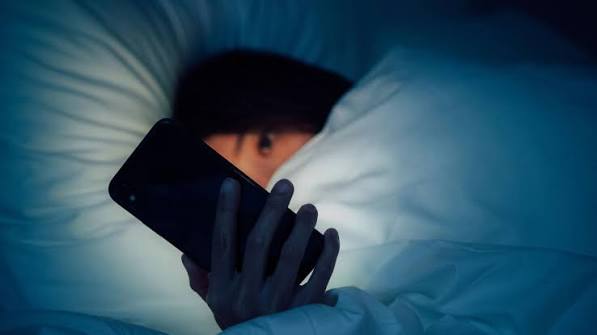
Here are a few changes that can make a difference:
Set a realistic cut-off time. Try putting your phone away 30 minutes before bed. If that feels difficult, start with 10 or 15 minutes and build from there. The US Centres for Disease Control and Prevention recommends turning off electronic devices at least 30 minutes before bedtime.
Keep the phone out of reach. Charging it away from your pillow can reduce the temptation to check notifications every few minutes. If you use it as an alarm, consider a basic alarm clock or place the phone across the room.
Make the final part of the evening less stimulating. Reading a physical book, listening to calm audio or preparing for the next day can help create a transition between being active and going to sleep.
Reduce interruptions. Silence non-essential notifications and use Do Not Disturb settings overnight. Lowering screen brightness can help too, but it should not become an excuse to scroll for another hour.
Keep a regular sleep schedule. Going to bed and waking up at roughly the same time helps establish a routine. Adults aged 18–60 generally need at least seven hours of sleep a night, according to the CDC. (Centres for Disease Control and Prevention)
If sleep problems continue regularly despite changes to your routine, speak with a healthcare professional. Persistent difficulty sleeping can have causes that go beyond screen use.
The Real Problem May Be the Time You Give Away
A phone is not automatically an enemy of good sleep. It can help you stay connected, listen to something calming or even access tools designed to manage insomnia. The trouble begins when using it at night becomes a habit that repeatedly pushes sleep further away.
The easiest way to find out whether late-night scrolling affects you is to try a small experiment. For a week, put your phone aside before bed and pay attention to how long it takes you to fall asleep, how rested you feel in the morning and whether you are less tempted to hit snooze. You do not need to make dramatic changes or give up social media altogether to notice a difference.
The science points to a sensible conclusion: the phone's light can play a role, but so can stimulating content, constant notifications and the minutes that quietly turn into hours. The goal is not to feel guilty about using technology. It is to make sure that when you decide it is time to sleep, your phone does not keep making the decision for you.