
In the land of varied cultures, professions and opportunities, one seldom gets tested by the pace of time. India, ranking amongst the top 50 in educational systems worldwide, is home to 133 globally ranked universities. To achieve that, it is important to implement constant reforms and changes as per the evolving global trends.
When we think of education, we think of Aryabhatta and Bhaskaracharya - the math and astronomy wonders. The ancient books also speak about young boys who defeat scholars in court with their wisdom, philosophy and knowledge. With industrialisation, revolutions and modernisation, the world looks at education in a completely different format now. Gone are the days when a ruler’s child would be the next ruler and a cobbler’s child would only become a cobbler.
With the impact of fast learning, equal opportunities, scholarships and diverse fields to work on, the education system has been relatively transformed. From subjects, syllabus, and extra activities to the infrastructure and staff, everything has changed. A major change that we are going to be bringing up today is the growing relevance of micro-degrees.
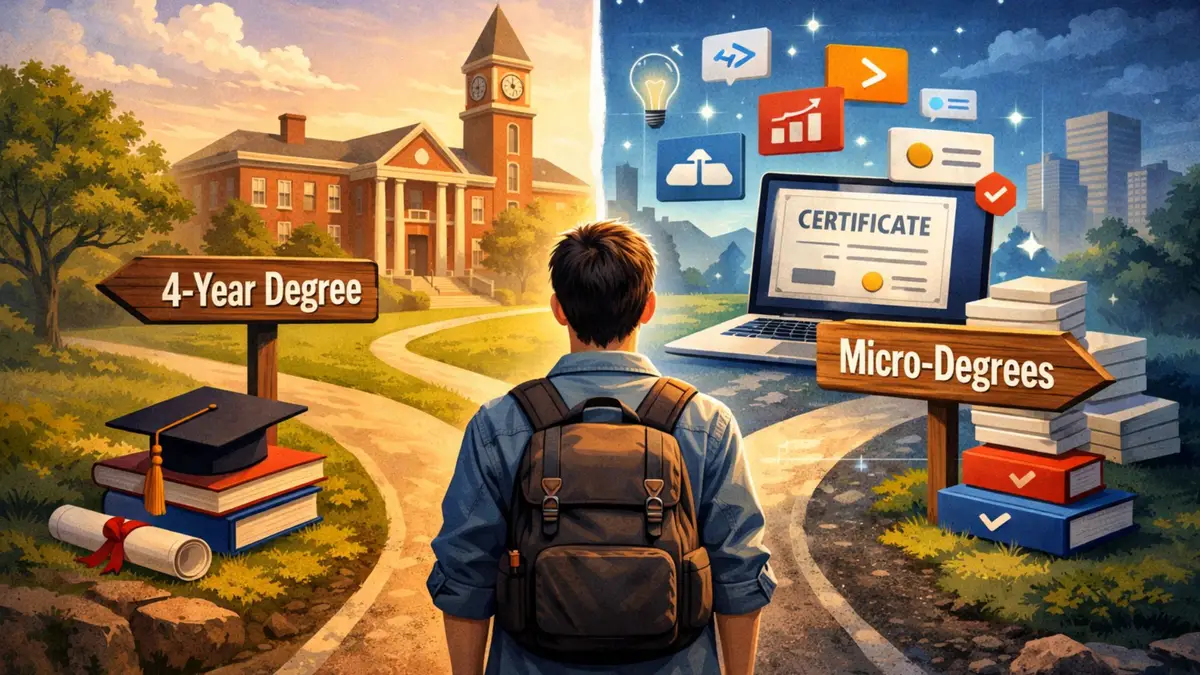
Micro Degrees are short courses that focus on teaching the practical skills required for a job. It differs from traditional degrees by not spending years on imparting theoretical knowledge and academics. In a few months, it makes a student learn enough so that they can work in the field. These courses do not have graduation ceremonies. A certificate is provided after the completion of the course by the institutions.
Micro-Degrees are available for:
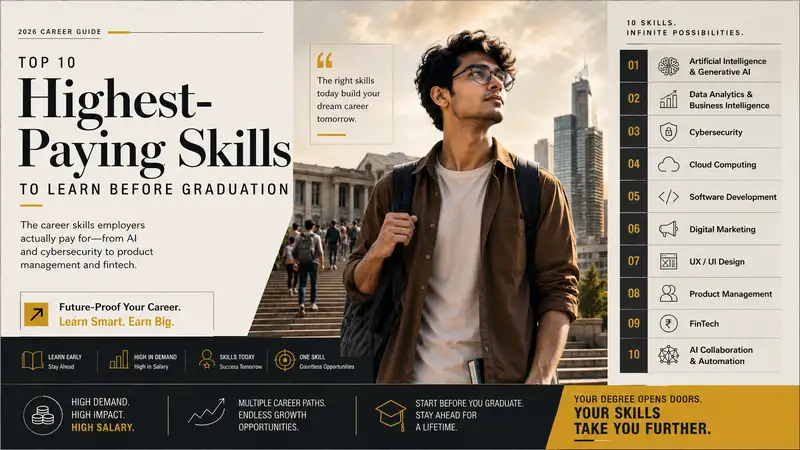
Coding, Cloud computing, Cybersecurity and Data Analysis in the Technology and IT sector
Social Media Marketing, Content Marketing and Performance Advertising in the Digital Marketing sector
Data Analytics, Machine Learning and Business Intelligence in the Data Science sector.
Graphic Design, UI [User Interface] Design, UX [User Experience] Design in the Design and Creative sector
Entrepreneurship, Project Management and Management Skills in the Business sector
Financial Analysis, Blockchain Technology and Digital Payments in Finance and FinTech sector
Video Editing, Podcast Production and Digital Storytelling in the Media and Content Creation sector
AI Tools, Robotics and Automation in the Artificial Intelligence and Automation sector
Network Security and Ethical Hacking in the Cybersecurity sector
Online Retail Management, Marketplace Operations and Logistics in the E-commerce and Online Business sector
Healthcare Administration, Medical Coding and Digital Health Systems in the Healthcare Technology sector
Instructional Design, Online Teaching Tools and Educational Technology in the Education and Online Learning sector
Benefits of Micro-Degrees: The Future of Skill-Based Higher Education
Micro-degrees are Fast, Flexible and Future-Ready. The reasons why they are attracting a new generation of learners are as follows:
1. Quick Entry into Workforce-
We have to work in a generation where someone looking for a job in their early twenties is expected to have half a decade's worth of work experience. A degree certificate is not the only requirement to get a job. We have to storm through a sea of extra skill sets, summer internships, letters of recommendation, and much more.
In such cases, the micro-degrees are a lifesaver. They enable earning and switching careers a bit more easily. With the exact knowledge of the required field, one can easily get a stable income in a few months, contrary to the 4-year degree programs. The switch is much faster and more convenient.
2. Cost-Effective Education
78% of Indian parents are sending their students abroad for studies, and 40% of these require a loan to do it. The numbers are high because when a child is interested in a particular field of study, parents wish to give them the best with the hopes of it returning to them in a few years. To combat these problems, many universities started offering online education.
The fees were more or less the same, but the cost of living away from home, paying tuition fees, rent and taking care of food and utilities was completely gone. With the micro-degrees, the students can still study abroad, but instead of a 4-year-long finance plan, parents can just accommodate it for a year or so, depending on the course. The child can have the same knowledge and practical assessment at a faster pace.
3. Continuous Skill Upgradation
The type of workforce that we have is changing every day. Whatever stream you come from, whatever you study in college for years, it seldom gets in implication when you start working. By the time you get the degree, many things have changed. With a micro-degree, you get enough time to keep your skill set upgraded.
Instead of taking one course, an individual can take one course after another as per the field’s requirements, which also helps them in staying relevant, promoting the idea of lifelong learning.
They can pivot into new career paths easily and swiftly.
What Micro-Degrees Can’t Replace: The Strength of a Four-Year Education
1. Lack of Depth in Learning
A 4-year college degree in any course will benefit the student by clearing the basics and making sure they are ready to face the challenges that come their way. Unlike Micro-degrees, they will focus on the entire course and its different aspects instead of narrowing in on one particular part of it. A long learning curve comprising theories, analytical skills and research methods helps in developing their critical thinking.
2. Recognition and Credibility
Some industries still recognise the importance of 4-year degrees. The discipline and consistency that are taught in long-duration programmes are often missing in micro-degrees. Candidates with longer degrees stand out as more competitive in the job market. Apart from technology and digital marketing, certain industries do not have a way around for micro-degrees. In such cases, credibility comes in the traditional format - long courses, LOR’s and summer internships.
3. Campus Experience
While micro-degrees are more inclined towards online education, the 4-year college degrees provide the invaluable campus experience. Students learn important skills such as discipline, teamwork, and punctuality. Most colleges offer profound networking, mentorship from professors and job placements. These experiences help students to develop social and leadership skills that go beyond classroom learning.
The Final Word
When we talk about educational practices across the country, micro-degrees are definitely considered a new trend in certain industries. But 4-year degrees have their own importance for other sectors.
Instead of who is better than whom, micro-degrees will complement the traditional degrees. They could be a good add-on, so that their base on one skill can contrast with the broader catch of knowledge in the longer courses.
When students are considering their course, they should definitely think about adding micro-degrees to their plan alongside traditional degrees; both would complement what the other lacks. With that said, it is a questionable format, given the ongoing war situation. We are yet to see what the future holds!