

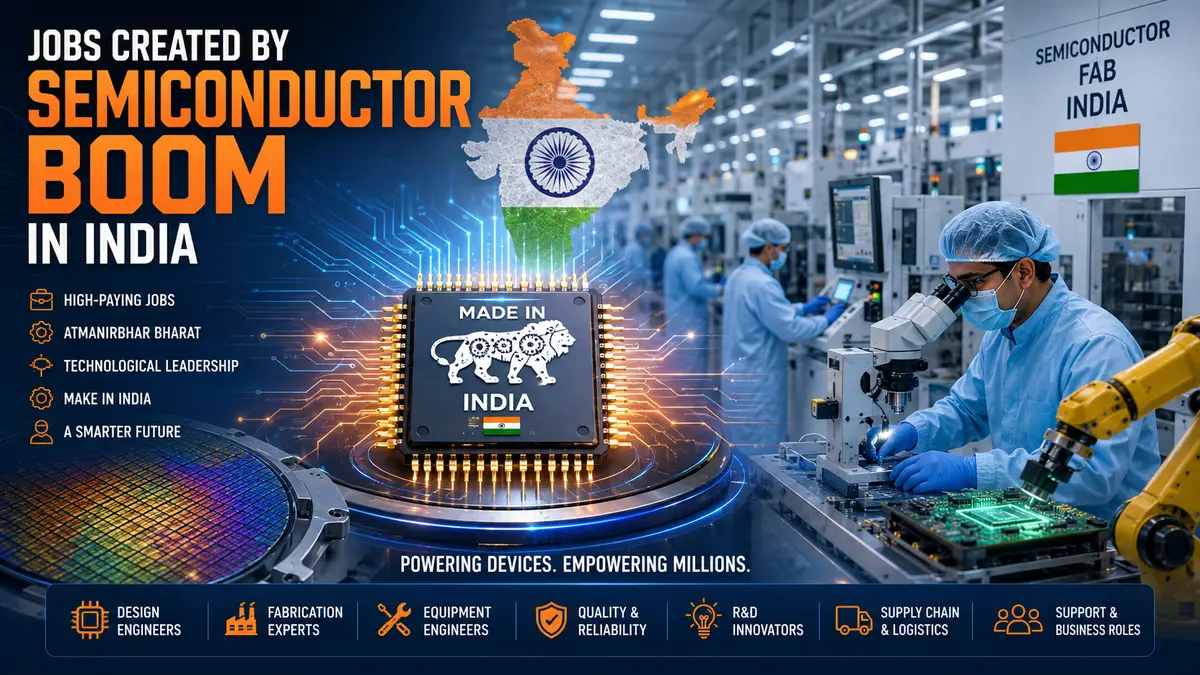
Imagine electricity as water flowing in a pipe. An insulator is a blocked pipe that does not allow electricity to pass through. A conductor is an open pipe that allows electricity to flow through freely. Semiconductors are a smart valve that allows you to control the quantity of the flow and timing of the flow.
This ability to control electricity, a million on and off in a second, is what makes computers, smartphones and AI possible. Semiconductor devices are made from sand, along with germanium, gallium arsenide, silicon carbide, and gallium nitride, each depending on what device it is used for.
A semiconductor chip is a tiny piece of silicon that has millions or billions of microscopic transistors. It can also be called a microchip or integrated circuit. The transistors can act like tiny electric switches that process, store and transmit information. They are often addressed as the “brains of modern technology”.
Why Are Semiconductors Important?
Semiconductors are helpful to extend battery life and reduce the power loss in data centres and electric vehicles. They are the foundational building blocks of the digital age, despite being smaller in size and possessing less weight.
Without semiconductors, devices cannot compute, communicate or automate tasks. Almost every electronic device, like smartphones, laptops, computers, cars, electric vehicles, aircraft, medical equipment, smart TVs, Artificial Intelligence systems, data centres, cloud computing, 5G telecommunications equipment, satellites, defence systems and smart home devices, uses semiconductors.
Semiconductors can conveniently switch between an insulator and a conductor. They are tiny in size, so engineers can fit billions of microscopic transistors in a figner nail size chips, which makes our devices smaller, faster and more powerful. Unlike older technologies, semiconductors are highly engineered to save power.
Why Is India Investing In Semiconductors?
In the 1980s, under the leadership of the then prime minister Rajiv Gandhi, SCL [Semiconductor Complex Ltd.] was established. They began developing 5-micron semiconductor chips in 1984 with agreements from companies like Hitachi, Rockwell and AMI. However, just as the company was about to take off, the massive unit was destroyed by fire in 1989. After this, India depended on other countries to fulfil its needs for semiconductors. 90% of the required semiconductors were imported. This resulted in massive strain on foreign exchange reserves. Because of geopolitical conflicts, the supply chain became vulnerable, and national security became subject to the export policies of foreign nations.
To combat this, India Semiconductor Mission 2.0 was launched. This would ensure-
Reduced dependence on imports
Creates high-paying jobs
Boosts manufacturing & ‘Made In India’
Strengthened national security
Support electronic manufacturing
Attract global technological investment
Position India as a global semiconductor hub
Attracts foreign investment
Accelerates innovation
Builds a skilled workforce
Develops supporting industries
Degree, Jobs, And Salaries That Will Be Generated With This Semiconductor Boom
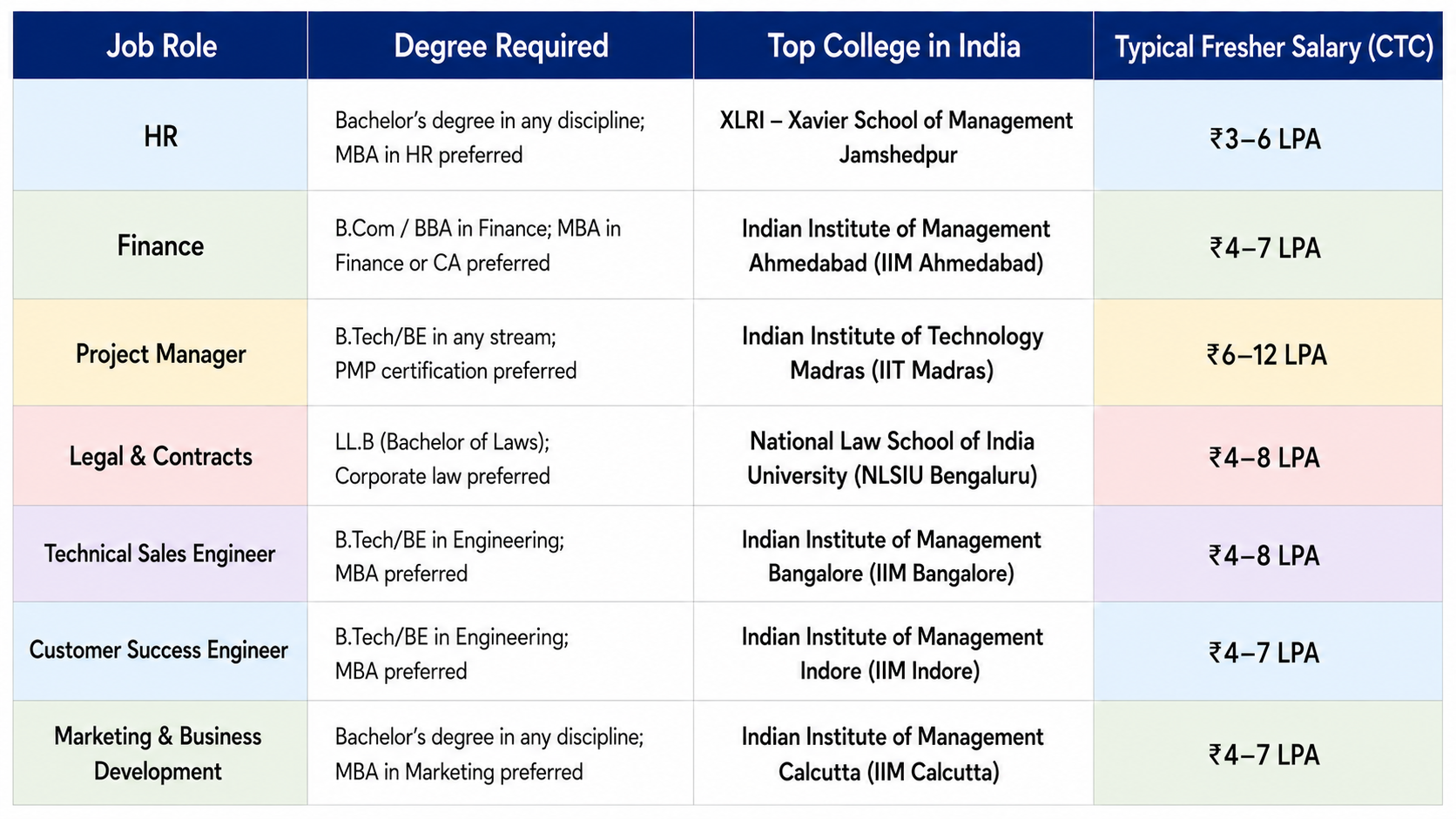
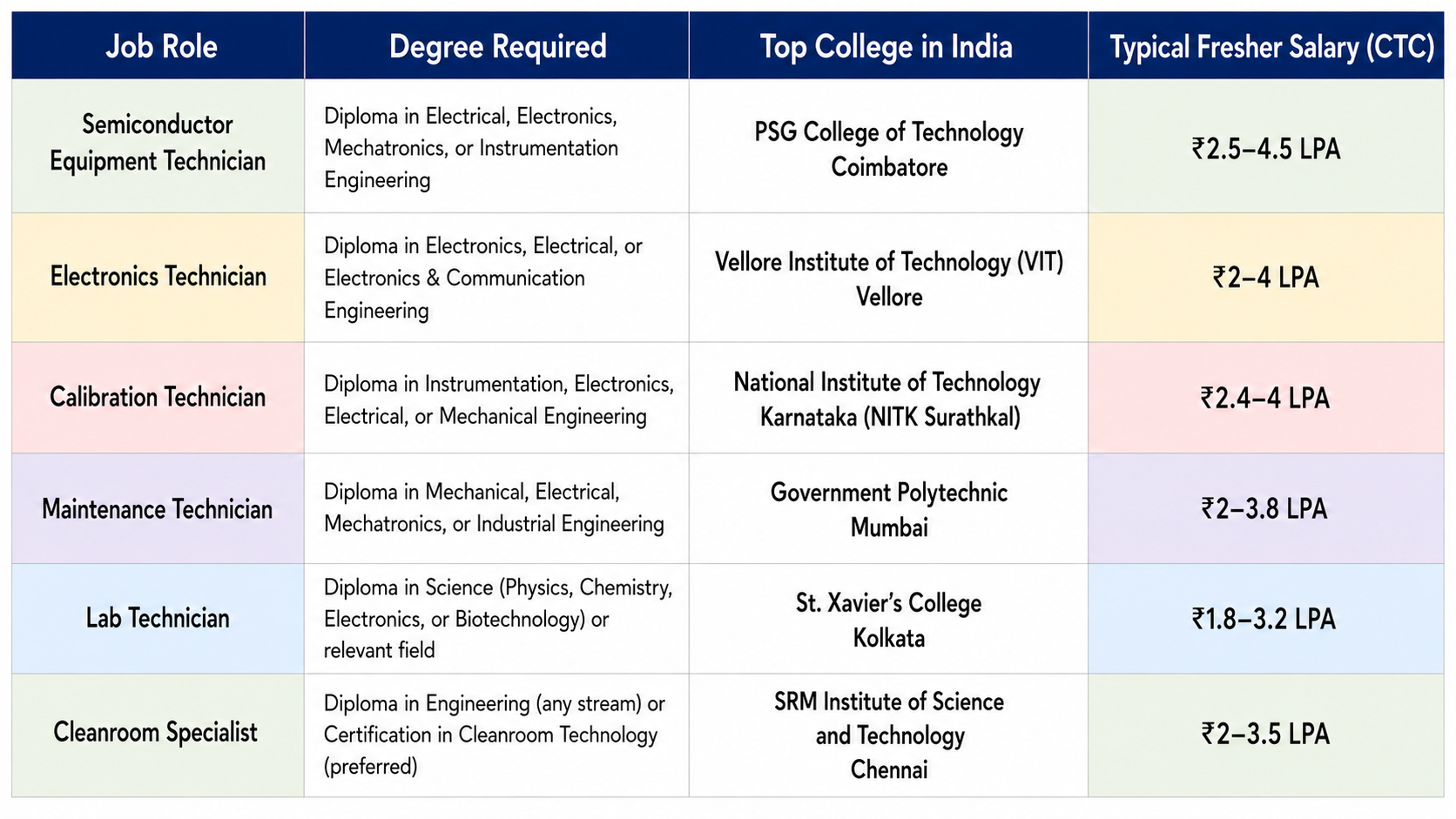
The old plant in the 1980s was established in Mohali, Punjab. The new plants are being developed in Sanand and Dholera in Gujarat. These plants will require people to run, and they are opening a lot of job opportunities. These plans aim to catalyse 1 million jobs. Below is a detailed list of positions that will open, with what educational qualifications you will require, from which university and how much you will be paid to start with.
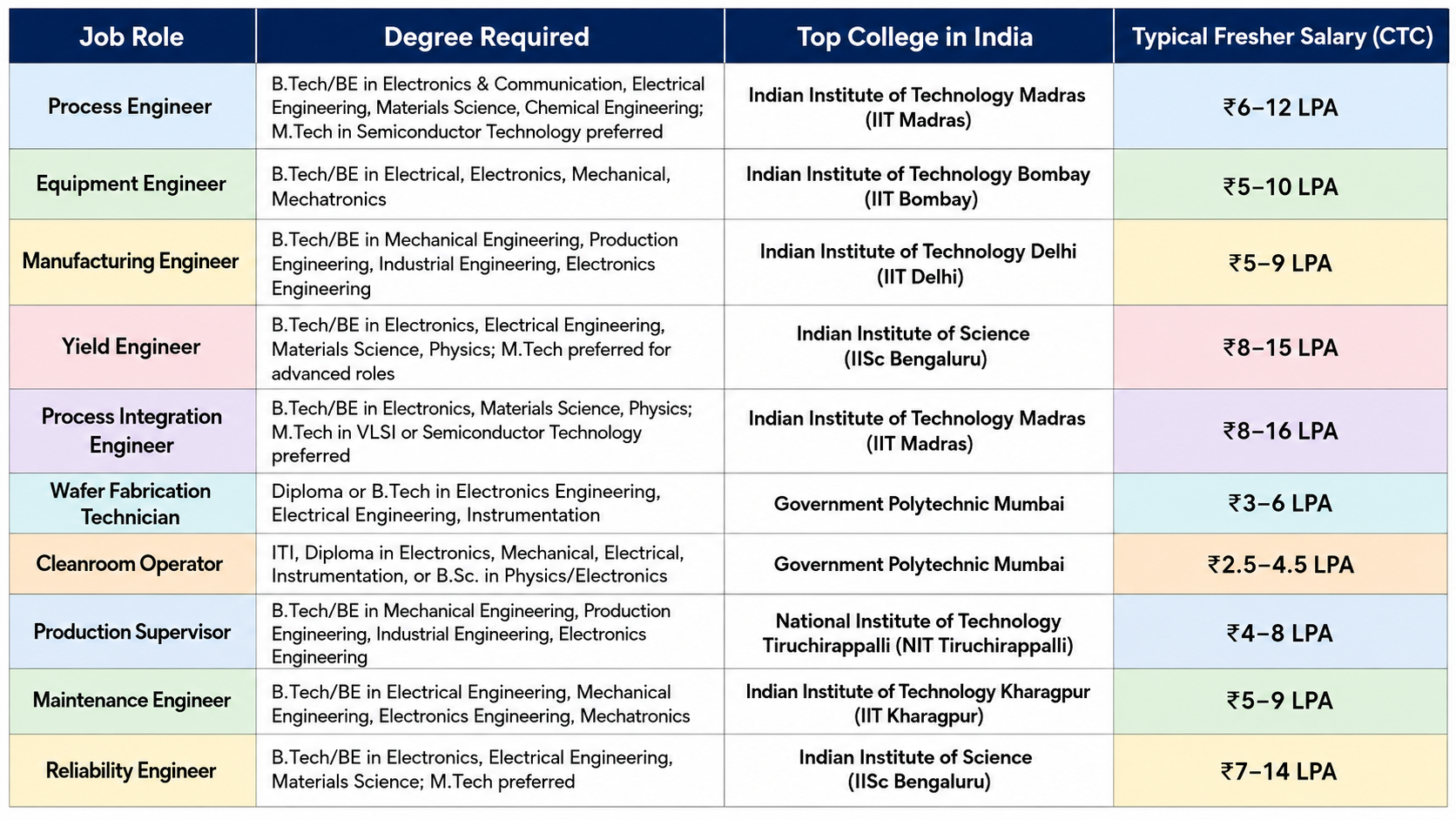
Core semiconductor manufacturing jobs
Process Engineer
Equipment Engineer
Manufacturing Engineer
Yield Engineer
Process Integration Engineer
Wafer Fabrication Technician
Cleanroom Operator
Production Supervisor
Maintenance Engineer
Reliability Engineer
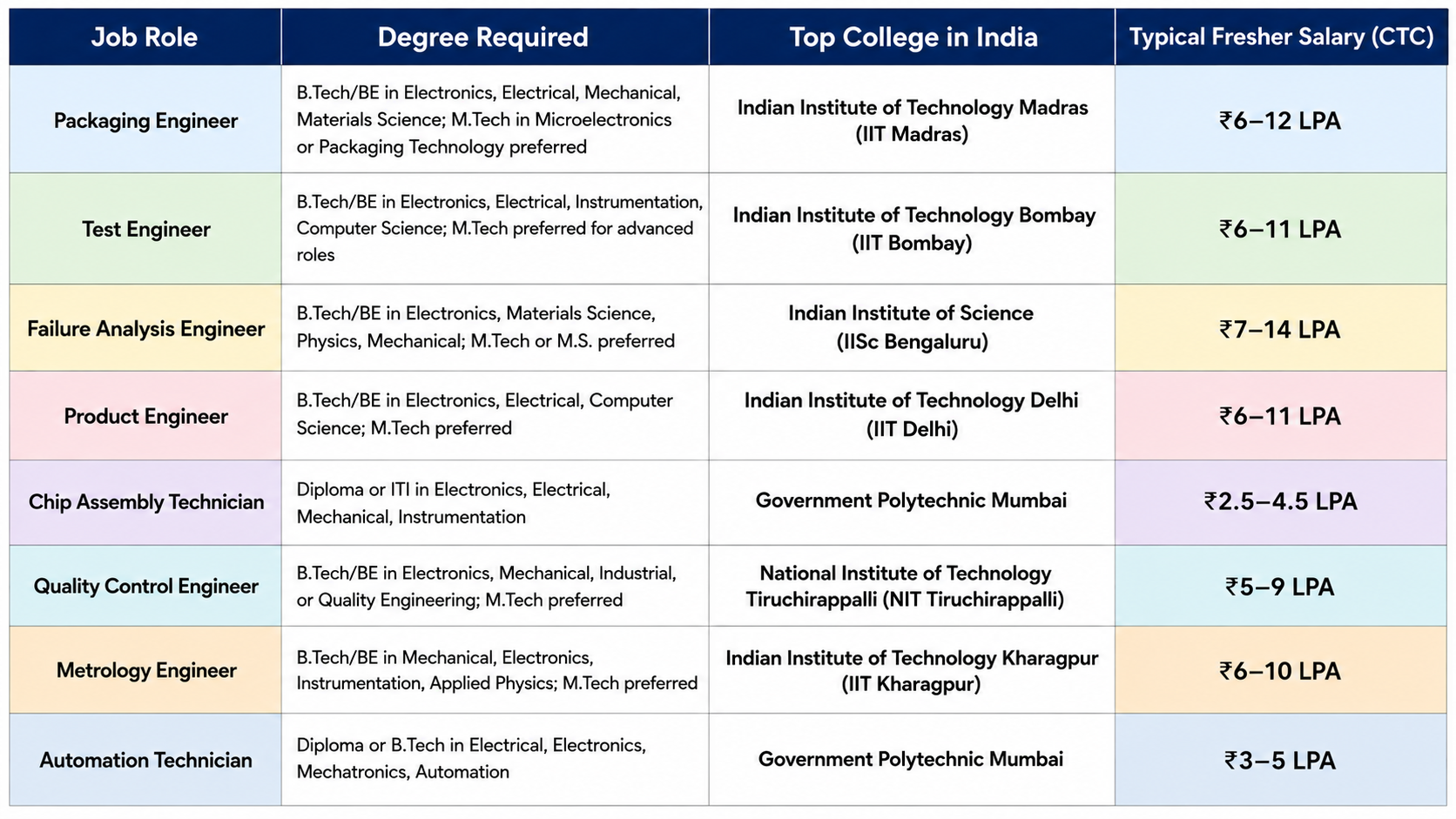
Assembly, Testing, Marking & Packaging (ATMP/OSAT)
Packaging Engineer
Test Engineer
Failure Analysis Engineer
Product Engineer
Chip Assembly Technician
Quality Control Engineer
Metrology Engineer
Automation Technician
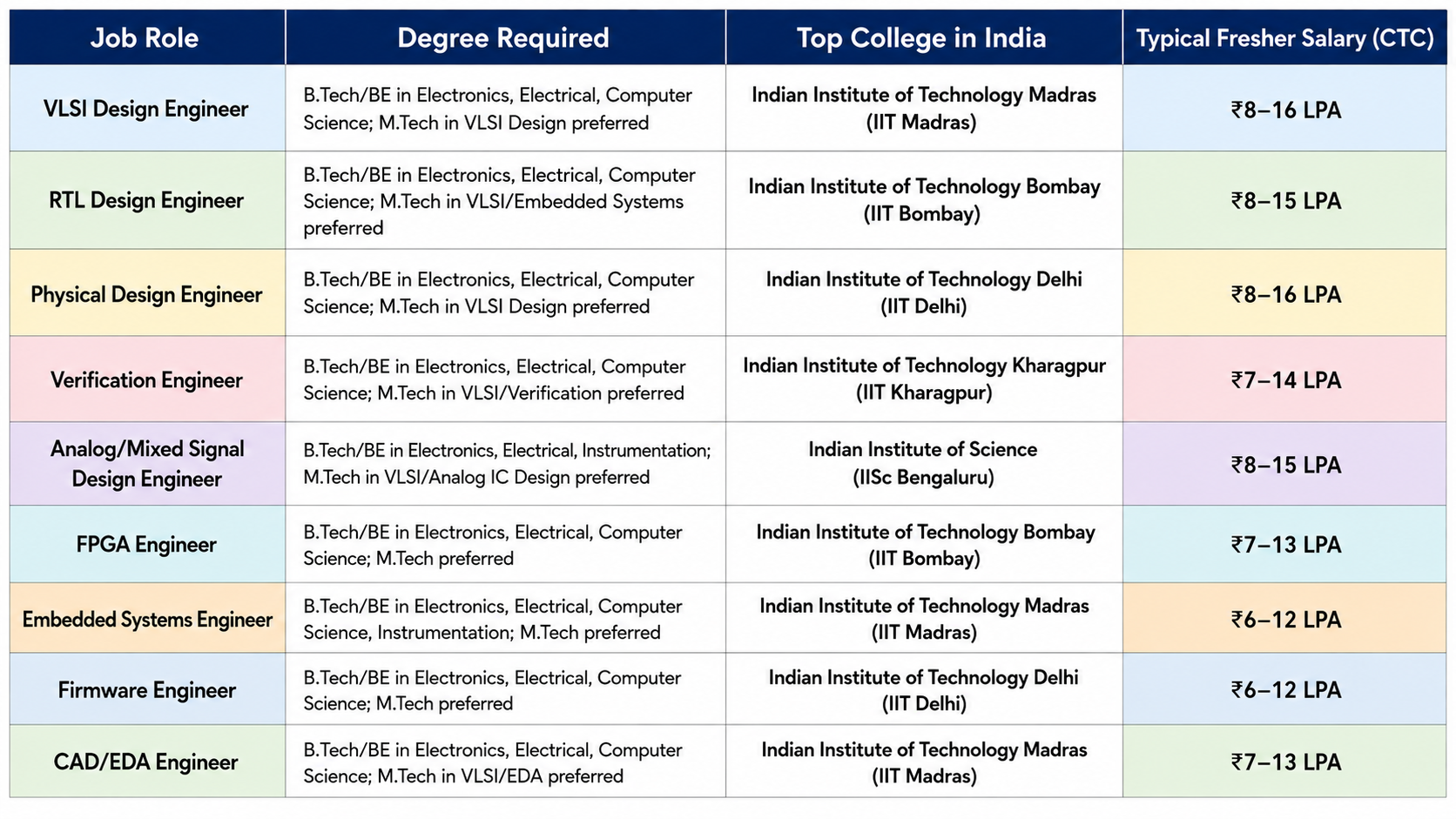
Chip design & R&D
VLSI Design Engineer
RTL Design Engineer
Physical Design Engineer
Verification Engineer
Analog/Mixed Signal Design Engineer
FPGA Engineer
Embedded Systems Engineer
Firmware Engineer
CAD/EDA Engineer
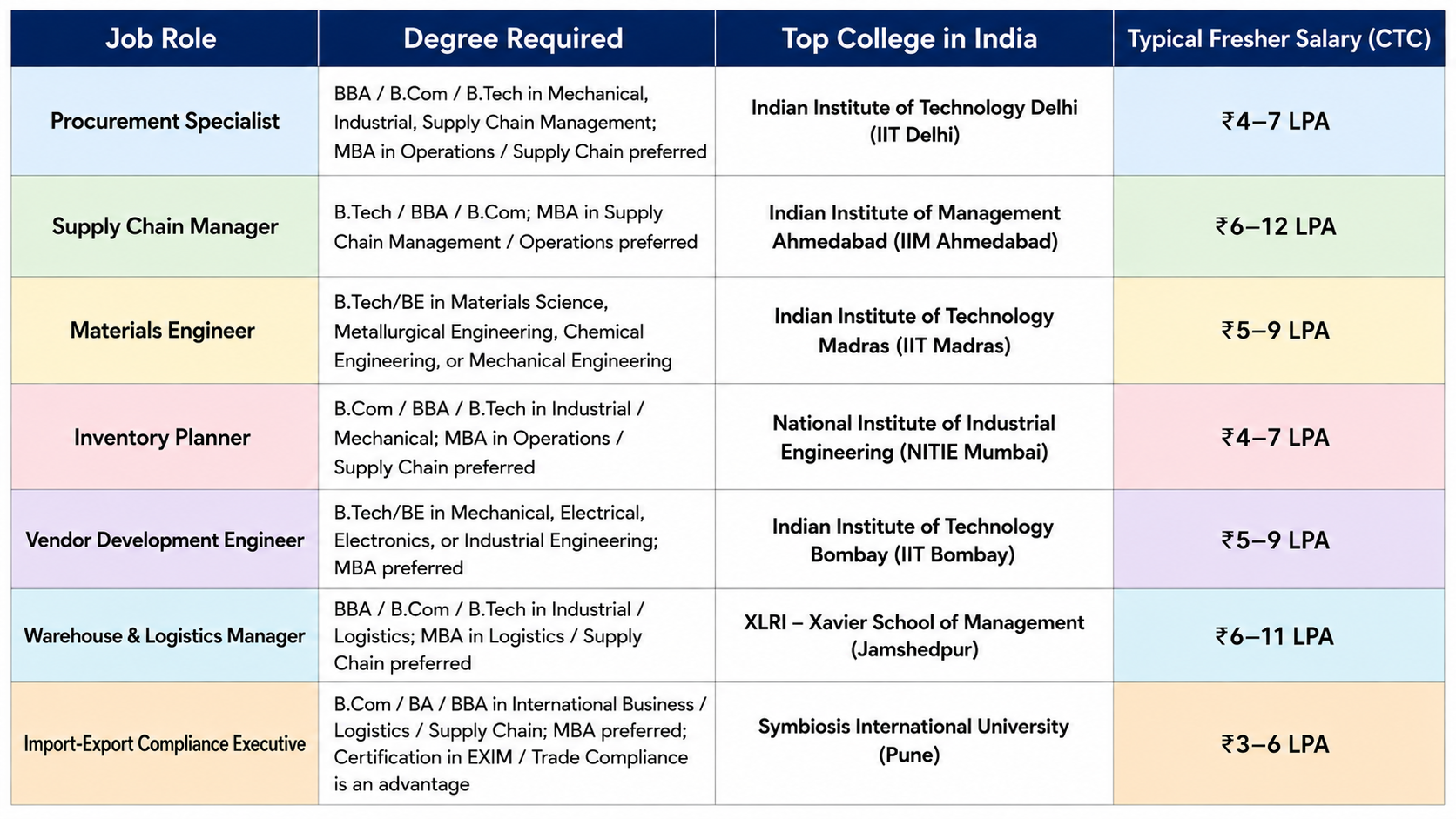
Materials & supply chain
Procurement Specialist
Supply Chain Manager
Materials Engineer
Inventory Planner
Vendor Development Engineer
Warehouse & Logistics Manager
Import-Export Compliance Executive
Quality & compliance
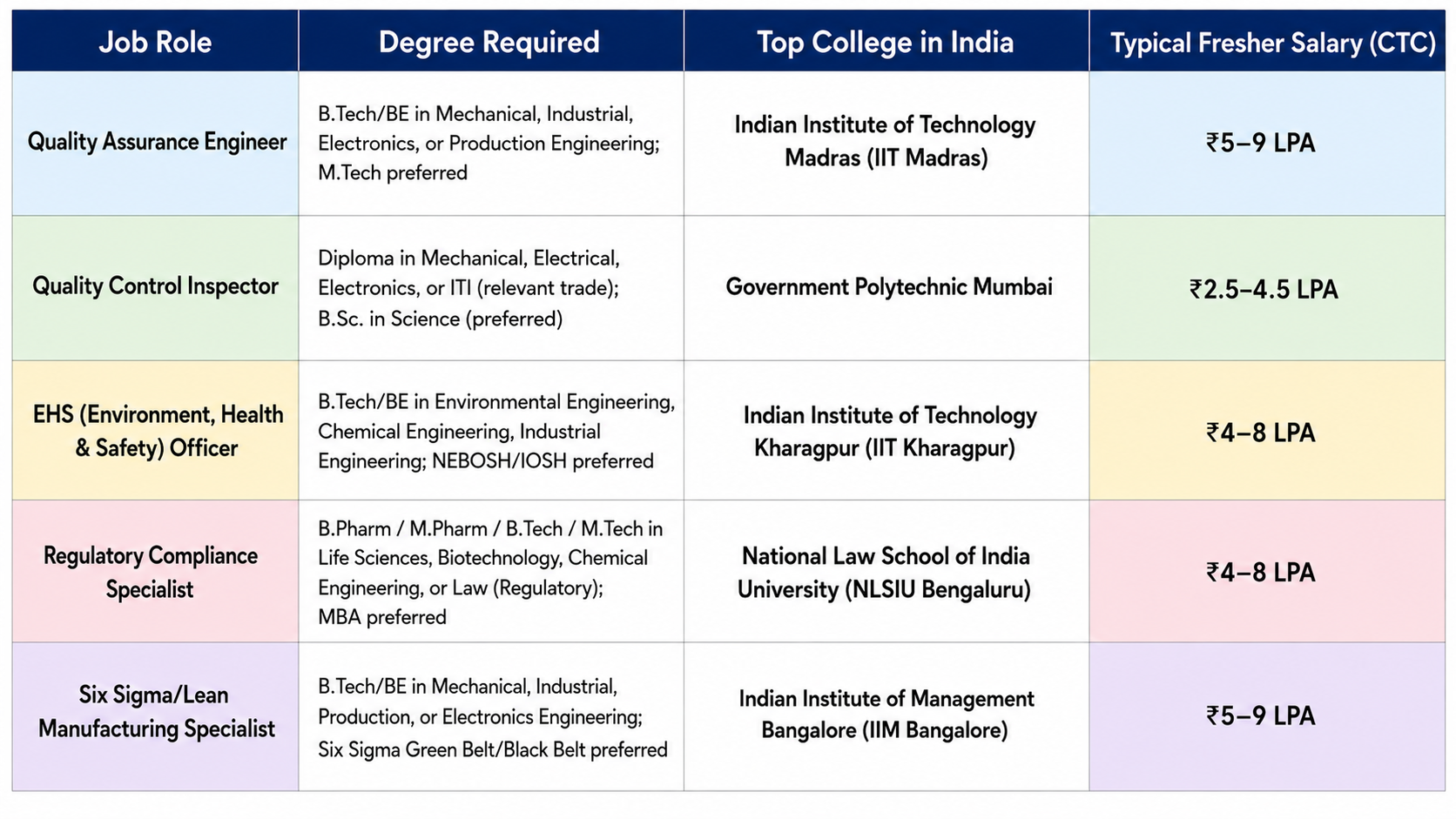
Quality Assurance Engineer
Quality Control Inspector
EHS (Environment, Health & Safety) Officer
Regulatory Compliance Specialist
Six Sigma/Lean Manufacturing Specialist
Facilities & infrastructure
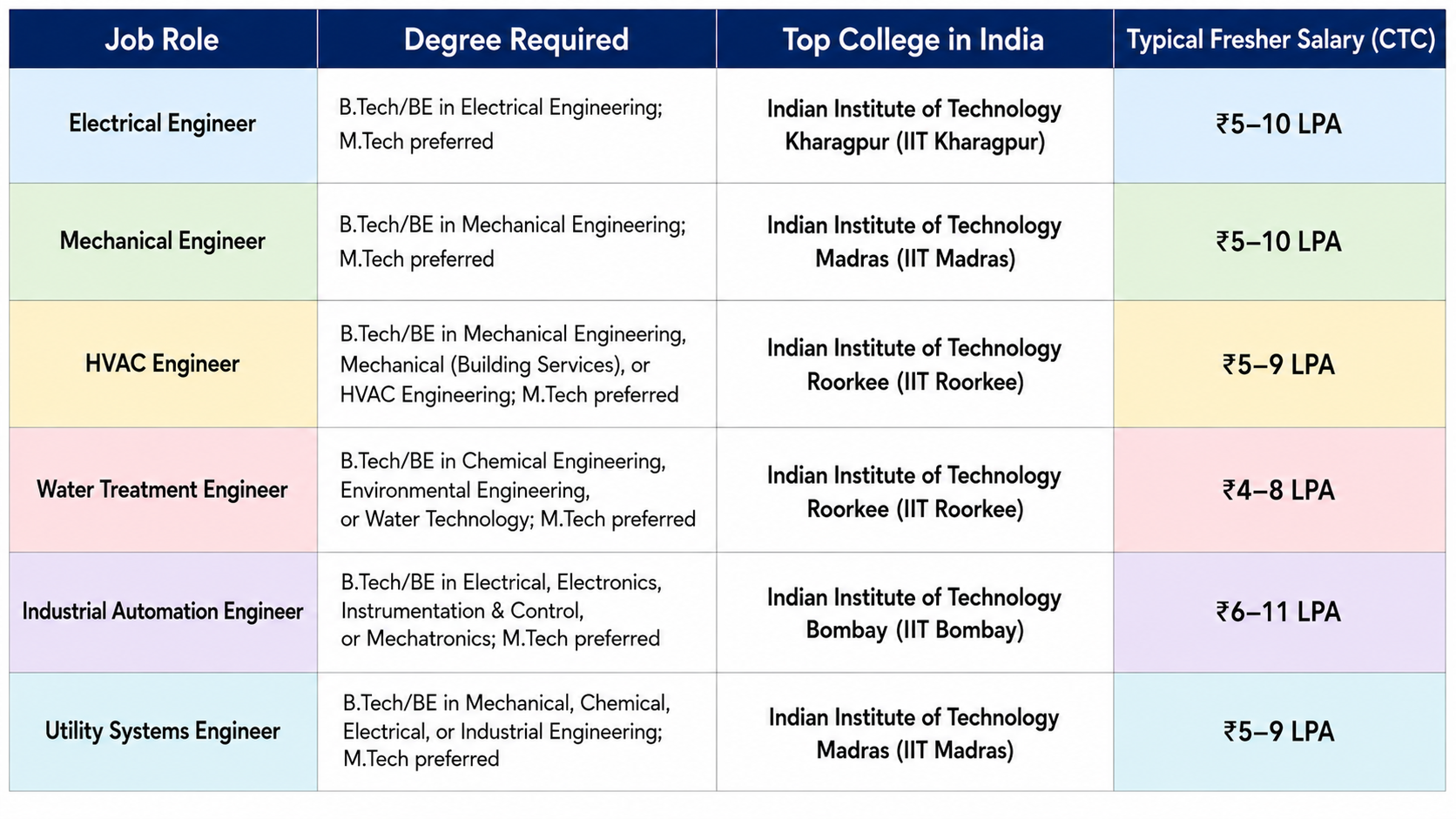
Electrical Engineer
Mechanical Engineer
HVAC Engineer
Water Treatment Engineer
Industrial Automation Engineer
Utility Systems Engineer
IT & automation
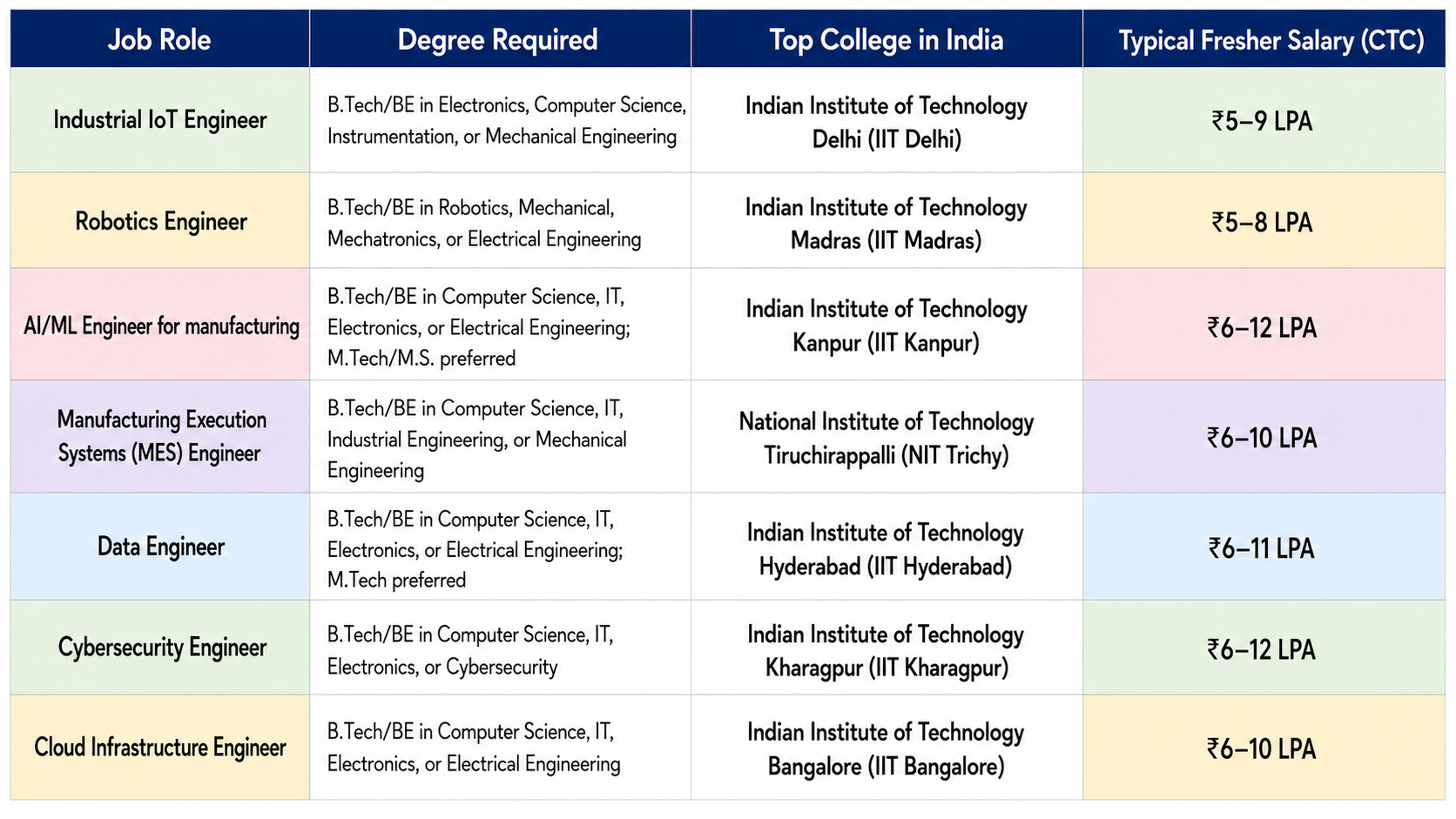
Industrial IoT Engineer
Robotics Engineer
AI/ML Engineer for manufacturing
Manufacturing Execution Systems (MES) Engineer
Data Engineer
Cybersecurity Engineer
Cloud Infrastructure Engineer
Business & support roles
HR
Finance
Project Manager
Legal & Contracts
Technical Sales Engineer
Customer Success Engineer
Marketing & Business Development
Skilled technician roles
Semiconductor Equipment Technician
Electronics Technician
Calibration Technician
Maintenance Technician
Lab Technician
Cleanroom Specialist
Degrees Most In Demand
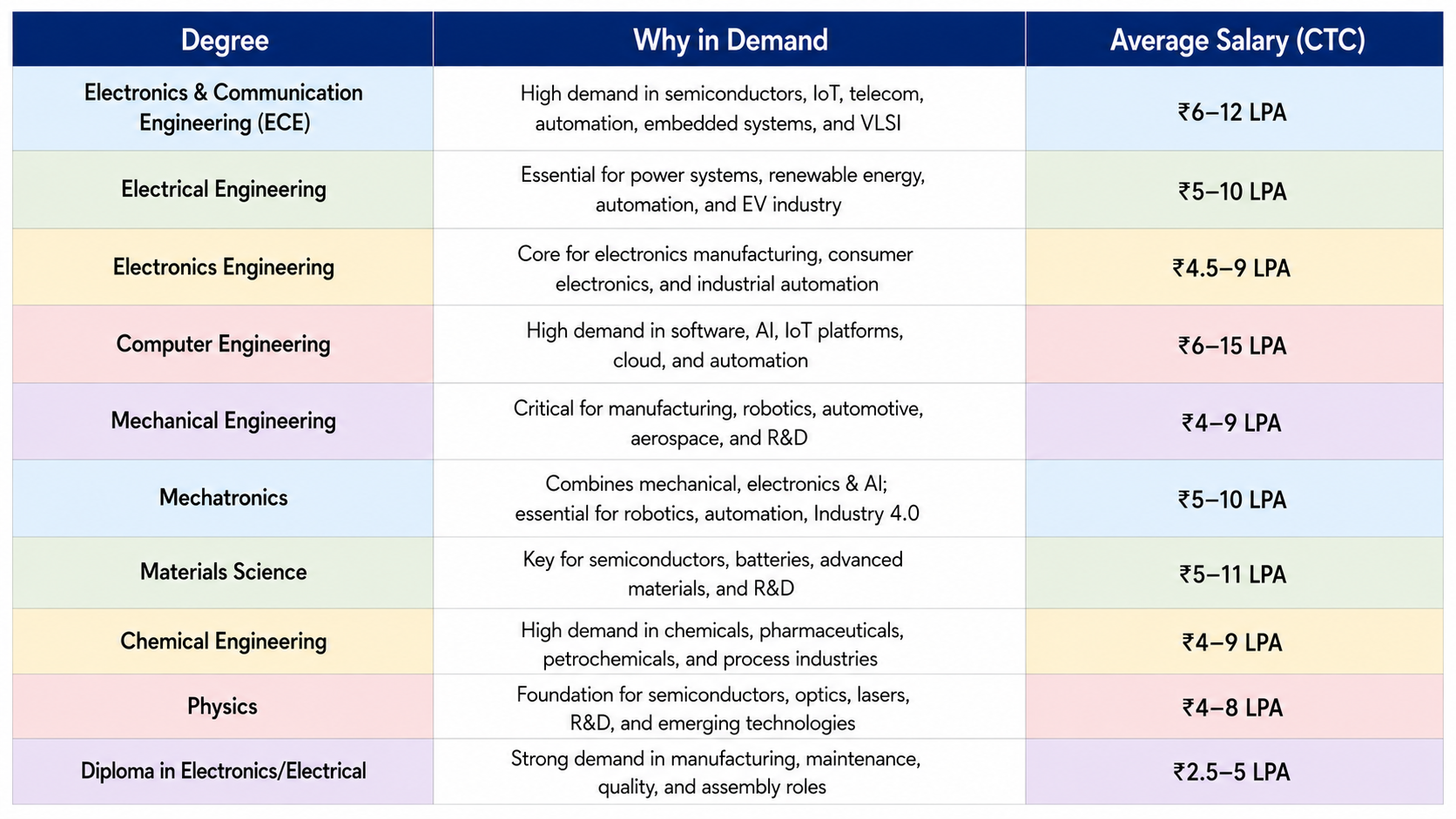
While all of these positions will directly or indirectly open up, the degrees mentioned below are the degrees that will be most in demand, along with the reason and expected salary for a fresher.
Electronics & Communication Engineering (ECE)
Electrical Engineering
Electronics Engineering
Computer Engineering
Mechanical Engineering
Mechatronics
Materials Science
Chemical Engineering
Physics
Diploma in Electronics/Electrical
Skills Employers Are Seeking
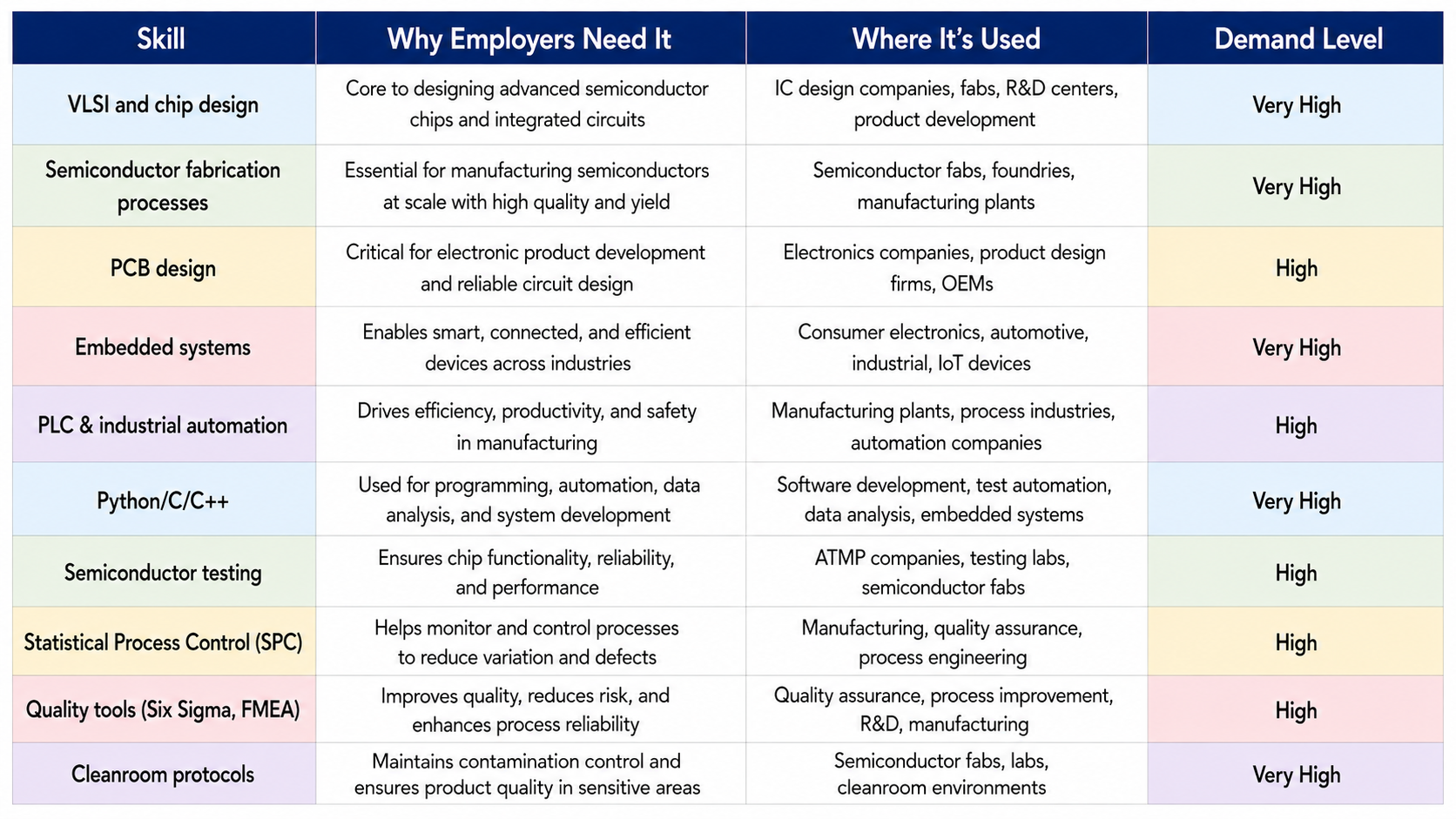
Having the degree alone doesn’t guarantee a job. Students can also try learning these skills for better resumes.
VLSI and chip design
Semiconductor fabrication processes
PCB [Printed Circuit Board] design
Embedded systems
PLC [Programmable Logic Controller] & industrial automation
Python/C/C++
Semiconductor testing
Statistical Process Control (SPC)
Quality tools (Six Sigma, FMEA)
Cleanroom protocols
The Future Ahead
With the investments flowing in and the massive budgets from the government, direct and indirect jobs will be generated. Even though India has engineers, their on-field experience is quite limited. If you wish to work in any of these professions, make sure you have all the required skills and qualifications.
As global semiconductor revenue is estimated to reach $1 trillion by 2030, India gears up. If India can consistently build its plants, it can gain massively from this business. Information Technology in the 1990s was a catalyst for indian economy. Semiconductors are just the same. They will make India globally competitive by boosting innovation, attracting global investment, creating high-skilled employment, and strengthening domestic manufacturing.
As India builds its semiconductor capabilities, the industry could emerge as one of the nation's most important growth engines over the next decade. Young students can take advantage of this and plan their careers accordingly.