
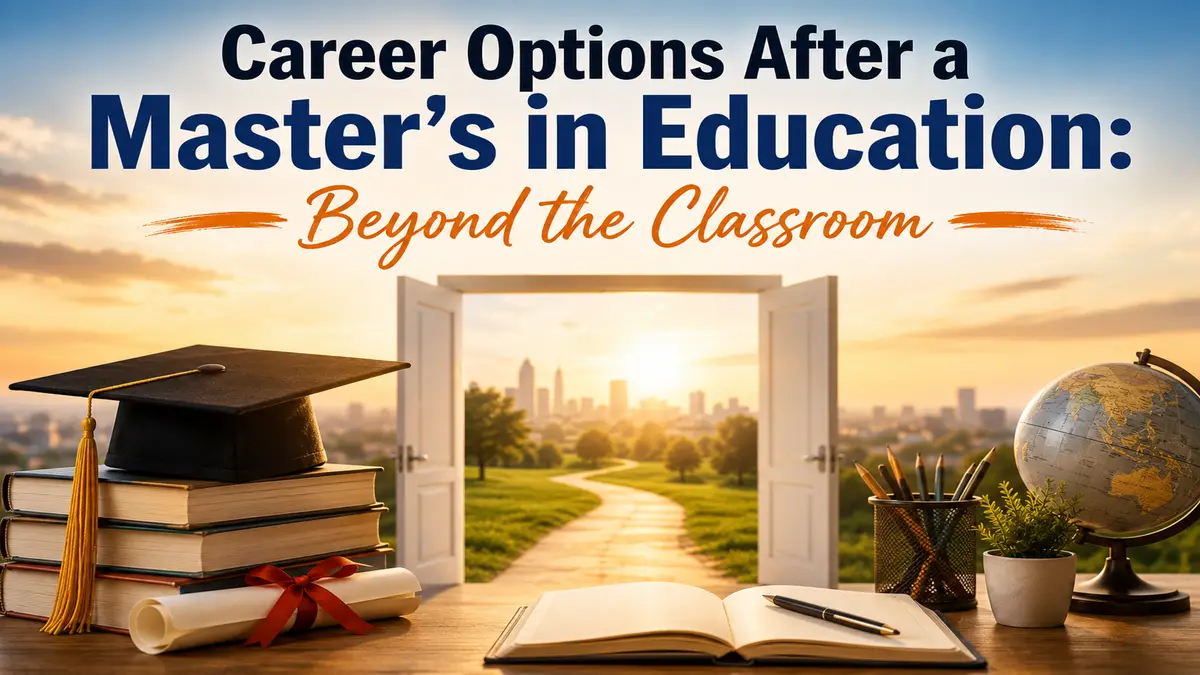
A Master’s in Education is no longer limited to preparing graduates only for teaching roles in schools or colleges. In today’s rapidly evolving academic and technological landscape, the field of education has expanded into diverse career opportunities that combine innovation, leadership, research, policy-making, and digital transformation. From designing future-ready curriculums to shaping national education policies and building learning technologies, education professionals are now influencing how the world learns.
With the rise of online learning platforms, artificial intelligence in classrooms, skill-based education, and student-centered teaching methods, organizations across sectors are actively seeking experts who understand learning systems and educational development. A postgraduate degree in education equips individuals with analytical, pedagogical, communication, and leadership skills that are valuable in schools, universities, government agencies, NGOs, publishing companies, and edtech startups. If you are wondering what career paths you can pursue after completing a Master’s in Education, here are some of the most promising and high-growth opportunities available today.
1. Curriculum Designer
One of the most sought-after careers after a Master’s in Education is becoming a curriculum designer. Curriculum designers are responsible for creating educational content, lesson plans, assessments, and teaching frameworks that align with learning objectives and educational standards.
As education systems increasingly shift toward experiential and skill-based learning, schools and organizations require professionals who can design engaging, inclusive, and effective curricula for students of different age groups and learning abilities.
Responsibilities:
Developing course structures and lesson plans
Designing learning materials and assessments
Integrating technology into educational content
Ensuring curriculum aligns with national or international standards
Updating educational content based on new learning trends
Where You Can Work:
Schools and universities
Publishing houses
Online learning platforms
Corporate training firms
Educational NGOs
Skills Required:
Instructional design
Research and analytical skills
Creativity and innovation
Knowledge of pedagogy and assessment methods
Digital learning tools
Curriculum designers play a critical role in shaping modern education by making learning more interactive, personalized, and accessible.
2. Education Consultant
Education consultants guide students, institutions, and organizations on academic planning, educational strategies, admissions, and institutional improvement. This career combines counseling, management, and educational expertise.
Some consultants specialize in helping schools improve teaching quality and infrastructure, while others work with students on higher education admissions, career guidance, or international education opportunities.
Responsibilities:
Advising institutions on academic strategies
Assisting students with educational planning
Evaluating teaching methods and school performance
Recommending curriculum or policy improvements
Conducting workshops and training sessions
Career Opportunities:
Study abroad consultancies
Private educational firms
Schools and universities
Government education projects
Independent consulting
Why It’s Growing:
As parents and students seek better educational opportunities and institutions strive to improve learning outcomes, the demand for expert educational guidance continues to increase.
This profession is ideal for individuals who enjoy communication, mentoring, and problem-solving.
3. Policy Analyst in Education
Education policy analysts work at the intersection of research, governance, and social development. They study education systems, analyze policies, and recommend improvements to enhance accessibility, equality, and learning outcomes.
This role is especially important in countries working toward educational reforms, digital inclusion, and improved literacy rates.
Responsibilities:
Researching educational trends and challenges
Evaluating government policies and reforms
Preparing policy reports and recommendations
Collecting and analyzing educational data
Working with government agencies and NGOs
Employers:
Government education departments
International organizations
Research institutions
Think tanks
Non-governmental organizations
Skills Needed:
Research and data analysis
Critical thinking
Report writing
Public policy understanding
Communication and presentation skills
Policy analysts contribute to large-scale educational change and help improve systems that affect millions of learners.
4. EdTech Specialist
Educational technology, commonly known as EdTech, has transformed the way students learn. After the rise of online education and hybrid learning models, the EdTech sector has become one of the fastest-growing industries globally.
Professionals with a Master’s in Education are highly valued in EdTech companies because they understand both pedagogy and learner behavior.
Roles in EdTech:
Learning experience designer
Instructional designer
Academic content manager
Online course developer
Educational product manager
Responsibilities:
Designing digital learning experiences
Creating e-learning modules
Collaborating with software developers
Improving user engagement and accessibility
Testing educational products
Top Skills:
Learning management systems (LMS)
Digital content creation
User-centered design
Educational psychology
Technology integration
EdTech careers are ideal for individuals interested in combining education with innovation and technology.
5. Academic Coordinator
Academic coordinators oversee the academic planning and quality management of schools, colleges, or educational institutions. They ensure that teaching standards, assessments, and student outcomes meet institutional goals.
Key Duties:
Managing curriculum implementation
Coordinating between teachers and administration
Organizing teacher training programs
Monitoring academic performance
Planning school events and academic schedules
Career Scope:
This role can eventually lead to leadership positions such as vice principal, principal, or academic director.
Academic coordinators are essential for maintaining the efficiency and quality of educational institutions.
6. Instructional Designer
Instructional designers focus on creating effective learning experiences using educational theories, multimedia tools, and technology. This role has become increasingly important in online education, corporate training, and professional development programs.
Responsibilities:
Designing digital learning modules
Creating interactive educational content
Developing training programs
Using multimedia and animations for learning
Evaluating course effectiveness
Industries Hiring Instructional Designers:
EdTech companies
Corporate organizations
Universities
Government training departments
Healthcare and IT sectors
This career is suitable for creative individuals interested in educational psychology and digital learning.
7. Corporate Trainer and Learning & Development Specialist
Many companies hire education professionals to train employees, improve workplace learning, and develop professional skills. A Master’s in Education provides strong communication and instructional skills that are valuable in the corporate world.
Responsibilities:
Conducting workshops and training sessions
Designing employee learning programs
Evaluating training effectiveness
Developing leadership and communication skills among employees
Supporting organizational growth through learning
Industries:
Information technology
Banking and finance
Healthcare
Retail and marketing
Human resources
Corporate learning has become a major industry as companies increasingly invest in employee development.
8. Educational Researcher
Educational researchers study learning methods, classroom behavior, educational technologies, and student performance to improve teaching systems and learning outcomes.
Responsibilities:
Conducting surveys and research studies
Publishing academic reports and papers
Studying educational trends
Evaluating teaching methods
Supporting institutional decision-making
Workplaces:
Universities
Research institutions
NGOs
International organizations
Government departments
This role is ideal for individuals interested in academic inquiry and data-driven educational improvement.
9. School Administrator
A Master’s in Education can also prepare graduates for administrative and leadership roles in educational institutions.
Leadership Positions Include:
Principal
Vice principal
School director
Education manager
Dean or department head
Responsibilities:
Managing institutional operations
Overseeing faculty and staff
Budget planning
Student welfare management
Policy implementation
Strong leadership, organizational, and communication skills are essential for success in administration.
10. Educational Content Writer and Publisher
The growth of digital learning platforms, educational blogs, and online courses has created opportunities for education professionals in content development and publishing.
Responsibilities:
Writing textbooks and study materials
Creating online educational articles
Developing assessment content
Producing scripts for educational videos
Editing academic publications
Employers:
Publishing companies
EdTech platforms
Educational websites
Coaching institutes
Media organizations
This role suits individuals with strong writing and creative skills.
Emerging Trends Creating New Opportunities
The education sector is evolving rapidly due to technology and changing learner expectations. Some emerging trends shaping future careers include:
Artificial Intelligence in Education
AI-powered personalized learning systems are transforming classrooms and online education platforms.
Gamification and Interactive Learning
Educational games and interactive tools are making learning more engaging.
Inclusive and Accessible Education
Institutions are focusing more on special education and accessible learning systems.
Hybrid and Online Learning
Digital classrooms and remote learning have expanded global access to education.
Skill-Based and Career-Oriented Education
Educational systems are shifting focus toward employability, entrepreneurship, and practical skills.
Professionals who can adapt to these trends will have a strong advantage in the future job market.
Skills That Enhance Career Growth After a Master’s in Education
To succeed in modern educational careers, students should focus on developing additional skills such as:
Digital literacy
Communication and presentation
Data analysis
Leadership and management
Instructional technology
Research methodologies
Project management
Creativity and innovation
Certifications in instructional design, educational technology, data analytics, or project management can further improve employability.
Salary Expectations and Career Growth
Salaries after a Master’s in Education vary depending on specialization, experience, location, and industry.
Entry-Level Roles:
Fresh graduates may begin in teaching, curriculum support, instructional design, or academic coordination roles.
Mid-Level Growth:
With experience, professionals can move into leadership, policy-making, consulting, or product management positions.
High-Growth Sectors:
EdTech, corporate learning, and international education currently offer some of the highest growth opportunities and competitive salaries.
A Master’s in Education opens doors to far more than traditional classroom teaching. Today’s education professionals are innovators, strategists, researchers, consultants, and leaders shaping the future of learning across industries.
Whether you are passionate about designing curriculums, influencing public policy, building digital learning platforms, guiding students, or managing institutions, there are numerous rewarding career paths available. As education continues to evolve globally, professionals with expertise in teaching, learning systems, and educational innovation will remain in high demand.
For students who want to combine purpose, creativity, technology, and leadership, a career after a Master’s in Education can offer both meaningful impact and long-term professional growth.