
If Grey's Anatomy and Silicon Valley had a baby, it'd probably major in Biomedical Engineering and Data Science.
The cure to any disease starts with the right diagnosis. If the disease, in either physical or mental form, is diagnosed promptly, the chances of successful treatment increase. In the past, people were treated by Nadi Parikshak, doctors who diagnosed patients with the vibration of pulses in their wrists. Now we have robots scanning and operating on patients.
Biomedical Engineering is a course that emphasises the application of engineering principles to biology and medicine. Data science is an interdisciplinary field that gets valuable insights from raw data by combining statistics, machine learning, and computer science.
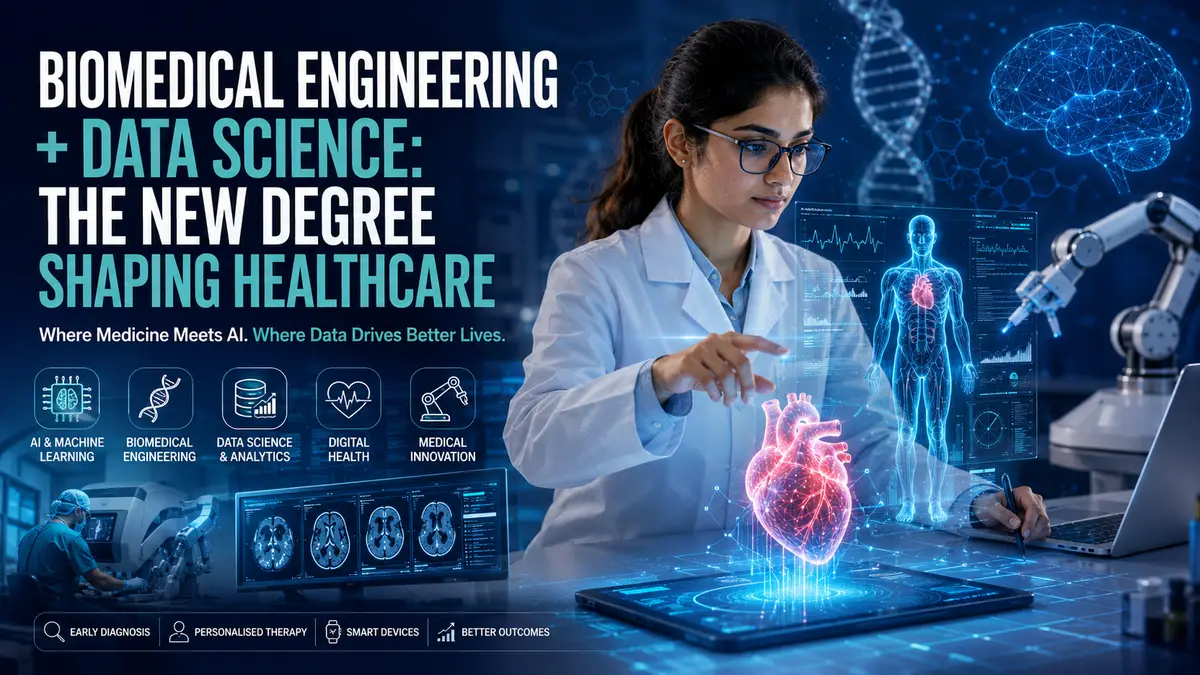
Hospitals do not just require doctors or software engineers. They need someone who understands medicine and data together. That is where this interdisciplinary course - Biomedical Engineering + Data Science comes into action. This new degree changes how healthcare works to a very impactful extent.
While Biomedical Engineering is the study and development of machines and medical equipment for better health, Biotechnology is the development of medicines and vaccines, working to manipulate DNA and cells. Bioinformatics focuses on interpreting complex biological data generated by genomic research and biotechnology. Biomedical Engineering + Data Science combines all of these. Unlike a traditional degree, this programme combines large-scale healthcare data with AI to develop wearable health monitors.
Why are universities now combining AI & healthcare into one programme?
Universities are now combining AI & Healthcare to ensure maximum results in early diagnoses for diseases. This will help in treating the diseases better. To train the AI, data is essential, and the correct analysis and interpretation of that data are the key to advancement. This will help the next generations of doctors to use the AI data, manage algorithms and use tools for documenting real-time patients. By combining these fields, universities are aiming for more advancements in digital health software and smart medical devices. AI can help in tracking and alleviating resource shortages, and combined with academics, adds a human touch to using these tools safely.
What Is The Need For Biomedical Engineering + Data Science?
Rise Of AI In Healthcare
AI is rapidly becoming a bridge to closing global shortcomings in the medical field, whether it's a shortage of doctors or time-consuming research. Medical diagnostics, drug discovery, precision medicine, and operational efficiency enabled by AI allow doctors to have more time to connect personally with patients, giving them the required human-narrative care.
Wearable Technology
Chronic diseases that require regular monitoring are now being treated before complications arise because of the AI technology. Machines can keep a constant track of heart, diabetes and hypertension. These advancements benefit the patients to a great extent. Apart from regular monitoring, this technology can also help reduce routine in-person checkups post-surgery or manage conditions from afar. They also reduce the cost of hospital visits for routine checkups daily.
Digital Hospitals
One of the most significant developments in modern medicine is the rise of digital hospitals. Government initiatives like the Ayushman Bharat Digital Mission [ABDM] are opening up a wider bridge to bridge the gap in resources available to those in need. It reduces paperwork by handling all the patient history and data via mobile phones. Connected devices are set to give a real-time record of all the vital monitors. Hospitals use automated systems for bed allocation and surgery scheduling to be more efficient. Predictive analysis and AI help with timely triggers in case the patient's health is deteriorating so the medical team can intervene promptly.
Precision Medicine
Biomedical Engineering and Data Science help in precision medicine by sourcing a large amount of data required to make a specific drug to cure a disease. They have all the detailed data required to create any medicine that can cure a particular person as per their individual molecular profile. This technology merges with advanced imaging tools and helps detect issues at the cellular level, which is fast and precise. This specific academic subject also helps in developing drugs with tools that can only target the defective organ or part of the body after bypassing the other organs.
Medical Robotics
While Biomedical engineering helps with the mechanical designs, tissue compatibility and surgical implementation, data science takes care of predictive analysis, safety, computer vision, imaging, intelligent adaptation, and machine learning. Together, they create a stream of healthcare that can be prompt and precise in diagnosing, curing, and taking care of the aftermath. It is time-saving, the only tool that matters in medicine.
What Are The Subjects & Skills You Study?
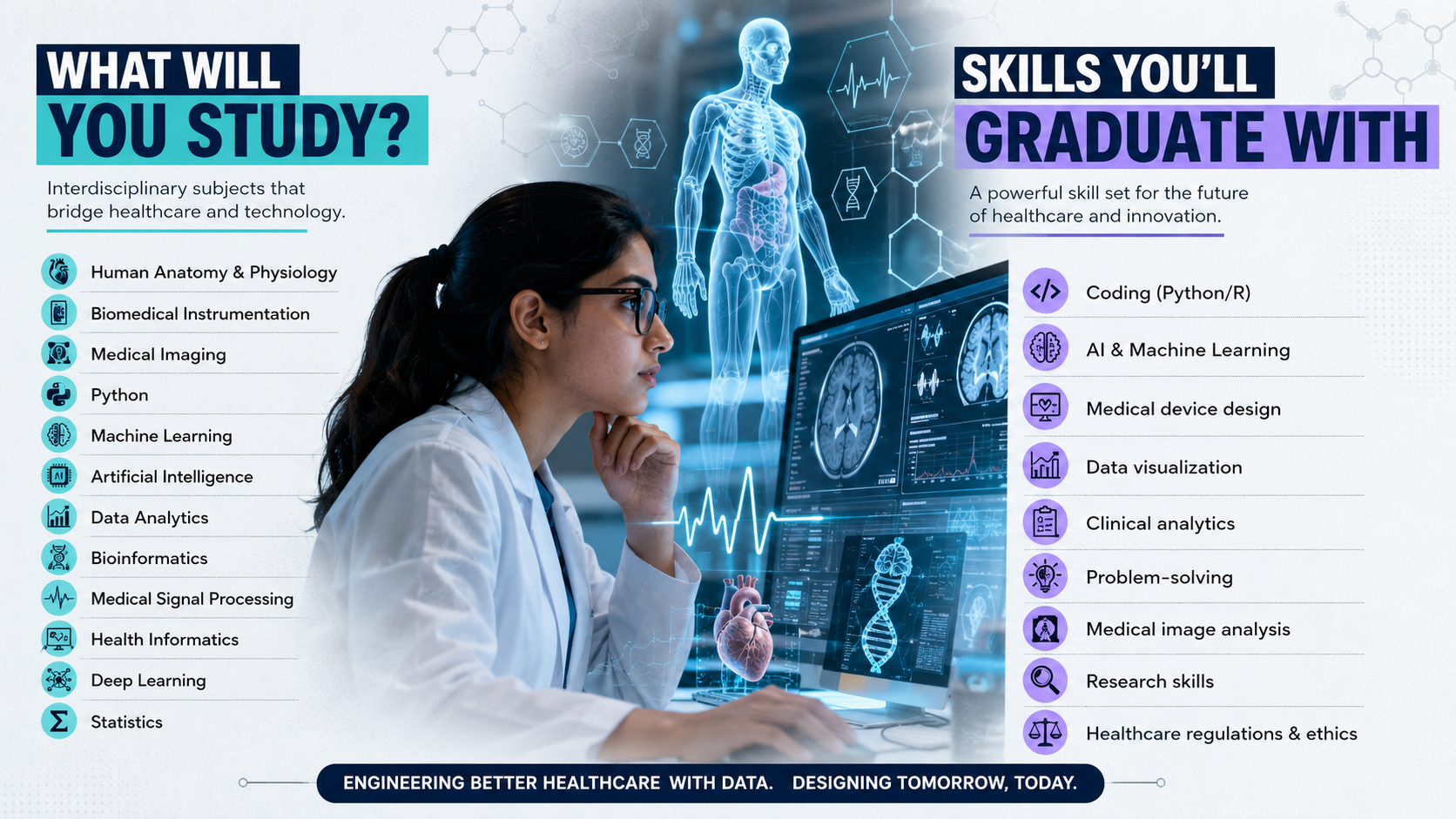
Biomedical Engineering is already a vast subject, and now that it merges with Data Science, the context just gets bigger. Below is what you will come out with after the 4-year degree program.
What Are The Top Countries To Study Biomedical Engineering + Data Science?
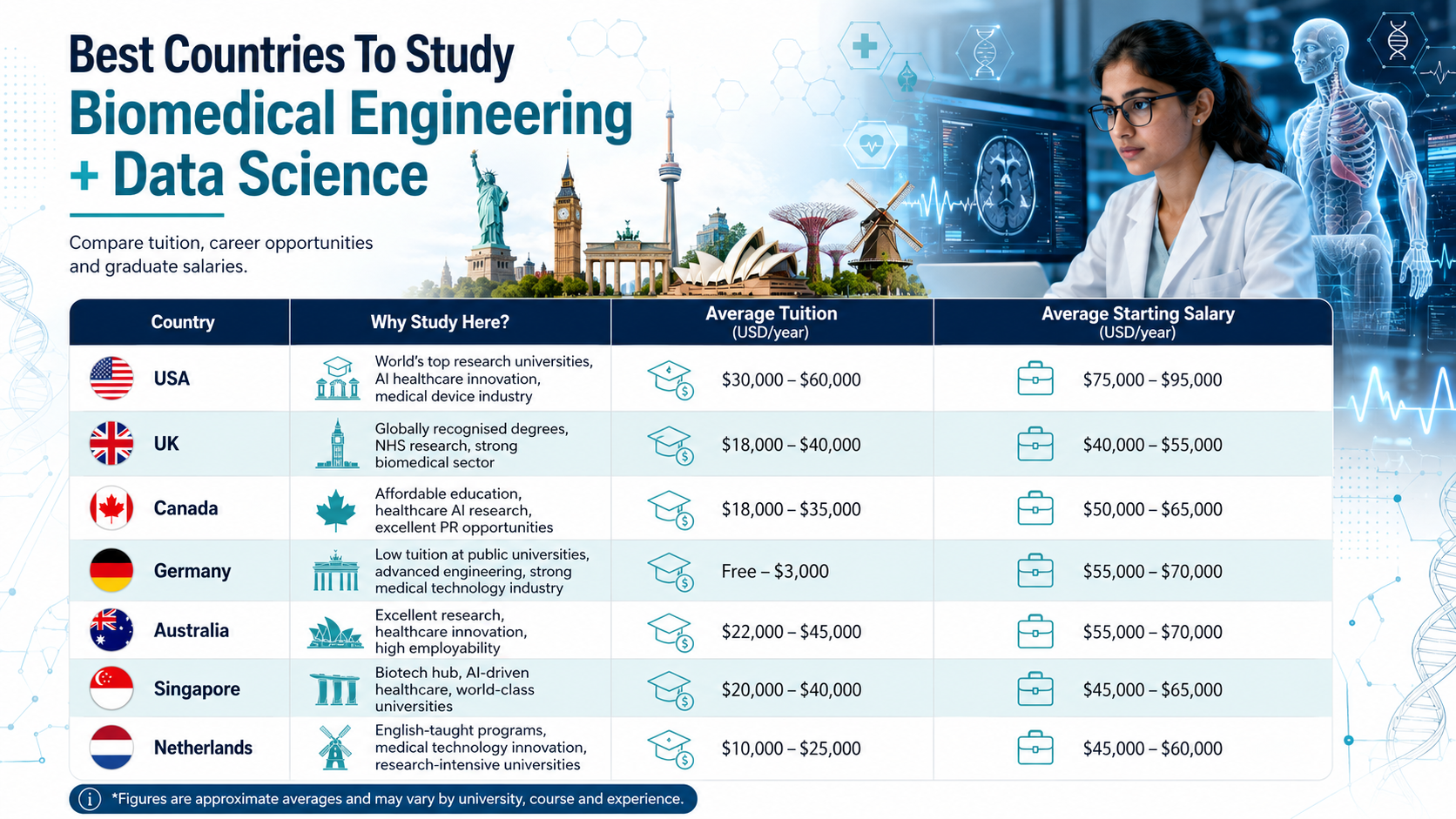
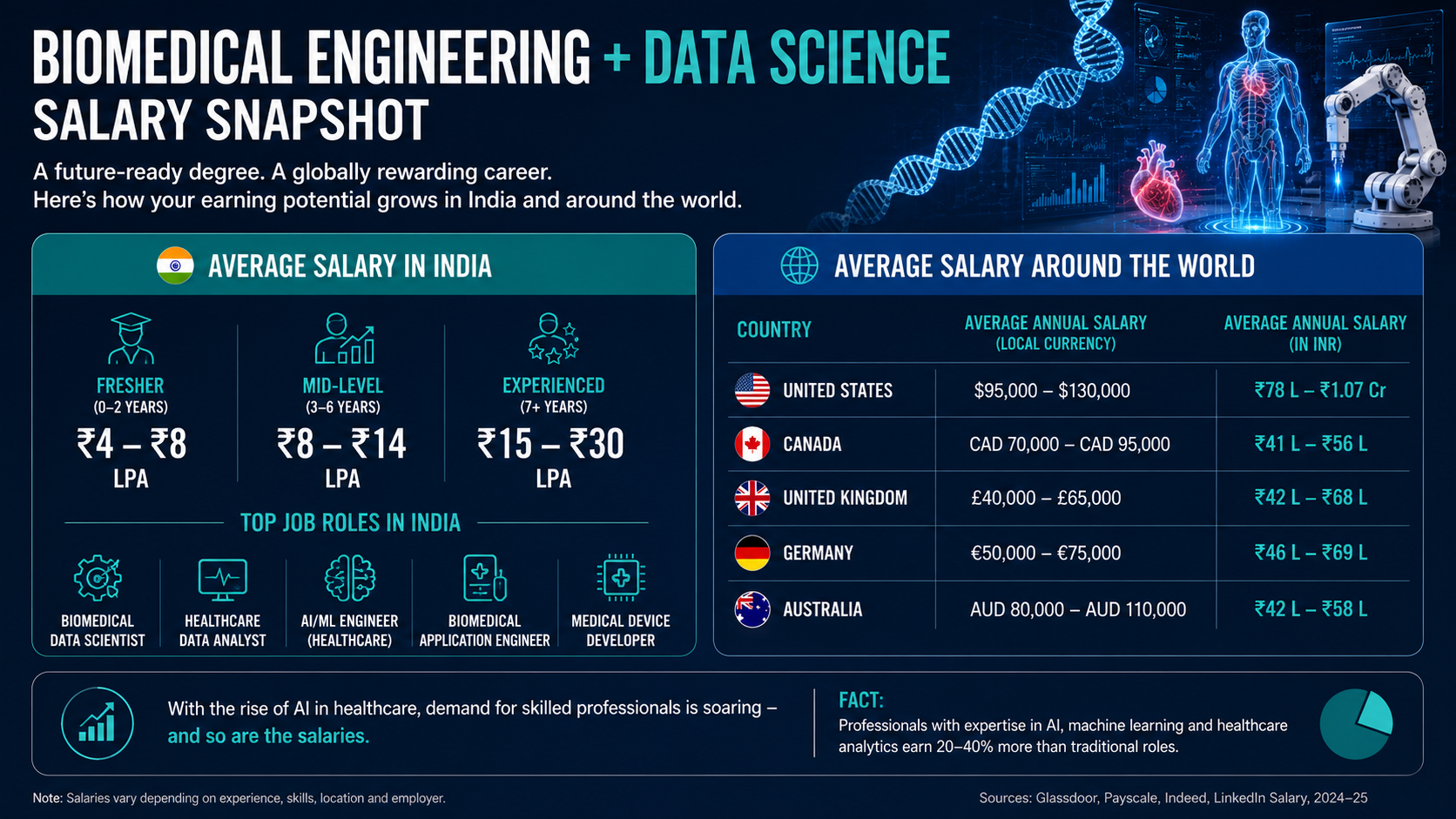
Biomedical Engineering with Data Science is not just becoming popular in India, but across many other educational hubs across the globe. The table below contains top countries, fees required to study there and the average salary you may earn from this graduate programme.
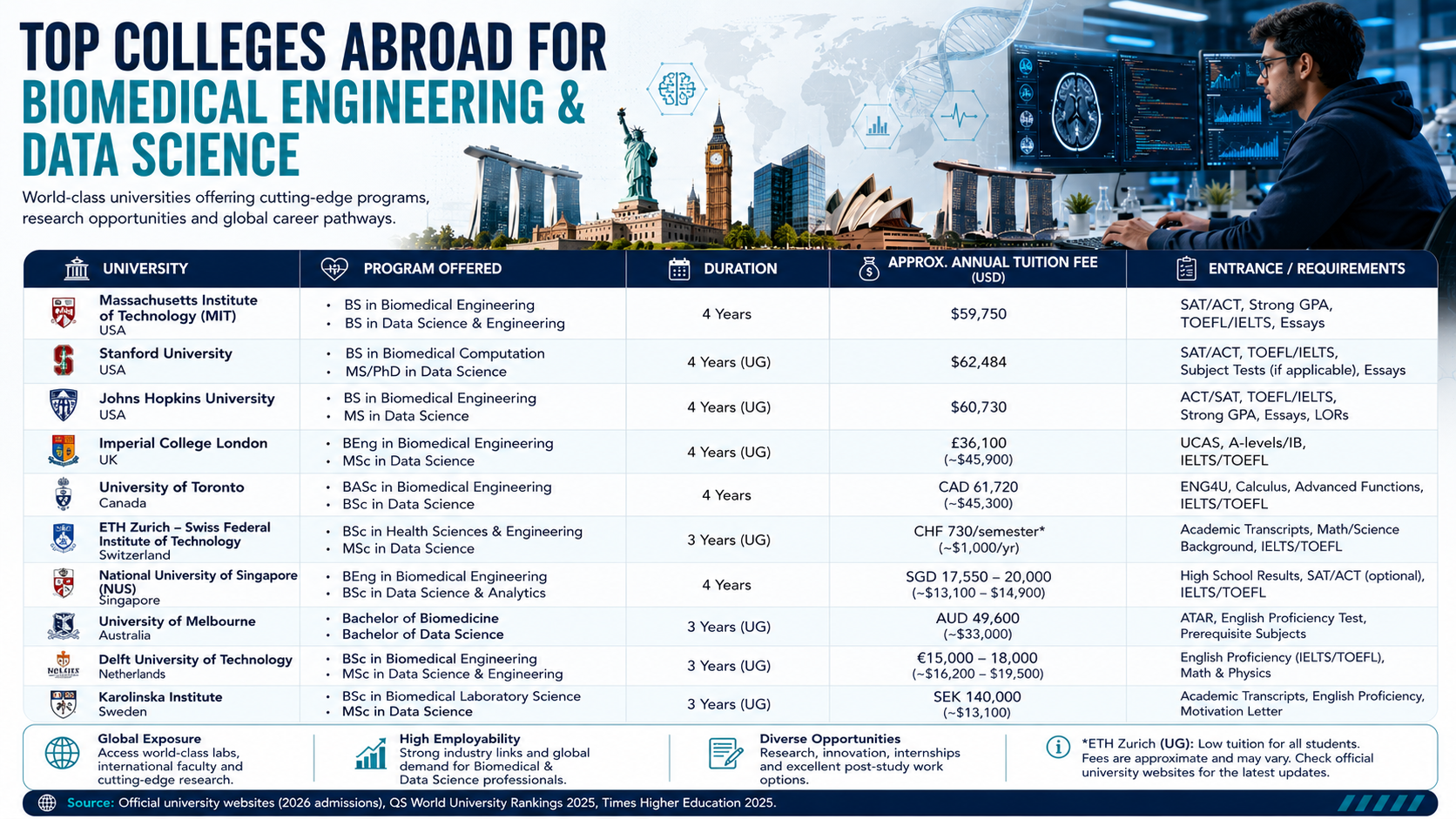
Top Universities To Study Biomedical Engineering + Data Science Abroad
Below are the top colleges abroad to study these specific subjects, with their duration, fees and requirements. You can opt for any of these universities based on your interests.
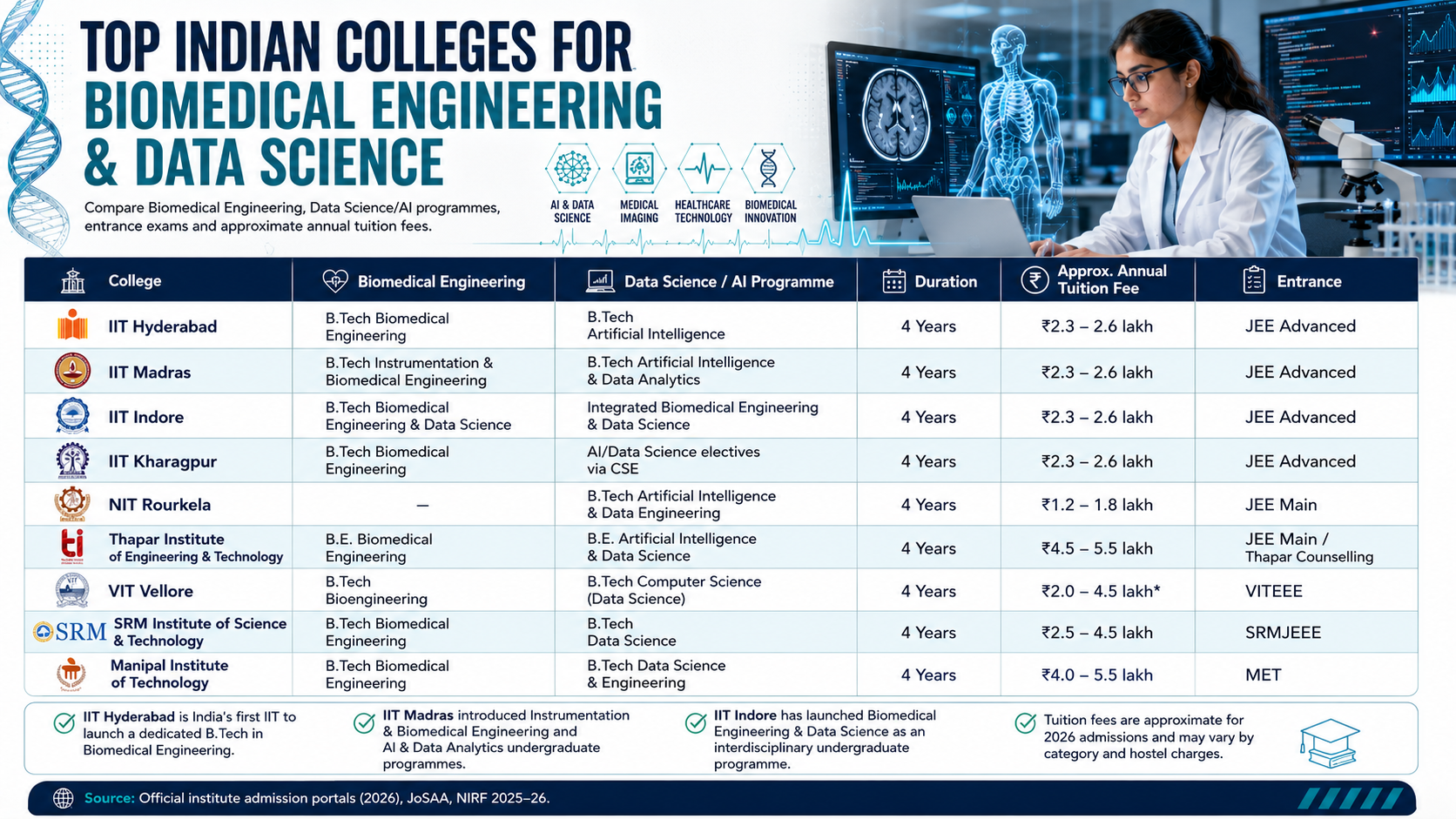
Top Colleges In India To Study Biomedical Engineering + Data Science
While going to another country might sound fascinating and a better option for global opportunities, Indian universities also offer this programme. For people with financial constraints, or those who just don't want to leave the country, they can opt for this from the following institutions.
Salaries After Course Completion
Biomedical Engineering + Data Science can open doors for several fields where professionals can work apart from hospitals. They can work in AI diagnostics, developing and helping with procedures involving digital twins in medicine, and further in aiding the manufacturing of personalised medicines. These professionals can analyse, ideate and execute wearable health tech, the demand for which is increasing day by day. For a lot of older patients, they can help with remote monitoring, saving them the hassle of travelling now and then. They can help in advancements in robotics and genomics. There are a lot of hospitals becoming smart hospitals, trying to use AI to reduce human error and improve efficiency, and with healthcare cybersecurity, new technologies will keep creating new jobs.
The Takeaway
AI detecting breast cancer from mammograms, smartwatches identifying heart rhythm disorders, ICU monitoring systems detecting patient deterioration, personalised medicine using genomic data, and digital twins simulating patient outcomes are all an example to show how healthcare is increasingly being driven by data. This is where the medical workforce needs a helping hand. AI will make this easier and faster. Professionals who can bridge the gap between healthcare and AI will be in demand in the near future.
Biomedical Engineering + Data Science isn't just another engineering degree—it's a gateway to building the future of healthcare. As AI, data, and medicine continue to converge, graduates who can bridge these worlds will be among the most sought-after professionals in the coming decade. Research the program curriculum carefully, as the exact combination of biomedical engineering and data science varies across universities.