

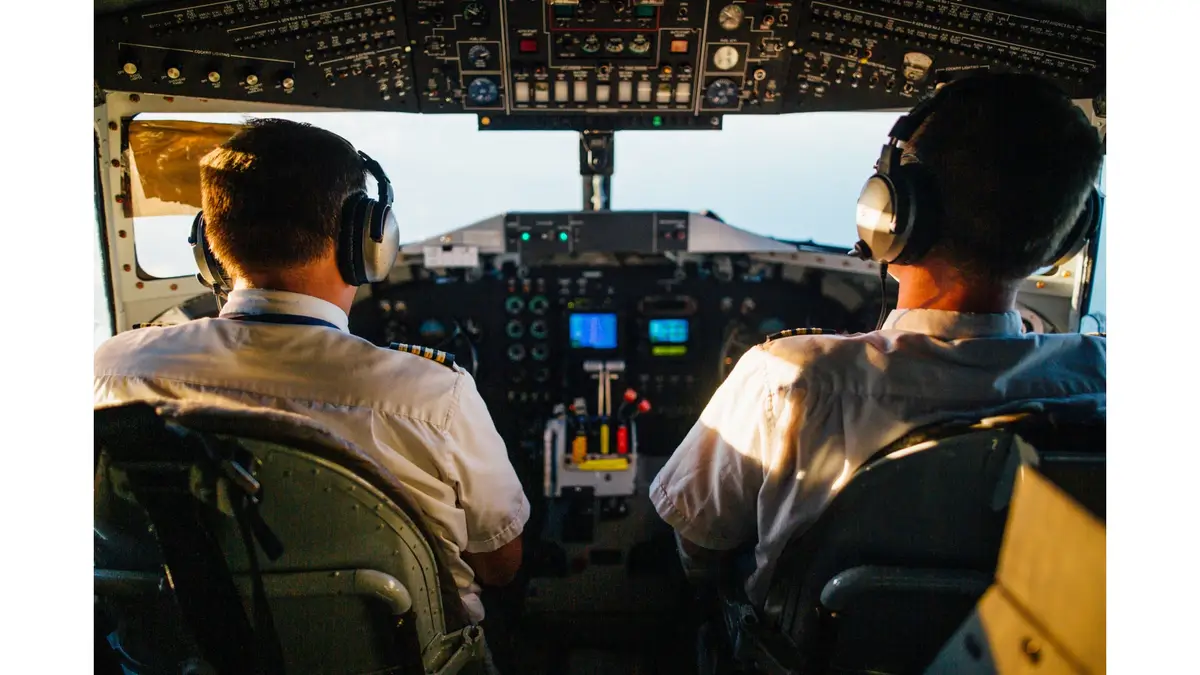
As children we've always been astonished with the ways airplanes fly over our homes and at such greater heights and travel across oceans. Skip to today where most of the students love the thrill of flying, travelling the world and some dream of becoming a pilot.
You're sitting inside the cockpit thousands of feet above the clouds. The engines roar as the aircraft climbs into the sky, passengers trust you with their lives, and every day at work brings a new destination. For many children, becoming a pilot starts as a dream while watching airplanes soar overhead. For others, it's the thrill of travel, technology, or simply the desire to pursue one of the most respected and well-paid careers in the world.
Today, that dream is more achievable than ever before. India's aviation industry is witnessing unprecedented growth, with airlines expanding their fleets, new airports opening across the country, and regional air connectivity bringing aviation to cities that were once considered too small to support commercial flights. This rapid expansion has created a growing demand for trained pilots, making it one of the most promising career choices for students.
However, becoming a pilot is about much more than learning to fly an aircraft. It requires discipline, technical knowledge, physical fitness, financial planning, and years of professional training. If you've ever wondered what it really takes to become a pilot in India, this guide covers everything—from educational qualifications and DGCA regulations to flight training, licences, costs, salaries, and career opportunities.
Why Is Aviation in India Rising?
The Indian aviation industry has transformed dramatically over the last decade. Affordable air travel, rising disposable incomes, government initiatives like the UDAN scheme, and an increasing number of airports have made flying accessible to millions of Indians. As passenger numbers continue to grow, airlines are expanding their operations by ordering hundreds of new aircraft and launching routes to domestic and international destinations.
India's aviation industry is creating more opportunities for aspiring pilots. In the first half of 2026, the Directorate General of Civil Aviation (DGCA) issued 1,331 Commercial Pilot Licences (CPLs), showing the growing interest among students to build careers in aviation. Out of these, 791 pilots were trained in India, while 540 completed their training abroad, highlighting that many Indian students are exploring both domestic and international flying schools.
With airlines expanding their fleets, launching new routes, and the demand for air travel increasing, the need for skilled pilots is expected to rise further. However, earning a CPL is only the first step—pilots must also complete additional training, such as aircraft-specific Type Ratings, before beginning their airline careers.
This growth has naturally increased the need for trained professionals, especially pilots. Industry experts estimate that India will require thousands of additional pilots over the coming years to meet demand. Besides commercial airlines, opportunities are also growing in cargo aviation, helicopter operations, charter services, corporate aviation, drone technology, and aviation training.
For students considering a future-proof career, aviation is becoming an increasingly attractive option.
Who Controls Pilot Training in India?
One of the biggest misconceptions among aspiring pilots is that any flying school can issue a pilot's licence. In reality, all pilot training in India is governed by the Directorate General of Civil Aviation (DGCA), the country's aviation regulator operating under the Ministry of Civil Aviation.
The DGCA establishes the rules for pilot licensing, approves flying schools, conducts examinations, prescribes medical standards, and ensures that every pilot meets strict national and international safety requirements. This means students should always verify that the flying academy they choose is DGCA-approved before enrolling.
Following DGCA regulations is essential because licences issued through unapproved institutions may not be recognised by Indian airlines.
Different Types of Pilots You Can Become
When most people think of pilots, they imagine someone simply steering an aircraft from one city to another. In reality, flying is only one part of the job.
Pilots spend hours preparing for every flight by studying weather forecasts, reviewing aircraft systems, calculating fuel requirements, planning routes, and coordinating with air traffic control. During a flight, they continuously monitor navigation systems, engine performance, weather conditions, and communication with controllers while making decisions that prioritise passenger safety.
Modern pilots are highly trained professionals responsible for managing complex aircraft worth hundreds of crores while ensuring hundreds of passengers reach their destination safely.
One of the most exciting aspects of aviation is that becoming a pilot doesn't necessarily mean flying commercial passenger aircraft. Aviation offers multiple career paths depending on your interests.
Commercial Airline Pilot
Commercial airline pilots fly passenger aircraft for domestic and international airlines. This is the most popular career choice among aspiring pilots. Airlines such as Air India, IndiGo, Akasa Air, SpiceJet, and Air India Express employ thousands of pilots to operate scheduled flights across India and around the world.
Cargo Pilot
Instead of carrying passengers, cargo pilots transport parcels, medical supplies, electronics, and industrial goods. Companies like Blue Dart Aviation and international logistics operators depend heavily on cargo pilots to keep supply chains running. Cargo flying often includes overnight schedules and international routes.
Corporate Jet Pilot
Many large corporations, business leaders, and high-net-worth individuals own private jets for business travel. Corporate pilots operate luxurious aircraft such as Gulfstream, Bombardier Challenger, Dassault Falcon, and Cessna Citation jets. This career often involves flexible schedules and international travel.
Helicopter Pilot
Helicopter pilots work across diverse industries including offshore oil and gas operations, tourism, medical evacuation, search-and-rescue missions, disaster relief, law enforcement, and VIP transportation. Their flying environment is very different from commercial airline operations and often involves landing in remote or challenging locations.
Indian Air Force Pilot
Those interested in serving the nation can join the Indian Air Force, where pilots fly fighter aircraft, transport planes, helicopters, and surveillance missions. The selection process, training, and career progression differ significantly from civil aviation and involve defence entrance routes.
Flight Instructor
Experienced pilots can also become certified flight instructors, training the next generation of pilots at flying academies. Many commercial pilots begin their careers as instructors to build flying experience before joining airlines.
Educational Qualification Required to Become a Pilot
One of the first questions students ask is whether they need to study science to become a pilot. The answer is yes—but with some flexibility.
To pursue a Commercial Pilot Licence (CPL) in India, candidates must have completed Class 12 with Physics and Mathematics from a recognised board. English proficiency is also important, as aviation communication worldwide is conducted in English.
Students who completed Class 12 through the Commerce or Arts stream without Physics and Mathematics are not automatically disqualified. They can still become eligible by passing these subjects through recognised open schooling systems such as the National Institute of Open Schooling (NIOS) or another recognised education board, provided they satisfy DGCA requirements.
Although there is no specific percentage mandated by DGCA for Class 12 marks, individual flying schools may have their own admission criteria.
Age Requirements
Age plays an important role in pilot licensing. The DGCA has fixed minimum age requirements for different licences.
Students can apply for a Student Pilot Licence (SPL) after turning 16 years old, while the Private Pilot Licence (PPL)requires candidates to be at least 17 years old. To obtain a Commercial Pilot Licence (CPL), candidates must have completed 18 years of age.
Although there is no strict upper age limit for beginning pilot training, airline recruitment and medical fitness requirements may influence career opportunities later in life.
Medical Requirements
Flying an aircraft demands excellent physical and mental fitness. This doesn't mean aspiring pilots need perfect eyesight or athletic abilities, but they must meet medical standards prescribed by the DGCA.
The first step is obtaining a Class II Medical Certificate, which evaluates general health, hearing, eyesight, blood pressure, cardiovascular health, and overall fitness. Before receiving a Commercial Pilot Licence, candidates must also clear a more detailed Class I Medical Examination, conducted at DGCA-approved medical centres.
Many aspiring pilots worry that wearing spectacles automatically disqualifies them. Fortunately, this is a myth. Corrected vision is generally acceptable, provided it falls within DGCA's permitted limits. However, certain serious medical conditions may affect eligibility.
Best Flying Schools in India
Choosing the right flying school is one of the biggest decisions you'll make as an aspiring pilot. While all Flying Training Organisations (FTOs) must be approved by the Directorate General of Civil Aviation (DGCA), not every academy offers the same quality of training. Factors such as aircraft availability, instructor experience, simulator facilities, maintenance standards, student-to-aircraft ratio, weather conditions, and airline placement records can significantly influence how quickly you complete your training and how well prepared you are for airline recruitment.
In recent years, the Ministry of Civil Aviation and the DGCA have also introduced a national FTO Ranking System to improve transparency and help students compare approved flying schools based on safety, operational performance, and training quality.
Some of the most reputed DGCA-approved flying academies in India include:
1. Indira Gandhi Rashtriya Uran Akademi (IGRUA), Uttar Pradesh
Widely regarded as India's premier government-backed flying academy, IGRUA has trained thousands of pilots who now fly for domestic and international airlines. Established under the Ministry of Civil Aviation, the academy offers CPL training with instrument rating and multi-engine endorsement, along with advanced simulators and airline-oriented ground training. It is often the first choice for students seeking structured and highly disciplined pilot training.
2. National Flying Training Institute (NFTI/CAE), Maharashtra
Operated by global aviation training company CAE, NFTI follows international training standards and offers world-class simulators, modern aircraft, and airline-standard procedures. The academy is particularly popular among students aiming for airline careers due to its strong emphasis on operational discipline.
3. Chimes Aviation Academy, Madhya Pradesh
Known for its modern fleet and experienced instructors, Chimes Aviation Academy provides comprehensive CPL training with simulator-based learning and structured ground classes. The academy has built a strong reputation for producing airline-ready pilots.
4. Academy of Carver Aviation, Maharashtra
One of India's oldest and most respected flying schools, Carver Aviation offers Commercial Pilot Licence training, simulator facilities, and experienced instructors. It is consistently recognised among well-performing DGCA-approved training organisations.
5. Redbird Flight Training Academy
Redbird has expanded rapidly over the past few years and offers modern aircraft, simulator training, and DGCA-approved CPL programmes. It is becoming increasingly popular among aspiring commercial pilots.
Other Notable Flying Schools
Bombay Flying Club (Mumbai)
Madhya Pradesh Flying Club
Orient Flights Aviation Academy
Ahmedabad Aviation & Aeronautics Ltd.
Government Flying Training School, Bengaluru
Flytech Aviation Academy
Telangana State Aviation Academy
Before taking admission, students should always verify that the academy appears on the latest list of DGCA-approved Flying Training Organisations and compare factors such as aircraft availability, instructor-to-student ratio, average course completion time, hidden charges, and placement support.
Government vs Private Flying Academies
One of the biggest dilemmas students face is deciding whether to study at a government-run academy or a private flying school. Both have their advantages, and the right choice depends on your budget, learning style, and career goals.
Government Flying Academies
Government institutions such as IGRUA have earned an excellent reputation for their structured curriculum, experienced instructors, and strong safety culture. Since these academies operate under government oversight, they often maintain rigorous training standards and disciplined academic environments. Graduates from these institutions are well regarded within the aviation industry.
However, government academies usually have limited seats, highly competitive entrance processes, and longer waiting lists due to high demand.
Advantages
Strong reputation within the aviation industry
Experienced instructors
High-quality training standards
Excellent simulator facilities
Good airline recognition
Limitations
Competitive entrance process
Limited intake
Longer admission cycles
Private Flying Academies
Private academies have grown significantly over the last decade and now account for a large share of India's pilot training capacity. Many institutions operate newer aircraft fleets, flexible training schedules, and modern infrastructure. Some also collaborate with international aviation organisations and airline cadet programmes.
Admission is generally easier than government academies, although students should carefully research each institution's safety record, training completion rates, and aircraft availability before enrolling.
Advantages
More frequent admissions
Larger fleet of aircraft at many academies
Faster training in some cases
Modern infrastructure
Flexible batch timings
Limitations
Costs vary considerably
Quality differs between academies
Students should research placement records carefully
Airline Cadet Pilot Programmes
For students who dream of flying directly for a commercial airline, Cadet Pilot Programmes provide an alternative pathway to the conventional CPL route.
In these programmes, airlines partner with approved flying academies to train future pilots according to their operational standards. Candidates undergo a rigorous selection process that typically includes aptitude tests, psychometric assessments, English proficiency evaluations, medical examinations, group discussions, interviews, and simulator assessments.
Once selected, cadets receive integrated training covering ground school, flying, multi-engine operations, instrument rating, and aircraft-specific preparation before joining the airline as Junior First Officers or First Officers, subject to meeting all training and regulatory requirements.
Several Indian airlines periodically launch cadet pilot programmes, including:
Air India Cadet Pilot Programme
IndiGo Cadet Programme
Air India Express Cadet Programme
Akasa Air Cadet initiatives (subject to recruitment requirements)
While cadet programmes provide a structured route into airline operations, they are highly competitive and often more expensive than the conventional CPL pathway.
Cost of Becoming a Pilot
Pilot training is one of the most expensive professional courses in India. The exact cost depends on the academy, aircraft availability, fuel prices, simulator usage, and whether type rating is included.
On average, aspiring pilots can expect the following expenses:
Training Component
Estimated Cost
Ground School
₹2–8 lakh
Commercial Pilot Licence (CPL)
₹35–60 lakh
Multi-Engine Rating
₹5–10 lakh
Type Rating
₹20–35 lakh
DGCA Medicals & Exams
₹1–3 lakh
Overall, the total investment can range between ₹45 lakh and ₹90 lakh or more, depending on the training route chosen. For example, IGRUA's current ab-initio CPL course fee is approximately ₹55 lakh, excluding applicable taxes and certain additional expenses.
Education Loans and Financial Assistance
Since pilot training involves substantial costs, many students rely on education loans. Most public and private sector banks in India provide loans for DGCA-approved pilot training programmes, subject to eligibility criteria, collateral requirements, and credit assessment.
Students should compare interest rates, repayment terms, moratorium periods, and loan coverage before finalising a lender. While some flying academies have relationships with financial institutions, many—including IGRUA—primarily assist students with documentation required to apply for bank loans rather than providing direct financing.
Scholarships for Pilot Training
Scholarships for pilot training are limited but do exist. Students should regularly check opportunities offered through the National Scholarship Portal (NSP), state governments, aviation foundations, and certain charitable organisations. Some scholarships are specifically available for students from Scheduled Castes (SC), Scheduled Tribes (ST), Other Backward Classes (OBC), Economically Backward Classes (EBC), or other eligible categories, depending on prevailing government schemes.
Although scholarships rarely cover the full cost of flight training, they can help reduce tuition fees or assist with living expenses during the course.
Best Airlines to Work For in India
After earning a Commercial Pilot Licence and completing the necessary Type Rating, pilots can apply to airlines across different sectors of the aviation industry. The best employer often depends on your career goals, aircraft preference, salary expectations, and opportunities for long-term growth.
Air India
With an expanding fleet and growing international network, Air India offers pilots opportunities to fly both domestic and long-haul international routes. The airline operates aircraft such as the Airbus A320 family, Boeing 777, Boeing 787 Dreamliner, and the Airbus A350.
IndiGo
India's largest airline is one of the biggest employers of commercial pilots in the country. Known for its extensive domestic network and rapidly expanding international operations, IndiGo offers strong career progression and consistent fleet growth.
Akasa Air
Despite being a relatively new airline, Akasa Air has expanded rapidly and is recognised for its modern fleet, young workforce, and ambitious expansion plans.
Air India Express
Operating both domestic and international routes, particularly to the Middle East and Southeast Asia, Air India Express offers valuable opportunities for pilots looking to gain international flying experience.
SpiceJet
SpiceJet continues to operate passenger and cargo services across India, providing opportunities for pilots interested in scheduled commercial aviation.
Other Career Opportunities
Apart from scheduled airlines, pilots can also work with:
Blue Dart Aviation (Cargo)
Corporate aviation companies
Charter airlines
Helicopter operators
Air ambulance services
Flying training academies as Flight Instructors
Government agencies
Offshore oil and gas operations
Search and rescue organisations
Regardless of where they begin, most pilots continue upgrading their qualifications throughout their careers, progressing from First Officer to Senior First Officer and eventually becoming Captains responsible for commanding large commercial aircraft.
Whether it's the thrill of taking off, travelling the world, or earning one of the highest salaries in the aviation industry, becoming a pilot remains one of the most exciting career choices for students in India. With India's aviation sector expanding rapidly, airlines are ordering hundreds of new aircraft, airports are increasing across the country, and demand for skilled pilots is expected to grow significantly over the next decade.
However, becoming a pilot isn't as simple as enrolling in a flying school. It requires the right educational background, medical fitness, training hours, licences approved by India's aviation regulator, and continuous learning throughout your career.
If you've ever dreamed of sitting in the cockpit, here's everything you need to know.