Indian space tech segment is on the path to achieve new heights. Many private sector companies are getting funds and aid from the government to develop unique systems that can protect the nation and help the industry grow for the generations to come.
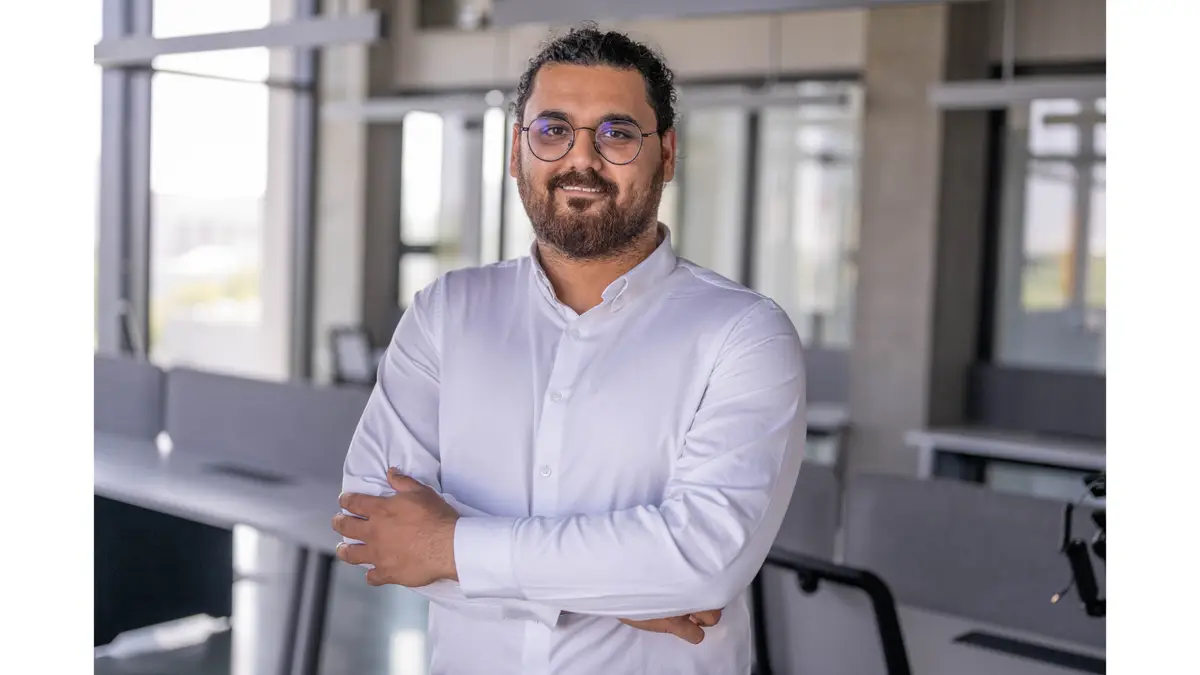
Gaurav Seth hails from Ahmedabad, Satellite area, which was significant in shaping his early interest in the field. He worked at ISRO for 9 years after he completed his BTech from IIST.
He played critical roles in designing payloads for 5 major Earth observation and interplanetary missions, including Chandrayaan-2, Chandrayaan-3, the RISAT series, and the joint NASA-ISRO NISAR project. Notably, he led the development of India's first airborne foliage penetration (FOPEN) SAR, designed to see objects hidden beneath dense forest canopies. His USP is making devices that can record activities by bypassing dense forests or clouds.
He launched his startup Piersight Space in 2023 to make satellite intelligence far more accessible and cost-effective. In light of this, he was amongst the few people who met the PM, to discuss how India can benefit from such systems.
Gaurav Seth has always believed in having the right intentions. He treats work as a part of life; he enjoys being a learner. Working at ISRO was just a starting point for his career. He is creating a workspace where like-minded people can thrive and grow irrespective of their age. It is a rare quality in a founder.
When we spoke to Gaurav about dedication or hard work and about the sacrifices he must have made in order to achieve such big things at such a young age, he said that he was always a go-with-the-flow person. For him, discipline was always second place. Intentions first. He believes that if you believe in yourself and work towards a goal with a true heart, everything else will fall into place.
Let’s see what Gaurav has to say:
1) After working with ISRO for over 9 years developing SAR systems, what prompted you to come up with PierSight?
Ans: My last project at ISRO was a mission to Venus, planned for a 2023 launch, which was pushed to 2033 due to COVID. That led me to look for other opportunities. I realised India lacked enough opportunities for talent in space technology. At the same time, I saw the need for satellite constellations designed for specific uses. With nearly a decade of experience at ISRO, I felt it was the right time to take the risk.
2) What is PierSight's current trajectory and its plans?
Ans: We are building specialised satellites for specific applications, currently focusing on ocean monitoring, monitoring through thick forest cover and border surveillance. Our three products are Varuna, Vidura and Sanjay. Varuna is planned for launch next year, Vidura has already seen units built and sold, while Sanjay is in the design phase. Long term, I want to build a workplace in India where people can solve hard technological problems and young professionals can take on leadership roles early, not based on their age.
3) What has been the biggest challenge in scaling a deep-tech startup?
Ans: Every day brings a different challenge, from managing company structures to learning about debt financing, joint ventures and sales in the defence market. Technical work is only one part of running a company. Managing finances is equally important because mistakes there can put the entire company at risk.
4) How do you see AI transforming Satellite and Earth-observation data?
Ans: Satellite constellations will generate enormous amounts of data that humans cannot analyse manually. AI can reduce false alarms and help process this information more accurately. It can also make Synthetic Aperture Radar (SAR) imagery easier for people to understand, even if they are unfamiliar with the technology.
5) You recently met the PM—what was your biggest takeaway from that interaction?
The Prime Minister spending around two hours with young companies was a very positive signal about the importance of the space sector to India. It also made me realise that startups like ours have a responsibility. How we perform will help determine how the sector develops in the coming years.
6) For young Indians who want to enter the space-tech industry, what skills or mindset should they develop?
Strong engineering, physics, mathematics and coding skills are a good foundation. Beyond technical ability, young people need integrity and a high degree of initiative. Space technology takes time, and teams may spend three to five years building a product. The industry also needs people in areas such as marketing and finance, not just engineering.
7) Where do you see India's space industry in the next 10 years?
I believe India will become the world's second- or third-largest space ecosystem. We already have the talent needed to compete globally, and India is among the few places outside the US and China with the capacity to serve the space industry.
Rapid Fire:
1) Who has had the biggest influence on your career?
My first boss, Mr Deepak.
2) If not a scientist, what would you become?
An artist.
3) What is harder: building a satellite or raising money?
Building a satellite.
4) If you could put one person into space for 24 hours, who would it be?
An Indian woman.
We look forward to seeing Gaurav reach greater heights and make the nation proud one day. If you are also someone who loves technology and space, this is a very good example to follow. Get your mind in one place and start working towards your goal.