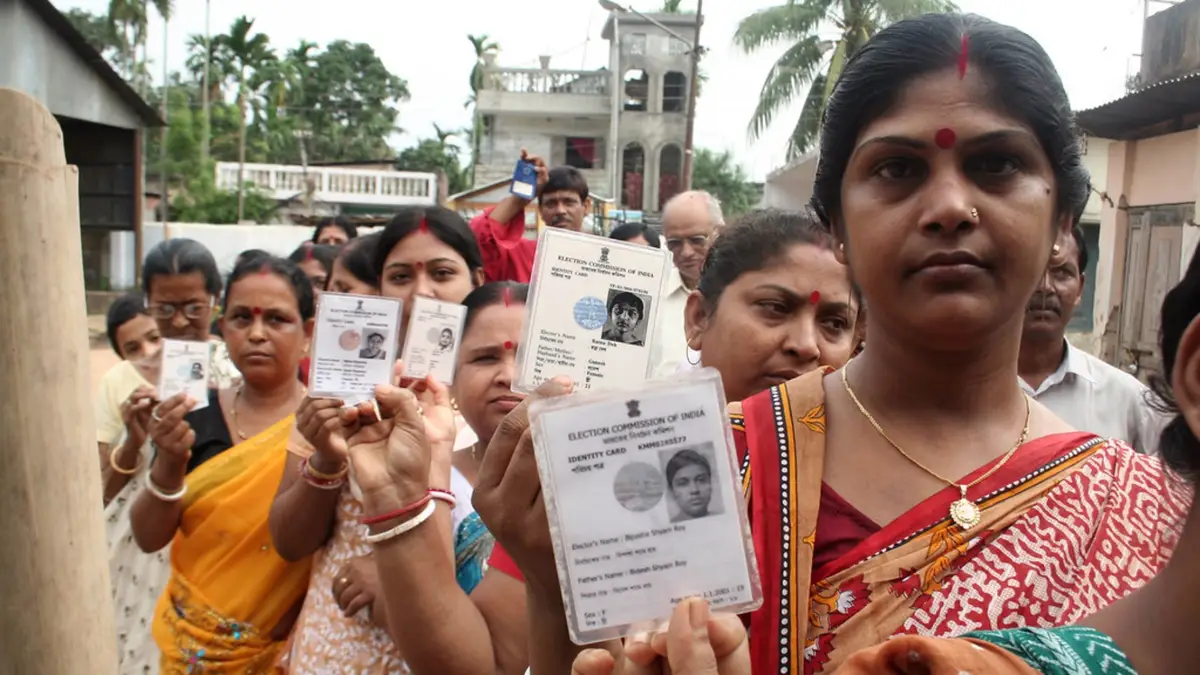
India has the world’s largest electorate, with over 900 million registered voters eligible to participate in elections conducted across the country. During this crucial time, the electoral roll is considered one of the important documents as it consists of the list of people who are eligible to vote. It is issued by the Election Commission of India (ECI).
In India, every citizen who turns 18 on any of the four qualifying dates (1 January, 1 April, 1 July and 1 October of the year of revision of the electoral roll) becomes eligible to register as a voter. It is important for the registered voters to check their enrollment status. While at the same time one of the biggest challenges is to keep maintaining an accurate list of voters.
Since as time passes people move cities, change addresses, some people pass away, while some youngsters get eligible to vote after turning 18, or sometimes many voters have duplicate names or have more than two addresses where their voter ID is registered.
Therefore to ensure that elections remain fair and transparent the Election Commission of India conducts an exercise called the SIR - Special Intensive Revision of Electoral Rolls.
The last nationwide Special Intensive Revision (SIR) was conducted between 2002 and 2004. Later, in 2025 the ECI decided to conduct an SIR with its first phase that was held in Bihar, the second phase was conducted in late 2025 and early 2026 in places like Punjab, Uttarakhand, Tamil Nadu, Rajasthan and West Bengal which covered nearly 51 crore electors. Whereas the third and final phase was conducted in May 2026, this phase expands the remaining 16 states and 3 union territories.
In this Booth Level Officers (BLOs) conducted door-to-door verification and distributed enumeration forms to voters. Citizens were asked to verify their personal details and submit supporting documents where required.
Thus, as India continues to grow, urbanise and experience large-scale migration, it is important to update these lists.
What is SIR?
SIR also known as Special Intensive Revision is a process that helps verify and update electoral records. The main purpose of SIR is to comprehensively verify and update electoral rolls by removing incorrect entries, adding eligible voters, correcting errors, and ensuring that voter records reflect current realities. During an SIR exercise, Election Commission officials conduct detailed verification; they conduct door to door visits, collect forms, and check voter details.
Many citizens have recently reported receiving SIR forms at their homes from Booth Level Officers. These are official Election Commission enumeration forms used to verify voter information.
The forms generally ask voters to:
Confirm their name and address.
Verify their date of birth and eligibility.
Update any changes in residence or personal details.
Report duplicate registrations if they exist.
Help election officials confirm that only eligible voters remain on the electoral roll.
Citizens can also verify their electoral registration details through official Election Commission platforms or by contacting their local Booth Level Officer. One of the latest developments is that new voter registration (Form 6) now includes additional declarations related to the ongoing SIR exercise.
Why is the SIR conducted?
SIR is conducted to keep voter lists accurate as the Indian population keeps increasing every year. India’s population is estimated to be around 1.4 billion people. This includes families moving from villages to cities, people migrating from other countries and settling in India, and other demographic changes. Thus, a voter list created years ago may not accurately represent the current population. The SIR helps ensure that voter records match ground realities. For example, a person who moved from one city to another may still appear on the voter list of their previous residential address. Without proper updates, duplicate entries can create inaccuracies in electoral records and increase administrative challenges during elections.
Thus one of the major challenges in maintaining electoral rolls is duplicate registration. A person can appear in two different constituencies, under different spellings of their name, at both their old and new addresses. Thus SIR helps identify and remove these duplications.
India has one of the largest youth populations in the world, with around 371 million people between the ages of 15 and 29. Every year, millions of young Indians turn 18 and become eligible to vote. However, many first-time voters may not be registered on electoral rolls, which makes regular updates important.
Through SIR, eligible citizens who have recently turned 18 can be added to the voter list, ensuring that young Indians have the opportunity to participate in the democratic process. This is especially significant as first-time voters make up an important part of the electorate and play a key role in shaping the future of the country.
How Is SIR Different From Normal Voter List Updates?
Many people confuse regular voter updates with SIR, but they are different.
Regular Revision
A normal voter list update usually focuses on:
Adding new voters
Correcting mistakes
Updating information submitted by citizens
It is generally simpler and happens periodically.
Special Intensive Revision
SIR involves:
More detailed verification
Wider scrutiny of existing records
Greater involvement of election officials
A comprehensive review of voter information
Think of regular updates as editing a document, while SIR is like reviewing the entire document from the beginning.
What Happens During the SIR Process?
The process generally involves several stages.
Step 1: Announcement by Election Authorities
The Election Commission announces the revision schedule and provides guidelines.
Citizens are informed about:
Deadlines
Required documents
Verification procedures
Step 2: Verification of Existing Voters
Election officials review existing voter records.
They may verify:
Name
Address
Age
Eligibility
Other relevant details
In many cases, officials visit households to confirm information.
Step 3: Submission of Forms
Citizens may be required to submit forms confirming their details.
If someone’s information has changed, they can request corrections.
Examples include:
Change of address
Correction in name spelling
Updating personal details
Step 4: Addition of New Voters
Eligible citizens who are 18 years or older can apply for inclusion in the electoral roll.
This ensures young voters are not excluded from elections.
Step 5: Final Publication of Electoral Rolls
After verification and corrections, updated electoral rolls are published.
Citizens can check whether their names appear correctly and raise objections if needed.
What Do Citizens Need to Do During SIR?
Citizens play an important role in making the process successful.
Here are some steps every voter should take:
1. Check Your Name on the Electoral Roll
Every citizen should regularly verify their voter registration details.
This is especially important if you:
Recently moved houses
Changed cities
Turned 18 recently
Have not voted before
2. Keep Important Documents Ready
Depending on the requirements, citizens may need documents related to:
Identity
Address
Eligibility
Keeping updated documents helps avoid delays.
3. Respond During Verification
If election officials visit your home or request verification, citizens should cooperate.
Ignoring verification requests may create problems with voter registration.
4. Report Errors
Citizens should report:
Missing names
Incorrect information
Duplicate entries
A democratic system works best when citizens actively participate.
Why Is SIR Important for India’s Future?
1. Strengthening Democracy
Free and fair elections depend on accurate voter lists.
If eligible citizens are missing from electoral rolls, they lose their right to participate.
If incorrect entries remain, public confidence can be affected.
SIR helps create a stronger foundation for democracy.
2. Managing a Growing Population
India’s population has experienced major demographic changes.
Millions of people move every year for:
Education
Jobs
Business opportunities
Better living conditions
As mobility increases, maintaining accurate voter records becomes more complex.
Future India will require stronger systems to manage these changes.
3. Encouraging Youth Participation
India has one of the world’s youngest populations.
Millions of young people become eligible voters every election cycle.
A well-maintained electoral roll ensures that young voices are represented in decisions about:
Education
Employment
Technology
Climate policy
Economic growth
4. Improving Election Transparency
Trust is one of the most important elements of democracy.
Citizens need confidence that elections are conducted using accurate information.
A transparent voter verification process can improve public faith in election systems.
5. Preparing for a Digital Future
India’s governance systems are becoming increasingly digital.
Future electoral systems may rely more on:
Digital verification
Secure databases
Faster updates
Better coordination between government records
SIR represents part of the larger effort to modernise election management.
Challenges and Concerns Around SIR
While SIR has important objectives, large-scale voter verification exercises can also raise concerns.
Documentation Challenges
Some citizens may face difficulties if they do not have updated documents or records.
This can especially affect:
Elderly citizens
Migrant workers
People who frequently change locations
Ensuring that genuine voters are not excluded is a major responsibility.
Awareness Gaps
Many citizens are unaware of voter registration procedures.
Better communication and public awareness campaigns are necessary to ensure everyone understands what action they need to take.
Balancing Accuracy and Accessibility
The goal of SIR is to improve electoral accuracy, but the process must also ensure that every eligible citizen can participate.
A strong electoral system requires both:
Reliable voter lists
Easy access to registration
The Role of Young Indians
Young citizens are not just future voters — they are current participants in democracy.
They can contribute by:
Registering when they turn 18
Encouraging family members to check their details
Understanding election processes
Staying informed about civic responsibilities
A democracy becomes stronger when citizens actively engage with it.
To conclude, SIR is not merely an administrative exercise; it is an important process to ensure that India’s electoral rolls remain accurate, inclusive and transparent. As the country experiences rapid urbanisation, migration and demographic changes, maintaining updated voter records becomes essential for protecting every eligible citizen’s right to vote.