
Some people have jobs that make you ask, “Wait, you guys are getting paid for this?”
When we think of careers, the only options that pop up in our heads are accountants, engineers, doctors and lawyers. That’s what most of us grew up believing. The conventional careers have been the safety net for decades. Parents are always mentoring their children, sometimes even forcing them to get into one of these streams for a financially secure future.
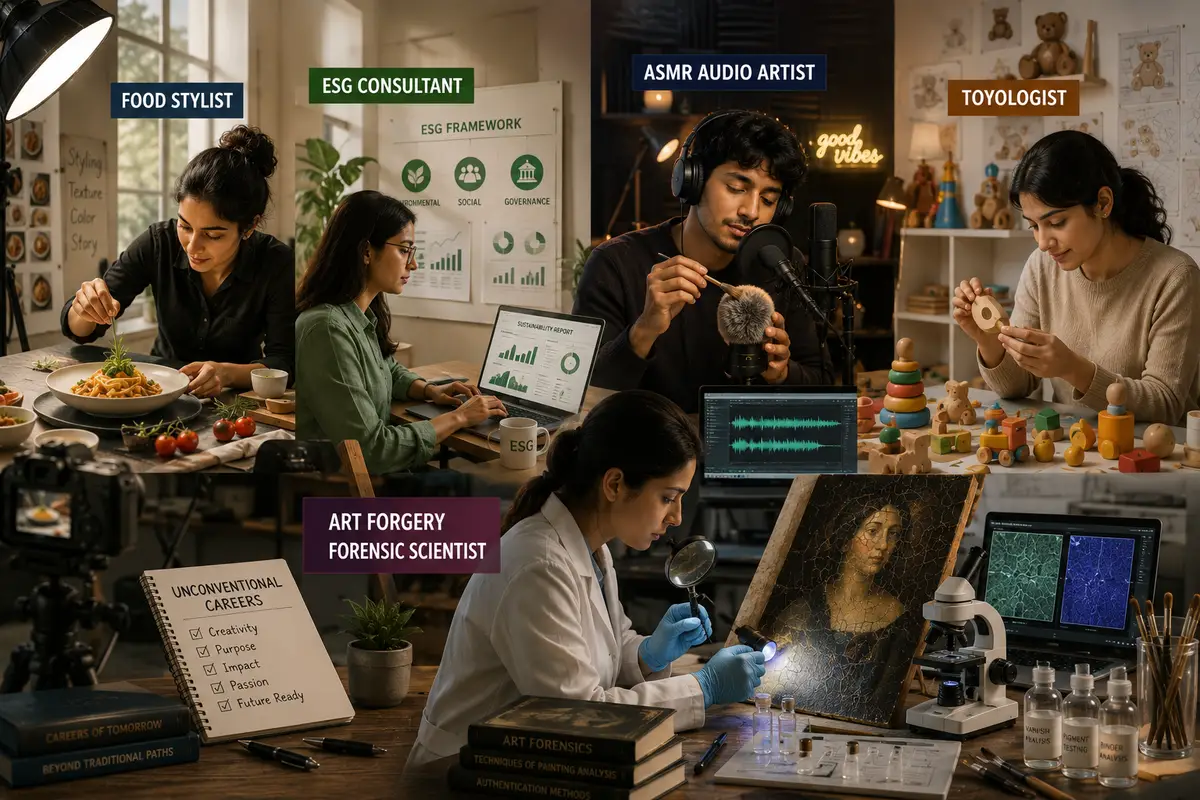
The scenario has changed in the past few years. There are many other careers that students are navigating and excelling in. The job market has grown extensively. There are so many things that young candidates are now getting paid for, which once looked like hobbies. Today we are going to talk about 5 unconventional careers. You can develop skills for these and start earning generous amounts of money. The modern workplace is creating careers at the intersection of science, creativity, business and curiosity.
Food Stylist
A food stylist is someone who can make food appear to be delicious and fresh for photographs, advertisements and movies, even if no one’s going to eat it. They use culinary tricks and tips to keep dishes looking perfect even under hot studio lights. They work closely with photographers, directors and art directors to understand a brand’s style. While a chef focuses on taste and texture, a food stylist focuses on appearance and durability.
Food stylists work in photo and film studios, commercial kitchens or restaurants. Advertising agencies, publishing companies, and the entertainment industry mainly hire them. Their work location changes as per the client's demands.
Skills required to become a food stylist
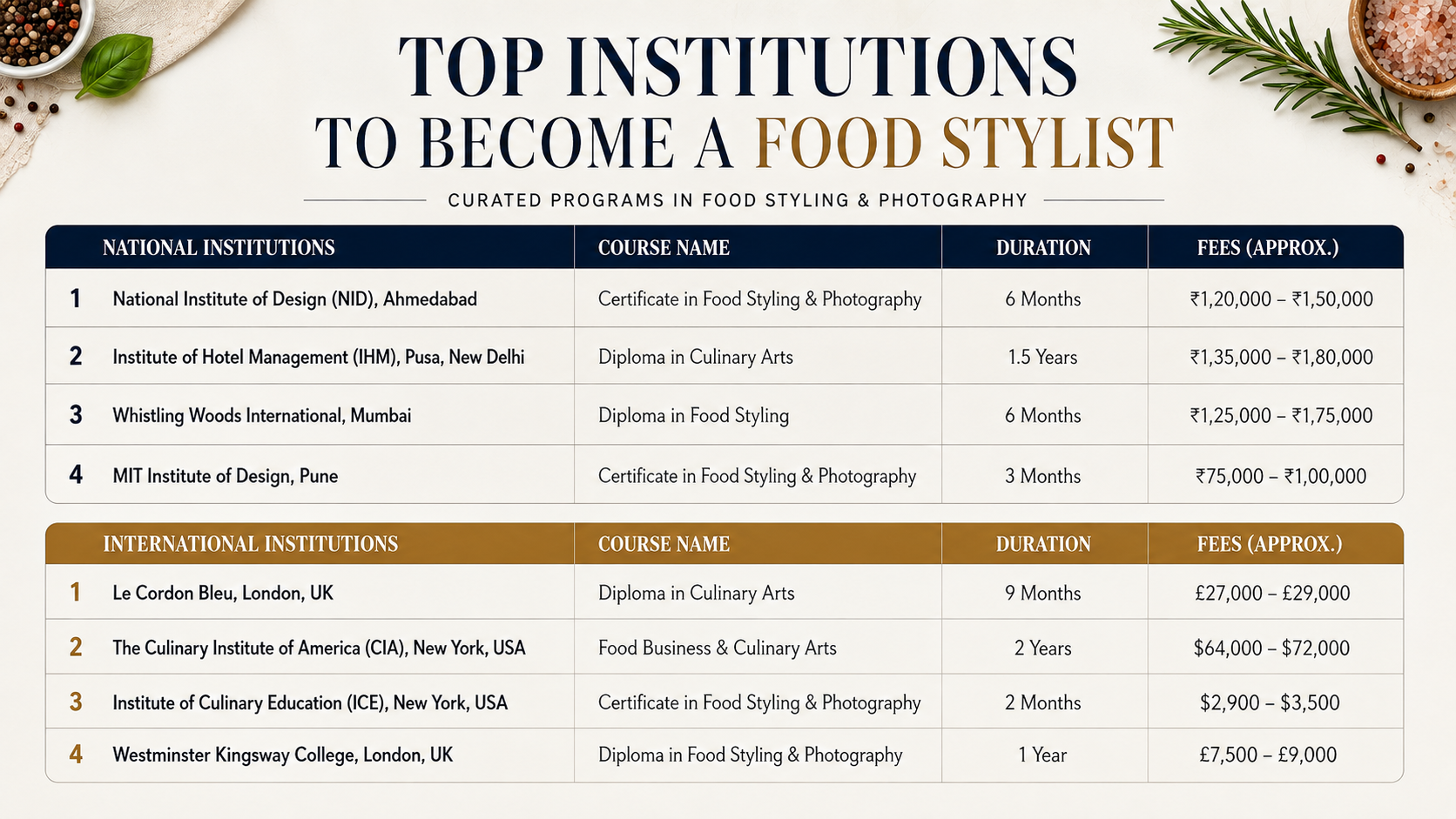
To become a food stylist, a culinary arts degree or diploma is a must. An additional food styling workshop certificate or background in visual arts to understand and work with lighting and camera helps.
Food Stylists do not have a monthly salary unless they work full time with some food magazines, media houses or FMCG companies. Entry-level stylists get up to ₹3000 per project. And it can go up to ₹75000 per project, completely based on experience and skills.
Where can you study?
Sustainability & ESG Consultant
ESG stands for environment, social and governance. An ESG consultant helps businesses to measure and improve their ethics and green practices. They can provide guidelines to match legal rules and investor goals.
Laws in India and globally make ESG reporting and compliance mandatory for large companies, which requires businesses to use specialised internal teams or external consultants to meet legal standards. Even SEBI requires the top 1000 listed companies to file annual BRSR disclosures. As an ESG consultant, your main job would involve auditing the weak spots of the company, building roadmaps for net-zero or diversity goals, and using GRI [Global Reporting Initiative] or BRSR [Business Responsibility and Sustainability Reporting] to write official reports as per global standards. An ESG professional keeps track of carbon footprints, conducts hands-on materiality assessments and gap analysis and develops strategy on the basis of these.
Skills required to become an ESG Consultant
ESG Reporting Frameworks like GRI, BRSR and SASB [Sustainability Accounting Standards Board]
Carbon Accounting to track and calculate Scope 1 (direct), Scope 2 (energy indirect), and Scope 3 (value chain) emissions
Excel for data analysis
Awareness of local and global laws and reforms governing corporate sustainability
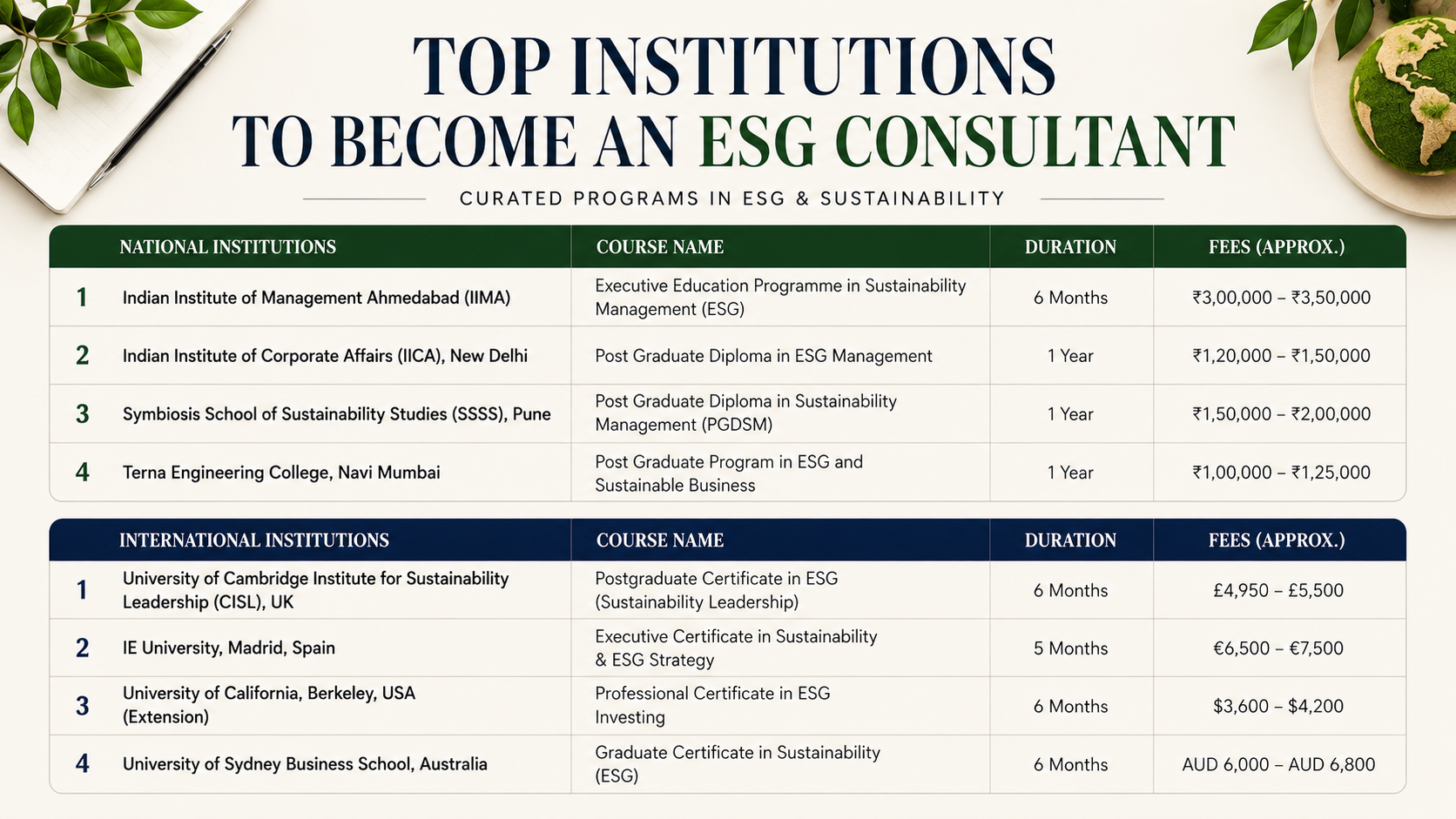
Useful Certifications like Certified Sustainability (ESG) Practitioner Program, CFA Institute Certificate in ESG Investing, and GARP Sustainability and Climate Risk.
ESG Consultant and Sustainability Consultant are both words used interchangeably, but the difference lies in their work. While a sustainability consultant only takes care of the company’s effect on the environment, an ESG Consultant works on the company’s future in accordance with climate and social risks.
Where can you study?
ASMR Audio Artist
An Autonomous Sensory Meridian Response [ASMR] is triggered by specialised auditory or audiovisual content. It is done to induce a relaxing feeling, sort of a tingling sensation proceeding from the scalp towards the neck. It is made using sounds of whispering, tapping, scratching or binaural recordings.
For creating these sounds, equipment like a 3D audio setup, low self-noise preamp, shock mounts and pop filters, acoustic panels, bass traps and heavy isolation fabrics are required. Once the recording is finished. It can be edited through digital audio workstations, Spectral repair & de-clicking and Parametric Equalizers.
The highest use of ASMR videos is via YouTube. It can yield monetary results if it works well. Platforms like Spotify, Amazon Music and Apple Podcasts also host ASMR audio. It can help with insomnia management, anxiety & stress relief, focus & ADHD support, video game audio, music production, sensory advertising, and realistic unboxing experience.
Skills required to become an ASMR Audio Artist
Expertise in binaural recording, gain and gain staging, EQ & frequency shaping, compression and limiting and noise reduction.
Control of breath, sustained whispering, pacing and cadence, and spatial awareness
Knowledge of trigger texturing, layering and mixing, and stereo imaging
Where can you study?
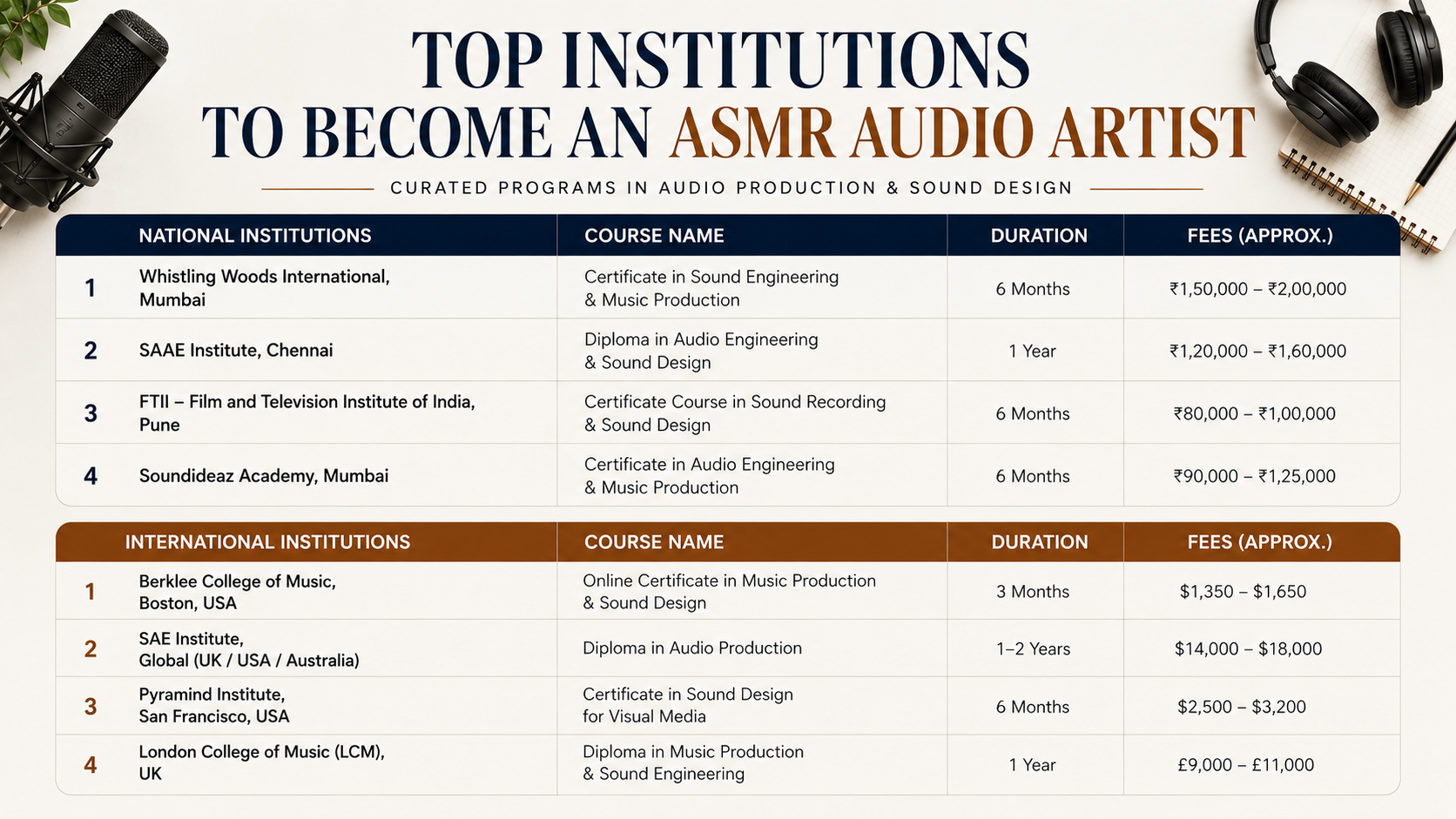
Toyologist
A toyologist is someone who reviews, evaluates and promotes toys. Before the toy reaches consumers, a toyologist makes sure that it is appropriate for children, that it is structurally safe and harmless for kids or adults. They can work with accredited laboratories and make evaluations through trials. Toys go through design and risk assessment, physical and mechanical testing, chemical screening, flammability and electrical checks, and user and play testing before hitting the market.
For child development, a toyologist ensures that toys are age-graded properly, checks if they are used for any skill growth, and makes sure that they are easy to play with without the kids getting frustrated. They keep a strict check on legal compliance, physical tests and chemical hazards.
After this, they also try to make sure that the packaging is attractive. Toys have dual markets as they should be liked by the kids and their parents. They try to take full advantage of trends and technology.
These professionals can work in toy companies and brands as in-house researchers, brand managers, and sourcing and production personnel. They work with independent testing labs for third-party certification, compliance management and failure analysis.
Skills required to become a Toyologist
Degree in Child Psychology & Human Development
Mechanical Engineering
Chemical Science
Industrial Design
Regulatory Expertise, Observational Research, Risk Assessment and cross-functional communication.
Where can you study?
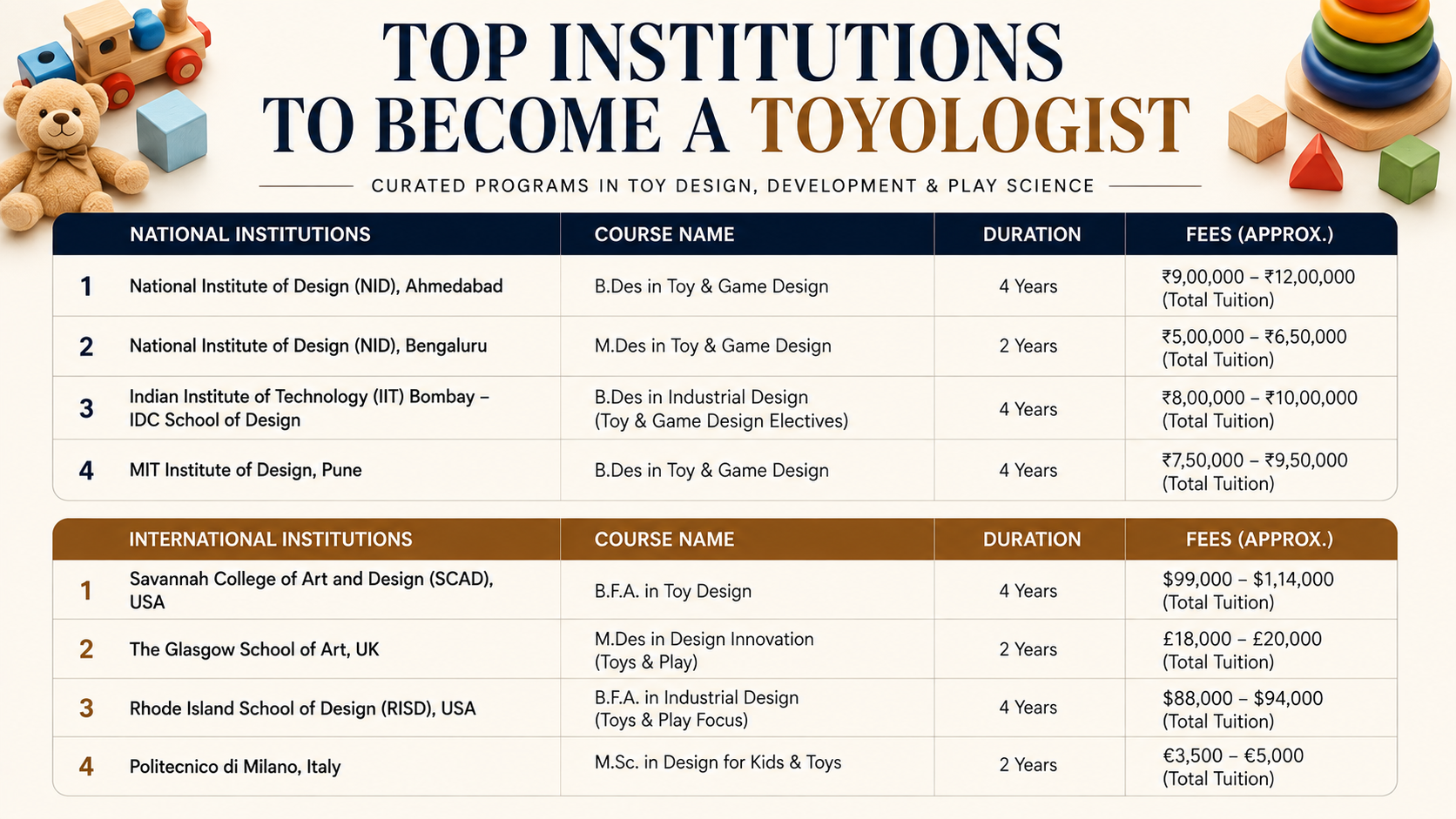
Art Forgery Forensic Scientist
Art Forgery Forensic Scientist is someone who uses technology and tests to check the authenticity of a valued painting or artefact. They can do this through pigment analysis, underdrawing imaging, age determination and microscopy.
To identify the chemical formula, they use different types of spectroscopy, which measure how light interacts with the materials of the object. Microscopy is used to check the details that the human eye cannot see, like the pattern of brush strokes and tapped dust. When the non-destructive ways of testing do not give accurate results, scientists can use chemical analysis and dating techniques by collecting tiny samples to identify recipes and formulations. They use radiocarbon dating to identify the creation timeline of canvas, wood or paper based on their decay. Catching anachronisms, that is, products on an artefact or painting that did not exist when it was originally made, is the most definitive method and a foolproof way of spotting a fake.
However, this won’t be done without being in contact with 3 most important pillars. Every Art Forgery Forensic Scientist needs to be in touch with Art historians for cross-reference and to check the data on which pieces came from where and who all had access to it, or whether it underwent a known restoration. They keep in touch with conservators to determine where to collect samples from without damaging the piece, in case the non-destructive approach doesn’t work. They also help determine if the piece was restored in a certain year or made fake in a certain year. The final pillar is the museums. Before museums display or acquire any pieces, they get them checked by the scientists to ensure their authenticity.
Skills required to become an Art Forgery Forensic Scientist
Organic and Inorganic Chemistry, Mineralogy
Instrument Expertise
Understanding the physical properties of canvas, wood panels, paper, and animal glues
Micro-sampling
Distinguishing repairs
Methodology for objective, unbiased testing, rigorous documentation, and cross-contamination prevention
Trace Evidence Analysis
Expert Testimony
Bachelor’s degree in Chemistry or Materials Science, followed by a Master’s or PhD in Heritage Science or Archaeometry
Master's degree in Art Conservation
Course in Art History
Where can you study?
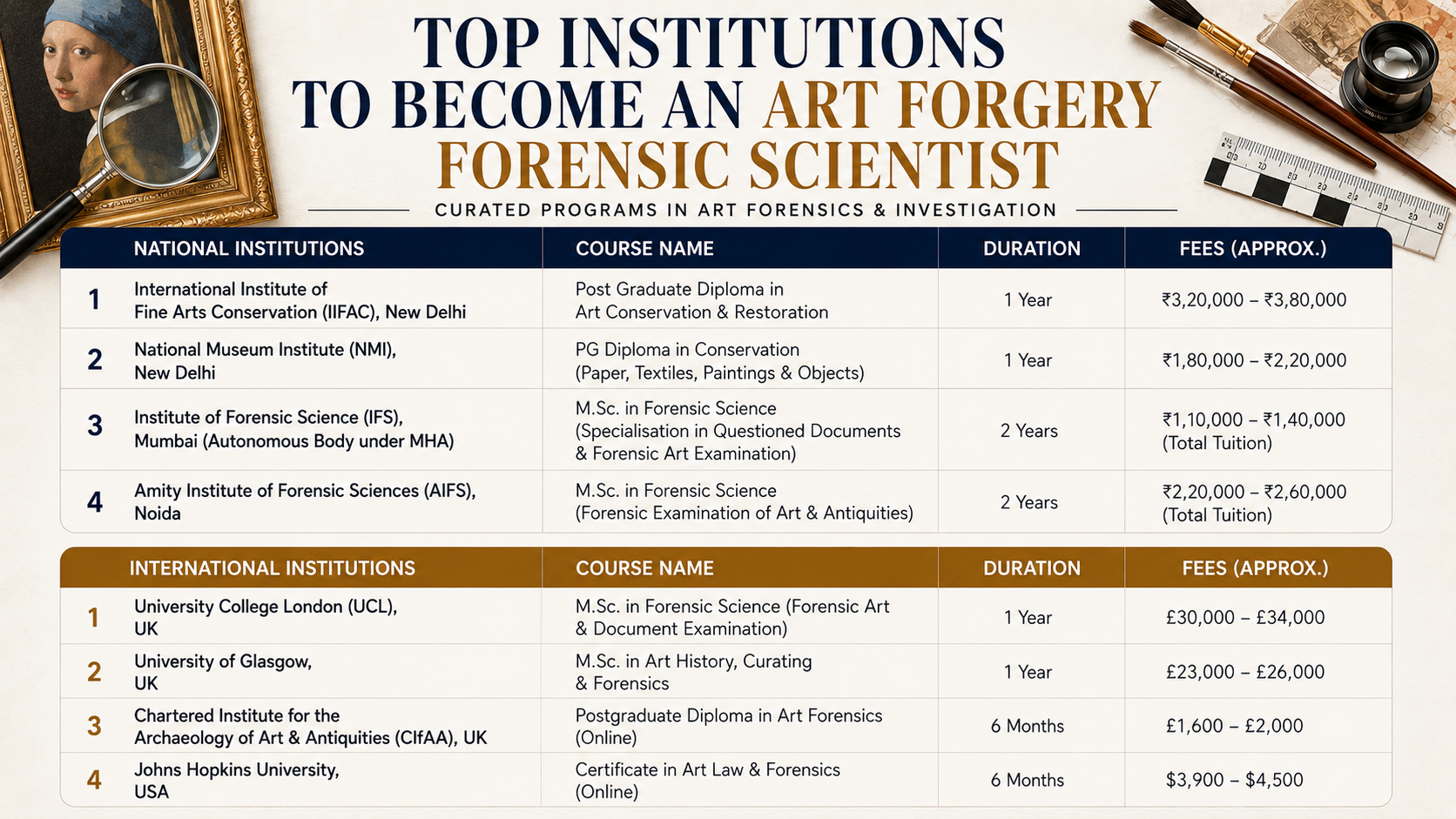
Closing
All these careers might be completely different, but they have one thing in common - turning unusual interests into career opportunities. With more specialised industries, there are many other roles that are unconventional and not thought of. Your hobby could actually pay you. So make sure that you research well and choose a career that you can enjoy, and that also gives you financial stability.