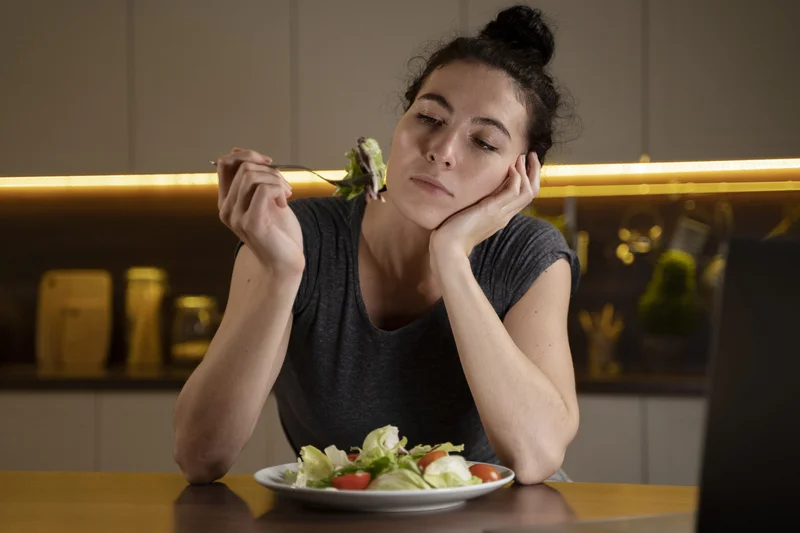

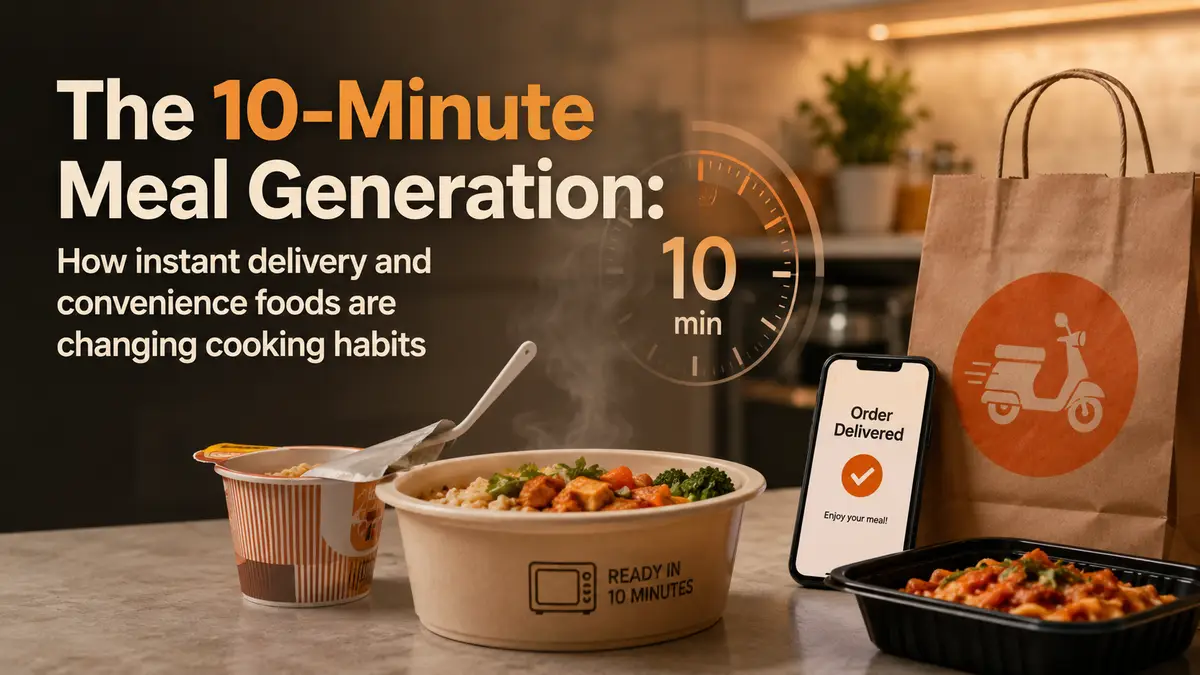
The clock hits 8.30, you are back from work, all tired and dizzy; your stomach is growling, and you check the fridge. You have 2 options now: chop the veggies, do all the work and make a comforting, warm meal or open the delivery app and order food that will be on your doorstep even before you freshen up. And if we're honest, the second option often wins. We now live in a world where waiting 30 minutes for dinner can feel like an inconvenience, and the surge of 10-minute delivery apps has added to the fire. This generation, hustling through jobs and barely making ends meet, has adapted to a fast-paced lifestyle and is therefore sometimes called the 10-minute generation for our chore habits. But what exactly is a 10-minute meal generation?
The 10-minute meal generation is more than just food arriving at your doorstep in a matter of minutes. It shows a larger shift where the motive is to make eating as fast and effortless as possible. From 10-minute grocery delivery to Ready-to-eat meals, including Instant noodles and pasta, Frozen snacks, Pre-cut vegetables and Meal kits, convenience has found its way into almost every step of the cooking process. Even air-fryer-friendly frozen foods and 10-minute delivery apps are a part of this growing system. The goal here is simple: removing the hassle from eating.
What began as a solution for busy schedules has gradually become a lifestyle. The question is no longer just “What do I want to eat?” but “How quickly can I have it?”
The biggest advantage: Convenience
For students, young professionals, people living alone and busy families, convenience foods can genuinely make life easier. For people who spend almost their entire day at college and work, cooking after a hectic day becomes a huge task. This is where delivery food comes to the rescue, as it reduces the stress of planning and preparing meals. These apps not only help working people but also lend a hand to those who don't know how to cook or to someone who has too many unannounced guests. Many make this convenience into an argument for laziness. However, convenience isn't necessarily laziness. Sometimes, convenience is simply what a busy life requires.
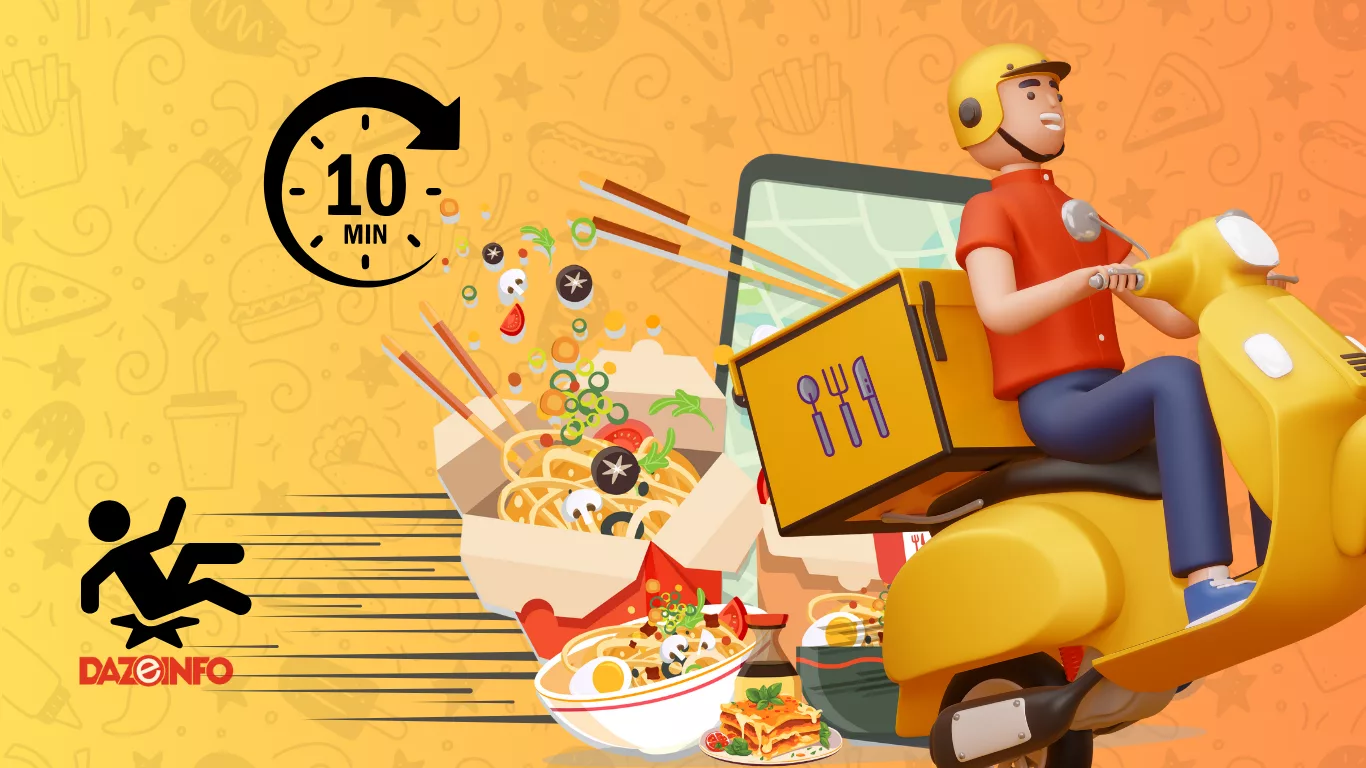
The hidden cost of convenience
Despite being convenient for people in need, these delivered foods come with a hidden cost that most often tend to ignore. The major one is literally the cost. Delivered items have higher charges as compared to home-cooked food. Delivery charges, handling fees, GST and other taxes all add up to a hefty amount. These costs are higher compared to cooking at home. Another hindrance is that we might never know what ingredients are used in the making and what the quality is. Unlike home-cooked meals, delivered food might not be nutrient-rich and might come with high levels of salt, sugar or saturated fat in some products. Delivery apps can also trigger the habit of impulsive spending. Using these platforms when you are really in a time crunch can be useful; however, making it a daily habit can make it a dependency rather than just a convenience. All convenience food isn't unhealthy, and the problem isn't that it exists. The problem is when convenience becomes the default
The rise of “shortcut cooking”
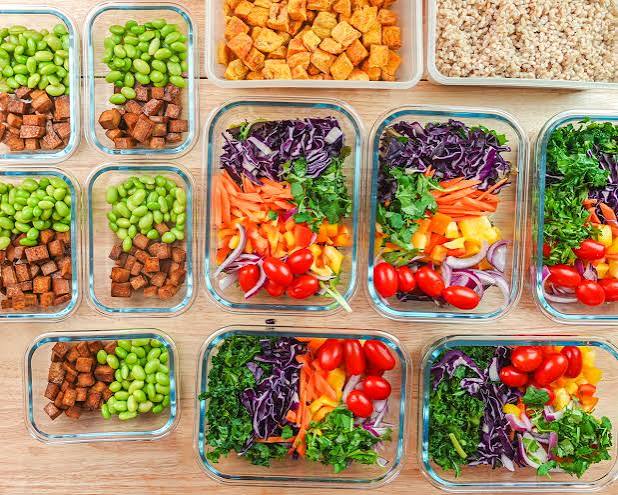
We might know both sides of the 10-minute food habits, but there is a middle ground, too, that most people often ignore. Not everyone is choosing between homemade biryani and a food-delivery app. There is a growing middle category: “I want to cook, but I don't want to do all the work.” This is where convenience meets home cooking. There is a growing trend of meal planning among working-class people, which ensures you have warm, home-cooked meals instantly without the burden of preparing things from scratch.
The smart way is to choose one weekend and turn it into a meal prep day; this makes cooking easy for the rest of the week. Things like pre-cut vegetables or buying instant dosa/idli batter and making ready-to-go curry pastes can instantly cut a lot of time from the cooking process. Frozen parathas and pre-marinated ingredients can make amazing Ready-to-cook meals that you can just toss into the pan or the oven, reducing the hassle of cooking. With this, we’re not necessarily moving from cooking to not cooking, but may be moving from cooking everything from scratch to assembling meals intelligently.
Does convenience give us more time, or just fill the time differently?
Well, most of the time these delivery apps are used, the motive usually is to save time. If cooking takes around 30 minutes or an hour and ordering just takes 5-10 minutes, what are we doing with that remaining time? Do we use it to exercise, catch up with family, read a book or simply get some much-needed sleep? Or do we spend those 25 minutes scrolling through Instagram while waiting for our food to arrive?
This is where the conversation about convenience becomes interesting because saving time doesn't automatically mean that we are using that time effectively. These technologies often tend to give us back some time just to take it away from us in a different way. The bigger question, then, isn't whether convenience is saving us time. It's what we're choosing to do with the time it saves. In a world which is mostly designed around speed, choosing to spend those 30 minutes cooking a meal can sound inconvenient. However, sometimes, not everything that saves time makes life better.
Could you make a meal in 10 minutes without ordering anything? Maybe some eggs on toast, some stir-fried veggies with rice or just a simple sandwich. The point isn’t to romanticise cooking or shame convenience. It’s simply worth asking: Are we becoming better at feeding ourselves or simply better at getting food?