Most often, when we choose a stream to study post-school, we assume that we will stick to it for the rest of our lives. If we study engineering, we look forward to earning and retiring as an Engineer. The same applies to CA's, Doctors, Lawyers, artists, or any other field.
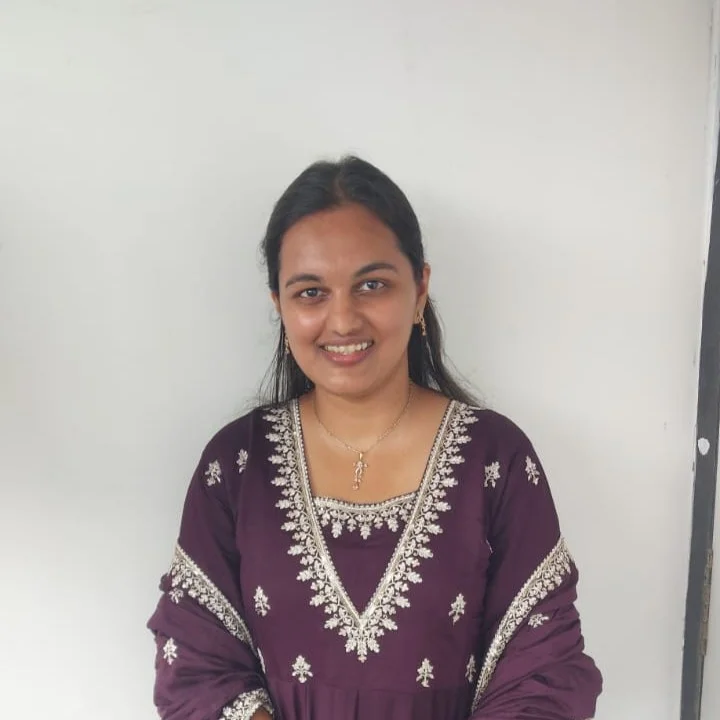
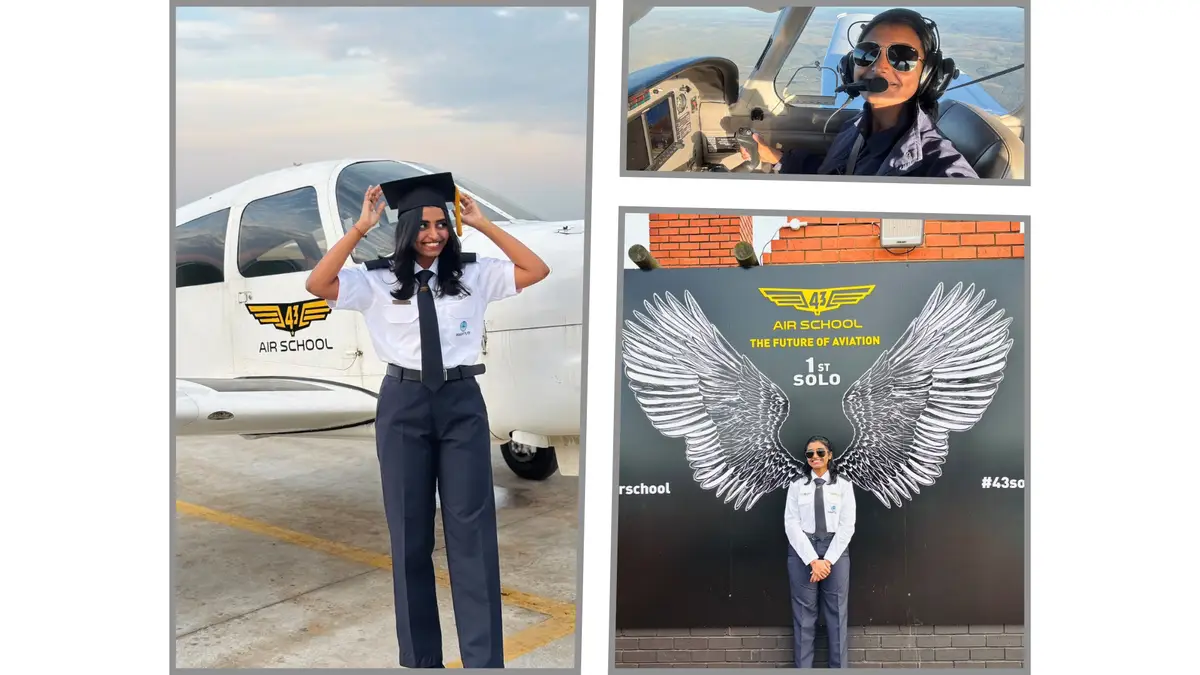
But 20-year-old Dhriti Reddy from Hyderabad defied these mainstream ideas. A strong-willed mother and a hardworking father raised Dhriti to always follow her passion. As a student at Woxsen University, she served in several student administrative roles, including One-Day Vice President, Vice President Intern, Campus Ambassador, and Administrative Liaison, and was selected for the Rising Stars leadership program. She spent her fourth semester as an international exchange student at IE University in Madrid, Spain, expanding her global business perspective. Despite being a top student at her university while pursuing a BBA Hons. [specialising in Entrepreneurship Development], she decided to become a Pilot.
She underwent rigorous flight training, completing major examination milestones at the 43 Air School, where she recorded a high academic score average of 83.3%.
We had the opportunity to speak with Dhriti about her life choices, her tips for success, her unending positivity, love and dedication towards her dream. Below is what she had to say:
1) What made you choose a BBA in Entrepreneurship Development in the first place - and what did you think your life would look like when you graduated?
Ans: Before I knew what I wanted to pursue, I had a vivid idea of what I didn't want to do. Engineering, for example, wasn't for me because I felt it was restricted to a particular domain and didn't align with my personal attributes.
I wanted something timeless and universal that would give me a strong foundation to pursue my passion and navigate the real world. For me, that was business.
I researched extensively because I didn't see a degree as just a piece of paper. The degree gave me strategic thinking, communication and decision-making skills, which have helped me throughout my professional life.
2) What was the defining moment when you decided, “I'm actually going to become a pilot”?
Ans: There wasn't one defining moment. I was around 11 or 12 when I developed this love for the cockpit and the uniform. Later, I started researching aircraft and aviation, and the idea kept building over the years.
During the last semester of my degree, I applied to IndiGo and got in. Interestingly, while I was training, I was also giving my final-semester exams at university. I was doing both simultaneously.
So, there wasn't one dramatic moment. It just kept building inside me, and I kept following it.
3) You studied Entrepreneurship Development and eventually became a commercial pilot. When did you first realise that the career you were preparing for wasn't necessarily the career you wanted?
Ans: Honestly, the transition into aviation was never sudden. It had always been there. What was unplanned was pursuing my degree.
I've always travelled a lot because my family believed that travelling broadens your horizons. During these trips, I found the cockpit and pilots quite intriguing. I remember my dad talking about the charisma and aura that pilots portrayed, and I used to wonder, "What if I had the same aura and charisma? Would people look at me the same way?"
That's when the idea of becoming a pilot was first imprinted in my mind. I was quite young, so nobody took it seriously initially. But it stayed with me.
When COVID hit, the aviation industry wasn't doing well, so I decided to pursue a degree first and I chose university instead. It wasn't a backup. I always believed education expands possibilities rather than restricting them. I thought I would explore other opportunities and eventually return to what I had always loved. But when I started doing well at university - with good grades, internships, extracurricular activities, an exchange semester in Spain and leadership opportunities - people assumed I had moved on from aviation.
At one point, I also wondered whether my heart and mind might shift towards business because I was doing so well. But my passion was strong enough to dominate that fear.
I give all the credit to my parents. Whenever I proposed something unconventional, they trusted that I would be able to achieve it.
4) What's a skill that young people should start developing today, regardless of their eventual career path?
Ans: I strongly believe in four Ps: passion, patience, perseverance and purpose.
Skills are often crisis-driven or acquired when a situation demands them. But having a passion or goal drives you to gain whatever skills are necessary for that profession.
I always tell my younger sister to have passion and patience because achieving something meaningful takes time. You need perseverance along the way, and eventually, that helps you discover your purpose.
5) What has becoming a pilot taught you about yourself that you didn't know before?
Ans: Two things I never expected were learning to live in solitude and becoming extremely calm under pressure.
I've always been an extrovert and loved having people around me. Training taught me how to be productive and comfortable in solitude.
It also made me much more stoic. As pilots, we have to make decisions and communicate within seconds. It's very different from having a deadline that's days or weeks away. We're making decisions under pressure almost instantly, and that has made me extremely peaceful and calm while still being able to make decisions quickly.
6) What matters more in the early years of a career: qualifications, connections, confidence, or competence? And why?
Ans: I would put all four on the same scale because I strongly believe they're directly proportional to one another.
Meaningful connections are very significant, but how well you connect with people depends on your confidence. Confidence comes from knowledge and awareness, while competence comes from developing the right skills.
Qualification - whether academic or personal - also forms part of that foundation. They're all connected and need to continue throughout your career, not just in the early years.
7) What is one thing you wish every young person understood before choosing their career?
Ans: One of my favourite sayings, which many pilots use, is: "You can always go around."
When we're coming in for a landing and something isn't right, we can always go around and get a second chance.
I strongly believe careers are similar. Whatever you're doing right now, you can always reassess. If you're not happy, you can think again and start something new.
Even if you're concerned about financial stability, you can stay where you are while figuring out what you can build from your passion. Your passion and purpose should be in equilibrium with what you're doing.
It doesn't necessarily have to be something you're insanely passionate about, but you should at least enjoy what you're doing instead of pursuing something purely for monetary benefits.
8) How important are communication and teamwork in aviation?
Ans: They are the most predominant things in aviation. We work with people we've never met and may never work with again. There's an exchange of literal trust between two strangers who are carrying hundreds of passengers and a huge machine to its final destination safely.
Once we enter the cockpit, we leave our personal problems outside and focus on communicating, making decisions and trusting one another.
I'm constantly communicating - with my co-pilot, air traffic control and the cabin crew. Whatever I think in my head has to be communicated for it to work. So communication is necessary.
Rapid Fire
Most memorable destination you've flown to?
-Amsterdam, the Netherlands.
Favourite aviation movie?
-Sully.
One thing in your cabin bag?
-My iPad. It has all my life - and all my work - on it.
Your role model?
-My dad. He's a superhero without a cape.
One skill you'd love to master next?
-Mindfulness. I tend to overthink sometimes.
You Can Always Go Around
Dhriti emphasises that no student or professional should work just for monetary gains. Every individual should pursue their own purpose in life and do something that makes them truly happy. Choosing a career can be a significant decision, but unlike what we generally believe, it is not a decision you can’t go back from.
Always dream big and return to your dream no matter what. There will be hurdles along the way. Your path might be unconventional, but you decide to make it. Success follows.