Pool swimmers count laps. Open-water swimmers count how many times they swallow ocean water.
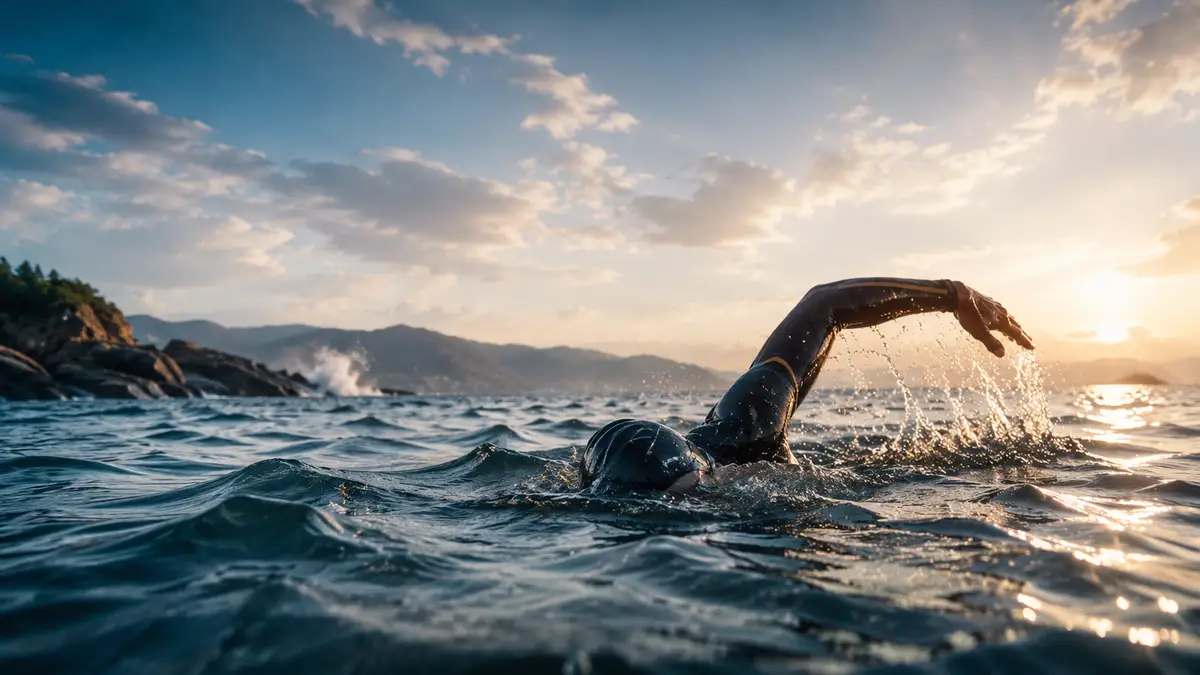
Open water swimming is, as the name suggests, swimming in natural bodies of water such as oceans, rivers, lakes, and more. It has been practised since 36 BCE. It was mainly recorded in Japan. It developed as an Olympic sport in the 19th century. In India, it was recognised in 1943 through the Murshidabad Swimming Association’s Indian National Open Water Swimming Competition on the Bhagrathi River, over a stretch of 81 kms. It remains the longest in the world.
Over the years, many renowned names have made India proud. Bhakti Sharma swam in the English Channel and is also one of the youngest people to swim in the Antarctic Ocean. Rohan More is another such star for the nation, being the 1st Asian and youngest to swim across the Ocean Seven.
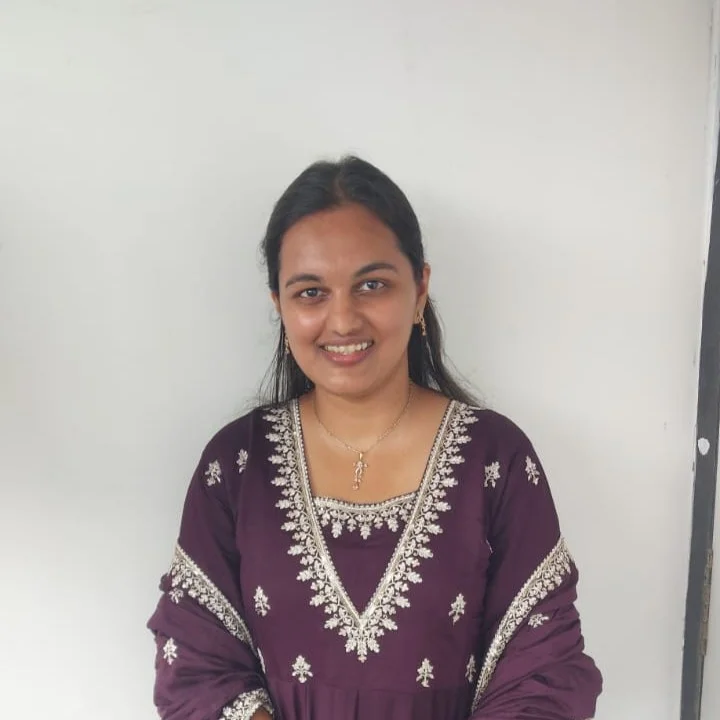
One such extraordinary swimmer that we had the pleasure of interviewing is Hetavi Shah. She is a 21-year-old open water swimmer and an MBA student, currently pursuing an MA alongside. She is a record holder in the India Book of Records for participating in the maximum number of long-distance open water swimathons as a teenager [2013-2019].
Let’s see how she achieved all this:
Q1. Swimming requires mental and physical potential, so what is your source for both?
A. Swimming definitely requires mental and physical potential, for mental potential I have to believe in myself in every situation that I can make it possible, it's all about the mind game and now as we talk about physical, it's all about the body game, it's about training, practice and preparation, so we need to prepare hard and well enough for every race so that we can complete it successfully and it's all about the belief that you can never give up, no matter how difficult the race or the time is.
Q2. When you are in the water, what is your mindset? Do you ever get scared or anything?
A. When I am in the water, my goal is always to focus on the next stroke of my race, I am always thinking about the finishing line or how fast I will complete so that I can secure a place and of course fear is a very natural concept that develops, but on the second thought I try to focus that I have to finish the race and come out quickly.
Q3. What are the advantages of open water swimming, since it's not very commonly done in India? What do you think are the advantages and why should people do that?
A. This is a very interesting question. It has many advantages, as it has taught me resilience, patience and dedication. It has also taught me how to be patient in tough times and how to face the changing situations in our lives. We should never be upset, and you should always stand up for yourself, and I would always encourage the next generation to come into this sport and to take it further.
Q4. Do you think swimming should be made mandatory in schools for the upcoming generation, because we have like cricket and table tennis and all these different sports, like there are races and lemon races and all of that, that is what we come from, so should swimming be made mandatory?
A. Yes, absolutely, it should be made mandatory as it is a very interesting sport and it is a life-saving sport and it teaches you one thing: no matter how hard life is or whatever happens, you should never give up. And if you learn swimming in school, you can teach children to prevent drowning, and they can save someone's life. It is a life-saving skill, and I would encourage every school to take up this so that every new generation can learn about this.
Q5. What has water taught you about life that school never did?
A. Water has always taught me resilience. It means you have to always keep patience, dedication and courage no matter how hard life gets. You have to always keep moving forward and manage away all the obstacles. You have to just keep moving whether the days are hard or not. But keep moving forward is the motto.
Q6. What does discipline look like in your everyday life?
A. Discipline should be a very important motto in every individual's life. For me, it is very significant. As I have set my timetable in the morning, I go swimming. Then I do my assignments. And then I go to college. And in the evening, I do my MBA. So, this is my daily routine. And I like to stay committed to my goals. No matter what happens, showing up every day is a very big deal, whether the day is good or bad.
Q7. You swim every day, like 7 days a week?
A. Yeah, every day.
Q8. What's one habit that changed your performance the most over the years?
A. The one habit that changed my performance over the years is consistency. You need to be consistent in whatever you do, no matter what. Consistency leads you to success in your life. It also gives you more good and higher goals in your life.
Q9. Who is your inspiration? And what does the future look like for you? What is your next target?
A. My mom and my dad are both my inspiration. My dad is my inspiration for my swimming. And my mom is my inspiration for my after-swimming, like my diet and my rest. And for my academics also, I need her. So, both are my equal inspiration. And they are my biggest support system. And I would like to say to the youth that you should also come and participate in this group. So that this can change the aura of our country. And in the next generation, this can be a golden era of the country.
A Quick Rapid Fire:
One word that describes open water to you? River.
One word that describes open water swimming? Freedom.
A sport you would love to try other than open water swimming? Solo sea swimming.
Other than swimming, who do you like to try and swim? Maybe badminton or cricket? Triathlon.
One habit you can't skip? Training.
Dream swimming destination? English Channel.
Three words today you should live by? Discipline, courage and consistency.
The Takeaway
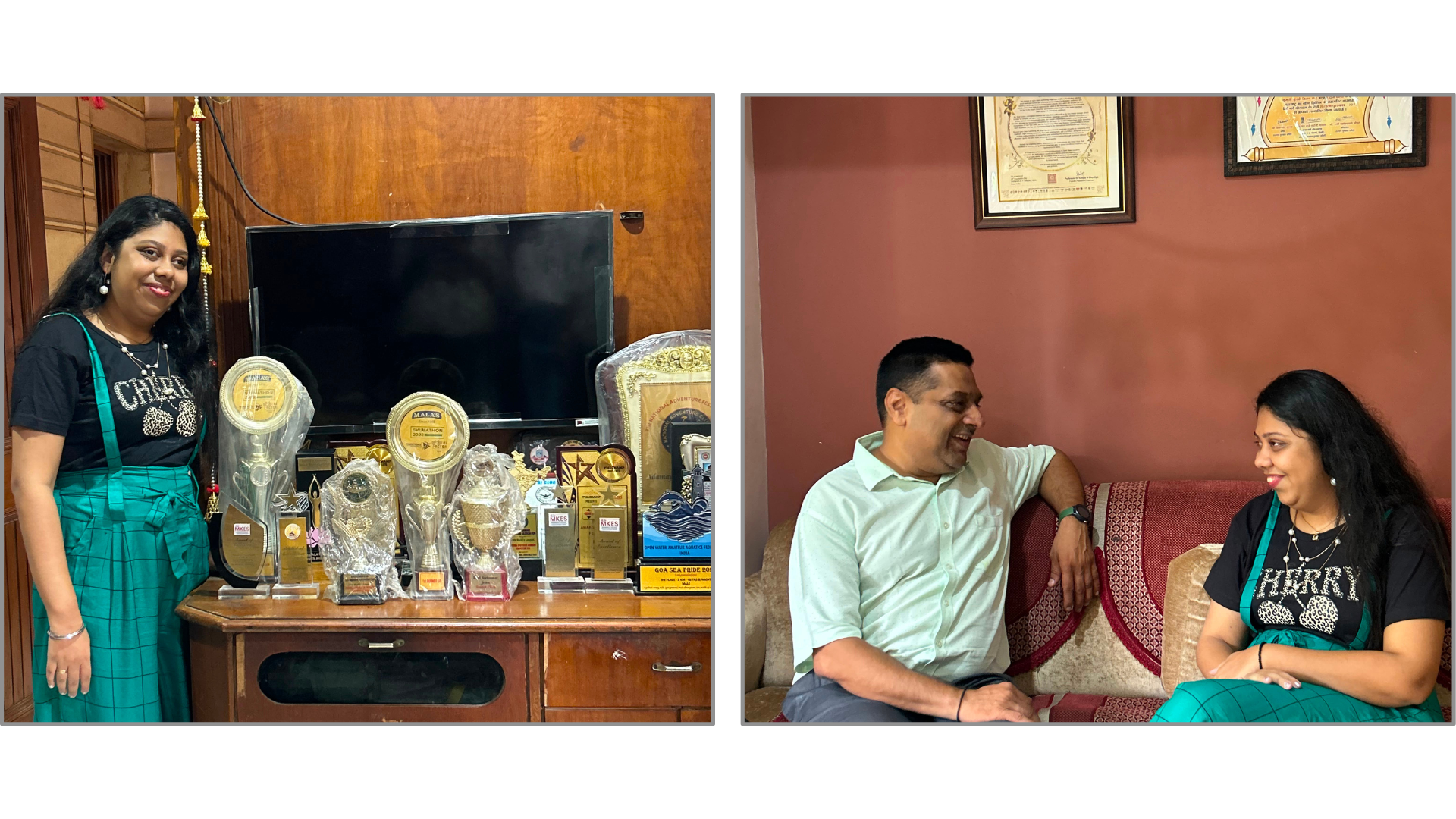
Hetavi Shah is undoubtedly an inspiration to the younger generation. Her heart-warming smile, her down-to-earth personality and maturity while talking to us definitely struck a cord in our hearts. Apart from that, she is a recipient of the Champions Of Change Award. She is also featured by HEROes Movement on the Her Circle platform run by Nita Ambani.
She is the first Indian female athlete to finish 28 swimathons covering a total of 212 kms. She is also the first athlete to represent the country in the Perhentian Island Championship 2022 in Malaysia. She has completed the world’s longest International Marathon Swimming Race 4 times in Murshidabad, which is 19 km long. She has 13 prestigious awards from many cities and states across India. She swam 16 miles (25 km) 3 times in All India Veer Savarkar Sea Swimming Competitions from Adri to Veraval. This event is organised by the Sports, Youth and Cultural Activities Department, Government of Gujarat. Hetavi has also finished 3 times in the National Takshila Open Water Long Distance Ganga swimming competition at Patna from Shiva ghat ( Digha) to Law College Ghat, Patna.
Open water swimming is a very difficult sport that requires a lot of training, dedication, consistency and a very strong mindset. Hetavi has been swimming since the age of 4. Her father, Vinay Shah, is an open-water swimmer too. With that said, we hope to see more schools take up swimming as an extracurricular activity. The sport is also a very good business opportunity, as the market is unorganised and there is a lot of potential.
While there are so many other swimming champions in our nation, there is no proper central committee or association to organise, manage, sponsor or take care of this sport. There are state-wise organisations, but considering the density of the sport, there is a huge need for involvement and support from the system.