Fashion is no longer limited to glamorous runway shows and celebrity wardrobes. Today, it is one of the fastest-growing creative industries in India, offering career opportunities in apparel design, styling, luxury branding, fashion communication, textile innovation, merchandising, and entrepreneurship. With the Indian fashion and retail industry expanding rapidly, more students are considering professional courses in fashion design after Class 12.
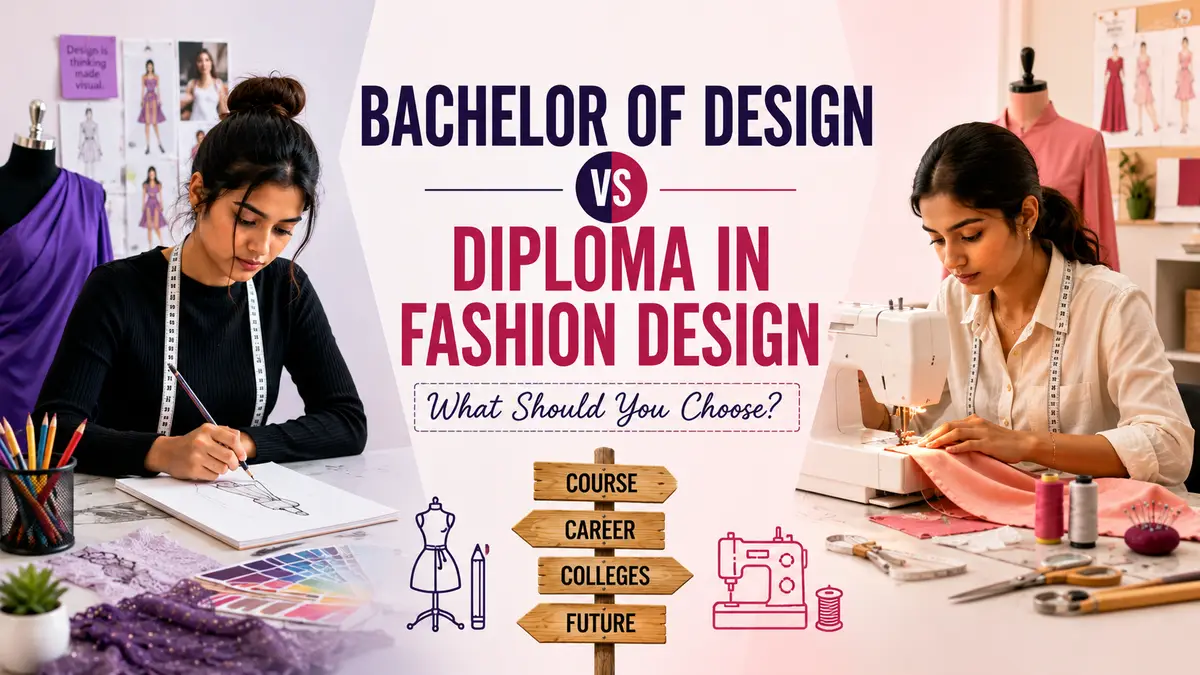
However, one major question often confuses aspiring designers: should you pursue a Bachelor of Design (BDes) in Fashion Design or opt for a Diploma in Fashion Design?
Both programs can help students enter the fashion world, but they differ significantly in terms of curriculum, duration, industry exposure, career opportunities, and long-term growth. Choosing the right path depends on your goals, budget, time commitment, and the type of career you envision for yourself.
This detailed guide explores the differences between a BDes and a Diploma in Fashion Design, along with examples of top colleges, famous Indian fashion designers, and leading companies in the fashion industry.
Understanding a BDes in Fashion Design
A Bachelor of Design (BDes) in Fashion Design is a professional undergraduate degree that usually lasts three to four years. It is designed to provide students with comprehensive training in fashion design, textiles, garment construction, fashion business, technology, and creativity.
Unlike short-term diploma courses, a BDes offers a more holistic understanding of the fashion ecosystem. Students learn both the artistic and technical aspects of design while also developing critical thinking, research skills, and industry knowledge.
Subjects Covered in BDes Fashion Design
A BDes curriculum usually includes:
Fashion Illustration
Pattern Making and Draping
Textile Science
Garment Construction
Fashion Communication
CAD (Computer-Aided Design)
Fashion Marketing and Merchandising
Fashion History
Styling and Visual Merchandising
Sustainable Fashion
Portfolio Development
Students also participate in:
Fashion shows
Internships
Industry collaborations
Design projects
Workshops with experts
This exposure helps students build strong portfolios and practical experience before entering the industry.
Understanding a Diploma in Fashion Design
A Diploma in Fashion Design is generally a shorter, skill-focused course that lasts from six months to two years. It is ideal for students who want practical training and faster entry into the fashion industry.
Diploma courses focus heavily on technical skills and hands-on learning rather than extensive theory or research.
Topics Covered in Diploma Courses
Diploma students usually learn:
Basic Fashion Sketching
Sewing Techniques
Pattern Making
Garment Construction
Fabric Understanding
Boutique Management
Styling Basics
These programs are useful for students interested in freelancing, tailoring, boutique businesses, or assistant-level design roles.
Advantages of Pursuing a BDes in Fashion Design
1. Better Career Opportunities
A BDes degree is widely recognized by major fashion houses, export companies, luxury brands, and global retailers. Degree holders are often preferred for senior creative and managerial roles.
2. Strong Industry Exposure
Most BDes programs include internships, fashion weeks, design competitions, and collaborations with brands.
3. Diverse Career Paths
Graduates can explore careers in:
Fashion Design
Textile Design
Fashion Styling
Luxury Brand Management
Fashion Journalism
Costume Design
Visual Merchandising
Fashion Entrepreneurship
4. Portfolio Development
BDes students spend years building professional portfolios, which are essential for landing jobs and internships.
5. Eligibility for Higher Education
A degree allows students to pursue:
MDes (Master of Design)
MBA in Fashion Management
International fashion programs
Specialized certifications abroad
Advantages of a Diploma in Fashion Design
1. Shorter Duration
Students can complete diploma programs quickly and start working earlier.
2. Affordable Fees
Diplomas are generally less expensive than full degree programs.
3. Practical Skill Development
Many diploma programs focus directly on industry-relevant technical skills.
4. Suitable for Entrepreneurs
Students wanting to open boutiques, tailoring businesses, or online fashion brands may benefit from short-term practical learning.
Top Fashion Design Colleges in India
India is home to several prestigious fashion institutes known for producing successful designers and fashion professionals.
1. National Institute of Fashion Technology (NIFT)
NIFT is one of India’s most reputed fashion institutes with campuses across multiple cities including Delhi, Mumbai, Bengaluru, Chennai, and Hyderabad.
Popular Courses
BDes in Fashion Design
Fashion Communication
Textile Design
Accessory Design
Why Choose NIFT?
Strong industry reputation
Excellent placements
Exposure to fashion weeks and brands
Alumni network across the industry
2. National Institute of Design (NID)
NID is known for its design-focused education and innovation-driven curriculum.
Strengths
Creative learning environment
Strong emphasis on design thinking
Excellent industry exposure
3. Pearl Academy
Pearl Academy is popular among students interested in fashion styling, communication, and luxury management.
Highlights
International collaborations
Industry workshops
Modern curriculum
4. Symbiosis Institute of Design
Known for creative design education and interdisciplinary learning.
5. JD Institute of Fashion Technology
Offers both diploma and degree programs with strong practical training.
6. Amity School of Fashion Technology
Provides fashion education combined with business and communication skills.
Famous Fashion Designers in India
India has produced globally recognized fashion designers who have transformed the industry with creativity and innovation.
Manish Malhotra
One of Bollywood’s most influential designers, known for glamorous bridal wear and celebrity styling.
Known For
Bollywood costumes
Luxury couture
Bridal collections
Celebrities like Kareena Kapoor, Alia Bhatt, and Deepika Padukone have worn his designs.
Sabyasachi Mukherjee
Famous for blending Indian craftsmanship with luxury fashion.
Known For
Bridal couture
Traditional Indian textiles
Global celebrity collaborations
His outfits have been worn by international celebrities and Indian brides alike.
Ritu Kumar
A pioneer in reviving traditional Indian textiles and embroidery.
Tarun Tahiliani
Known for combining Indian aesthetics with modern silhouettes.
Masaba Gupta
Popular among younger audiences for bold prints and contemporary fashion.
Anita Dongre
Recognized for sustainable fashion and elegant ethnic wear.
Top Companies to Work for in Fashion
Fashion graduates can work with designers, retail brands, export houses, luxury labels, and e-commerce companies.
Aditya Birla Fashion and Retail Limited
One of India’s largest fashion retail companies managing brands like:
Pantaloons
Louis Philippe
Van Heusen
Allen Solly
Reliance Retail
A major player in Indian fashion retail and luxury segments.
Myntra
Offers opportunities in:
Fashion styling
Buying and merchandising
Fashion marketing
Trend forecasting
Ajio
A rapidly growing online fashion platform under Reliance Retail.
H&M
Provides global exposure in fashion retail and visual merchandising.
Zara
Popular for fast fashion and retail operations worldwide.
Fabindia
Known for promoting Indian crafts and sustainable fashion.
Shoppers Stop
Offers careers in fashion retail, styling, and merchandising.
Career Opportunities After Fashion Design
Whether you pursue a BDes or diploma, the fashion industry offers numerous career options.
Popular Job Roles
Fashion Designer
Creates clothing collections and fashion concepts.
Fashion Stylist
Works with celebrities, magazines, shoots, and brands.
Textile Designer
Designs fabrics, prints, and textile patterns.
Visual Merchandiser
Creates attractive store displays and retail experiences.
Fashion Illustrator
Produces sketches and digital fashion artwork.
Costume Designer
Designs outfits for films, television, and theatre.
Fashion Blogger or Influencer
Creates fashion-related digital content.
Fashion Entrepreneur
Launches independent labels or boutiques.
Salary Expectations in Fashion Design
Salaries vary based on skills, institute reputation, portfolio quality, and experience.
Average Starting Salaries
RoleAverage Starting SalaryFashion Designer₹3–6 LPAStylist₹2.5–5 LPATextile Designer₹3–5 LPAVisual Merchandiser₹3–4.5 LPALuxury Fashion Professional₹5–10 LPA
Graduates from reputed institutes with strong portfolios often secure better packages.
Which Course Should You Choose?
Choose a BDes If:
You want long-term career growth
You aim to work with major brands or luxury labels
You want global opportunities
You are interested in research, innovation, or management
You plan to pursue higher education
Choose a Diploma If:
You want quicker employment
You prefer practical learning
You want to start a boutique or small business
You have financial or time constraints
You want to specialize in a technical skill
The Importance of Skills in Fashion
Regardless of the course you choose, success in fashion depends heavily on:
Creativity
Communication skills
Trend awareness
Technical knowledge
Networking
Portfolio quality
Adaptability
Fashion is highly competitive, and continuous learning is essential.
Final Thoughts
The choice between a BDes and a Diploma in Fashion Design ultimately depends on your personal goals, learning preferences, and career ambitions. A BDes provides deeper industry exposure, stronger academic foundations, and broader career opportunities, making it ideal for students seeking long-term growth in the fashion world.
On the other hand, diploma courses are practical, affordable, and skill-oriented, offering a faster route into the industry or entrepreneurship.
India’s fashion industry continues to evolve rapidly with growing opportunities in luxury fashion, sustainable design, digital styling, and global retail. Whether you dream of becoming the next Sabyasachi Mukherjee or launching your own boutique label, the right education combined with creativity and dedication can help turn your passion into a successful career.