

For someone who loves sports, a career does not necessarily mean becoming a professional cricketer, footballer or athlete. Behind every successful tournament, packed stadium and sporting event is a team of people handling everything from sponsorships and marketing to player contracts, logistics and media relations. These are the people who make professional sports work, even if they rarely appear in the spotlight.
India's growing sporting ecosystem is creating more opportunities for such professionals. The popularity of the Indian Premier League (IPL), Pro Kabaddi League (PKL), Indian Super League (ISL), badminton tournaments and international sporting events has brought greater attention to the business side of sports. As a result, sports management is attracting students who want to build careers around something they genuinely enjoy. But what does studying sports management involve? And can a degree in this field actually lead to a stable career in India?
What Do You Actually Study in a Sports Management Course?
Sports management is not simply about knowing the rules of a game or understanding how a team performs. It is about learning how the business behind sports operates. Students are introduced to subjects such as sports marketing, event management, finance, sponsorship management, public relations, sports law, athlete management and business administration.
The course also covers how sporting leagues are organised, how brands collaborate with athletes, how teams manage their finances and how sporting events attract audiences and sponsors. With the growing use of technology, some programmes have started including sports analytics, digital marketing, fan engagement and sports technology. Most undergraduate programmes run for three to four years, while postgraduate degrees generally take two years. Some institutes also offer shorter diplomas and postgraduate programmes for students who already hold a degree.
Students who have completed Class 12 can apply for undergraduate sports management programmes, usually from any stream, depending on the institution's admission requirements. Those who have completed a bachelor's degree can consider postgraduate programmes.
A few Indian institutions offering courses in this field include:
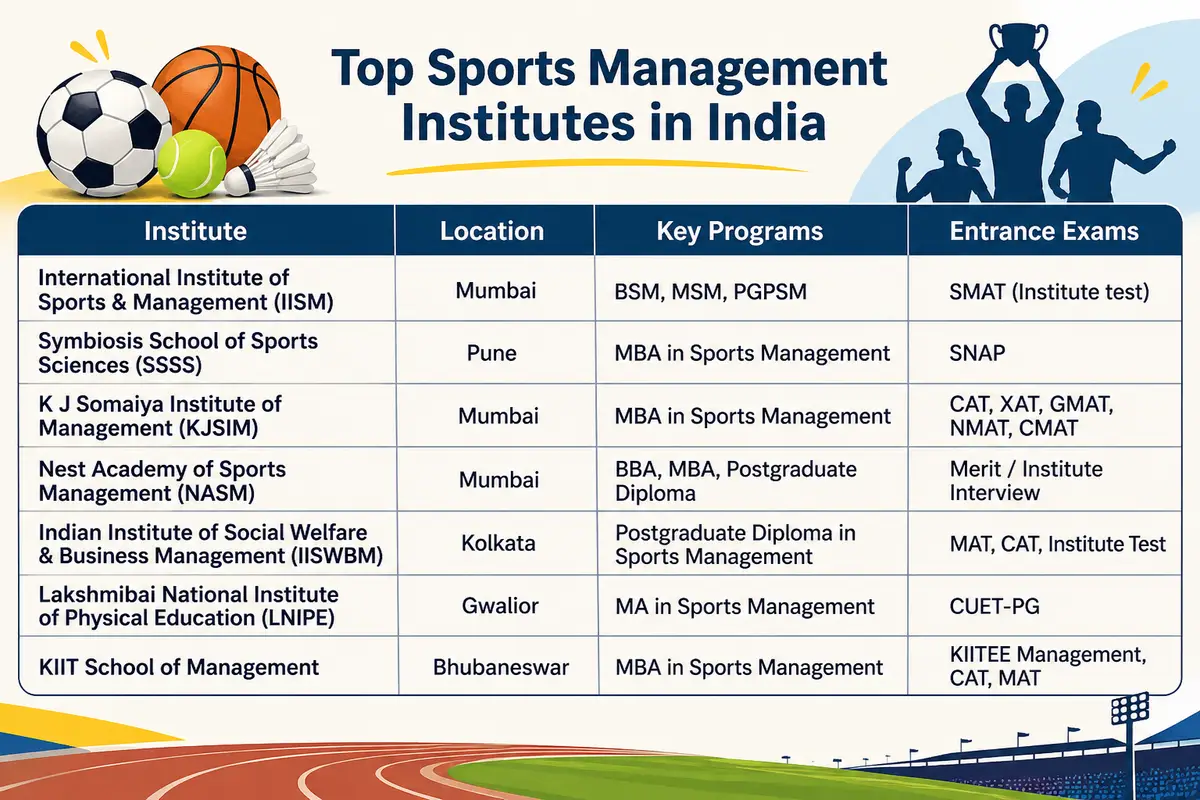
Students should compare course recognition, curriculum, internship opportunities, faculty experience and placement records before choosing an institution. The name of the degree alone does not determine the quality of industry exposure a student receives.
What Career Options Can You Explore?
A sports management qualification can lead to several careers, and not all of them involve working directly with athletes. The role you choose will depend on your interests, communication skills and the area of sports you want to work in.
1. Sports Marketing and Sponsorship
Every major sporting event needs brands to invest in advertising, partnerships and promotions. Sports marketing professionals plan campaigns, manage brand collaborations and find ways to connect sponsors with fans. They may work with IPL franchises, sportswear companies, broadcasters or marketing agencies.
2. Sports Event Management and Operations
From arranging stadium facilities to managing ticket sales, security, transport and hospitality, event managers handle the practical side of sporting competitions. Their work becomes particularly demanding during major tournaments, where thousands of spectators, players and support staff need to be coordinated.
3. Athlete and Team Management
Professional athletes need support beyond their training sessions. Athlete managers help with contracts, sponsorship agreements, public appearances, travel arrangements and career planning. Team managers, meanwhile, coordinate administrative responsibilities and ensure that players and coaching staff have what they need.
4. Sports Media and Broadcasting
Sports broadcasters, digital platforms and media agencies need professionals who understand both sports and communication. Career options include sports content production, social media management, broadcasting operations, public relations and sports journalism.
5. Sports Analytics and Business Development
Data is increasingly influencing decisions in professional sports. Analysts study audience behaviour, ticket sales, player statistics and team performance to help organisations make better decisions. Business development professionals look for new partnerships, commercial opportunities and ways to expand sporting properties.
Where Are the Opportunities in India?
India's sports industry is expanding beyond its traditional dependence on cricket. According to KPMG India's September 2025 report, Sportlight: The Business of Sports, the industry was valued at approximately $19 billion and was projected to grow to more than $40 billion by 2030. The report also highlighted the growing contribution of football, kabaddi, women's sports, sports technology and infrastructure development.
The IPL remains one of the biggest employers of sports business professionals, with franchise teams requiring people for marketing, sponsorships, operations, communications and fan engagement. The Pro Kabaddi League, Indian Super League and Women's Premier League have also created commercial opportunities outside traditional cricket structures.
Organisations such as JSW Sports, Reliance Sports, sports federations, event agencies, broadcasters and sports technology companies offer other avenues to explore. Government-backed initiatives such as Khelo India have also increased attention on grassroots sports development, competitions and infrastructure. The industry is not limited to major cities or professional leagues. Schools, universities, sports academies and fitness organisations need people who can organise competitions, manage facilities and develop sports programmes.
KPMG's October 2026 assessment of India's sports ecosystem also highlighted the growing importance of sports education, technology, athlete development, sports tourism and professional governance. These areas could create opportunities for people with specialised knowledge of the sports business.
Is It a Good Career Choice?
Sports management can be an exciting career, but students should understand that loving a particular sport and working in its business are two different things. The job may involve long working hours, weekend assignments, travel and the pressure of managing large events. Some entry-level positions may also be contractual or seasonal, particularly during tournament periods.
A degree alone will not guarantee a job. Internships, volunteering at sporting events, communication skills, networking and practical experience matter considerably. Students should also be comfortable with business-related subjects such as marketing, finance and management.
For someone who enjoys organising events, working with people, building brands or understanding how sports organisations function, this field is worth exploring. India's sporting ecosystem still has plenty of room to develop, and the people managing that growth will be just as important as the athletes competing on the field. You may not always be the person scoring the winning goal or lifting the trophy, but you can build a career helping make those moments happen.