

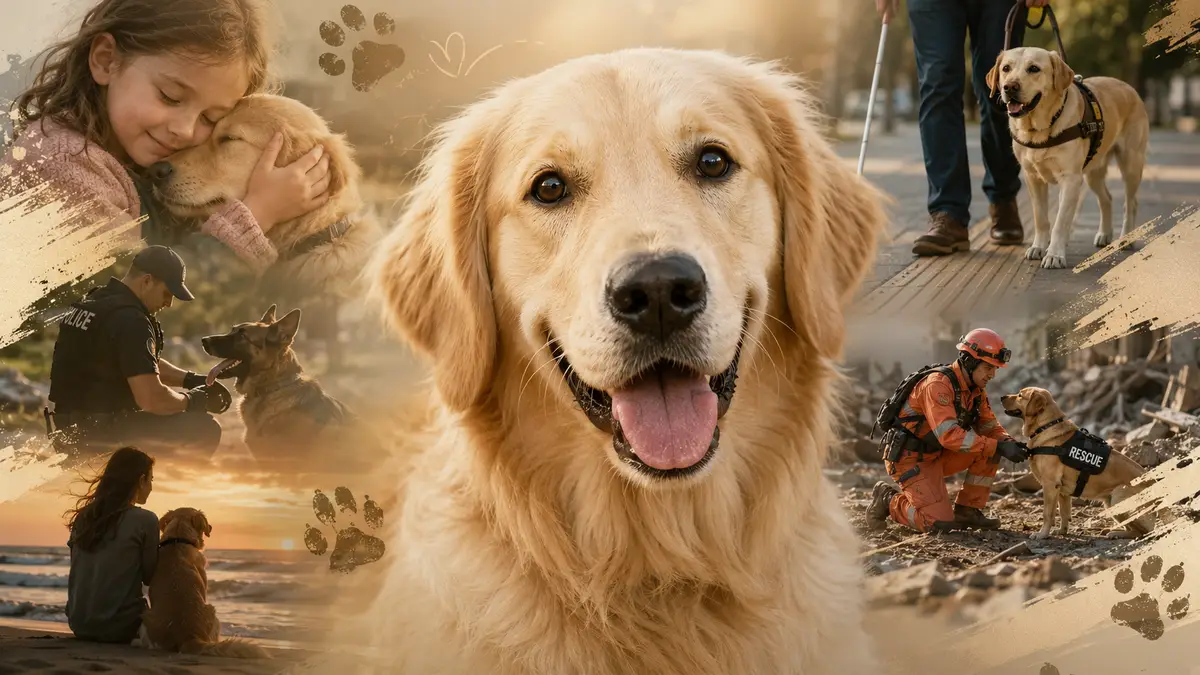
International Dog Day is celebrated every year on August 26. Colleen Paige, an animal welfare advocate, author and pet-lifestyle expert, started it in 2004. She chose this date as it marked the adoption of Sheltie, the family’s first pet dog, when she was just 10 years old.
Dogs are our loyal companions, and this day is celebrated for several reasons:
To promote their adoption from shelter homes
To honour the dogs working for police, therapy, guiding the sick/disabled, and search-rescue operations
To fight animal abuse, neglect and homelessness, and to improve their welfare
To celebrate their bond and the joy they bring in our lives
On this occasion, below are five facts you might not know about your paw-friend:
Fact #1: Your Dog’s Nose Is Far More Powerful Than Yours
Just like humans have different fingerprints, dogs have different nose prints. It is a unique pattern of lines, creases and ridges. No two dogs have the same nose prints. Scientific studies have shown that it takes two months from birth for a dog's noseprint to grow fully. Unlike other features, this print does not change with age or maturity. When there is a need for biometric identification, nose prints are widely used by researchers and registries. The unique creases help keep the nose moist so it can trap and dissolve the scent molecules better for smelling.
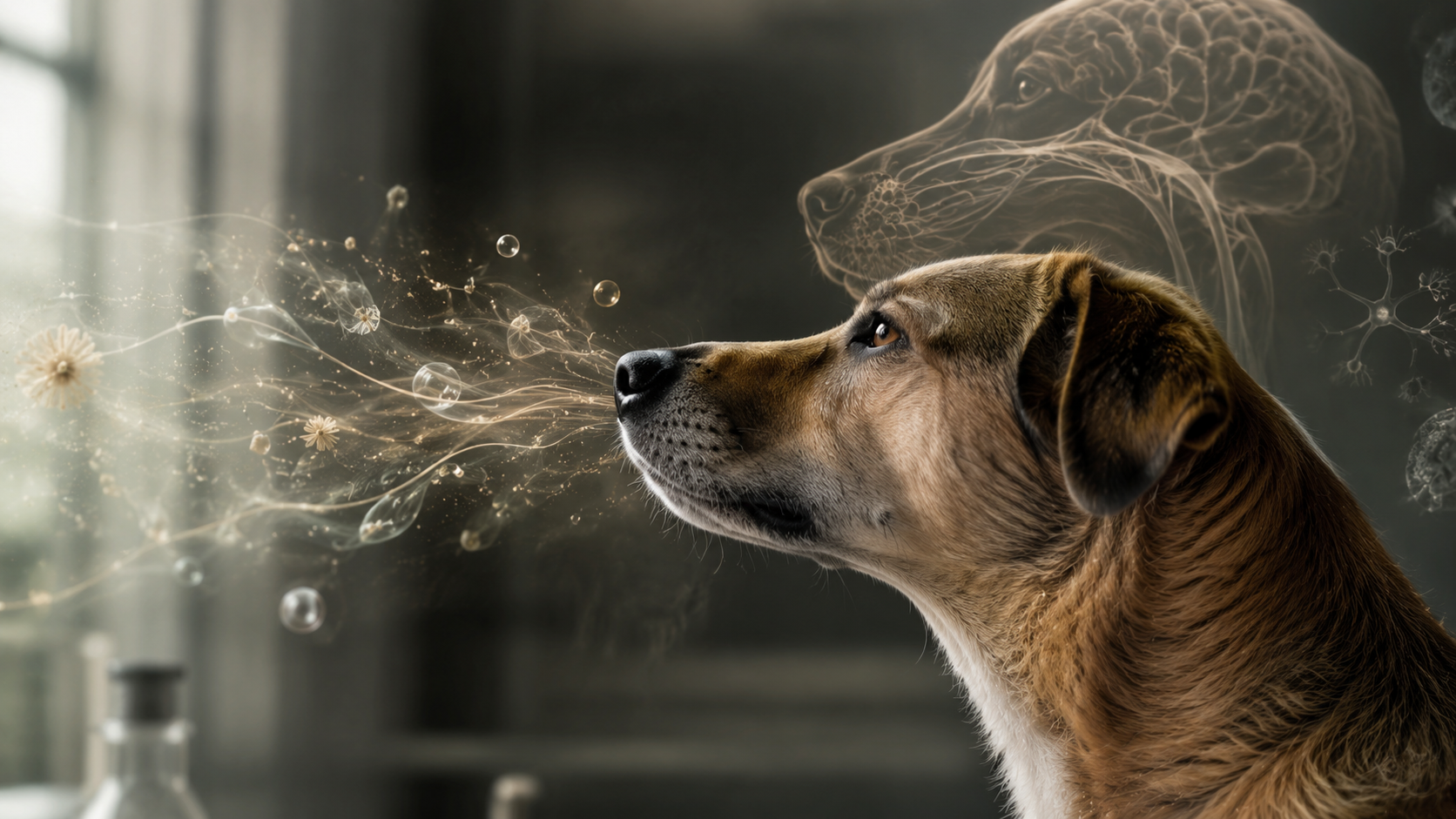
A dog's nose is 100000 times better than a human nose. It can smell a single drop of liquid in an Olympic-sized swimming pool. While humans have 6 million olfactory receptors, dogs have 300 million. The brain area dedicated to analysing smells in dogs is 40 times larger than in humans. A dog can hence find out who walked down the street hours ago and which direction they went in. The rhinarium, the moist tip of the dog’s nose, can detect heat like that through infrared rays.
Dogs do not wait for the odour to reach their nose. Their air passages are designed to create a bellows effect by pumping out air from the slit-like slits in their nostrils and forcing the scent molecules from the ground to move upward during inhalation. For decades, dogs have used their senses to help the human race in one way or another.
Fact #2: Dogs Have A Third Eyelid
Another interesting fact about dogs is that they have 3 eyelids. It is known as the nictitating membrane or the haw. This eyelid stays hidden under the lower eyelid in normal conditions. The third eyelid has specific functions. It protects the eyes from dust, scratches or debris. 50% of the tear supply for dogs comes from this eyelid. It helps in spreading tears uniformly. This eyelid also has immune tissue to fight off germs.
A dog's eye can span up to 250°. It can scan fast-moving objects from far away. Dogs have dichromatic vision, so they see more in blue, yellow and grey. They cannot see sharp images well at long distances. They can see clearly in near-darkness. They can identify paths and obstacles well. A dog’s eyes are also capable of expressing their feelings to humans or other animals.
The third eyelid is visible when the dog is very sleepy, he is startled, wakes up fast, dehydrated or has an eye infection. It is not controlled by the dog voluntarily. Instead, it comes into function as soon as the eyeball is pulled back in danger. This is also a vital tool to remove debris because most dogs do not have upper or lower eyelashes. Humans have this third eyelid too, but it disappeared with evolution.
Fact #3: Dogs Have Been Our Companions For Thousands Of Years
Dogs are one of the most popular pets across the globe. The first dogs tamed by humans date back 15000 to 16000 years. ‘Nature’ published a study showing genetic evidence for domestic dogs dating back 14800 years. Some dogs were domesticated by humans long before the invention of agriculture. They have a great sense of hearing too, 4 times better than humans.
An average dog can learn up to 150 words and gestures, matching the brain power of a two-year-old child. They also have similar love hormones like humans that are released when they look at their owners. Dogs can also dream about their day and whimper; they have REM sleep. They can serve as excellent guide dogs, therapists, and rescue workers.
Dogs are ancestrally connected to wolves, and they moved around with hunter-gatherers. In the initial years, wolves approached humans near campfires, starting a partnership based on mutual trust. Ever since, dogs started roaming and hunting with humans all across Europe and Asia. Due to this history and side-by-side evolution of thousands of years, dogs are emotionally connected to humans. They help reduce stress and anxiety.
Fact #4: Dogs Have Specialised Drinking And Sweating Methods
At first glance, it always seems that dogs lick and drink their water, but it is far from the truth. Dogs have a specific way of drinking water. They curl their tongue backwards and form a ladle-like scoop to hastily pull water into their mouth with their tongue. Then they pull the tongue in quickly and form a small column of water. Before gravity acts, they hurriedly shut their jaws and drink the water.
Dogs also get hydration from canned or freshly made meals. The amount of hydration from dry kibble is much less. They use their incisors to pick bites for eating. Since the dog's jaw does not move side-to-side, they only move up and down; they are capable of swallowing large chunks of food. The food mixes with the saliva and goes to the stomach through muscle contractions.
Dogs do not sweat through their whole body, but instead only sweat through the bare pads on the bottom of their paws. But this release does not work for regulating body temperature. For cooling down, they have to rely on panting.
Fact #5: Dogs Poop As Per Earth’s Magnetic Field
A famous study conducted in 2013, with 70 dogs, noted that they preferred to defecate in a calm environment. It was published in Frontiers in Zoology. The dogs were tracked for a period of 2 years. It showed that dogs prefer a north-south alignment for defecating, eliminating the east-west alignment.
Later, researchers also found that in complex urban spaces, or due to solar disturbances, if the field is not calm, dogs may change their behaviour. New research also shows that they may have a hidden spatial compass to track their owners in difficult hikes.
Conclusion
Dogs are of many kinds and categories, but they are loved and cared for for an endless number of reasons. They are quick learners, emotional, pattern followers and sometimes the best companion one can ask for.
To mark a wish on this International Dog Day, ensure that every dog around you, stray or adopted, is in good condition. Try to adopt an animal from the shelter instead of buying them from pet stores or shady individuals. Every dog deserves a home.
Be a responsible pet owner. You might see them as a pet or a family member, but they look at you as the only thing in the world. Do not abandon them. They deserve love and respect for being the caretakers in your absence. In whatever small or big way, donate and support animal welfare.