The Indian entertainment industry has always made the most respect and money through films in theatres over the years. Our parents and grandparents spent most weekends watching black-and-white, then coloured, films in theatres. Films have always been looked upon with the ideas of big budget, big stars and big results.
But when the pandemic hit, films stopped, shoots stopped, and theatres closed down. That is when micro-dramas gained popularity. OTT platforms and Social Media apps like Instagram and TikTok had already popularised the concept of reels, making consumers consume content in minutes. Viewership shifted from 2-3 hours in a movie to thousands of less-than-two-minute reels.
But there was still one sector that demanded attention. Micro-dramas solved it. These short story videos became sensational. People loved watching dramas that could be more emotional and detailed than a reel with an apt storyline but also less than an episode of some series or a movie. The best way to spend time during lunch breaks or while waiting for your appointments is watching a micro-drama. It essentially erases the time spent deciding what to watch. It makes you consume the entire story in minutes.
What Exactly Are Micro-Dramas?
Micro-dramas are usually shot vertically in the 9:16 format. They are primarily designed to be viewed on smartphones. There are a lot of stories on the platform, with each episode lasting up to a minute or a few minutes. Everything on the show is scripted.
Instead of one conventional episode per day for half an hour, like the television soap operas, this has multiple episodes released in a day. The story is generally formed to have cliffhangers and hooks to keep the viewers engaged. While reels are single pieces of content, micro-dramas are designed to make people come back. They are usually available on dedicated apps.
Why Is India Becoming A Micro-Drama Hotspot?
Indian TV serials and films have a lot of variety. Every language and every region has their own industry, actors and plots that gain immense popularity. With the vast population and diversity, it is only natural that every form of entertainment is welcomed. Several behaviours that already exist here include:
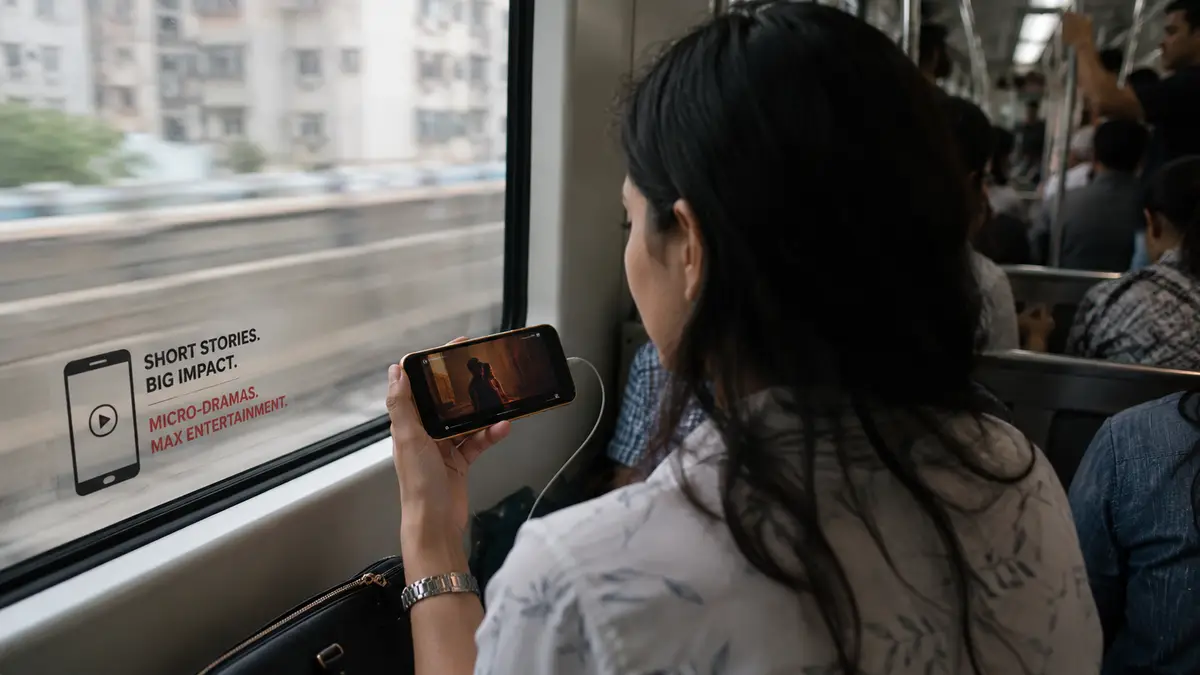
Smartphone consumption: Since entertainment increasingly happens in short time breaks, like while travelling for work, laptop and TV screens are not accessible. At that moment, it becomes easier to use smartphones to watch something that can be fun and distracting.
Reels culture: Before micro-dramas were introduced, the audience was already accustomed to the short form of content through quick storytelling. So the transition became easier.
Television serial habits: India has a huge audience for family drama, crime stories, cliffhangers, and romance. Micro-dramas deliver the same with quick storytelling, which gives users satisfaction in limited time. They can watch more stories.
Regional-language opportunity: Since these are short forms of content, it is very easy to develop them on a lower budget than films and serials. This gives more opportunities to people who have talent but lack the support required.
Low-entry barrier: You don’t have to dedicate 45 minutes to watch one episode; you can simply watch a few whenever you are free.
India recorded 16% more downloads for apps with micro-dramas through overseas users. This makes it clear that we are adapting to consumers’ way of consuming entertainment.
What Makes Micro-Dramas Addictive?
Micro-Dramas is an apt industry for making money in 2026 if you are an actor, producer, director, photographer, videographer, writer, editor, costume designer, or even a social media manager. The industry is growing rapidly. The formula for that is being invested in a micro-drama that is addictive, and that can be done by making sure it has:
Great hook: The viewer doesn't have to wait for introductions and eye-pleasing aesthetic clips for the plot to begin; it is straight to the point.
Cliffhangers: Every episode leaves you questioning what happens next. There is always a reason to continue watching more and more.
Emotional shorthand: Depicting storylines with emotions such as love, anger, betrayal, revenge, ambition, jealousy, family conflicts and unrevealing plots after the climax makes it very easy for the audience to relate to the plot.
Low commitment: To watch a 45-minute episode, you need a place, a screen, lots of free time and snacks. To watch a micro-drama, you just need a minute that can be spared in between interruptions.
Infinite binge: Micro-dramas create an infinite binge because one episode becomes 20 in a few minutes. It is difficult to stop with all the cliffhangers and story lines when it feels that the end is just one more small episode away.
Algorithmic discovery: Micro-dramas are heavily discovered through social media platforms like Instagram, Facebook, TikTok and YouTube Shorts. Then they take you to the apps where you can watch the full story. This makes micro-dramas particularly addictive because you may see the story in bits and pieces and would definitely want to watch the full plot.
The micro-drama industry could cross $26 billion worldwide by 2030. The Indian market for this industry crossed $300 million and is expected to grow to $4.5 billion by 2030. This data shows that the markets are moving towards monetisation from acquisition.
For Indian users especially, micro-dramas are like reinventing television for smartphones. They are not killing television. They are using the same format of daily episodes, drama, romance, action, cliffhangers, recurring characters and habitual viewing in shorter versions of it through micro-dramas. It is just an easy transition from TV Soaps to Vertical Soaps to fit into your schedule.
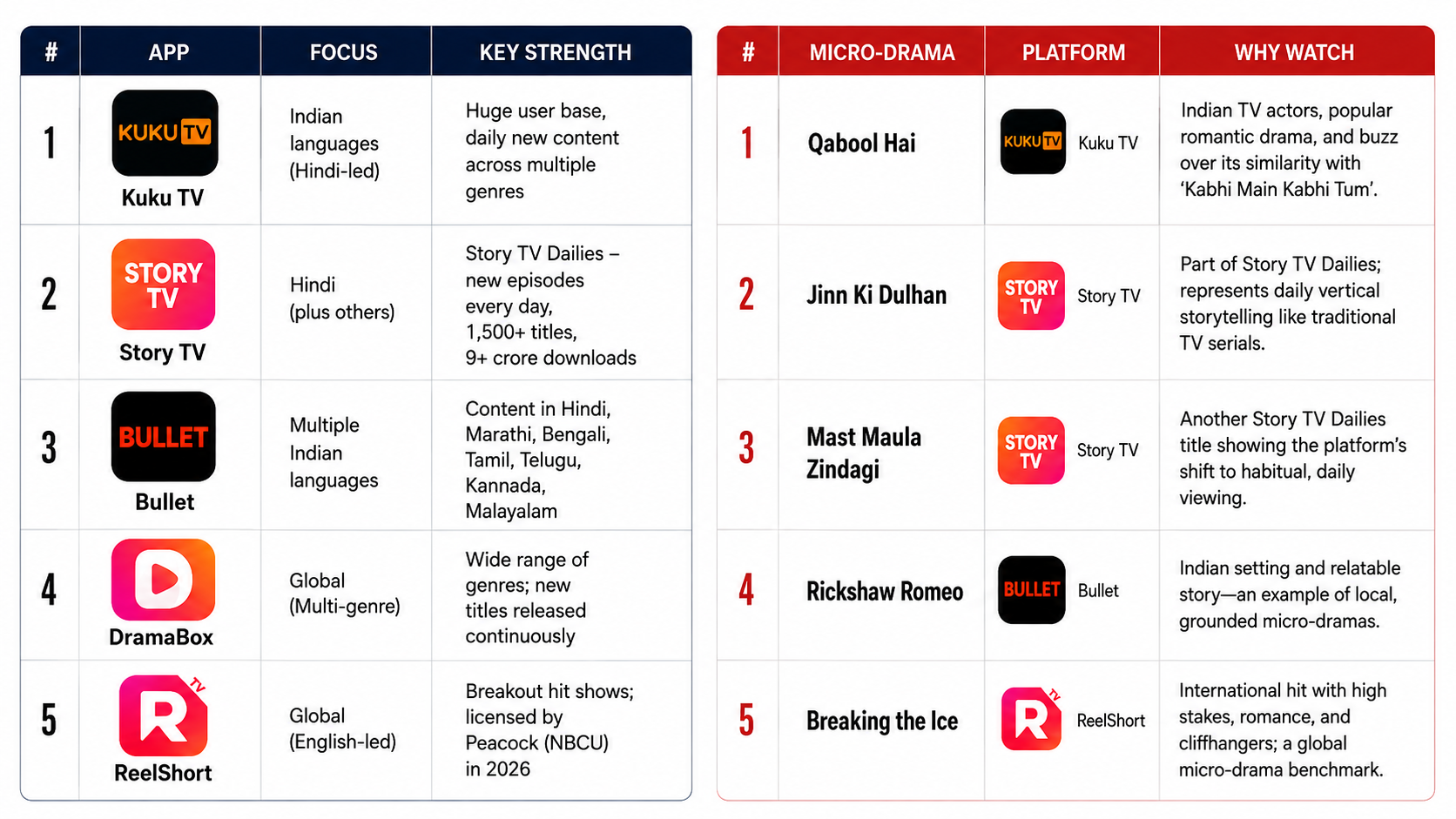
Top Micro-Drama Apps and Series
The Takeaway
Like Instagram and YouTube created a generation of content creators and influencers, Micro-dramas would create a generation of vertical actors. They have great opportunities for faces who have not had opportunities with films or TV. Social media visibility, close vertical shots, quick changes in expressions, immediate communication, frequent shooting and fast production are the format that is easy to follow. Many known TV stars are also joining the micro-drama industry.
There are a few downsides to Micro-Dramas as well. Some series have repeated plots involving billionaires, CEOs and Mafias. They are typically based on romance and revenge narratives. There is an overload of cliffhangers, exaggerated writing and acting, paywalls and aggressive monetisation. Many series have copywriting and adaptation controversies that make a negative impact on social media promotions. The formula of Free episode → hook → cliffhanger → coins/ad/subscription → next episode is dark. The industry is focused on retention and monetisation. This makes one question if the viewers are paying for entertainment or if they are paying to know what comes next.
Artificial intelligence has made this an even bigger picture. With just the plots, creators can develop videos and post them online through apps. This is another industry that is in the growing stage. There is a reduction in production cost, dubbing cost, localisation cost, editing time and content turnaround. This is necessary because apps constantly need stories and episodes. But does this mean that the internet will soon be flooded with thousands of similar stories?
The next big entertainment revolution may not require a bigger screen. It may require a smaller one. Micro-dramas have taken something India already loves - episodic storytelling - and redesigned it around something Indians already carry everywhere: the smartphone. The real test isn't whether people will watch a one-minute drama. They're already doing that. The real question is whether they will continue watching - and paying - for 50, 80 or 100 episodes of one. That is what will determine whether micro-dramas are merely a trend or the next major entertainment business.