
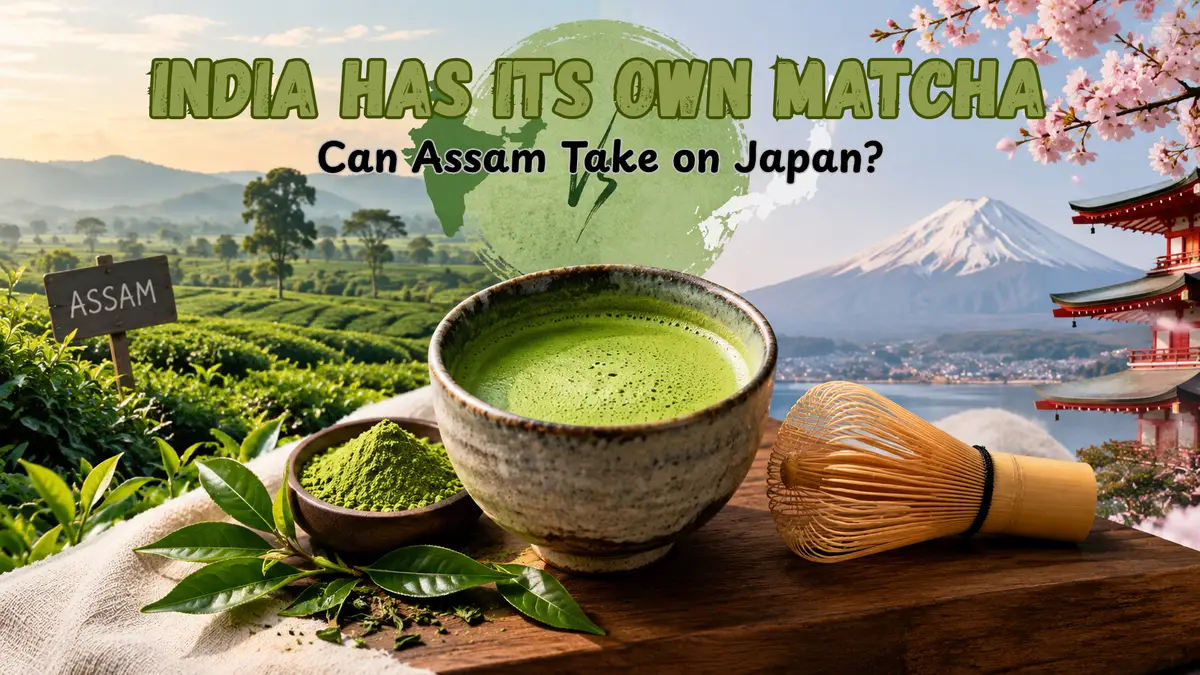
A cup of matcha has become almost as recognisable as the coffee it competes with. From iced green lattes at trendy cafés to matcha-flavoured cakes, cookies and ice cream, the bright green drink has found a loyal following among young consumers. But until recently, anyone in India looking for the powdered tea often had to turn to imports.
That is beginning to change. In July 2026, Assam made its entry into the commercial matcha market when Chotaq Tingrai Tea Estate in Tinsukia sold India's first reported commercial batch of homegrown matcha at the Guwahati Tea Auction Centre. The five-kilogram lot fetched ₹3,000 per kilogram, marking a new chapter for a state better known for its strong, malty black tea.
The development raises an interesting question: can a region famous for one kind of tea build a name for a product so closely associated with Japan? Assam has the tea-growing experience. What it needs now is to prove that its matcha can stand on its own.
Matcha Is More Than Just Green Tea Powder
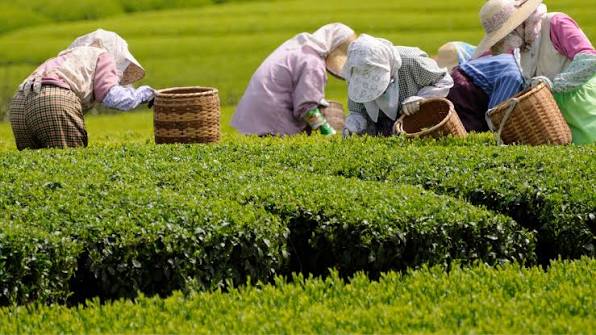
Although matcha is often described as powdered green tea, producing it involves a more specialised process than simply grinding dried tea leaves. Traditionally, the plants are shaded before harvest to reduce direct sunlight exposure, encouraging the development of chlorophyll and amino acids that contribute to matcha's colour and flavour. The leaves are then carefully processed, dried and finely ground into powder.
Unlike regular green tea, which is steeped and removed before drinking, matcha is whisked into water, meaning the powdered leaf itself is consumed. Its flavour can range from sweet and mellow to grassy and slightly bitter, depending on the tea and how it is produced.
Japan has spent generations refining this craft, with regions such as Uji, Nishio and Shizuoka developing their own reputations for tea production. Matcha is also deeply connected to Japanese tea culture, particularly the traditional tea ceremony. Its global popularity today extends well beyond that setting, with cafés and food businesses incorporating it into everyday drinks and desserts.
For Assam, entering this market means more than producing a powder that looks similar. The challenge is to develop a consistent product with the colour, flavour and quality that buyers expect.
A Decade of Work Behind Assam's First Matcha
The story of Assam's matcha began years before its first commercial sale. At Chota Tingrai Tea Estate, the effort to develop Japanese-style green tea production began around 2016, involving collaboration between the Jalan family, Japanese tea specialists, machinery suppliers and technical experts. The team had to adapt techniques developed in Japan to Assam's tea varieties and growing conditions rather than simply reproduce an existing process.
This distinction matters because Assam's tea-growing traditions have largely centred on varieties suited to producing strong black tea. Matcha requires a different approach, from selecting suitable leaves and managing shade before harvesting to adjusting the processing methods. The estate has developed its own product, called Matcha Assamica, drawing on the region's tea-growing heritage.
The first commercial auction was a modest one in volume but significant in what it demonstrated. Five kilograms sold for ₹15,000 in total, or ₹3,000 per kilogram. The estate had reportedly produced around 90–100 kilograms by the time of its initial launch, with further quantities expected to enter the market.
It is an encouraging start, but a small batch cannot yet establish whether production can expand reliably while maintaining the same quality.
Can Assam Compete With Japan?
There is an opportunity here, particularly as matcha demand has grown internationally and supply has struggled to keep pace. Japan's producers have faced pressure from rising demand, higher prices and the time and expertise required to produce quality matcha.
Assam already has an established tea industry, experienced growers and a long history of processing and exporting tea. Developing premium products could help estates diversify beyond conventional black tea and reach buyers willing to pay more for specialised varieties. Domestic production may also create an alternative for Indian cafés and food businesses that currently rely on imported matcha.
However, competing with Japan will require more than lower costs or a strong origin story. Buyers will look for consistent colour, taste, freshness and reliable supply. Producers will also need to build trust through transparent sourcing, quality control and a clear identity for Assam-grown matcha.
Nor does India's entry mean Japan's expertise or cultural connection to matcha can be replicated overnight. Assam may be better positioned to create its own place in the market than to replace established Japanese producers.
A New Chapter for Assam Tea
The arrival of matcha offers Assam a chance to rethink what its tea industry can produce. Rather than relying almost entirely on its reputation for black tea, the region can explore premium green teas and other specialised products that appeal to changing consumer tastes.
For matcha drinkers in India, locally produced tea could eventually mean more choice and a stronger connection to the country's own tea-growing regions. For Assam's estates, it could open a route towards value-added production, provided demand grows enough to justify the investment.
The first commercial batch is only the beginning. Scaling up, maintaining quality and finding a steady market will determine whether this becomes a lasting business opportunity or simply an exciting milestone.
Japan may remain the benchmark for matcha, but Assam no longer has to watch the trend from the sidelines. Its next challenge is to turn a promising first batch into a product that people choose for its quality, not just because it is made in India.