

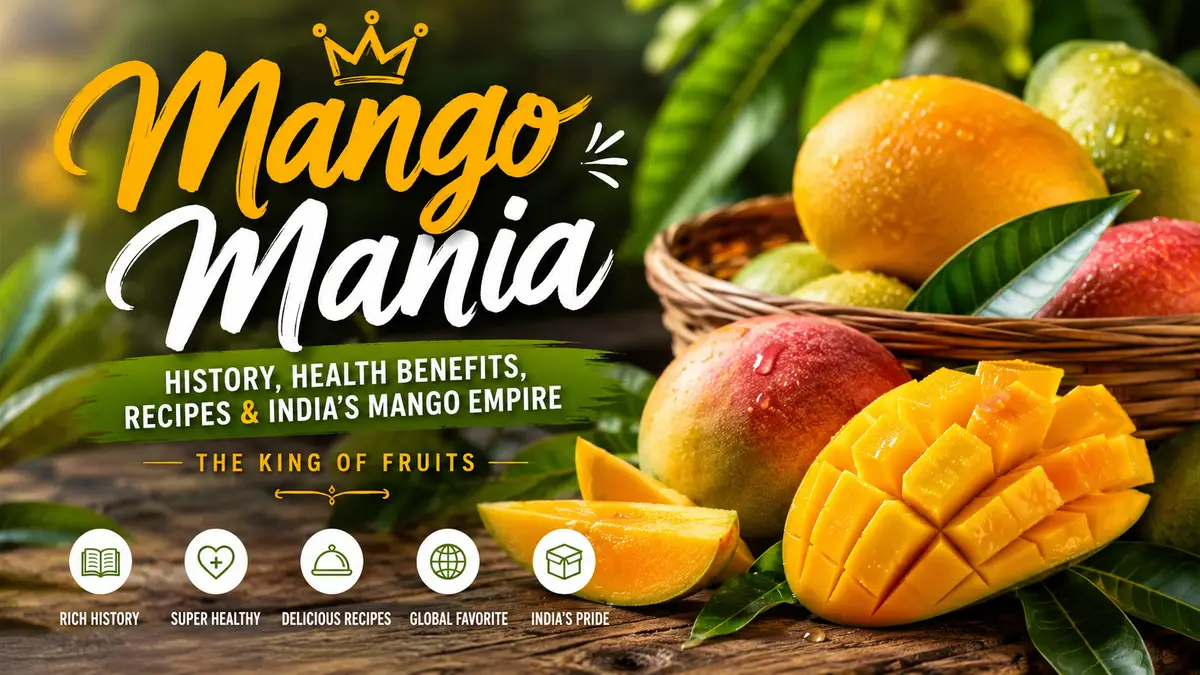
Image credits: AI-generated
The real struggle while dieting in summer is stopping at one mango slice.
The only reason why Indian summers could be loved is mangoes. The golden, sweet, juicy, and fragrant nostalgia that comes with Mango is unlike that of any other fruit. The season of Mango Mania is about to end, but before that, let’s throw some light on the king of fruits.
Mangoes benefit the body in several ways. It is a seasonal fruit, which makes it a lot more valuable. It is widely used from March to June, that is, in the summer. It can be used in various formats, both raw and ripe. Let’s dive into this article to know more.
The Fascinating History Of Mangoes
The king of fruits was mentioned in several religious texts, such as the Vedas and the Mahabharata, and in fossils dating to around 27 million years ago. It was native to India and Myanmar, with some parts of Bangladesh, from where it went to China and then the other countries in the world.
Indian mango varieties are referred to as a symbol of prosperity and abundance. Buddhist monks carried the seeds of mango to Southeast Asia in the 4th-5th century BCE. By the 7th century, China had it, and by the 10th century, Persian and Arab nations had them too.
In Indian history, the Mauryan Emperor Ashok is said to have planted Mango trees on the side of roads to provide shade for the travellers. Mughal Emperor Akbar made a Lakhi Baag, which had 1,00,000 mango trees. In ancient languages, it was known as ‘amra-phal’.
Why Is Mango Called the King of Fruits?
The scientific name for Mango is Mangifera Indica. It literally means an Indian plant bearing mangoes. Mango mania is not overrated. It is rightfully given the royal status. The reason follows:
The unique flavour:
Mango benefits the tongue with a flavour like no other fruit. It is tangy and pleasingly sour when raw and becomes naturally sweet once ripe. It has an aroma, and it is extremely juicy.
Varieties:
No other fruit has over 1000 different varieties across the globe. Every variety has its own texture, colour and taste. India commercially grows 300-400 types of mangoes.
Mango’s Nutrition Value:
Vitamins, antioxidants, fibres and natural sugars all in one fruit. Mango is highly nutritious. It becomes a problem if consumed in excess, but otherwise, it is good for health.
Cultural Significance:
Apart from the medical uses of Mango, it is among the rare fruits that hold huge cultural significance in a lot of different countries. It is a symbol of something powerful.
Variations:
From salads, to pickles, to desserts and icecreams, and to milkshakes and curries, mangoes can be used literally everywhere.
Health Benefits of Mangoes
The benefits of eating a mango are not confined to being rich in vitamins and minerals. The king of fruits has a lot of other benefits, as follows:
Immunity:
The first and foremost health benefit of eating mangoes is that it immediately helps boost immunity. It has an abundance of Vitamin A & C that help in fighting minor infections easily.
Supports Eye Health:
Mangoes consist of beta-carotene, which helps with the production of Vitamin A in the body, which supports healthy vision.
Healthy Heart:
Mango is also rich in potassium and magnesium, which help in regulating the blood pressure levels in the body and keep the cardiovascular health intact.
Digestion:
The benefits of mango also include enzymes and fibres that break down food and help with improved gut health.
Hair and Skin:
Mango supports collagen production that aids in better skin and hair health. The antioxidants and vitamins make the skin texture better.
Mango also has anti-inflammatory properties and is a natural energy booster.
Top Mango Recipes From Around the Globe
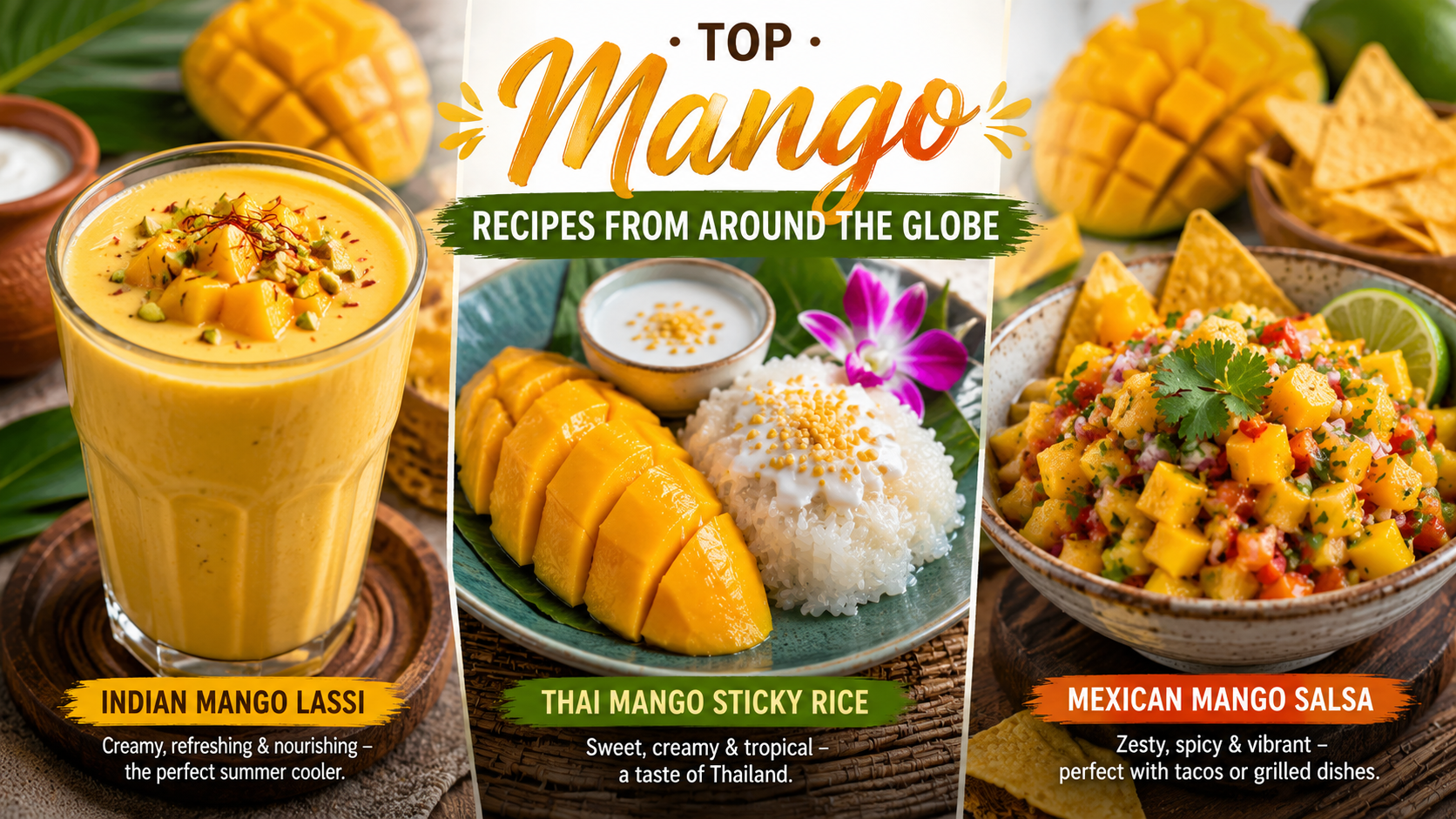
Image Credits: AI-generated
Mango might have been native to India, but over the years, it has had a remarkable effect on cuisines around the world. There are hundreds of different recipes used by so many different communities in the world. Listing below the top 3 beloved mango recipes around the world.
Indian Mango Lassi
The mango mania starts with yoghurt and honey blended with ripe mango to create a thick mixture, occasionally flavoured with a little bit of cardamom. Ice cubes are used to make it more creamy, and it is a perfect drink for summer because of its cooling properties.
Thai Mango Sticky Rice:
It is a dessert dish made with sweet sticky rice, coconut milk, sugar, salt and sliced mango. It is loved because of its tropical flavour that comes with the richness of coconuts, combined with the sweetness of mangoes.
Mexican Mango Salsa:
The dish is made with onions, Jalapeno, Cilantro, Lime juice and salt with diced mango to eat with tacos or grilled food. It is versatile, zesty, and spicy.
Apart from these, every one of us has a personal favourite mango recipe. Mango is used around the world to make cheesecakes, icecreams, bubble teas, candies, smoothies, energy drinks, sushi rolls and pastries. Try one new recipe before the season ends.
India’s Mango Export Boom

Image Credits: AI-generated
It is the national fruit of India.
-Mango export from India contributes to 40% of its global mango production.
-As per the Indian mango export data for 2024-2025, we have exported around 30,000 metric tonnes of mango.
The best mango varieties in India have been imported by countries like the UAE, China, Saudi Arabia, the UK, Kuwait and Qatar. The logistics and export regulations often affect the trading of mangoes. Indian mango varieties have mostly been demanded in high quantities in the domestic sector, allowing it to export a small quantity of its overall production.
One Fruit, Endless Memories

Image credits: AI-generated
The tropical fruit has a lot of types, especially in India. The most significant ones are: Alphonso, Kesar, Langra, Dasheri, Banganapalli & Himsagar. The king of fruits is also beneficial because of its plant value. The leaves of the mango benefit respiratory health in the human body. The bark of the summer fruit benefits the throat and improves digestion. Mango recipes consisting of raw fruit help with the reduction of dehydration during the summer. The seed powder was used in ancient times to cure digestive issues.
The mango mania also impacts negatively if not consumed with precaution. It has natural sugars, which can cause harm to diabetic patients. It can also create acne, body heat or throat irritation when consumed in excess. When it is used in desserts, it can be calorie-heavy, causing weight gain.
It is better to consume it consciously and not overindulge. A summer without mangoes is unimaginable. In an otherwise changing world of food trends, mango remains timeless!