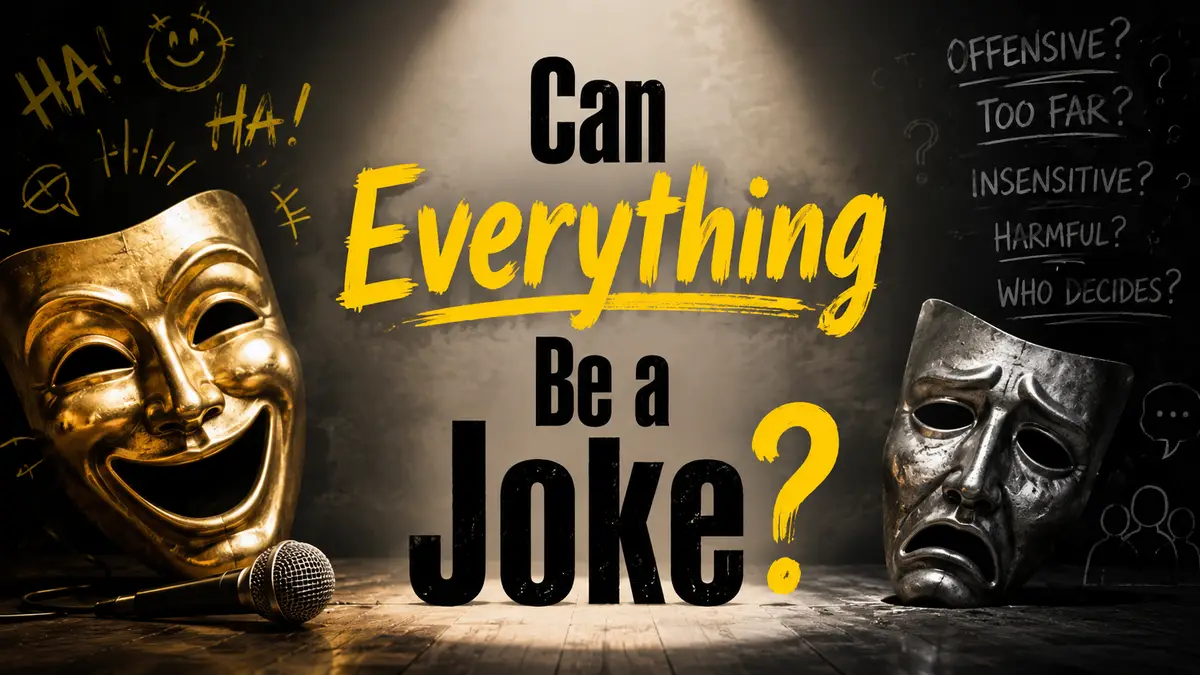
Everything is not a joke. Period.
We joke around friends, family and in public places. Some jokes are funny, some are lame while some are blatantly horrendous. While some make us question whether that joke should have been said or not?
Comedy has always pushed boundaries. We often joke about issues that may not matter to us but do matter to others. Daily health issues, financial issues, family issues are joked about, and no one ever has the guts to call them out rather than been forced to laugh at a joke. While we think dark humor is a thing, we never think of how it can hurt a person or what a person could in real life be dealing with. In an era where a joke can reach millions of people within seconds, the question becomes increasingly important: Is learning the ethics of modern comedy important?
Comedy in India has come to a point where it now challenges authority and questions social norms. It challenges authority, questions social norms, and often helps us cope with uncomfortable realities. But in an era where a joke can reach millions of people within seconds, the question becomes increasingly important: can everything be a joke?
Comedy Show Controversies That Have Sparked Debate
The recent controversy of the 370 Rs. biryani joke has sparked debate on the ethics of stand up comedy. It all started when a clip from Pranit More's stand up comedy show. In the video featuring a large audience and a member Himanshu Jangra went on to state that he took a girl out on a date and spent Rs. 370 on chicken biryani and suggested he was entitled to physical intimacy in return to recover his money spent. In the video you can hear the boy saying in Hindi. He said, "Maine kaha ki Rs 370 lage hain to use to wasool to karunga hi." (I said, I've spent ₹370 on it, so I'm definitely going to recover it.) He further went on to describe the evening in grave detail. The audience as well as the host Pranit all laughed out at the misogynistic joke and this spread an outrage amongst the people when the clip went viral. Following this incident the police registered an FIR against Pranit More. Amidst all the backlash, both of them deactivated their accounts. The National Commission for Women (NCW) have also taken a suo motu cognisance of the matter and notices were issued to both Pranit More and Himanshu Jangra.
Comedian Pranit after facing backlash stated that he should have challenged the remark instead of laughing and moving on and that was a lapse in his judgement. Many influencers like Dolly Singh shared her views calling out all male creators to act better. She shared a note stating :" To Male Comics / Creators, If you can act all mature, open-minded, women-respecting (saying you're a feminist ally would be a stretch) in your sets and overall media footprint, please at least try to act the same performative act in your crowdwork and Instagram too!"
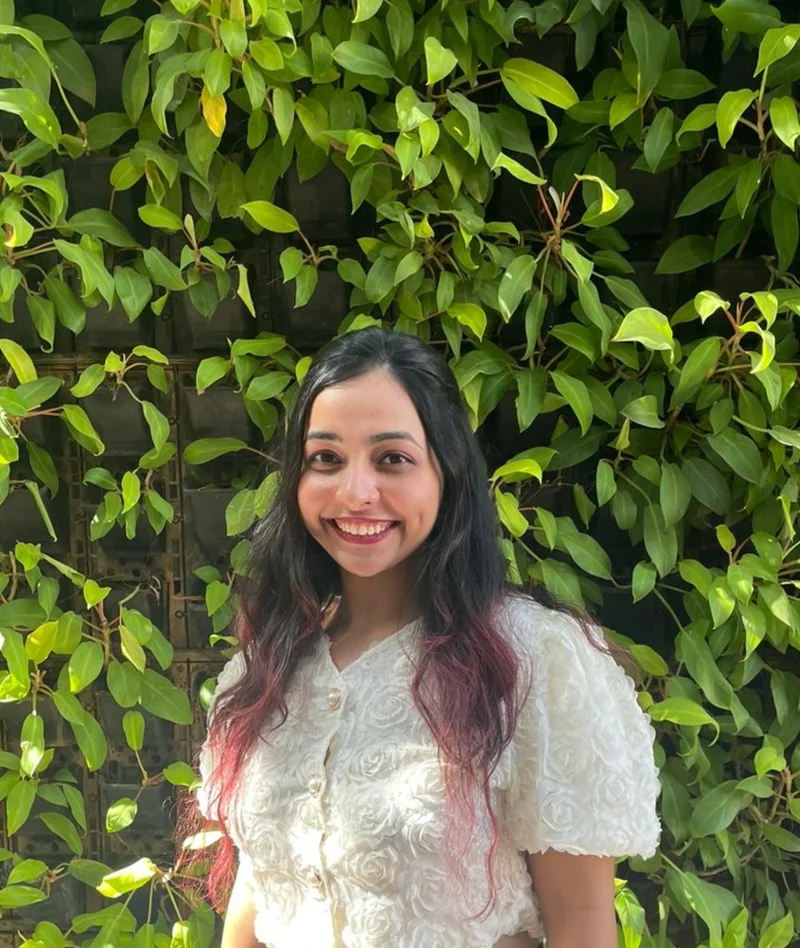
After this incident many are now calling out other creators who have come up on comedy shows and made remarks that are inappropriate and disrespectful. In another incident the limelight has now fallen on Dr. Sejal Pawar, an undergraduate MBBS student associated with KEM Hospital in Mumbai. It all began when Sejal Pawar participated in a crowd work during a stand-up comedy show hosted by comedian Pranit More. Sejal made some insensitive remarks on the show when her host asked if doctors remain serious or crack jokes during autopsies.
To which she replied on the process doctors do and went on to comment about male cadavers mainly used for medical dissection. The matter further escalated when she went on to talk about how she and her colleagues would often compare the sizes of male cadavers' private parts. In the now surfaced online video she was heard saying (“whatever jo bhi, size vagera”) (Whatever it is, size and all).
The medical community, doctors, and the public heavily condemned her statements on social media. Doctors have also mentioned that deceased body donors also known as Cadavers are highly respected in medical education as a student's first teacher. Students in their first year of their medical degree are required to take the Cadaveric Oath, which is usually taken before beginning human anatomy dissection. It requires students to treat the donated body with dignity and respect.
The comments made by Sejal Pawar were flagged as a violation of the oath and of medical professionalism. The comments can also hurt the sentiments of the donor’s family. The Maharashtra Cyber Police have registered a criminal FIR against the three Pranit More, Sejal Pawar and Himanshu Jangra for generating and circulating obscene content online.
Following the intense backlash, Pawar submitted a written apology and released a video acknowledging that her comments were inappropriate, insensitive, and naive, expressing deep regret for the distress caused. Due to the severe public scrutiny, the hospital also recommended she undergo counseling.
The All India Medical Students' Association (AIMSA) escalated the matter by formally writing to Maharashtra Chief Minister Devendra Fadnavis, demanding strict guidelines for stand-up comedy regarding medical professionals and stricter action against her.
These controversies are coming up now but we majorly have overlooked so many jokes in the past that have been made by several comedians, podcasters, influencers and content creators. While many are related to genders, disabilities, tragedies, religion, caste and individual specific just for TRP, views, money making, etc.
Today comedians crack jokes that target the vulnerable communities but at the same time when it comes to standing up for our rights, speaking up on serious issues we all of a sudden do not have a voice. This is leading to audiences constantly debating where humour ends and harm begins. In the past there have been instances where famous stand up comedians like Kunal Kamra, Munawar Faruqui, Vir Das and Samay Raina have faced with backlash and legal consequences over religious and political jokes, massive backlash for trivializing sexual assault and de-faming individuals or institutes.
While comedians so strongly believe that comedy should be freedom of expression, critics point out that not all comedians believe that. There is a time and place for matters that are meant to be spoken about, not joked about. The above comedians all have a huge fan following for that matter even kids are a part of it, so if adults in the name of comedy are being insensitive and immature about things. Do they expect the next generation to blindly follow their ideology and mindset?
Many questions: where has the good old comedy gone? Are comedians come to a point where their words now reinforce stereotypes, normalise prejudice, and trivialise real suffering.
The problem is not to put a complete ban on comedy and stand up comedians. At the end of the day using your talent should be done the right way. No humour doesn't need a ban when it is a powerful tool for connection. It needs to be understood that a joke shared amongst friends is different from a joke openly broadcasted to a global audience without consent, without realizing its harm, and impact.,
Comedy, Outrage and the Internet
The debate around comedy has become more intense because jokes no longer remain confined to comedy clubs or private gatherings. A comedian may perform before a few hundred people, but a 30-second clip can reach millions online within hours. What was once context-specific is now consumed by audiences from different cultures, age groups, and experiences.
This shift has changed how comedy is judged. A joke that might receive laughter in a room full of willing attendees can provoke outrage when viewed by people who never chose to be part of that audience. Social media has blurred the line between private performance and public discourse.
Many comedians argue that comedy requires freedom. They believe that humour should be allowed to explore uncomfortable topics, challenge taboos, and provoke thought. Throughout history, comedy has often been used to criticise governments, expose hypocrisy, and question social norms. Restricting comedians, they argue, could limit creativity and discourage honest conversations.
Dark humour remains one of the most controversial forms of comedy. However, dark humour becomes problematic when it turns another person's suffering into entertainment without empathy or context. There is a difference between a cancer patient joking about their own experience and a stranger making cancer jokes at the expense of those affected by the disease.
The ethical question is not simply "Can I make this joke?" but "Who is the target of this joke?" and "Who might be harmed by it?"
The Ethics of Modern Comedy
While there is no universal rulebook for comedy, several ethical principles can help comedians, influencers, and audiences navigate humour responsibly.
1. Understand the Difference Between Punching Up and Punching Down
One of comedy's oldest ethical principles is that satire should challenge power rather than target the powerless.
Making fun of politicians, billionaires, corrupt systems, or societal hypocrisies is generally considered "punching up." Mocking people based on disability, poverty, race, gender, or personal tragedy is often viewed as "punching down."
2. Consider Impact Alongside Intent
Many creators defend themselves by saying, "I didn't mean to offend anyone."
Intent matters, but so does impact. A joke may be intended as harmless fun, yet still perpetuate stereotypes or normalise harmful attitudes. Ethical comedians understand that both factors deserve consideration.
3. Context Matters
The same joke can have entirely different meanings depending on where, when, and how it is delivered. A private joke among friends differs from a joke shared on a public stage, uploaded online, or broadcast to millions. Especially for comedians who have shows in public spaces, they must be even more responsible for what they say or what they laugh on.
4. Be Willing to Accept Criticism
Comedy does not exist in a vacuum. While comedians do believe they have the freedom to make jokes, audiences too have the right to question, challenge and criticize them. The idea is not to be a silent spectator. In crowd-work comedy, comedians also share responsibility for how they respond to audience comments. Sometimes not every joke deserves applause and comedians must decide whether to encourage, ignore or call people out.
5. Avoid Dehumanisation
The most harmful jokes often reduce people to stereotypes rather than recognising their humanity. Ethical comedy can be provocative without stripping people of dignity.
The Role of Education
Learning the ethics of modern comedy is not about banning jokes or creating humourless spaces. It is about developing media literacy, empathy, and critical thinking.
Students today consume enormous amounts of content through stand-up specials, podcasts, memes, reels, and social media clips. Understanding how humour shapes attitudes and influences behaviour is becoming as important as understanding news or advertising.
Comedy can challenge power, spark conversations, and unite people. But it can also normalise prejudice, spread misinformation, and desensitise audiences to real suffering.
Final Word
The question is not whether everything can technically become a joke. Almost anything can be joked about. The more important question is whether every joke deserves laughter.
Humour is one of humanity's greatest tools for connection, creativity, and social commentary. Yet with that power comes responsibility. In a digital world where words travel faster and farther than ever before, ethical comedy is not about limiting freedom—it is about understanding consequences.
Perhaps the future of comedy does not lie in asking, "Can I say this?" but in asking, "Why am I saying it, who is it targeting, and what impact will it have?"
Because sometimes the funniest joke in the room is not the one that crosses the line, but the one that proves you never needed to cross it in the first place.