


Maintaining boundaries has always been a very interesting argument, especially in Indian society. From being scolded for needing some privacy in your own room to saying no when someone asks for something that you cannot do, maintaining boundaries can be deemed to be rude by many. The word ‘boundary’ is not something invented by the recent generation. Although it's used a lot recently, the concept of ‘boundaries’ was established long ago. The only difference is that it wasn't given much importance by our earlier generations because they really didn't think boundaries actually existed. Maybe that is the reason why many today think maintaining boundaries is something new that Gen Z has invented.
Why Did “Boundaries” Become Such a Popular Word?
I need to set a boundary.” Five years ago, that might have sounded like therapy-speak. Today, it can show up in a WhatsApp argument, an office conversation, a friendship falling apart, or a family dinner. Boundaries have always been a part of our lives; however, they did not have such labels or names. It usually meant saying no, asking for privacy or maybe not wanting to give up on something that we like. However, many people cannot accept no as an answer and therefore think boundaries are rude or distant. The exposure to social media and the rising conversations about mental health have made concepts like emotional wellbeing, personal space and self-respect more mainstream.
People are becoming more aware of what they need and what they need to avoid, which has contributed to the rise of terms like boundaries. The younger generation is more comfortable talking about their feelings and what they're going through, mainly because of the rise in mental health understanding. They are also aware of what to speak about, where to draw the line, and what they will and won’t accept in relationships, friendships and workplaces. However, knowing the word boundary and understanding its meaning doesn't necessarily constitute knowing how to actually set one.
What Does a Boundary Actually Mean?
The word has been a part of so many conversations, but not everyone really understands what it really stands for. A boundary is essentially a limit that people set around what they are comfortable with and what they are not. This limit can be physical, emotional, social, digital or even professional. In simple words, when a friend doesn't want to share personal conversations about their partners or family, doesn't reply to work emails or messages after working hours, needs alone time without having to give a whole explanation or doesn't want to help someone due to personal reasons, all of these can be a boundary. Sometimes, boundaries are mistaken for punishment or rules meant to control another person. But setting boundaries doesn’t mean cutting someone off every time you disagree with them. A boundary is about deciding what you are comfortable with and how you will respond, rather than dictating what another person can or cannot do.

This Mental Health Day, we spoke to Bhavya Sajith, a practising Clinical Psychologist, to understand the importance of setting boundaries and how they shape our relationships and emotional well-being. She shared her expert insights on what boundaries really mean, why they can be difficult to establish, and how to maintain them without pushing people away.
Why has the idea of “boundaries” become so popular in recent years, especially among young people?
What does having a healthy boundary actually mean, and how is it different from simply keeping people at a distance?
Why do many people find it difficult to say “no” or communicate their boundaries, even when they are uncomfortable?
How can someone tell the difference between a genuine personal boundary and an expectation that may be unrealistic or controlling?
Are social media and constant digital availability changing the way we understand personal boundaries?
What are some common signs that a person’s boundaries are being crossed, even if they haven't consciously recognised it yet?
Boundaries became relevant recently because previous generations never really understood the concept, and people who grew up in such families often felt that others had more say in their lives; thus, people started inculcating boundaries in their lives.
Keeping people at a distance is only a part of having boundaries, but boundaries are much more than that. It’s the ability to say no, keeping your life private, being assertive about your needs, not allowing others to dictate you or your behaviour, having personal space, etc.
If someone has grown up in a household with healthy boundaries, they tend to have boundaries in other aspects of their lives as well. Sometimes not being able to say no comes from guilt of ruining relationships or people-pleasing.
Personal Boundaries are reflected mostly in our own behaviour and personal choices, but if it’s about controlling or unrealistic expectations, that means you are wanting to control or change someone else.
Yes, because we are more aware of how crucial it is to maintain boundaries, and we see more people talk about how not having boundaries can affect our daily lives.
If their “no” is not respected or is pushed.
Testing their boundaries to make them feel angry.
Making them feel emotionally guilty that they are being assertive about their choices
Mocking them when they speak up for themselves.
Not respecting their opinions.
Trying to convince them until they say yes, e.g., “If you cared about me, you would have…”
Taking their boundary as a personal issue instead of respecting it.
How can young people set boundaries with parents, friends, partners or colleagues without feeling guilty or damaging the relationship?
Why do people sometimes feel guilty after setting a boundary, and how can they deal with that feeling?
Keeping your boundaries clear without over-explaining, avoiding arguments to make the other person understand or validate your feelings, leaving the room where you are not respected, etc. Boundaries can be applied differently in different areas of life. For instance, you can leave a friendship or relationship when you are not being respected, but when it comes to family, people often have a hesitation to take a step to cut off someone or maintain that distance because of the guilty feeling.
We feel guilty because setting that boundary is a new feeling, and it makes us want to go back to the way things were, as it is a familiar feeling. It is mostly because of the way we are conditioned, and we feel that setting boundaries is something that is going to hurt the other person.
The ways you can deal with it:
Sit with the feeling of guilt instead of labelling the boundary as a mistake
Acknowledge that this step is for your life to become healthier
Avoid overexplaining why you want to set a boundary
Don’t try to push your boundaries so that the other person can feel better
Remember you are not responsible for the other person’s reaction
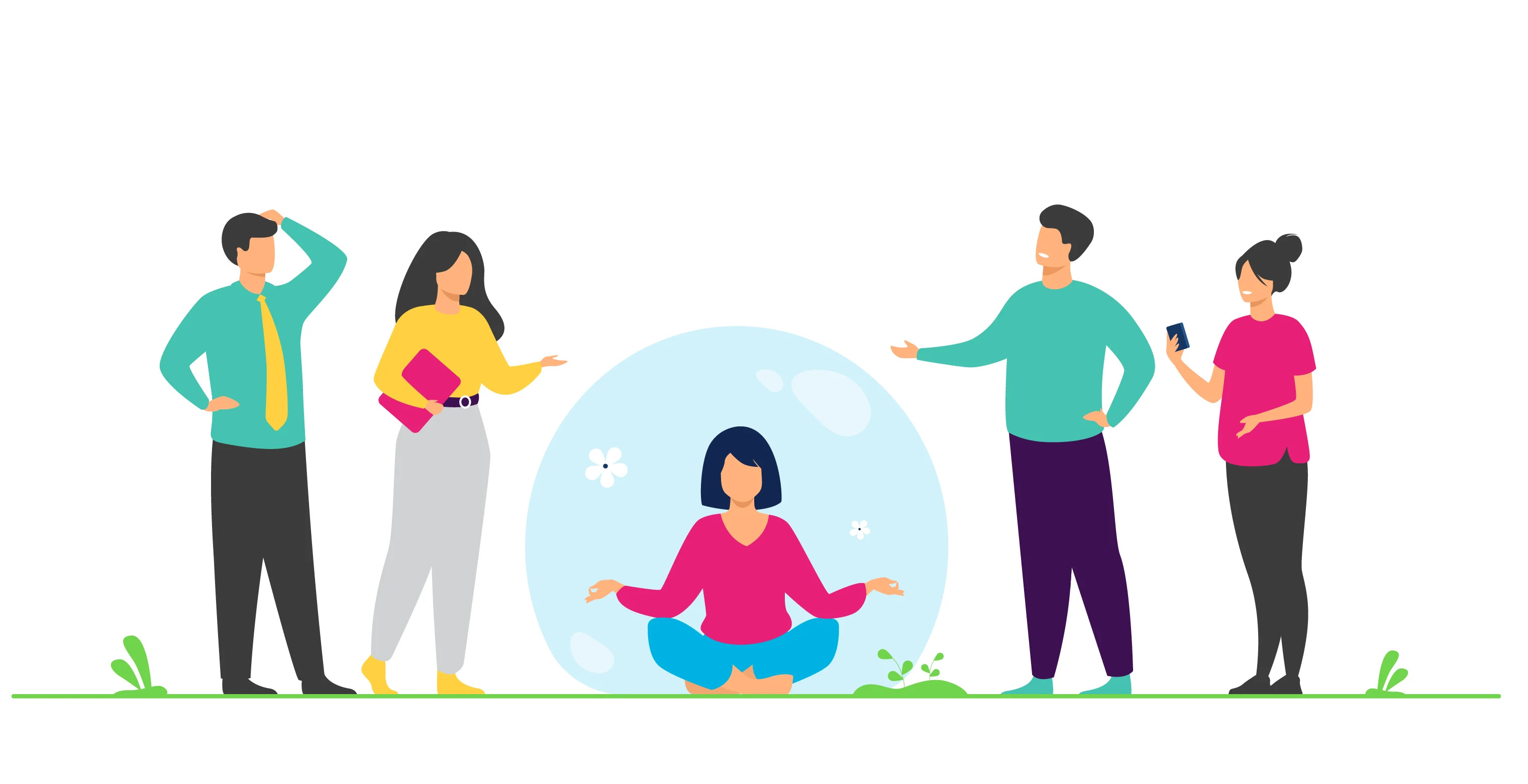
Can setting too many boundaries become a way of avoiding difficult conversations, emotional vulnerability or healthy relationships?
If someone feels they have never really learned how to set boundaries, what is one practical place they can start?
Sometimes the word " boundary " can be used to weaponise when uncomfortable situations arise. When you start thinking of the walls built to avoid any connection as boundaries, label every conversation that didn’t happen the way you wanted as a boundary violation, lack accountability, make it look like a boundary, and hide from being vulnerable, it can end up being a rigid boundary, as you have your guards up and don’t let anyone else close enough to see you vulnerable.
Building personal identity is the first place to start seeing what your boundaries are. Seeing the internal signs like being uncomfortable in someone’s presence, sudden exhaustion after interacting or hanging out with someone, or regretting saying yes when you internally wanted to say no. Sometimes we feel angry and react the way we never do because our boundaries are constantly being violated. Starting small can be done by saying no to very small things instead of immediately agreeing to do it. For eg “Let me check and see if I will be able to do that task”. Taking more time to respond can help.
Setting Boundaries Without Pushing People Away
Setting boundaries can be difficult because many people grow up believing that being nice means always being available, agreeable and accommodating. Saying no may feel selfish, even when it is necessary. This becomes more complicated in Indian families, where decisions about careers, relationships, marriage, money or appearance are often seen as collective concerns. Balancing respect for family with personal autonomy can be challenging, just as differences in expectations can strain friendships and relationships. One person may see frequent texting as closeness, while another may find it overwhelming.
However, setting boundaries does not mean shutting people out whenever conversations become uncomfortable. There is a difference between asking for time to process emotions and using silence to punish someone, just as taking space is different from avoiding every difficult conversation. Not everyone who questions a boundary is necessarily disrespecting it; sometimes, people simply have different expectations that need to be discussed.
The real test lies in communicating what makes you uncomfortable clearly and consistently, without trying to control another person’s behaviour. It also means respecting their boundaries and accepting that expressing your needs may change a relationship. Discomfort does not automatically mean you have done something wrong. After all, boundaries are not about creating a life where nobody inconveniences or disappoints you, but about understanding where your responsibility ends, and someone else’s begins.