
There was a time when a holiday to the hills meant waking up to quiet mountain views, taking long walks through winding roads and enjoying a cup of tea without having to compete for a seat. Today, reaching some of India's most popular hill stations can mean spending hours in traffic, searching endlessly for parking and finding that the quiet little spot you saw on Instagram is anything but quiet.
The same story is playing out at beaches, pilgrimage centres and heritage towns across the country. Places that once attracted visitors for their natural beauty, peaceful surroundings and local culture are struggling to cope with the growing number of people arriving every year.
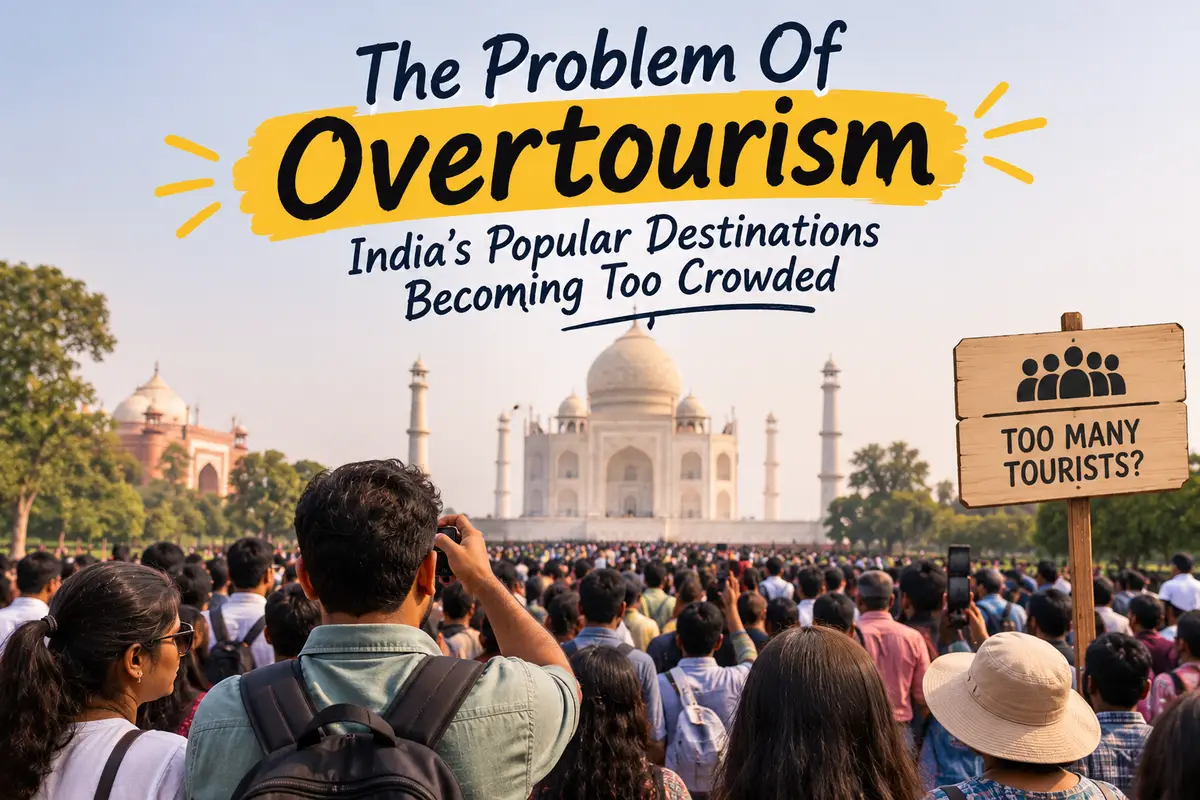
Tourism is undoubtedly important to India's economy. It creates employment, supports small businesses and gives local communities opportunities to earn a living. But when the number of visitors begins to exceed what a destination can comfortably accommodate, tourism can become a problem of its own. This is the growing concern around overtourism, and India is beginning to feel its effects.
India's Tourism Boom Is Coming at a Cost
India's tourism numbers have grown considerably over the past few years. According to the Ministry of Tourism's India Tourism Statistics 2025, domestic tourist visits reached approximately 428.55 crore (4285.5 million) in 2025, compared with 294.53 crore (2945.3 million) in 2024. That represents a 45.51% increase in a single year. The 2025 figure also includes visits during the Maha Kumbh in Prayagraj, which contributed to the sharp rise.
While these numbers reflect the growing popularity of domestic travel, they also raise an important question: are our tourist destinations prepared to handle such large crowds? The problem is not simply that more people are travelling. It is that a large proportion of visitors tend to choose the same destinations, often during the same holiday periods. Long weekends, school vacations, festive breaks and summer holidays bring thousands of travellers to places that have limited roads, accommodation, water supplies and waste management facilities. For destinations with fragile ecosystems or older infrastructure, even a temporary increase in visitors can create considerable pressure.
When Popular Destinations Start Feeling the Pressure
Hill Stations Are Losing Their Peaceful Charm
Shimla, Manali, Dharamshala and other Himachal Pradesh destinations have long been favourites among travellers looking for a break from city life. However, the summer tourist rush has increasingly turned these hill towns into traffic hotspots.
In June 2026, Scroll reported that nearly eight lakh tourist vehicles had entered Shimla during May alone. Around 70,000 arrived over the May 22-24 weekend. Narrow mountain roads, limited parking spaces and vehicles stopping for photographs have made congestion a familiar problem for both visitors and residents.
The consequences go beyond an unpleasant holiday experience. Traffic jams can delay emergency services, disrupt everyday commuting and increase pollution. Water scarcity and mounting waste add to the pressure. A 2025 report by The Tribune also highlighted how popular Himachal destinations were struggling with water shortages and overstretched civic facilities during the tourist season.
Ladakh's Fragile Landscape Faces a Different Challenge
Ladakh attracts travellers with its dramatic mountains, clear skies, monasteries and unique culture. But its high-altitude, cold-desert environment has limited resources, making it particularly vulnerable to an increase in visitors.
A 2025 research feature published by the Centre of Excellence for Himalayan Studies at Shiv Nadar University highlighted how Leh's daily waste generation quadruples during the tourist season. Plastic bottles, food packaging and other disposable items place an additional burden on an already limited waste management system.
The issue is not just about litter on roadsides. Waste disposal, water availability and sanitation are difficult to manage in a region where resources are naturally scarce. The growing popularity of Ladakh as a road-trip destination makes responsible travel especially important.
Goa's Beaches Are Feeling the Crowds Too
Goa's popularity is hardly surprising. Its beaches, nightlife, food and relaxed atmosphere make it an attractive holiday destination. However, the growing number of visitors has also brought concerns about overcrowded beaches, traffic, waste disposal and pressure on local infrastructure. According to Goa's Department of Tourism, the state recorded approximately 1.08 crore (10.8 million) tourist arrivals in 2025, including more than 1.02 crore (10.2 million) domestic visitors.
A September 2025 report by The Times of India pointed out that Goa receives more than six times its resident population in tourist numbers. This raises questions about whether its roads, water supply and waste management facilities can keep pace with the demand, particularly during the peak season.
Social Media Is Adding to the Problem
One reason certain destinations become crowded so quickly is the way people discover travel spots today. A scenic viewpoint, a little-known waterfall or a quiet café can become extremely popular after a few Instagram reels or travel vlogs.
There is nothing wrong with sharing beautiful places online. However, when thousands of people begin chasing the same photograph or experience, the destination can lose the very appeal that made it popular.
Travel plans are also becoming increasingly influenced by viral recommendations. Instead of exploring a place at their own pace, some visitors follow similar itineraries, visit the same viewpoints and arrive at the same locations around the same time.
This creates concentrated crowds rather than distributing visitors across different locations and seasons. A 2025 study published in the European Economic Letters journal also identified social media trends, influencer culture and inadequate destination management as contributing factors behind overtourism in destinations such as Shimla, Manali, Goa and Jaipur.
Looking beyond the usual tourist spots:
The solution to overcrowding may also lie in looking beyond the destinations everyone already has on their travel list. Instead of heading straight to Manali or Shimla, travellers could explore places such as Jibhi and Tirthan Valley in Himachal Pradesh, which offer mountain scenery, riverside stays and opportunities to explore nature. Those looking for a different Himalayan experience could consider Zanskar, while beach lovers visiting Goa could explore quieter stretches such as Galgibaga or Agonda in South Goa. In Rajasthan, Bundi offers a heritage experience for those willing to look beyond Jaipur's popular attractions.
Exploring lesser-known destinations can help distribute tourism more evenly, allowing smaller communities to benefit from visitors while easing some of the pressure on heavily crowded hotspots. However, these places are not automatically free from tourism-related problems. As their popularity grows, they too will need responsible planning, better infrastructure and sustainable tourism practices.
Can India Find a Balance Between Tourism and Conservation?
The answer is not to discourage people from travelling. Tourism supports livelihoods, particularly in places where local businesses depend heavily on visitors. Hotels, homestays, restaurants, taxi operators, guides and handicraft sellers all benefit from a healthy tourism industry.
The challenge is to ensure that destinations do not pay the price for their popularity.
One way forward is to assess the carrying capacity of popular tourist locations. This means understanding how many visitors a place can accommodate without damaging its environment or affecting the everyday lives of residents. Based on a 2025 study published in Scientific Reports, researchers estimated sustainable daily visitor limits for the four Char Dham pilgrimage sites in Uttarakhand, highlighting the importance of planning tourist inflows according to local conditions.
Authorities can also improve public transport, introduce better waste collection systems, regulate construction in ecologically sensitive areas and encourage visitors to explore lesser-known destinations. Advance registrations or daily visitor limits may be necessary at particularly fragile locations during peak periods. Travellers, too, have a role to play. Carrying reusable water bottles, avoiding littering, respecting local customs, supporting local businesses and travelling outside peak seasons are small steps that can make a difference.
Ultimately, a destination should not have to lose its character to become a popular tourist spot. India's mountains, beaches, forests and heritage towns are valuable precisely because they offer experiences that cannot be recreated elsewhere. The next time we plan a holiday, perhaps the question should not only be whether a place is worth visiting, but also how we can visit it without making life harder for the people who call it home. After all, the best travel memories should not come at the expense of the places that make them possible.