
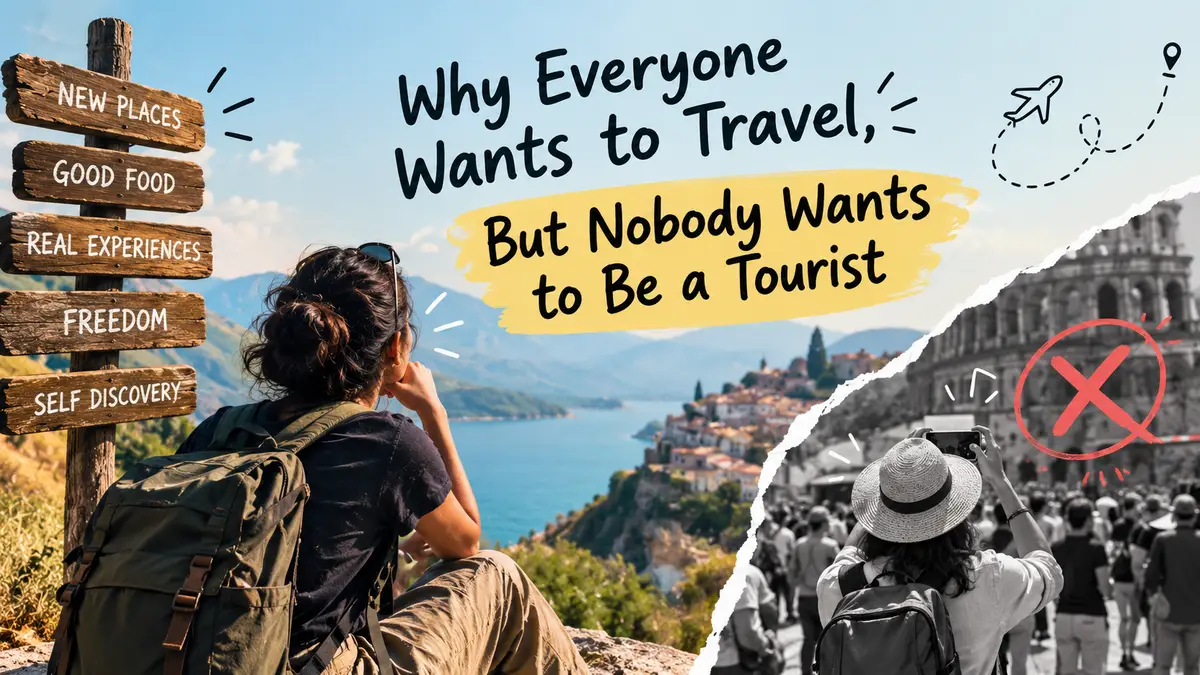
There was a time when being a tourist was simply what happened when you travelled somewhere you had never been before. You arrived in a new city, visited its famous landmarks, took a few photographs, bought something to remember the place by and went home with stories to tell. Today, somehow, the word “tourist” has started to sound like an accusation.
Nobody wants to be the person who goes to Paris and only sees the Eiffel Tower, visits New York and takes a picture in Times Square, or travels to Goa and spends the entire trip at a resort. We want to believe that we are travelling differently, even when thousands of other people are searching for exactly the same “hidden gems” on Instagram and TikTok.
We want the local café, the quiet neighbourhood, the family-run restaurant and the little street that supposedly “tourists do not know about”. We want experiences that feel personal and photographs that look as though we simply happened to stumble upon them.
The funny part is that everyone else is looking for the same thing.
When Did Being a Tourist Become a Bad Thing?
Part of it comes from how travel has changed. Earlier, travelling somewhere new was largely about seeing what the place had to offer, but today there is often another layer to it: how the trip looks and what it says about us.
A famous landmark can feel almost too obvious because millions of people have already photographed it. Going there is still exciting, but posting the same photograph can feel ordinary. There is a growing desire to discover something that feels less accessible, more personal and, ideally, more impressive to the people watching from home.
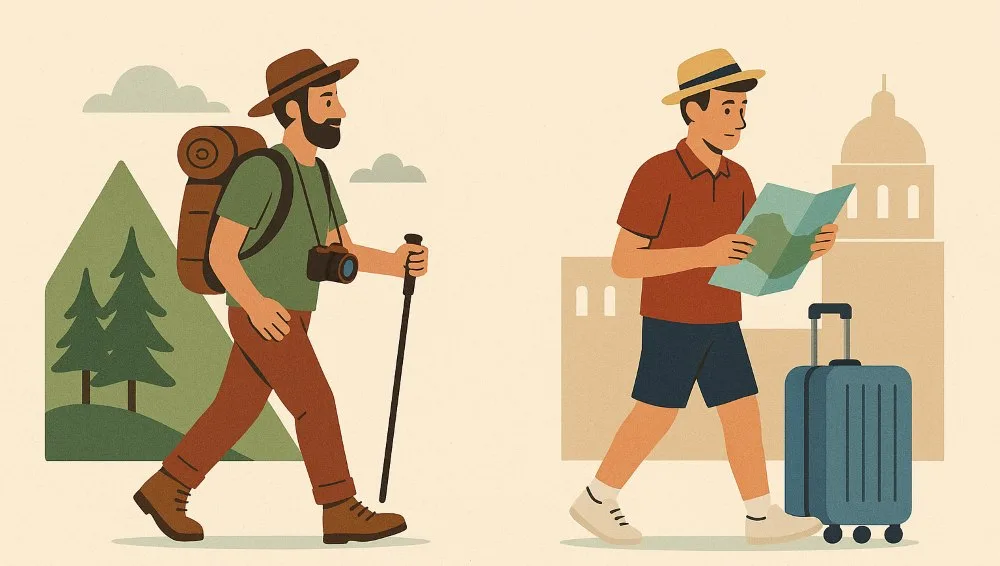
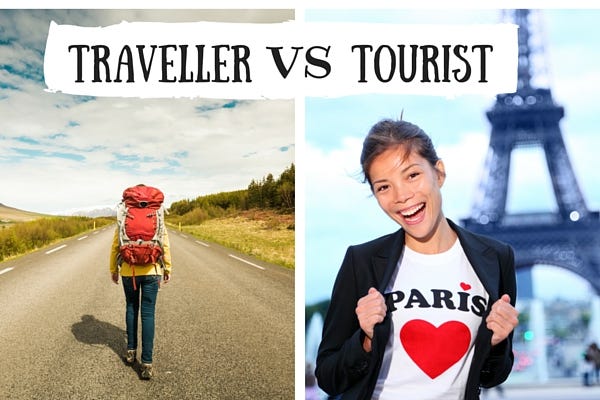
This is where the idea of the “traveller” has become so appealing. A tourist follows the crowd, while a traveller supposedly understands the place. A tourist checks attractions off a list, while a traveller takes their time. A tourist eats where the guidebook tells them to, while a traveller finds the place locals love. The distinction sounds romantic, but it is not always as clear as we like to think.
Someone travelling to Rome for the first time is not somehow less of a traveller because they want to see the Colosseum. Someone visiting Jaipur does not become a less curious person because they want to see the Hawa Mahal. Famous places became famous for a reason, and there is nothing wrong with wanting to experience them. Sometimes, being a tourist is simply what happens when you are somewhere for the first time.
The Search for the “Authentic” Experience
What has really changed is our obsession with authenticity. We do not just want to visit a place anymore; we want to feel as though we have experienced the “real” version of it.
That might mean searching for a neighbourhood that is not crowded with visitors, finding a restaurant without a flashy sign or choosing a homestay instead of a hotel. There is nothing wrong with any of this, and in many cases, it can lead to a much deeper understanding of a place. But authenticity becomes complicated when it turns into another travel checklist.
The hidden café that one creator recommends may become crowded precisely because thousands of people saw the same video. The “secret” beach might no longer be particularly secret. A tiny restaurant that was once known mostly by locals may suddenly have a queue outside because it appeared on a list of places to visit. In trying so hard to avoid touristy experiences, we can end up creating new tourist hotspots.
We Are All Following Something
Even the most spontaneous-looking trip often involves some form of planning. We search Reddit threads, save Instagram reels, read reviews, watch travel vlogs and ask friends where we should go. There is nothing wrong with that; in fact, these tools can make travel much easier. The interesting part is that the internet has made our idea of discovering something independently much less independent than we realise.
When ten different people recommend the same “underrated” neighbourhood, it is no longer particularly underrated. When every travel video tells us to skip the obvious attraction and visit the same alternative spot instead, the alternative becomes its own version of the obvious. Perhaps the problem is not that we are tourists. It is that we are uncomfortable admitting that we sometimes enjoy doing touristy things.
Maybe We Should Stop Trying So Hard to Travel the “Right” Way
There is a strange pressure around travel today to make every trip meaningful. You should not just relax; you should immerse yourself in the culture. You should not simply take photographs; you should have an authentic experience. You should not follow an itinerary; you should discover the place naturally. But travel does not always have to be profound.
Sometimes you want to spend three hours in a museum because you genuinely love it. Sometimes you want to sit in a hotel room after walking around all day. Sometimes you want to eat at the restaurant everyone recommended because the food actually looks good. Sometimes you want to take the ridiculously touristy photograph because you have wanted that photograph since you were a child. There is nothing less meaningful about that.
At the same time, travelling with a little curiosity can take you beyond the obvious. Talk to people when the opportunity naturally arises, try food you have never eaten, take public transport, walk without rushing to the next attraction and pay attention to how people actually live in the place you are visiting. You do not have to prove that you are different from other tourists to have a memorable trip.
The Best Trips Might Be a Mix of Both
Maybe the real distinction is not between tourists and travellers at all. Maybe it is between people who simply move through a place and people who allow themselves to notice it.
You can visit the famous landmark and still wander down an unfamiliar street afterwards. You can take the standard photograph and then spend an afternoon doing absolutely nothing. You can follow a recommendation from TikTok and still have a conversation with someone who lives there. You can be curious without constantly searching for something nobody else has discovered. Travel does not become more valuable just because it looks different on Instagram.
Perhaps we need to stop treating “tourist” as a word we have to escape from. We travel because we want to see places that are different from home, experience things we cannot experience every day and, sometimes, simply have a good time. There is no shame in being a tourist.
The better question is whether, somewhere between the famous sights and the hidden cafés, we actually took the time to look around and experience where we were. After all, the best travel story is not necessarily the one nobody else has lived. It is the one that meant something to you.