
India has everything tourists dream of—mountains, beaches, deserts, jungles, history... and somehow, a talent for making them stand in long queues.
Whenever we plan a vacation, we choose a place where we can relax, enjoy the authentic local culture, go on adventures, and explore nature and wildlife. Then we think of budgets, timings and accommodations. Well, India offers all of these things in a varied price range. You can survive a day in India for a few hundred rupees, or spend a few lakhs, depending on your interests.
From history and heritage to adventures and parties, this country has it all. For almost 2000 years, India has been a hub for study, trade and spiritual retreats. With its geographical position, it is one of the best destinations for tourism. The Himalayas in the north are great for mountain vacations, offering snow sports and excellent hotels with some of the best views.
India is home to vast coastlines and tropical beaches, with party destinations like Goa and relaxing on the untouched beaches of Andaman & Nicobar Islands. It has high biodiversity, with forests, deserts, and wildlife. You can always find a place to vacation as per the season. Despite this, India’s tourism numbers are not in any competition with those of other countries, some of them probably the size of one of India’s states.
Where Does India Stand In The Global Tourism Industry?
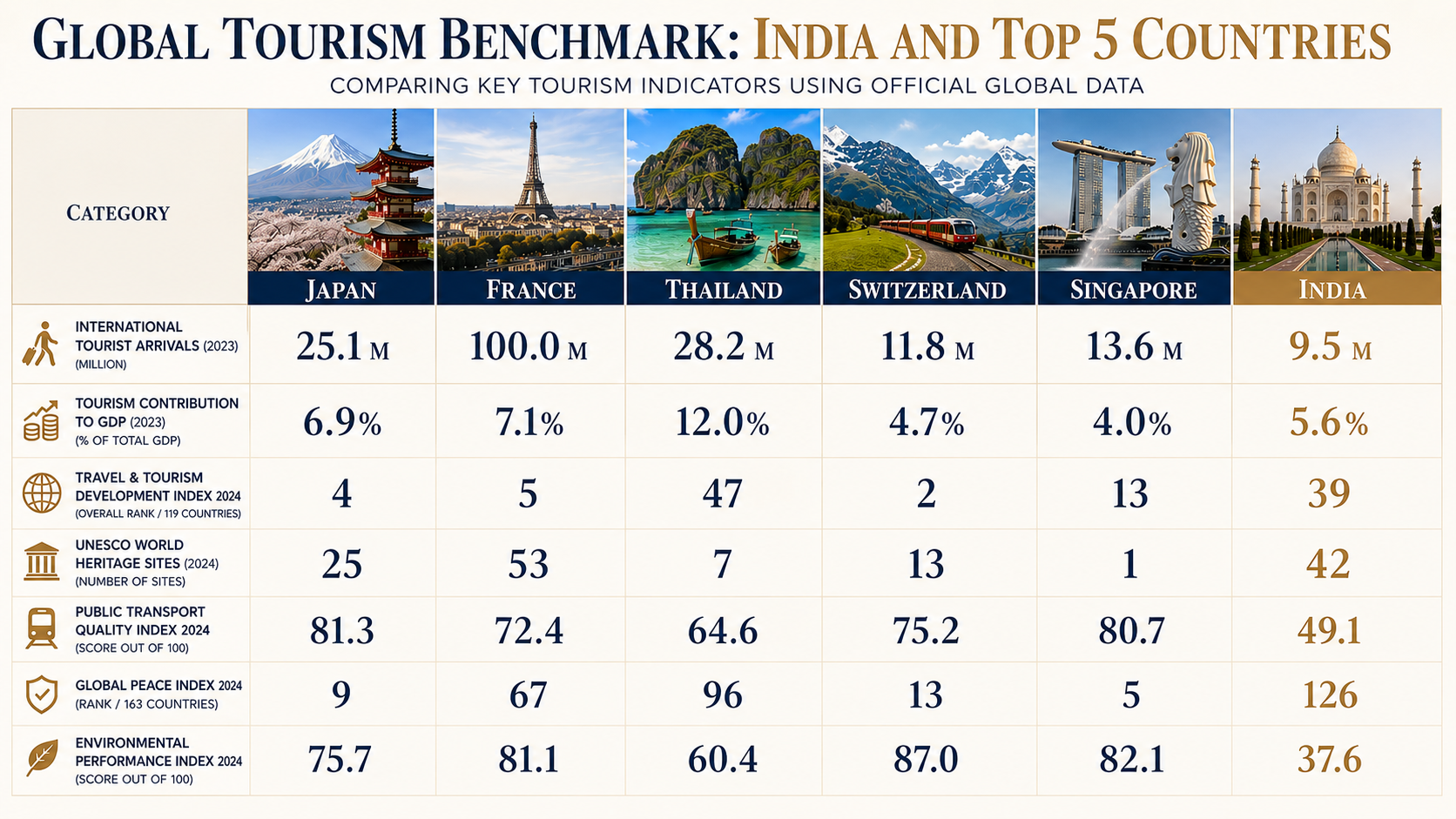
The sub-tropical Indian climate favours tourism the most. Every season is the best time to visit some or the other state/city in the country.
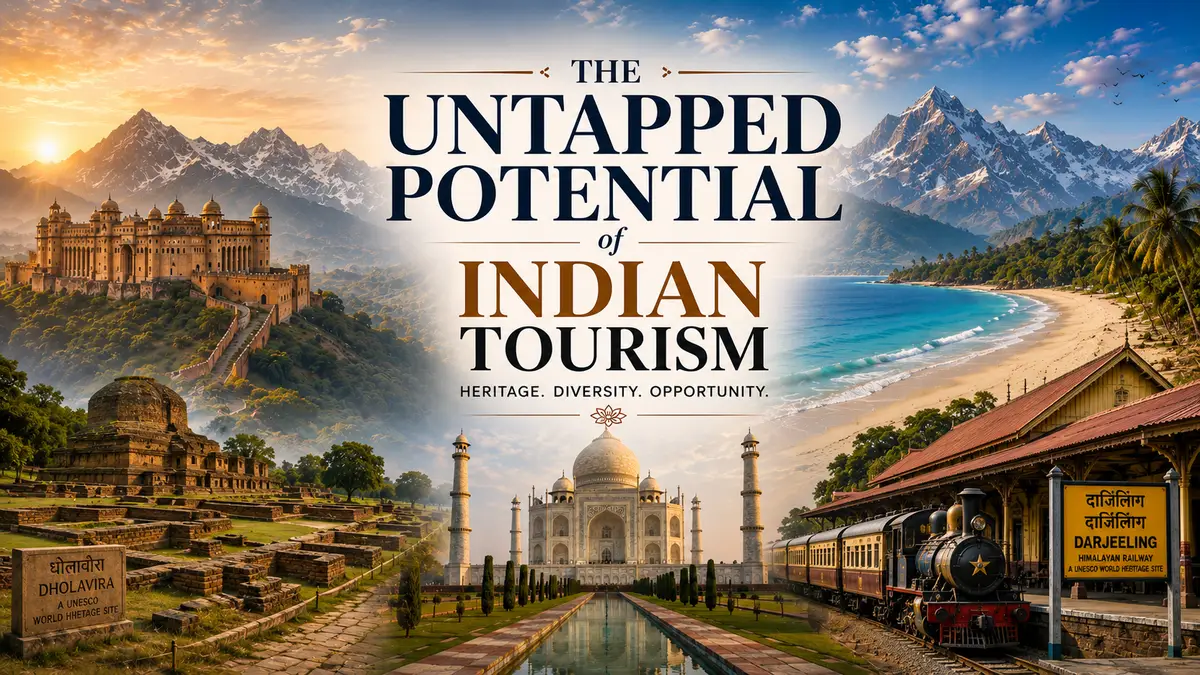
Despite this, India ranks 8th globally in terms of tourism economies. The tourism potential index shows that it should be in 1st position owing to its abundance of UNESCO heritage sites, 44 of them. So then, where is it that we fall short?
Fatigue and overpricing:
Every street in every corner of the state and city in India always has a vendor selling something special. There are so many things people would willingly buy as souvenirs at tourist attractions. But the shopkeepers and vendors make it a point to charge abnormally high prices, taking advantage of the lack of knowledge of market prices for several products of foreigners.
Severe congestion and traffic on roads:
Indian Road Network ranks as the 2nd largest, only second to the USA. But they also rank at the top for road fatalities and accidents due to congestion. Apart from that, every last mile to any tourist attraction spot has a weak commute. The bikes/cars/buses generally drop off some distance away from the actual destination. The roads are packed with people who have little or no civic sense as they park and litter wherever they please.
Poor sanitation & cleanliness:
India is probably the only country where you find people spitting and peeing on walls painted with slogans like: ‘Cleanliness is next to godliness’. It looks funny. But for people coming here as tourists, it is a nightmare. Many tourists come across poorly maintained public toilets around attractions. There is a clogged drain, broken pipes or tubs, and definitely a queue with at least one broken latch on the washroom doors. The beaches and rivers are heavily polluted, and the open waste disposal makes it a very heinous sight to look at. Despite government efforts, there are very few places that are well-maintained. When we compare that to Japan and Singapore, they have built tourist places so clean that even if there is no major attraction, it still feels worth capturing.
Weak infrastructure:
Many of the tourist places in India are not accessible to the disabled and the elderly. There is also a lack of wayfinding signs and no clear parking areas. Moreover, there are very few places with tourist information desks to explain the history/importance of the attraction or to even guide the tourists. At some places, guides often overcharge the tourists. This is a major problem in cities away from airports. Places like Dubai and London have HOHO [Hop-On Hop-Off] Buses that provide a commute and can go up to the destination. This system is also available in India, but for 4-5 selected cities.
Inconsistent Service Quality:
Indian hospitality from hotels, taxi drivers and restaurants is quite inconsistent. You are never prepared for how you will be treated. Tourists often face great treatment in 5-star hotels, and good conversations flow easily with local people. But unfortunately, we are also a nation where tourists have been harassed, raped and even commented on in broad daylight. There is no proper system to accelerate justice for the wrongdoings. People are robbed of their personal belongings and are often stuck with a financial crisis, with multiple trips to the offices to get their things back.
Limited tourism beyond major attractions:
India is not just about the Taj Mahal, Jaipur, Goa, Varanasi and Kerala. It is home to so many other places and even 106 national parks. It accounts for so many different spiritual and wellness getaways, too. But we fall short in marketing our destinations on a global level. We have limited potential and effort that is well utilised in promoting domestic tourism, but on an international level, we have fallen behind our own numbers post-COVID pandemic.
The Souvenir Industry
Tourism in India also opens doors for the million rare and unique artefacts that we produce, which are rarely found at affordable rates across the globe. But that is where the country takes another major dip. Despite hosting almost 10 million foreign and 3 billion domestic tourists last year, we were hardly able to bring any revenue through souvenirs.
Undoubtedly, Indian handicrafts and textiles are exported very nicely across the world, but they come with all the extra charges and seldom benefit the creators. With an unorganised market, this becomes one of the major challenges to even keep a clear record of the statistics relating to this market.
If every tourist spent 10$ minimum on a souvenir in India, imagine the revenue generated. What is required is a government standee that brings all the vendors under one roof, which makes it easier for categorised things that tourists can buy from India. The need of the hour is also someone who can explain the cultural significance of whatever the tourist is buying for back home.
How Can We Make Indian Tourism Better?
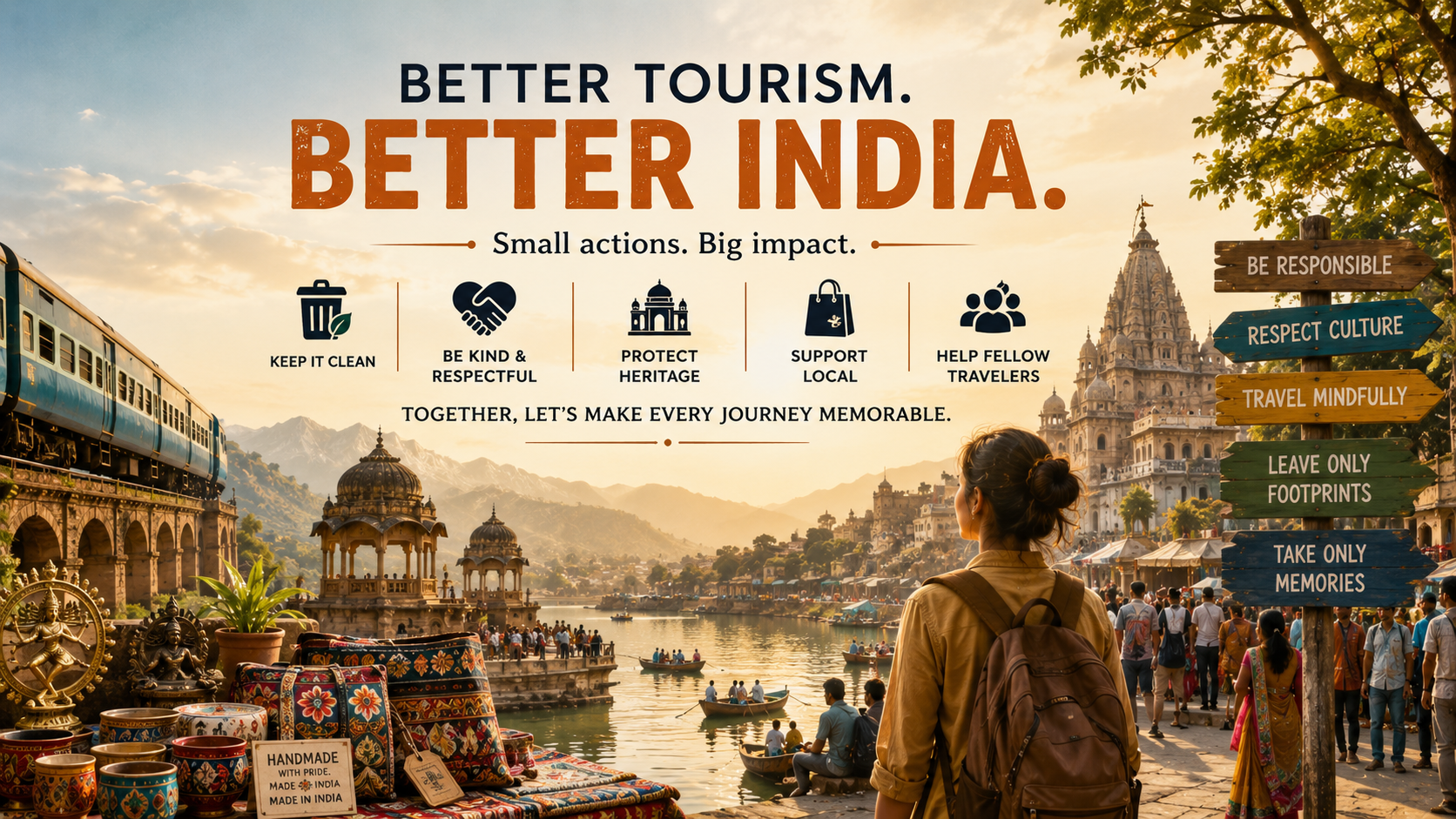
Government initiatives like GI tags, Vocal for Local platforms and One District One Product [ODOP] facility are already working towards making a smooth experience for tourists. Many tourist places have proper security and fines for people who cause damage to the place. The government is also working towards making the country cleaner.
The security and safety of tourists, and educating the people more, making them aware and conscious, are also taken into consideration. With that, it is also the responsibility of the youth to make sure that we make any tourists around us have a pleasant experience. To attract more visitors and make the tourism economy better, the change has to start with us.
India's biggest tourism challenge isn't a lack of destinations—it's the experience between them. A cleaner street, an honest taxi fare, a helpful local, or an authentic souvenir can leave a stronger memory than even the grandest monument. If India wants to become the world's favourite destination, the journey has to become as remarkable as the destination itself.