
Walk into any cybersecurity classroom, and you'll learn about encryption, network security, malware, and ethical hacking. But ask professionals how they truly developed their skills, and you'll often hear a different answer: by building, breaking, collaborating, and learning from others.
Today, cybersecurity is one of the fastest-growing fields in technology, yet it is also one of the most community-driven. Whether it's open-source projects, Capture the Flag (CTF) competitions, workshops, or conferences, some of the most valuable lessons happen outside the classroom. Across campuses, student-led communities are becoming spaces where learning is practical, curiosity is encouraged, and collaboration takes centre stage.
At our institution, ExploitX is one such community.
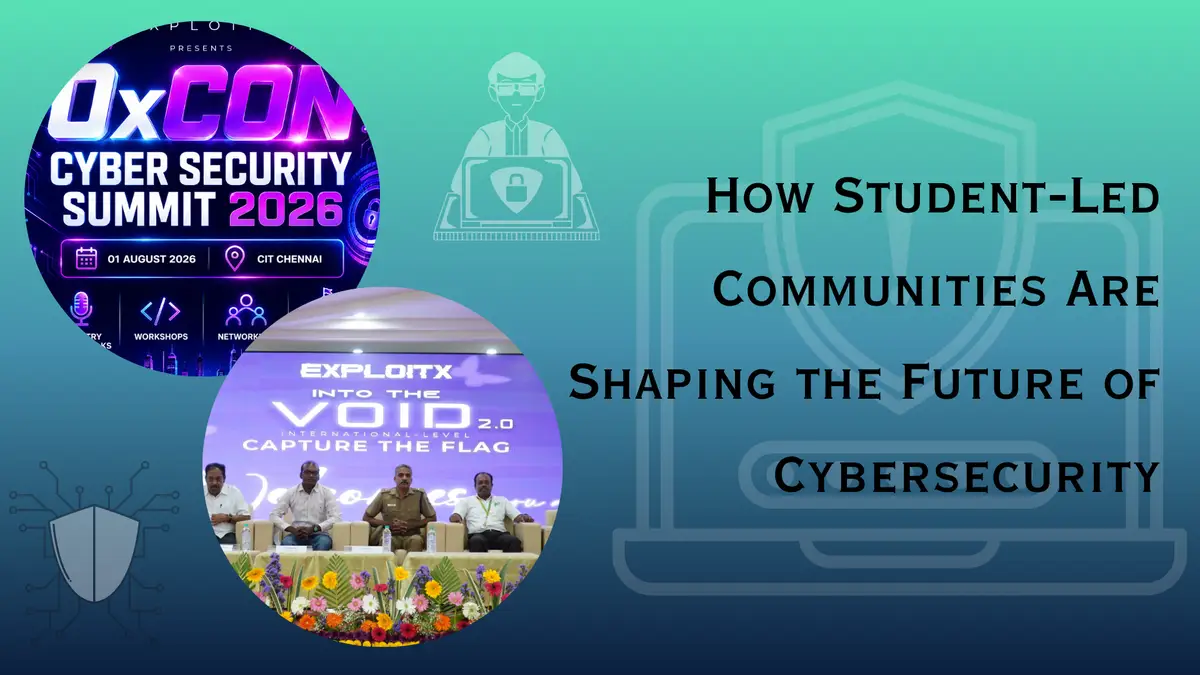
With a vision to make cybersecurity more accessible and hands-on, ExploitX has steadily created opportunities for students to move beyond theory and experience the field firsthand. This year, that vision unfolded across three days through Into the Void 2.0, the club's flagship national-level Capture the Flag competition, followed by its valedictory ceremony, and finally 0xCON, a dedicated cybersecurity summit bringing students face-to-face with professionals from across the industry.
Day One: Where it kicked off
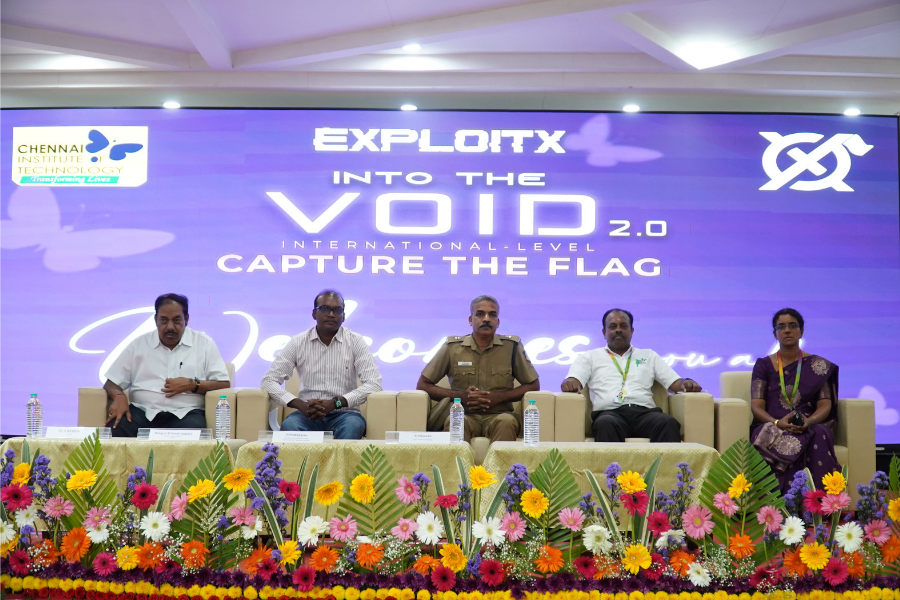
The first day of Into the Void 2.0 transformed cybersecurity from something students study into something they actively experience.
Participants took on challenges across domains including web security, cryptography, digital forensics, reverse engineering, binary exploitation, and OSINT. Each challenge required more than technical knowledge. Participants had to investigate, experiment, think critically, and approach unfamiliar problems with persistence.
What made the competition particularly special was its reach beyond India. Participants from countries including Sri Lanka and Vietnam joined the CTF, giving Into the Void 2.0 an international dimension and bringing together cybersecurity enthusiasts from different countries and backgrounds.
The first day also marked an important moment for the event's organisers and participants with the inauguration of the CTF.
The occasion was graced by Thiru Prabakaran, Deputy Commissioner of Police, Cyber Crime Wing, Tambaram City Police, whose presence brought a valuable law-enforcement perspective to an event centred around cybersecurity. His involvement highlighted the growing importance of collaboration between cybersecurity professionals, students, and law-enforcement agencies in addressing the evolving landscape of cybercrime.
The inauguration was also attended by Mr Reegun Richard Jayapaul, a cybersecurity professional and Director- Threat Research at Cyderes. With extensive experience spanning areas such as security research, malware analysis, reverse engineering, incident response, and threat intelligence, his presence allowed students to connect with someone working directly in advanced cybersecurity research.
For the participants, however, the real work had only just begun.
The CTF became a space where beginners could experiment without fear of getting things wrong, while experienced participants could push their skills further. It was competitive, but the strongest element was the learning that happened along the way.
Day Two: Ego’s touched, Event sparked
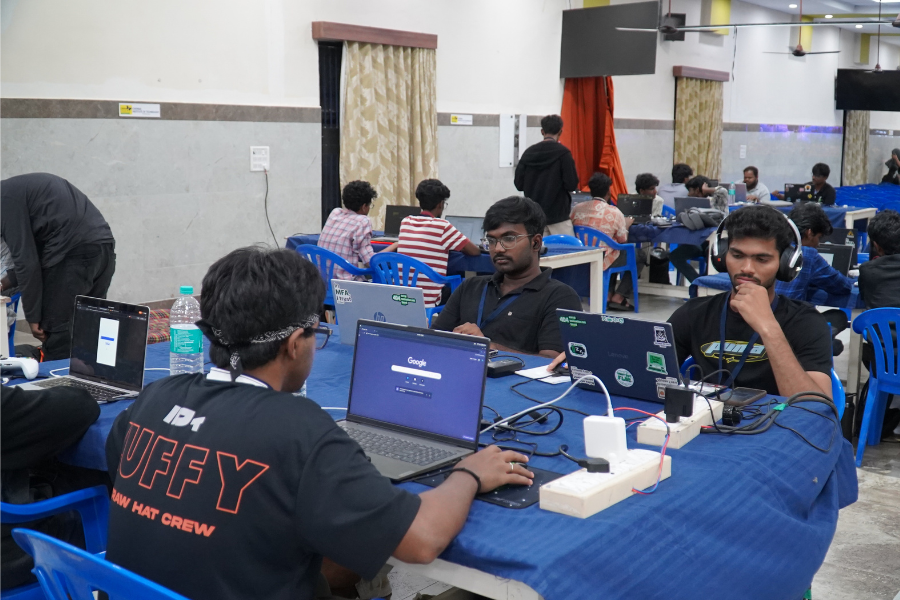
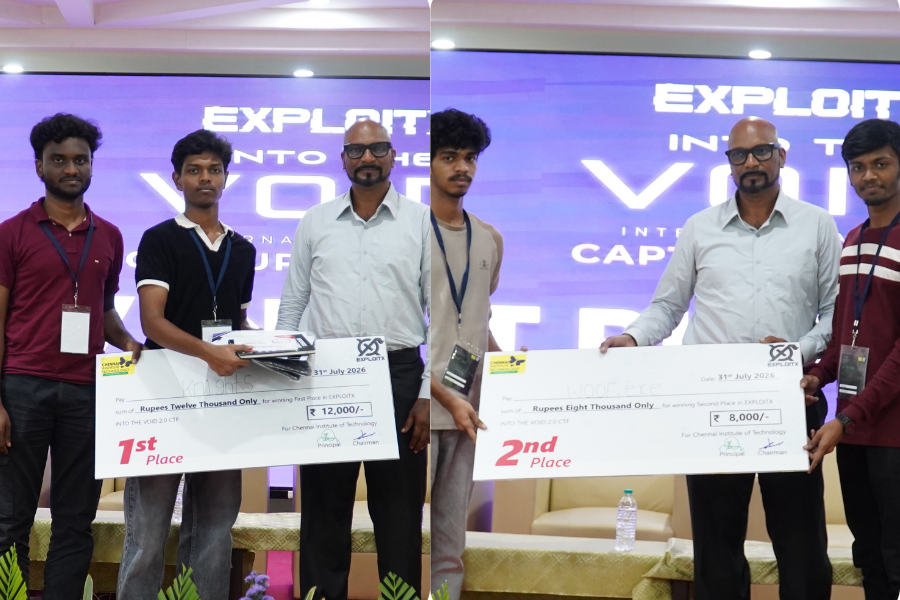
As Into the Void 2.0 progressed, the second day brought the competition towards the end where the participants were into the depths, making their positions rise. At last, as its conclusion it gave the community a chance to reflect on everything that had taken place.
The Valedictory Ceremony marked the culmination of the CTF and celebrated the efforts of the participants, organisers, volunteers, and everyone who contributed to making the event possible.
The ceremony was graced by Mr Christopher Franklin, Head of K7 Academy, who joined the event as Chief Guest. His presence added significance to the closing ceremony and reinforced the importance of creating strong bridges between students and the professional cybersecurity ecosystem.
But the conclusion of Into the Void 2.0 was not simply an ending.
It was a reminder of what student-led initiatives can create when students are allowed to build something of their own- a platform where people can compete, learn, meet others who share their interests, and discover new possibilities within cybersecurity.
And there was still one more day to come.
Day Three: From Challenges to Conversations
The third day marked a shift from solving cybersecurity challenges to understanding the people, careers, and ideas shaping the industry.
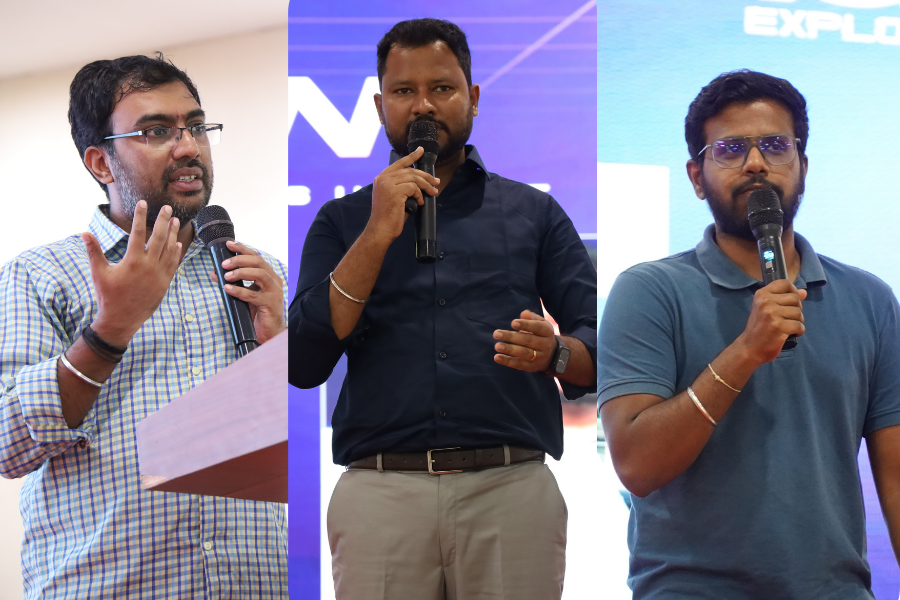
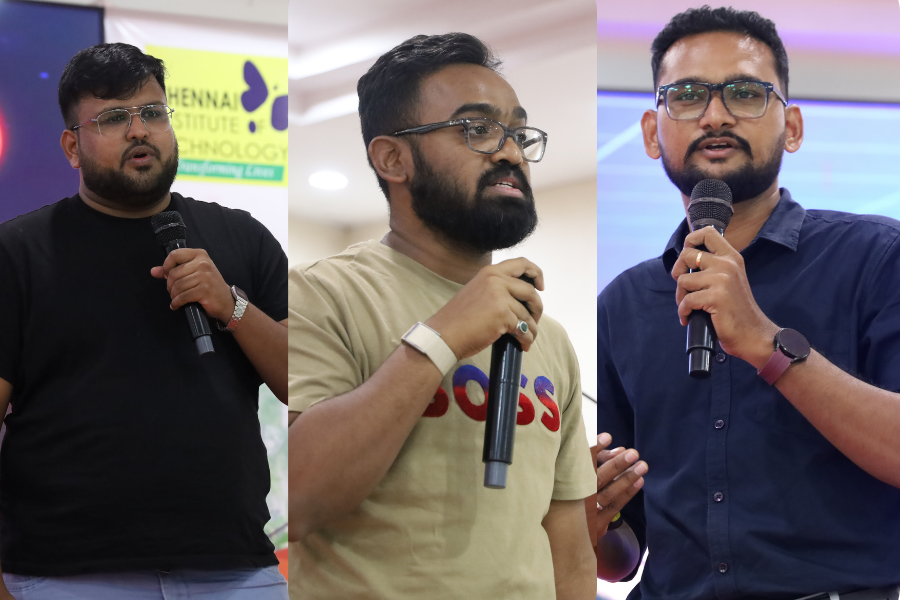
This was the day of 0xCON, ExploitX's cybersecurity summit, bringing together students and six experienced cybersecurity professionals for a full day of technical sessions, discussions, and networking.
The keynote series began with Mr Vinoth Kumar, Manager of Incident Response & Enterprise Security at Freshworks. Bringing more than a decade of experience in incident response and enterprise defence, including handling high-stakes nation-state cyber threats, his session offered students insight into the realities of responding to sophisticated attacks and managing high-severity security incidents.
The second session featured Mr Aravind Baskaran, Senior Information Security Engineer at LinkedIn. With more than seven years of experience across incident handling, threat hunting, and cloud forensics, and professional experience at organisations including Microsoft, Imperva, and Deloitte, he brought valuable perspectives on cloud security engineering and modern threat detection.
Students then heard from Mr Niranjan Jayanand, Advanced Threat Hunting Service Lead at CyberProof. A published security researcher featured in SC Media and Dark Reading, Mr. Jayanand specialises in advanced threat hunting and adversary analysis. His session explored the methodologies used to identify sophisticated threats and understand adversary behaviour.
The fourth speaker, Mr Venkatesh Sathya, Strategic Head of Security Operations at TCS, brought more than a decade of experience in SOC architecture, Digital Forensics, and Threat Intelligence. As a Blue Team Commander and technical author, his session offered students a deeper perspective on building resilient security operations and developing effective defensive capabilities.
The afternoon sessions shifted towards offensive security.
Mr Venkatesh L Sharma, AI Red Teamer & Security Officer at Delta Exchange Group, brought more than 15 years of offensive security experience. Having audited Critical National Infrastructure under NTRO and achieved Hall of Fame recognition with organisations including Google, Apple, and Microsoft, his experience demonstrated the depth and persistence required in offensive security and red teaming.
The summit concluded its keynote series with Mr Srinivas N, Manager of Offensive Security & Assurance at Emirates NBD. With more than 12 years of experience leading red teaming and adversary simulation initiatives, along with advanced threat research experience involving organisations such as DRDO, Microsoft, and the World Bank Group, his session gave students insight into how organisations simulate real-world adversaries to strengthen their defences.
Together, the six speakers represented an impressive cross-section of the cybersecurity industry- from incident response and cloud security to threat hunting, SOC operations, red teaming, and adversary simulation.
Beyond the Stage
The summit didn't end with the final keynote.
The Cyber Villages and Networking Session allowed attendees to interact more informally with professionals, explore hands-on exhibits, exchange ideas, and connect with fellow cybersecurity enthusiasts.
For students, these conversations were just as valuable as the formal sessions.
A textbook can explain what incident response is. A professional can explain what it feels like to handle an incident.
A course can introduce threat hunting. A threat hunter can explain how the skill is actually used.
And a syllabus can list cybersecurity career paths. Conversations with people working in the industry can show students what those paths really look like.
That difference is at the heart of what student-led communities can offer.
More Than Three Days of Events
Looking at Into the Void 2.0 and 0xCON as separate events would miss what made the experience meaningful.
Across three days, the journey moved through three different forms of learning.
Day One was about exploration- students entering challenges, breaking down problems, and discovering practical cybersecurity.
Day Two was about celebration- recognising the participants, organisers, and community that brought the competition to life.
Day Three was about connection- bringing students together with professionals and opening conversations about the wider cybersecurity industry.
And throughout those three days, the community continued to grow.
Participants from India, Sri Lanka, and Vietnam, students from different colleges, experienced cybersecurity professionals, researchers, speakers, organisers, and volunteers all became part of the same ecosystem.
That is perhaps the most powerful thing about student-led cybersecurity communities.
They don't simply teach students how to use a tool or solve a challenge. They create environments where students can ask questions, make mistakes, meet mentors, discover interests, and imagine themselves as part of the industry they are preparing to enter.
Building the Future, Together
Cybersecurity changes constantly. New vulnerabilities emerge, attack techniques evolve, technologies transform, and defenders are continually challenged to keep pace.
In such a field, learning cannot stop at the classroom door.
Communities like ExploitX create spaces where students can continue learning through experience. Competitions like Into the Void 2.0 provide the challenge. Events like 0xCON provide the conversations. And the people who participate, speak, mentor, organise, and collaborate provide the community.
The three-day journey of Into the Void 2.0 and 0xCON demonstrated that student-led initiatives can grow far beyond campus boundaries- bringing together participants from different countries, connecting students with professionals, and creating opportunities for practical learning.
Because cybersecurity is not only about securing systems.
It is about the people who protect them, the researchers who study threats, the professionals who respond to attacks, the communities that share knowledge, and the students who will eventually carry the field forward.
The future of cybersecurity isn't built by individuals working alone. It is built by communities that learn, challenge, collaborate, and grow together.