

In this era of ever-changing trends and innovations to solve problems we didn’t even feel existed, there is one thing that does not change: The need to look good.
Over the decades, humans have always wanted to look their best. The definition of beauty and the ways to maintain it changed a thousand times, but the intention was always the same. And when it comes to beauty, our first thought is skin.
Skin is one of the most delicate, significant and resilient parts of the human body. To have good skin doesn’t just mean it should be bright. Healthy skin, defined by its core strengths, should be the goal.
The 5 core signs of healthy skin include:
Smooth texture void of rough, flaky patches.
Hydrated, not dry, not oily. Just hydrated.
Resilience to sensitivity that comes with climate change or changing products.
Firm elasticity, making it bounce back as soon as pressed.
Natural radiance, making light reflect evenly.
It is very common nowadays to use a 10-step skin care routine with multiple active elements that may be harming your skin instead of repairing it. There are acids, retinols, Vitamin C, and serums. Dermatologists are emphasising that skin might just need a break.
What Is A Skin Barrier?
Skin is multiple layers deep, and the topmost layer is the stratum corneum, the outermost layer of the epidermis. To understand it easily, scientists compare it to a brick wall. The dead skin cells form the bricks, and other elements like ceramides and fatty acids act as mortar. It prevents water loss by keeping the skin hydrated so that it can be soft and plump. It keeps the body safe by preventing bacteria, germs, and toxins from entering.
What Can Cause Skin Barrier Damage?

We had a chance to speak with Dr Manal Dave [M.D. DVL], from Ahmedabad.
She is an expert in Dermatology [Board Certified] with precise knowledge, sharp visual diagnostic skills, and deep empathy. Here's her view on the subject:
Q. What causes skin barrier damage the most, and how can it be avoided?
A. The most common reason is simply doing too much to the skin- exfoliating acids, physical scrubs, harsh cleansers, acid toners, DIY remedies or frequent hot water exposure. One important cause we see quite often in OPD is the use of topical steroids, especially in over-the-counter fairness creams. With prolonged use, these can significantly affect the skin. So, avoid overloading your skin with multiple actives and keep your routine as simple as possible.
To say the least:
Skin barrier damage can be caused by:
Over-exfoliation, i.e, using too many acids or scrubs too frequently. The right amount at the right time is necessary.
Having too many actives in the skincare routine. Avoid combining too many strong ingredients. Go one step at a time.
Cleansing harshly with products that can leave the skin dry, and doing so too frequently.
Not using SPF, dry air, pollution and other environmental factors can cause skin stress.
Diseases such as psoriasis and eczema leave the skin barrier damaged; they require professional treatment.
Signs That Skin Barrier Is Damaged
Travelling, eating or working in polluted air is one of the most common causes of skin damage, alongside other causes related to lifestyle and daily habits. To know the possible signs if your skin barrier is damaged, you can follow these steps:
Know your skin texture. Understand if you have dry skin, any unexplained spots/blotchiness or if it is dull and lacks a healthy bounce.
Wash your face and leave it pat-dried for 15-20 mins. Check for itchiness or tightness.
Use your skincare products like serum/moisturizer. Check for burning or sharp tingling.
Check for sudden or unusual breakouts or tiny bumps.
If there is any sudden problem even after using the product for a long time, it generally means that the skin barrier is damaged. The key is to use the right product instead of many products.
How To ‘Repair’ The Damaged Skin Barrier?
Q. How long does it take to recover?
A. It depends on the extent of damage. Mild irritation can improve within 1–2 weeks, while more significant damage may take several weeks to months. If your skin remains persistently red, burning or peeling, see a dermatologist. - Dr Manal Dave.
Once diagnosed, skin barrier damage can be repaired. It won’t happen overnight. Repair usually means:
Reducing irritation
Good hydration
Skin functioning well
Some moisturisers do contain ceramides, fat molecules present naturally in the skin that repair and lock moisture, which can help restore the outer layer of the skin. [American Academy of Dermatology]
To repair and achieve a good skin barrier and make it naturally glowy and healthy, there is absolutely no need to follow any rigorous routines.
In the morning:
Gentle cleanser
Moisturizer
Broad-spectrum sunscreen
In the night:
Gentle cleanser
Hydrating moisturizer
Sealing moisture with Vaseline [petroleum jelly] is optional.
Dermatologists may recommend a pause on exfoliants, retinoids, fragrances and hot water. Once the skin gets better, only use products suggested by the dermatologist. It is very important to be aware that not all products are made for all skin types. You might particularly benefit from some, be allergic to some, or some might simply not be required. Do not try anything without a patch test.
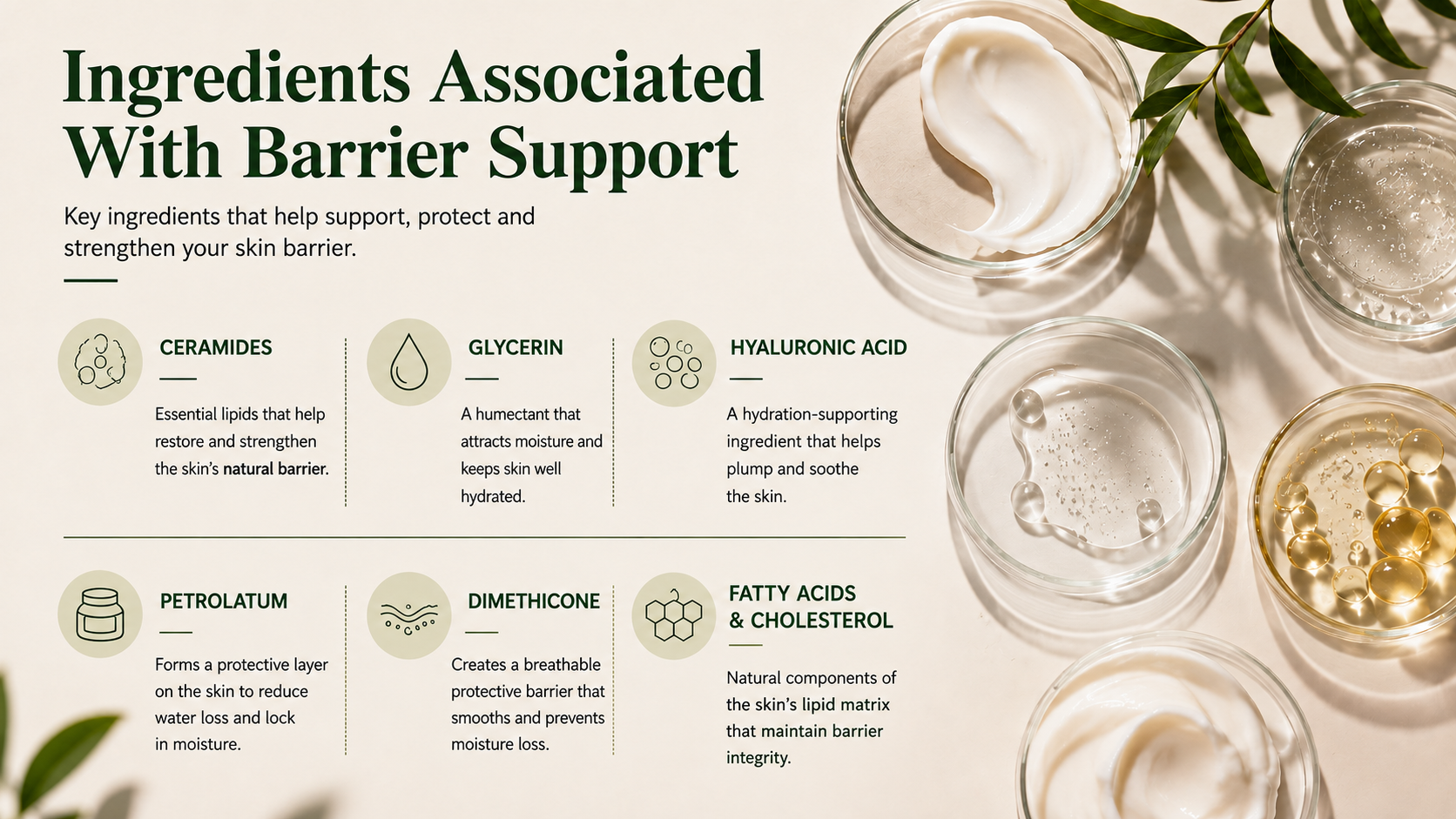
Which Ingredients Are Associated With Barrier Support?
Q. What are the most important steps to maintain good, healthy skin?
A. Keep the basics consistent and simple. A gentle cleanser, moisturiser and sunscreen are non-negotiable. At night, you can use actives depending on the concern you’re trying to address, preferably with guidance from a dermatologist. If your skin barrier is irritated, stop the actives for the time being and focus on moisturising. Look for ingredients such as ceramides, panthenol and squalane, which help support the skin barrier and reduce moisture loss. And in general, avoid DIY remedies and jumping from one skincare trend to another. Your skin often needs consistency more than a complicated routine. - Dr Manal Dave.
Why Is Barrier Repair Trending?
Barrier repair has been studied for decades, with products developing around the idea of having a fairer/good skin, but it is trending now more than ever because of the following reasons:
Skincare became more active-heavy: For many years, skin barrier repair meant sealing with heavy greasing elements. Now it is niacinamides, panthenol, fermented lysates, and microbiome & pH support. With these being easily available, everyone wants good-looking skin.
Skincare is being overdone: The accessibility of all potential chemical ingredients with no proper knowledge is the main cause of barrier damage. Such ingredients do not require any prescriptions, and hence, it becomes very easy for everyone to use them. Half knowledge can thus be a cause of downfall.
Social media popularised skin cycling and slugging: Skin cycling is alternating between retinoids and exfoliants with rest days to prevent skin irritations. Slugging is usage of thick petroleum based ointment over moisturiser to lock in the moisture. These practices have been popularised by influencers, and most people consider following them, without thinking whether their skin needs them.
Beauty to skincare: From beauty, the conversation in 2026 has drifted towards healthy skin. From chasing ‘glass skin’, now the motive is to have a strong skin barrier.
The Bottom Line
India is a country of many cities with different climate cycles. Mumbai is hot and humid, or Rajasthan is dry. This makes people have different skin types reacting to different weather conditions. Pollution, exposure to the sun, and sweating are a recipe for unwanted dull skin. To fight these, it is important to know that different skin types require different routines and products.
Instead of believing someone on social media, everyone should consider investing in skincare that is suitable for their own skin. It is important to understand that even oily skin requires a good skin barrier. Your skin needs fewer steps and more time. And as said, healthy skin is not the one with the longest routines. It is the one with the longest time and support to do what it knows how to do.