
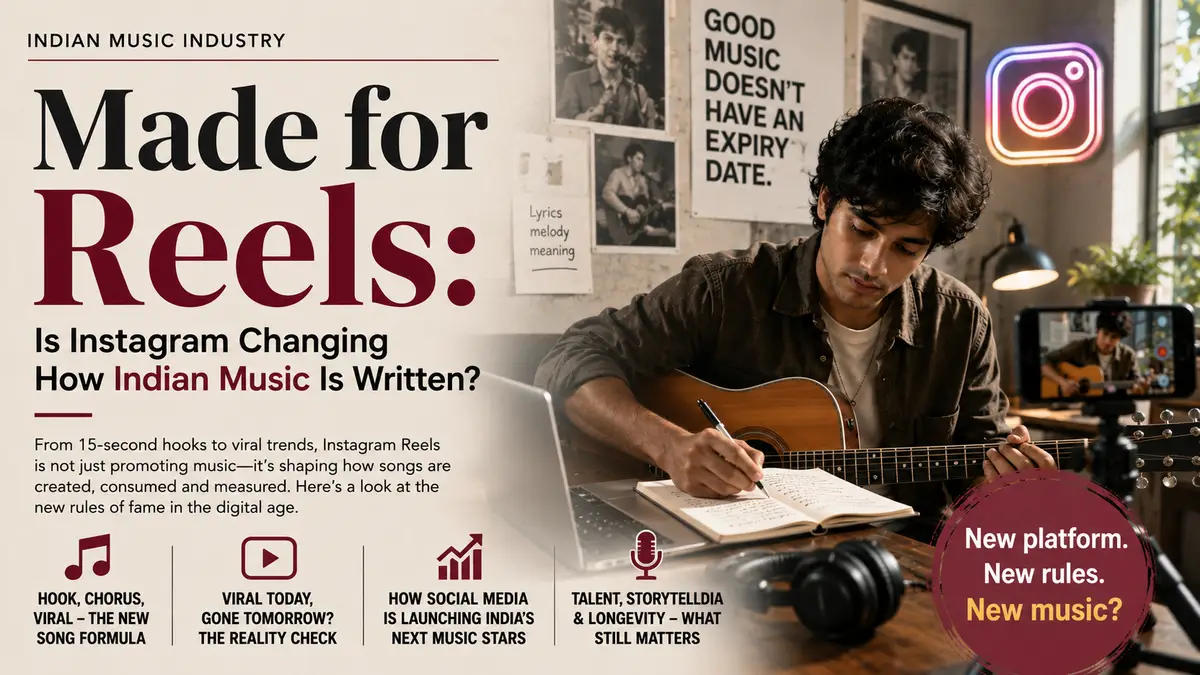
The shortest route to music fame used to be years of practice. Today, it might just be 15 seconds and a trending Reel.
Music has always been a source of connection for people all over the world. It is a language understood by all. In the past, music was launched, and it gained popularity through radio or television. Everything was recorded live. There were regional limitations. But with technological advancements, editing and recording are now easier and faster.
We have music-specific platforms and trending short-form video and reel formats that pick up a hook from a song and make it go viral overnight. In the past, songs were made to be emotionally relatable, featuring meaningful lyrics and varied instrumentation. The scenario now is different. Let’s see what is changing.
Is Music Being Written for an Algorithm?
Social Media has become the most powerful platform to promote music in the present. The question arises: Is it the future of music? Are we going towards an era where music will be ranked according to IG views and shares? Probably not. But it does seem a little unfair. While there is a whole side of advantages to this new platform for creators, there are disadvantages too.
However, musicians might have to find a balance between staying relevant and writing and composing good songs and also making sure that they stay good enough for people not to scroll past. Most of the musicians are now aware of the shrinking attention span of the users. If we look at the thousands of songs that have gained popularity through social media, we will be able to see a pattern that follows.
Every song getting viral on Instagram has a hook. This is the place of the songs that have appeared most in the reels. The chorus and the song get shorter, and they aren’t even repeated many times, unlike what we hear in old songs. There is always a dance step that thousands of users perform on, making the audio popular.
The audio is used with cooking videos, get-ready-with-me videos, and many others. This pattern is followed for every song. And that is what the music creators might focus on. Sometimes they land a song with a perfect mixture. But sometimes only the hook that gets viral makes sense; the other part of the song is not that good.
Music might be written with an algorithm in mind, which is good. But the challenge that music creators now face is keeping their artistic integrity intact with that approach.
When Virality Becomes The Goal
Music and songs that are measured through Instagram are not always the definition of success. Undoubtedly, getting more views and streams can easily be proportional to an increase in brand deals, recordings and concerts, but only the fortunate ones can make this into a long-lasting career.
The best example of this is Dhinchak Puja, a girl going viral overnight for tacky lyrics, unfiltered voice and a short versed song. She was also seen in the reality TV show Big Boss. She gained a million followers and also released more songs, but now, she is nowhere to be seen. What comes around goes around faster.
On the other hand, films like Dhurandhar have taken good advantage of this format. Many short clips with catchy music liners went viral before the film was released. It created so much anticipation that people watched the film partly for the music. There weren’t even many new tracks. Old tracks were reused to make the film timeline look authentic.
Another such example is the movie Animal. The Ranbir Kapoor starrer’s song Arjan Vailly took the internet by storm. It was used by so many people to create memes and reels. The song Saari Duniya Jala Denge was widely used in cinematic transitions.
For individual artists, King became popular with one verse of the song Tu Maan Meri Jaan. None of his releases after that song have reached the potential as great as this one. Singers like Aditya A also became the talk of the town with his song Chand Baliya, but now he is out of the scene and not releasing popular tracks.
But the music album in its entirety should be good. Only then will it have a long-lasting impact on the audience. People will use the audio repeatedly and continue to do so even after the trend goes old. While the past generations took years to reach a point for recording collaborations, new generation artists are able to get there faster through these platforms.
Some new artists might have this position quickly. But the main challenge is to keep making more music, to be more relatable and true to the craft. Otherwise, there are old musicians and singers who have stuck to their path and still have a loyal audience and sell out concerts.
The Bright Side Of The Reel Revolution
Musicians, singers and composers took decades to land recording contracts, to reach a million people and get brand deals. But today, that can happen within a week. Artists no longer need to be able to afford recording studios, marketing and distribution costs, or even spending on people to play their background music for them.
All they need is raw talent, a phone and the internet. A 15-second reel can make them famous. Talent reaches millions of people in a few hours. People start recognising the voice. They push it by sharing it forward, and the artist is rewarded with deals and contracts within a few days. Music from regional places is finding a wider audience through such platforms.
Social media has enabled democracy in music. People are now able to discover folk artists, regional musicians, rappers, and independent singers. Underrated artists get the recognition they deserve without burning a hole in their pocket. Music from different countries is also widely admired and reaches a fanbase beyond boundaries.
So, Has Instagram Replaced Talent?
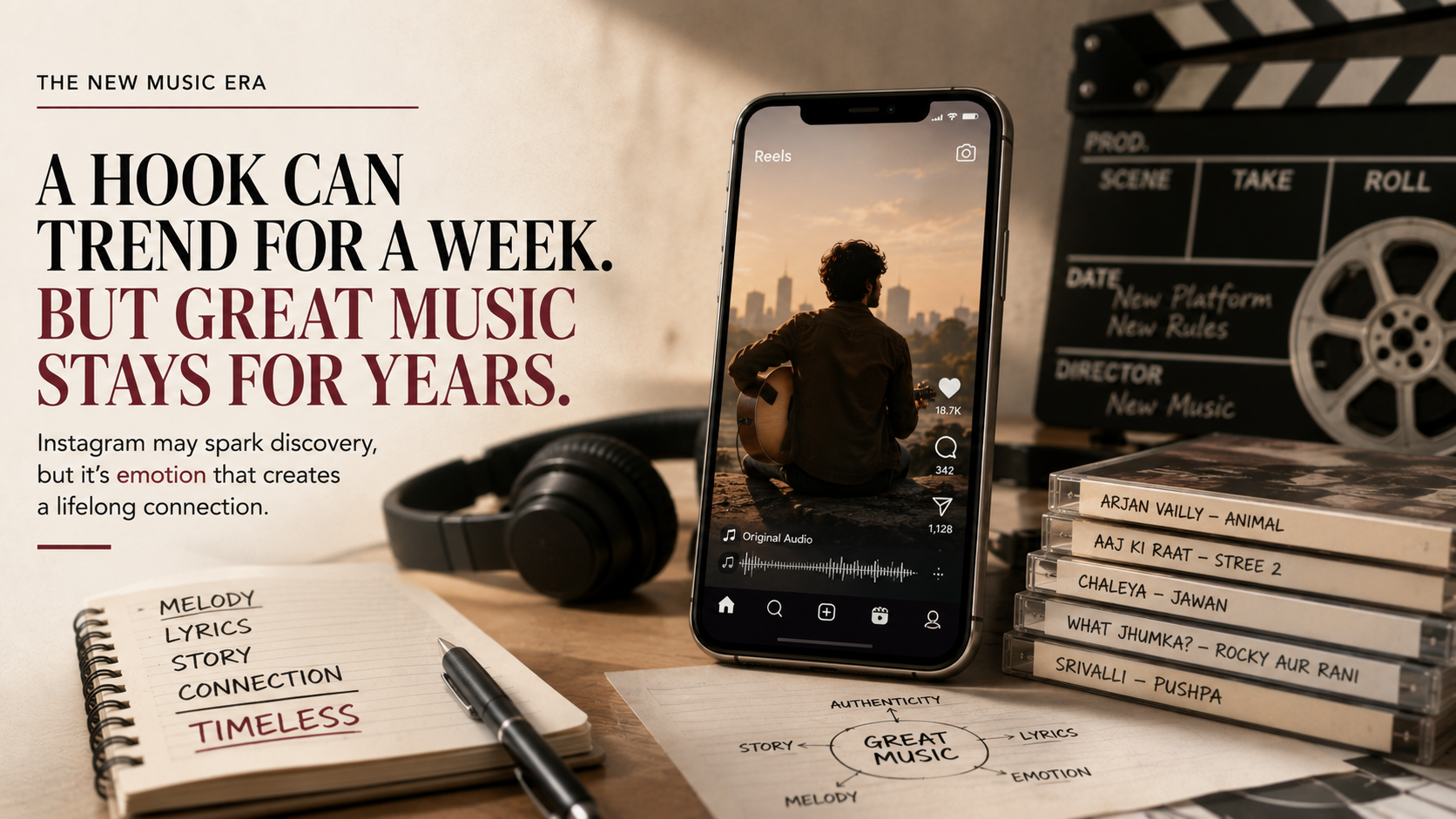
It has not. It never will.
Instagram, like any other platform, is a source of opportunity. It does not guarantee success. The best musicians and singers today are expected to perform, market, be digital creators and storytellers too. This shows that talent is enough, but now it should be combined with these things.
There will be new platforms like Instagram in the future. The definition of success in music will change with that. It is the feelings that will make people come back to a song after the trend fades. And no algorithm can manufacture that.
The artists who continue to thrive are often those who combine strong songwriting, authentic storytelling, consistent releases, memorable live performances, and meaningful audience relationships. Social media may introduce listeners to a song, but lasting careers are built through trust, quality, and evolution.