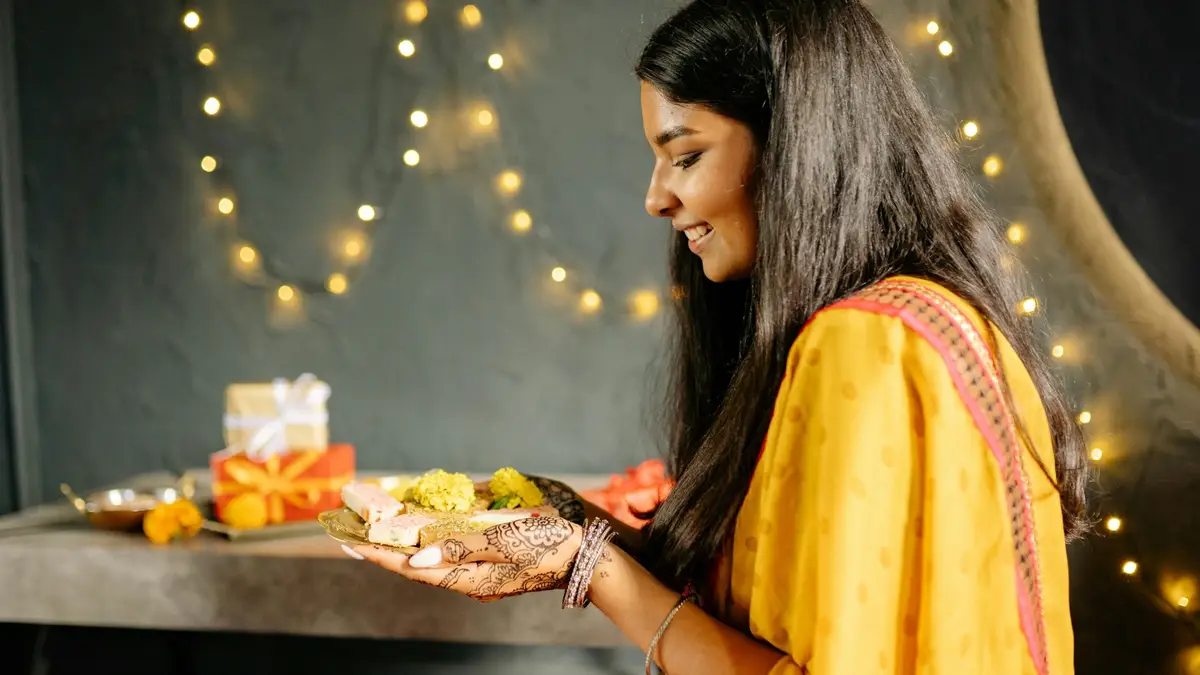
India has always been known as a land of deep-rooted traditions. From the moment we are born, traditions become a part of our identity whether it’s celebrating festivals like Diwali, Ganesh Chaturthi, or Christmas, following family rituals, or simply growing up with values passed down through generations. These traditions once formed the backbone of everyday life in India.
However, the world today is very different from what it was even two decades ago. Global exposure, social media, education, and changing mindsets have reshaped how young people see culture. This raises an important question are Indian traditions still relevant to Gen Z?
Gen Z, born between the late 1990s and early 2010s, is often described as independent, aware, and digitally connected. At first glance, they may seem distant from traditions. But if you look closer, you’ll notice something more interesting they are not rejecting traditions, they are redefining them in their own way.
How Gen Z is Redefining Indian Traditions
One of the biggest differences between Gen Z and older generations is that they do not believe in blindly following customs. They want to understand the meaning behind traditions. If something feels relevant and meaningful, they embrace it. But if something feels unfair or outdated, they question it openly.
A clear example of this shift can be seen in how Gen Z views marriage. Earlier, marriage was often seen as a family decision, with arranged setups being the norm and societal pressure playing a huge role. Today, many young people prioritize compatibility, mutual respect, and emotional connection. Love marriages, intercaste relationships, and even the decision to marry later in life are becoming more accepted. Gen Z also questions practices like dowry or rigid gender roles, believing that marriage should be an equal partnership rather than a fixed structure where one person adjusts more than the other.
Another major shift is in how young people are addressing traditions that are misogynistic or unfair to women. For years, certain practices limited women’s participation in rituals or placed expectations on them that were not applied to men. Today, Gen Z is more vocal about these issues. For instance, many women are choosing to perform rituals that were once restricted to men, or questioning why they should be excluded during certain times like menstruation. In weddings too, there is a visible shift—brides are actively participating in rituals, sometimes even taking on roles that were traditionally reserved for male family members. This reflects a growing desire to make traditions more inclusive and equal.
Gen Z is also more aware of mental health and personal boundaries, which affects how they approach certain customs. In the past, practices like fasting or following strict rituals were often done out of obligation or fear of judgment. Today, young people are more likely to ask whether such practices are healthy or necessary. For example, someone might choose not to fast during a festival if it affects their health, or they may adapt the ritual in a way that feels more comfortable. Similarly, practices involving harm—such as animal sacrifice or emotionally pressuring individuals to follow certain customs—are increasingly being questioned and, in many cases, rejected.
At the same time, Gen Z is not abandoning traditions altogether. Instead, they are personalizing them. Weddings are a great example of this. Instead of large, elaborate ceremonies with rigid rules, many young couples now prefer smaller, more intimate weddings that still include important rituals but in a simplified way. They might write their own vows, include both families equally, or blend different cultural practices. This shows that traditions are still valued, but they are being adapted to reflect personal identity.
Social media has also played a huge role in this transformation. Platforms like Instagram and YouTube have made it easier for young people to explore and share culture. From traditional recipes to classical dance performances and regional fashion, Gen Z is using digital spaces to reconnect with their roots. In many ways, this has made traditions more visible and accessible than ever before.
The Role of Education in Preserving Culture
While traditions are evolving, there is also a growing concern that important aspects of culture may be lost over time. Many young people today may celebrate festivals but not fully understand their history or meaning. Regional languages are slowly declining in usage, and several local traditions are at risk of fading away.
This is where education becomes extremely important. Education helps people go beyond surface-level understanding and truly explore the depth of culture. It allows individuals to ask questions, understand context, and make informed choices about what to preserve and what to change.
For example, a student studying Indian culture might learn the historical and philosophical meaning behind a festival rather than just its rituals. This deeper understanding creates a stronger connection and ensures that traditions are not just followed mechanically but appreciated meaningfully. Education also helps in identifying which traditions are valuable and which ones may need to evolve with time.
Are Traditions Losing Their Significance?
While traditions are evolving, it would be inaccurate to say they are losing relevance. Instead, their form is changing, not their essence. However, certain challenges persist:
Urban Disconnect: Many young Indians living in cities are less exposed to regional traditions.
Language Barriers: Declining use of regional languages can lead to a loss of cultural knowledge.
Commercialization: Festivals and rituals sometimes become more about consumption than meaning.
Lack of Documentation: Several indigenous practices and art forms are at risk of fading away.
These challenges highlight the importance of conscious efforts to preserve and promote India’s cultural heritage.
What is a Master’s in Indian Culture?
A Master’s in Indian Culture is a postgraduate program that focuses on exploring India’s rich heritage in a detailed and structured way. It is not just about memorizing facts it is about understanding how culture has developed over time and how it continues to change.
The course usually covers a wide range of subjects, including history, literature, philosophy, religion, art, and social practices. It is interdisciplinary, meaning students get a holistic view of culture from different perspectives.
What makes this course unique is that it connects the past with the present. Students are encouraged to analyze traditions, understand their relevance, and think about how they can be preserved in a modern world.
How a Master’s in Indian Culture Helps Preserve Heritage
1. Documentation and Research
One of the biggest threats to cultural heritage is the lack of proper documentation. Students in this field engage in research to record oral traditions, folk practices, and regional histories, ensuring they are not lost over time.
2. Revival of Traditional Arts
Many traditional art forms struggle to survive due to lack of awareness and financial support. Graduates can work with artisans, NGOs, and cultural organizations to revive and promote these crafts.
3. Cultural Policy and Advocacy
With a deeper understanding of heritage, professionals can contribute to policymaking, ensuring that cultural preservation is prioritized at national and international levels.
4. Museum and Heritage Management
Museums, cultural centers, and heritage sites require skilled professionals who can curate exhibitions, manage archives, and create engaging experiences for visitors.
5. Education and Awareness
Graduates often become educators, writers, or content creators who spread awareness about Indian culture, making it more accessible to younger generations.
6. Tourism and Cultural Promotion
India’s tourism industry heavily relies on its cultural richness. Professionals trained in Indian culture can design authentic cultural experiences that attract both domestic and international tourists.
Core Syllabus
The core syllabus of a Master’s in Indian Culture is designed to give students a strong foundation. It usually includes subjects like Indian history and civilization, cultural anthropology, philosophy, religion, art and architecture, and literature.
For example, while studying Indian philosophy, students may explore concepts from ancient texts and understand how they influence modern thinking. In art and architecture, they might study temple designs, sculptures, and regional art forms, learning not just about their beauty but also their cultural significance.
The course often includes fieldwork and research projects. This means students don’t just study in classrooms—they also visit heritage sites, interact with communities, and gain real-world experience.
New Changes in the Syllabus
As the world changes, so does education. Modern programs are now including topics that make the course more relevant to today’s generation.
For instance, digital archiving has become an important part of the syllabus. Students learn how to preserve cultural data using technology. Gender studies is another key addition, helping students understand how culture impacts different groups and how it can become more inclusive.
There is also a focus on media and cultural representation. Students analyze how culture is portrayed in films, social media, and popular content. This is especially important because platforms today play a huge role in shaping perceptions.
Fees, Eligibility & Other Details
To pursue this course, students usually need a bachelor’s degree. While a background in arts or humanities is helpful, many universities accept students from different fields as well.
The fees can vary depending on the institution. Government universities are generally more affordable, with fees ranging from around ₹5,000 to ₹50,000 per year. Private institutions may charge higher, going up to ₹2,00,000 per year.
The course typically lasts for two years. It is ideal for students who are curious, open-minded, and interested in understanding culture beyond the surface level.
Colleges That Offer Master’s in Indian Culture in India
Some well-known institutions offering courses in this field include:
Jamia Millia Islamia – M.A. in Arab-Islamic Culture
University of Lucknow – M.A. in Arab-Islamic Culture
Gujarat University – M.A. in Indian Culture & Tourism
Tamil University – Culture & Tourism Studies
Utkal University of Culture – Cultural Studies
Indira Gandhi National Open University – Folklore & Culture Studies
To ensure that Indian traditions remain relevant:
Families must continue sharing cultural knowledge with younger members
Educational institutions should integrate cultural studies into mainstream curricula
Media and technology should be used to promote authentic cultural narratives
Young people should actively engage with their roots, whether through festivals, language, or art
Therefore to conclude, we must notice that Indian traditions are not disappearing in fact they are evolving with time. Gen Z is not turning away from culture; they are questioning it, reshaping it, and making it more relevant to today’s world.
They are choosing equality over blind rules, understanding over pressure, and meaning over routine. At the same time, education plays a crucial role in ensuring that this evolution does not lead to loss.
Courses like a Master’s in Indian Culture help preserve what truly matters while allowing necessary change. They create individuals who can respect tradition but also improve it.
In the end, the question is not whether traditions are relevant, but how we choose to carry them forward.