Image Credits - Shivam Kakkars’ IG and AI generation
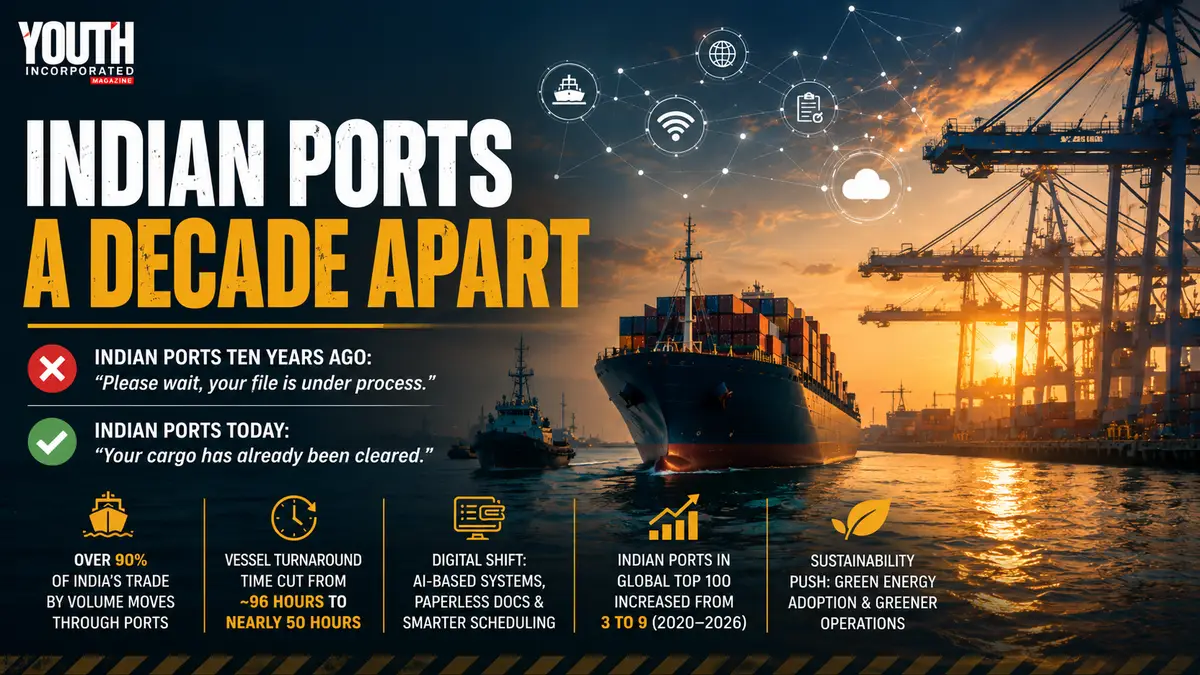
Indian ports ten years ago: “Please wait, your file is under process.”
Indian ports today: “Your cargo has already been cleared.”
Trading via seas and ports is not a new concept for India. Ever since the Indus Valley Civilisation, we have been actively using, maintaining and changing our ports. In terms of value [65-70%] and volume [90-95%], the Indian economy relies heavily on ports. Any problems with the port infrastructure in India, directly or indirectly, affect the trade and the demand-supply equation of the country.
Over the years, the operations of the ports have changed drastically. Citing poor infrastructure and transportation, ever since independence, the logistics cost has been much higher compared to that of the developed countries. But with policies like the Sagarmala Programme, the scene changed. Several lakh crores have been spent under 800 different policies aiming to make India a global maritime leader by 2047.
Key Takeaways: Indian Ports Transformation
Here’s a quick snapshot of how Indian ports have evolved over the last decade:
Massive dependency: Over 90% of India’s trade (by volume) moves through ports
Faster operations: Vessel turnaround time cut from ~96 hours to nearly 50 hours
Digital shift: AI-based systems, paperless documentation, and smarter scheduling are now standard
Global rise: Indian ports in the global top 100 increased from 3 to 9 (2020–2026)
Capacity boost: Handling capacity has doubled in a decade
Better connectivity: Stronger road and rail links are improving cargo movement
Sustainability push: Ports like V.O. Chidambaranar are leading in green energy adoption
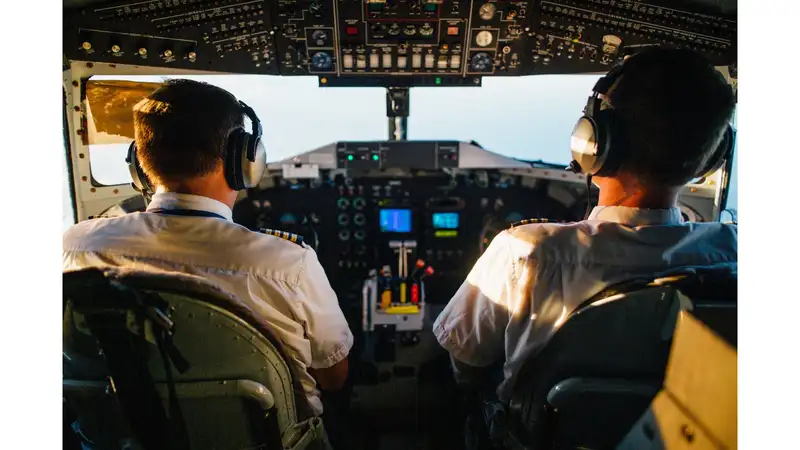
Career reality: The merchant navy offers global exposure, but demands discipline and long periods at sea
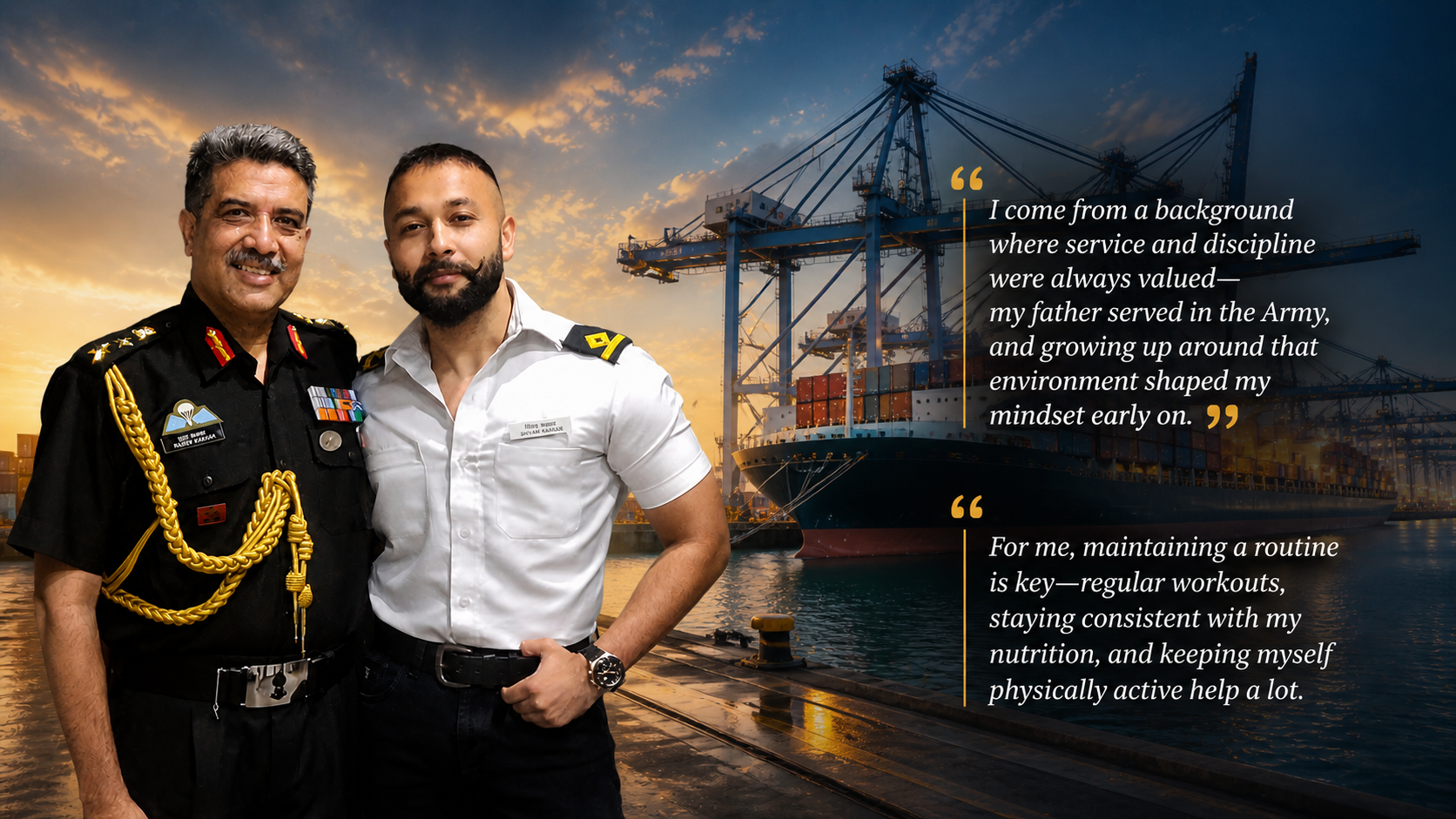
Image Credits - Shivam Kakkars’ IG and AI generation
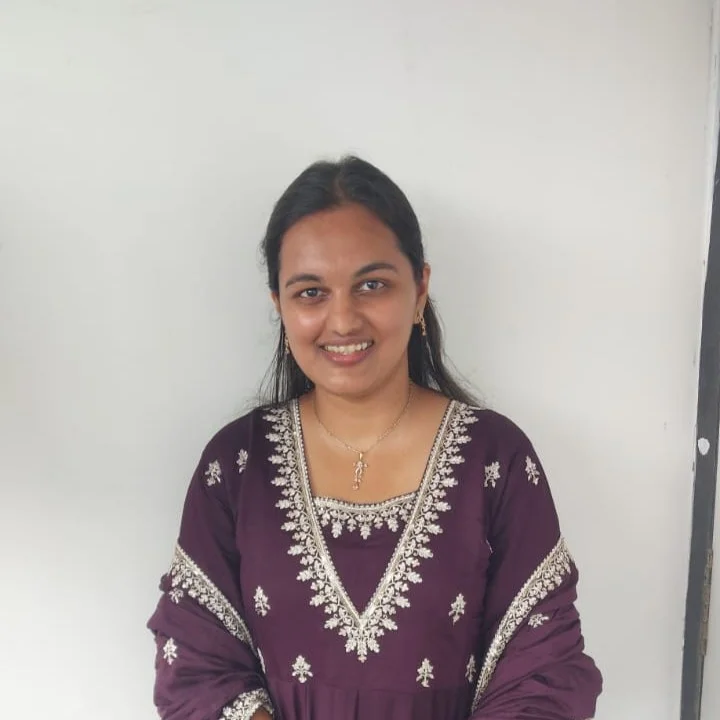
In light of this change, the team at Youth Incorporated Magazine got in touch with Mr Shivam Kakkar. He is a Sailor in the Merchant Navy. He talks about the geopolitical crisis, the digitalisation of ports, whether being a sailor is a good career and much more. Read the interview below:
Q: What first drew you to life at sea, and how has that motivation evolved?
A: I come from a background where service and discipline were always valued—my father served in the Army, and growing up around that environment shaped my mindset early on. The idea of a life driven by purpose, adventure, and a sense of honour naturally appealed to me. The sea offered all of that, along with the opportunity to constantly challenge myself. Over time, that initial attraction to adventure has matured into a deeper sense of responsibility and pride in being part of a profession that quite literally keeps global trade moving.
Q: With ships returning from the Strait of Hormuz, what has the atmosphere been like onboard during such tense periods?
A: During such periods, there’s definitely a heightened sense of awareness onboard. Sailors are trained to operate under pressure, but that doesn’t mean the risks go unnoticed. Security drills are intensified, communication becomes more structured, and everyone becomes more mentally alert. What stands out is the resilience of seafarers—despite uncertainties, operations continue smoothly. It highlights the often-unseen hardships that sailors endure to ensure continuity in global supply chains.
Q: India has been pushing digitalisation across ports—have you personally noticed improvements in efficiency or turnaround times?
A: Yes, there has been a noticeable improvement. The push towards digitalisation—whether in documentation, cargo handling, or port clearances—has significantly reduced delays and increased transparency. Processes that once took considerable time are now streamlined. These developments reflect a clear intent from the government to modernise the maritime sector and bring it in line with global standards.
Q: How do Indian ports today compare with international ports you’ve visited?
A: Indian ports have made substantial progress over the years. While some of the top international ports still set benchmarks for scale and automation, Indian ports are rapidly closing the gap. Infrastructure, efficiency, and technological adoption have all improved. What’s encouraging is the pace at which this development is happening, showing strong potential for India to compete at a global level.
Q: What’s one port experience (in India or abroad) that really stood out to you—and why?
A: One experience that stands out vividly was while approaching Richards Bay in South Africa. We encountered severe storm conditions, with heavy swells and strong winds that made manoeuvring extremely challenging. Despite being on a massive vessel, the sheer force of nature made us feel almost powerless at times—progress was slow, and every movement had to be calculated with precision.
There were moments when it truly felt like we were at the mercy of the sea, just holding position and waiting for the right window to proceed safely. It was a humbling reminder of how unpredictable and powerful the ocean can be. At the same time, it highlighted the importance of training, teamwork, and composure under pressure. Experiences like these stay with you—they test not just your skills, but your mindset as a seafarer.
Q: How do you deal with isolation, long durations away from family, and mental health? What keeps you grounded when you’re literally in the middle of nowhere?
A: It’s definitely one of the tougher aspects of this profession. For me, maintaining a routine is key—regular workouts, staying consistent with my nutrition, and keeping myself physically active help a lot. Fitness gives structure to my day and keeps my mind clear. Staying connected with family whenever possible and focusing on personal discipline also play a big role in staying grounded. You know what they say, "If you want to change the world, start by making your bed!"
Q: With changing trade routes, climate concerns, and geopolitics, how do you see the maritime industry evolving in the next 5–10 years?
A: The maritime industry is heading towards a more technology-driven and environmentally conscious future. We’ll see increased adoption of green fuels, stricter emission regulations, and smarter ships with advanced navigation and automation systems. Trade routes may continue to shift based on geopolitical dynamics, but adaptability has always been a strength of this industry. Overall, efficiency, sustainability, and resilience will define the next phase.
Q: Do you think India is on track to become a global maritime leader? Would you recommend this career to young people today? Why or why not?
A: India has immense potential to become a global maritime leader, given its strategic location and coastline on three sides. With ongoing investments in port infrastructure, policy reforms, and a focus on digitalisation, the direction is promising.
That said, I would recommend this career with a sense of realism. In recent times, social media has portrayed life at sea in a very glamorous light, but the ground reality is far more demanding. It involves long and unpredictable working hours, sleepless nights, extended periods away from family, limited connectivity at times, and complete dependence on nature’s conditions. It’s not a typical 9-to-5 profession—there are days when it becomes a round-the-clock responsibility.
For those who understand and accept these challenges, it can be an incredibly rewarding career that builds resilience, discipline, and a truly global outlook.
Indian Port Development Over The Decade
As said by Mr Shivam, Indian port development infrastructure has undergone a complete makeover in the last decade. The first and most significant change is the digitalisation of the Indian ports. The maritime industry in India has reduced the turnaround time of vessels from 96 hours to nearly 50 hours in 2025-2026.
The port infrastructure in India is not just implementing better systems, but they are also looking forward to becoming eco-friendly and sustainable. The V.O Chidambaranar port in Tuticorin is the first Indian port to be recognised as one running on green technology.
13 major and 271 minor ports work on the Indian coastline. The handling capacity has doubled over the last 10 years, strengthening the export/import business for the nation. In 2020, only 3 of India's ports were listed amongst the top 100 ports globally. By 2026, the number has risen to 9.
Ditching the primary manual systems, Indian ports have digitalised by using Twin technology - AI-based berth scheduling and paperless documentation. The cargo dwell time has reduced to 3 days, which is better than that of the developed nations. A major surge in road and rail infrastructure has been noticed to offer better port connectivity. New ports are being built to reduce and divide the load.
As India’s ports grow and evolve, so does the need for people who can navigate this world. For young professionals ready for something different, this could be more than a career—it could be a defining experience.