
A student uploads a simple LinkedIn post about their first internship presentation. Another shares a reflection about getting rejected from an interview and what they learned from it. Someone else posts a breakdown of a marketing campaign they noticed while scrolling through Instagram.
None of them are CEOs, influencers, or industry experts.
Yet opportunities slowly begin finding them.
That is the power of LinkedIn in 2026.
The platform has evolved far beyond job applications and online resumes. Today, LinkedIn acts as a digital identity space where students showcase skills, build credibility, network globally, and create visibility before even graduating. In an era shaped by AI recruitment, creator culture, and skill-based hiring, personal branding has become one of the most valuable career tools students can develop.
According to LinkedIn platform insights, the network crossed over 1 billion users globally by 2025, with Gen Z becoming one of its fastest-growing audiences. Recruiters increasingly value communication skills, online presence, initiative, and consistency alongside academic qualifications.
For students entering competitive industries, this means one thing: your LinkedIn profile is no longer optional.
The biggest misconception students have about personal branding is believing they need major achievements before posting online. In reality, LinkedIn rewards consistency and authenticity more than perfection.
Personal branding is not about pretending to be successful. It is about documenting growth.
A psychology student can discuss mental health trends among Gen Z. A finance student can share stock market observations. A media student can break down storytelling in advertising campaigns. An engineering student can post project learnings or AI experiments.
The goal is simple: become known for something.
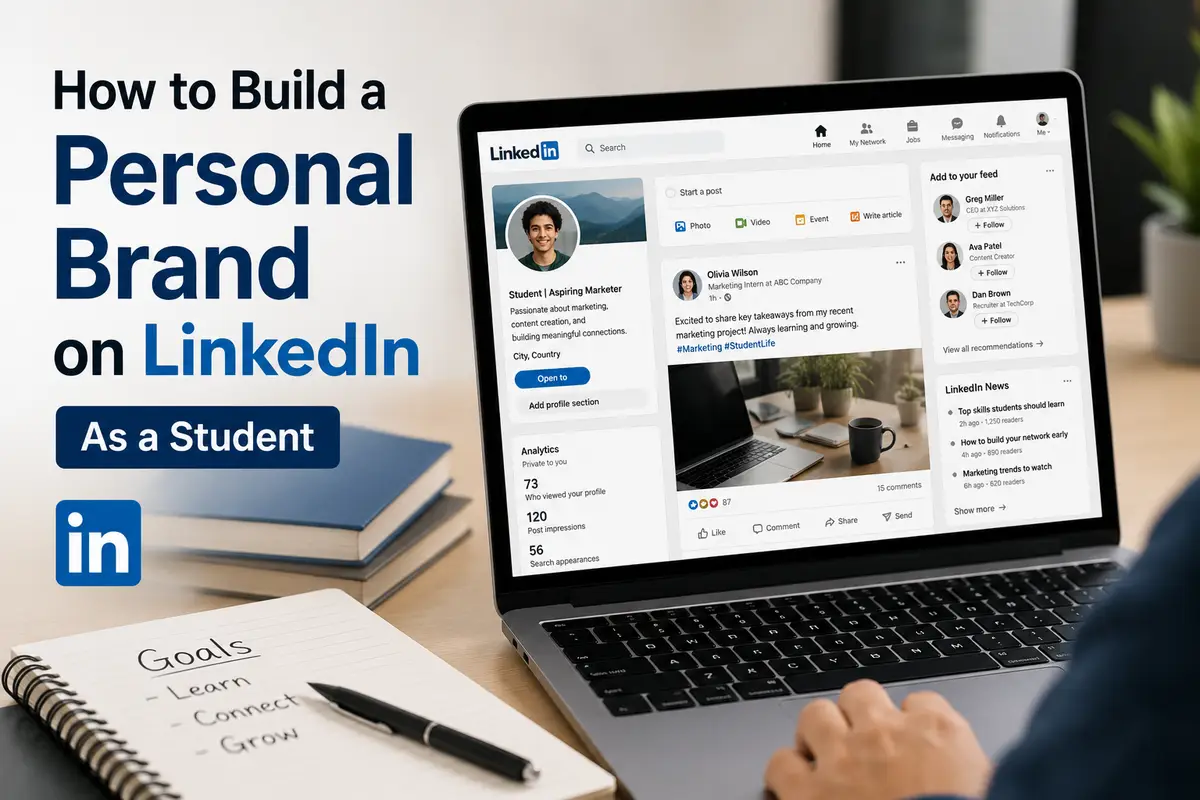
Your profile also matters more than most students realize. LinkedIn data suggests profiles with professional photos and detailed information receive higher engagement and visibility. A clean profile picture, a meaningful headline, and a human-sounding “About” section instantly create stronger first impressions.
Instead of writing:
“Student at XYZ College.”
Try:
“Mass Media Student | Content Writer | Interested in ESG, Storytelling & Digital Culture.”
A good headline tells people who you are and what space you belong to.
Content plays the biggest role in personal branding today. In 2026, recruiters increasingly look beyond resumes. They want proof of curiosity, communication skills, leadership, and initiative.
This is why students who post regularly about internships, projects, certifications, volunteering experiences, competitions, books, or career lessons often stand out more.
You do not need viral posts.
Even simple content works:
Lessons from an internship
A project breakdown
A book recommendation
Thoughts on industry trends
A campus event experience
A skill you recently learned
Studies by Socialinsider and Hootsuite show that educational storytelling and experience-based posts often perform better than generic motivational content. Audiences increasingly prefer authenticity over polished corporate language.
Another major shift in 2026 is the rise of niche personal branding.
Students are no longer trying to appeal to everyone. Instead, they are building identities around specific interests like:
ESG and sustainability
HR and workplace culture
AI and technology
Finance and investing
Fashion communication
Mental health advocacy
Student productivity
Media and storytelling
The more focused your content becomes, the easier it is for people to remember you.
Networking is another essential part of LinkedIn growth. Many students only begin networking when they urgently need internships. However, strong personal branding is built through long-term relationship building.
Thoughtful comments often create more impact than random connection requests.
For example, instead of saying:
“Hi, I need an internship.”
Try:
“Your post on sustainable marketing strategies helped me understand how ESG communication is evolving in modern brands. As a student exploring this field, I found your insights extremely valuable.”
That creates conversation instead of transaction.
In today’s hiring culture, “LinkedIn stalking” is also a very real thing. Recruiters, HR professionals, startup founders, and even clients often check LinkedIn profiles before interviews or collaborations. Your activity, posts, comments, and profile can quietly shape first impressions long before someone officially contacts you.
This is why students must treat LinkedIn like a digital portfolio instead of just another social media app.
Data-driven storytelling is also becoming increasingly important.
Students who combine research with personal perspectives stand out more. For example, instead of writing:
“AI is changing jobs.”
You could say:
“According to the World Economic Forum’s Future of Jobs Report, AI literacy and analytical thinking are among the fastest-growing skills globally. Students who adapt early may gain a long-term advantage.”
Adding reports, statistics, and industry examples makes content feel more credible and insightful.
At the same time, personality still matters more than automation.
With AI-generated content becoming common, many LinkedIn posts now sound repetitive and robotic. Students should use AI for brainstorming, editing, or structuring ideas — but their own voice must remain visible.
The future of personal branding belongs to people who still sound human in an increasingly automated world.
Building a personal brand on LinkedIn as a student in 2026 is not about becoming famous online. It is about becoming visible, credible, and memorable.
Every thoughtful post, meaningful comment, project update, or networking conversation slowly builds your digital identity.
The students who grow the most on LinkedIn are usually not the loudest people in the room. They are the ones who stay curious, keep learning publicly, support others, and consistently show up.
Sometimes, one post can quietly open a door you never expected.