

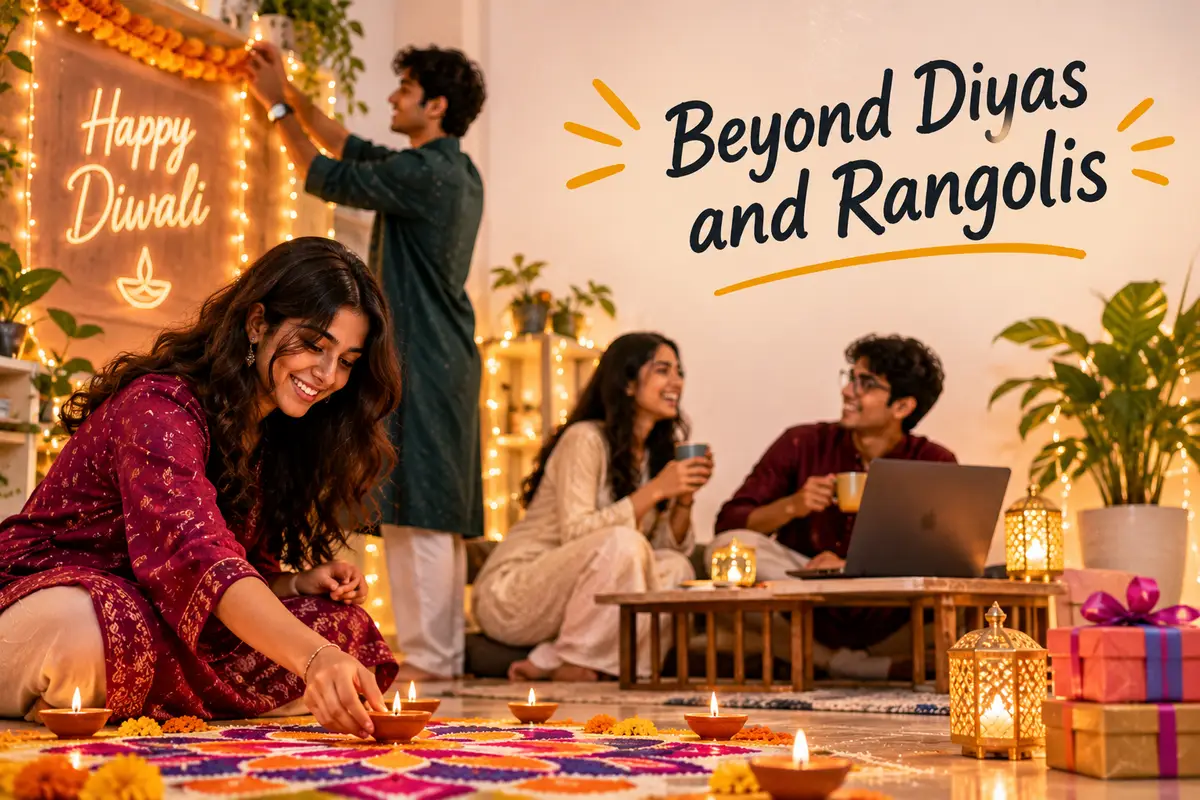
The chaotic Diwali cleaning, the smell of hot and crispy homemade snacks, colourful LEDs and lanterns lighting the whole corridor, beautiful rangolis and bright diyas beautifying your doorstep- this is what Diwali was all about earlier. Today’s adults might always remember Diwali as the festival when we woke up early to the sounds of crackers, parents gifting us new clothes and our mothers distributing sweets and snacks to our neighbourhood. The festival of Diwali for today's generation might have changed a lot; however, the essence of getting together and celebrating still remains the same.
A Diwali shopping list today might look a little different from what it did a decade ago. Along with diyas, sweets and new clothes, there might be a Pinterest-inspired décor plan, a themed party outfit, fairy lights for the balcony and a list of ingredients for homemade chocolate desserts. Some families still follow the same rituals they have grown up with, while others are finding new ways to make the festival their own.
For Gen Z and young millennials, Diwali has now become an opportunity to experiment with decorations, food, gifting and social gatherings. Instagram and Pinterest have certainly influenced how people prepare for the festival, but the changes go beyond making homes look good in photographs. Young people are also thinking about how much they spend, what they buy, how they celebrate with friends and whether their celebrations can be a little more sustainable. The familiar traditions are still around. They are simply sharing space with a few new ideas. Let's have a look at how Diwali celebrations have changed now compared to our childhood.
From Traditional Decorations to Pinterest-Inspired Homes
Remember when Diwali decorations meant cleaning the house, bringing out the old boxes of lights and arranging rows of clay diyas near the entrance? Those rituals have not disappeared, but home décor has become a much bigger part of festive preparations.
A quick scroll through Instagram or Pinterest is enough to find homes decorated with pastel-coloured flowers, brass lamps, fabric backdrops and warm fairy lights. Instead of covering every wall and corner with decorations, some young homeowners prefer a more coordinated look. A small festive corner with flowers, cushions, lanterns and a few statement pieces can be enough to change the feel of a room.
Colour themes are also finding their way into Diwali preparations. Some prefer traditional combinations of red, yellow and gold, while others experiment with ivory, earthy browns, muted pinks and pastels. Even rangolis are getting a fresh look, with geometric patterns, floral designs and contemporary motifs appearing alongside traditional ones.
There is also a growing interest in making decorations rather than buying everything ready-made. Painted clay diyas, handmade paper lanterns, recycled glass-bottle lights, fabric torans and flower rangolis are popular DIY ideas. They are relatively easy to put together and can turn decorating into a family activity.
Sustainability is another consideration. With greater awareness about waste, some households are choosing reusable fabric decorations, natural rangoli colours, locally made clay lamps and fresh flowers instead of plastic alternatives. Reusing decorations from previous years is also becoming more common.
Of course, not everyone has the time or patience to recreate elaborate Pinterest boards. Sometimes, a few lights, fresh flowers and a clean balcony are all it takes. The idea is less about achieving a perfect festive home and more about creating a space that feels welcoming.
Themed Parties, Potlucks and Diwali Beyond Family Gatherings
Diwali has traditionally been associated with family gatherings, visits to relatives and exchanging sweets with neighbours. These remain important parts of the festival, but younger people are also making room for celebrations with friends, college groups and colleagues.
Themed Diwali parties are one way this is happening. Bollywood nights, retro-themed evenings, ethnic glam dress codes and colour-coordinated gatherings have become popular ways to make festive get-togethers more interesting. Guests may be asked to dress as their favourite Bollywood character or turn up in a particular colour. Some hosts even set up small photo corners with flowers, lanterns and festive backdrops.
Then there are Diwali potlucks. Instead of one person preparing an entire spread, everyone brings a dish to share. One friend might bring homemade chakli, another might arrive with a box of gujiyas, while someone else contributes brownies or a homemade dip. It is a simpler way to host a gathering, particularly for young professionals and students living away from their families.
Games are another part of these celebrations. Tambola, card games, antakshari, Bollywood quizzes and festive treasure hunts give people something to do beyond eating and chatting. Some gatherings also include DIY dessert counters, mocktail stations and small gift exchanges.
For those living away from home, celebrating with friends can become especially meaningful. Students studying in another city and professionals working away from their hometowns often create their own festive traditions. A shared meal, a video call with family or a small gathering in a rented apartment can make the festival feel less distant.
Restaurants, cafés and community spaces are also joining in with Diwali-themed evenings, festive menus and special events. This gives people who do not want to host at home another way to celebrate.
Gifting, Food and Celebrations Are Getting a Personal Touch
Festive gifting has also moved beyond the familiar box of sweets and dry fruits. While these remain popular, younger shoppers are increasingly interested in gifts that feel carefully chosen rather than picked up at the last minute.
From Sweet Boxes to Thoughtful DIY Hampers
Personalised hampers are a popular choice. These might include scented candles, handmade soaps, chocolates, skincare products, small indoor plants, stationery or accessories. Adding a handwritten note or a customised item makes the gift feel more personal.
Some are also choosing gifts with a practical or sustainable purpose. Reusable bottles, locally made products, seed kits, indoor plants and handmade home décor offer alternatives to heavily packaged festive hampers. For friends and relatives living in different cities, digital gift cards and online shopping vouchers are convenient options.
Food, naturally, continues to be at the centre of Diwali celebrations, although the dessert table is getting a few additions. Traditional mithai still has its place, but chocolate-covered sweets, fusion desserts, gourmet chocolates, brownies, cookies and kunafa-inspired treats are finding their way into festive gift boxes.
Home baking has become another way of making celebrations personal. Some young people prefer preparing cookies, cupcakes or homemade chocolates for friends rather than purchasing expensive gift boxes. Others experiment with familiar Indian sweets, adding chocolate, pistachio or other flavours.
The attraction is not necessarily that these options are better than traditional sweets. It is that people enjoy having more choices and putting together something that reflects the person receiving the gift.
A Different Diwali, but the Same Festive Feeling
Not every Diwali needs a themed party, an elaborate decoration plan or a carefully curated gift hamper. Some people will continue to celebrate with homemade sweets, traditional rangolis and family pujas, while others may spend the evening with friends or organise a small gathering at home.
What makes the current shift interesting is that younger generations are not necessarily moving away from tradition. They are deciding which parts they want to preserve and where they would like to try something different.
A handmade rangoli can sit beside a contemporary flower arrangement. A traditional family dinner can be followed by a Bollywood-themed party. A box of homemade laddoos can be gifted along with a personalised candle.
The decorations may change, the food may get a modern twist, and the guest list may look different, but the reason people look forward to Diwali remains familiar. It is still about taking a break from everyday routines, spending time with people who matter and making the home feel a little more special. And perhaps that is the best part of a modern Diwali: there is room for new ideas without having to leave the old ones behind.