




















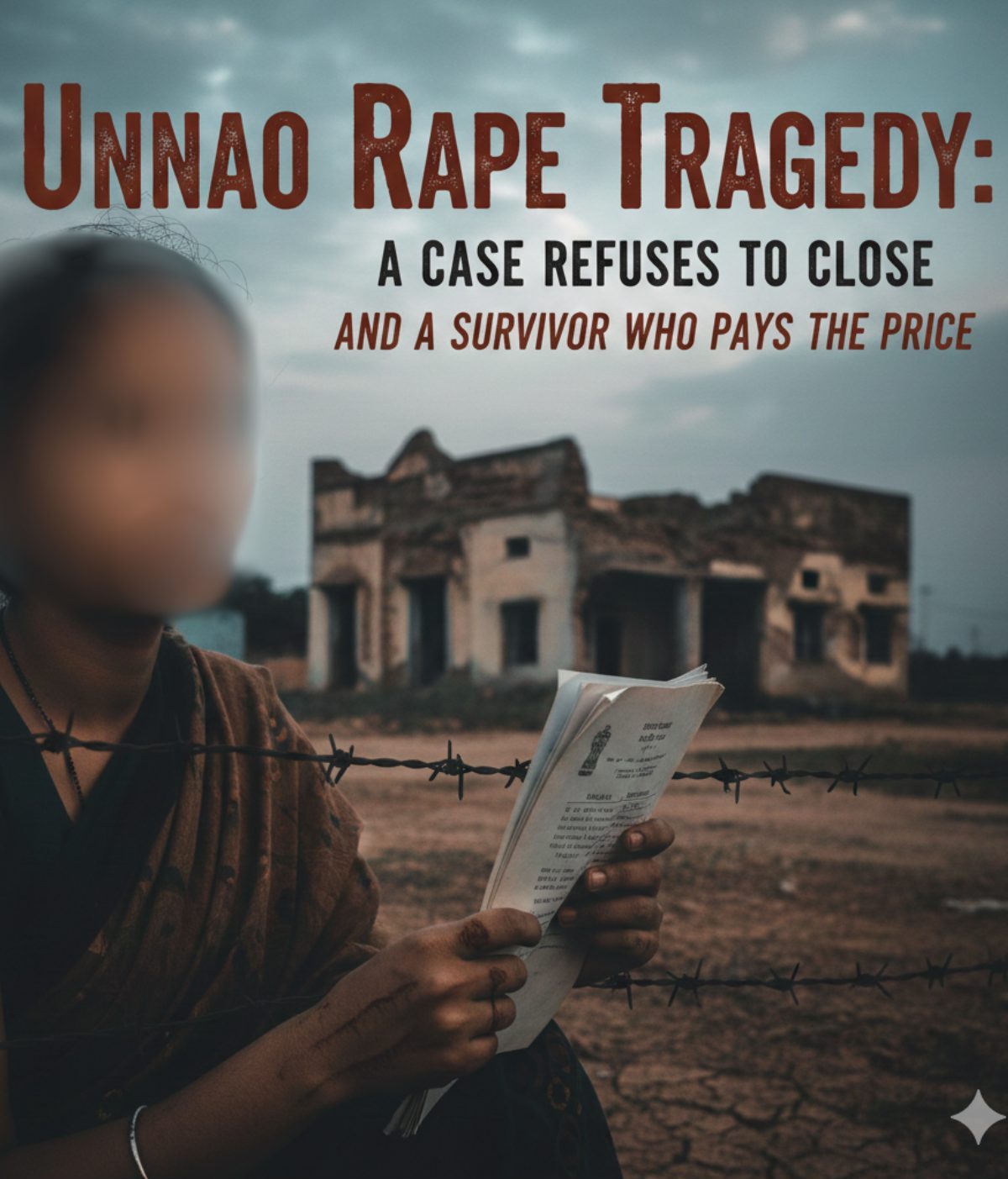
In December 2019, the court finally delivered the verdict the survivor had waited years to hear. Kuldeep Singh Sengar, a former BJP MLA, was found guilty of rape and sentenced to life in prison. After a long legal fight, the judgment felt like a turning point. It was meant to stand for justice. It was meant to offer safety.
Six years later, she is once again in court, still fighting to regain a sense of security.
When the Unnao Rape Case Reopened Old Wounds
Last month, the Delhi High Court suspended Sengar’s sentence, citing that he had already served seven years and five months in jail. The fallout was alarming. A man convicted of rape could walk out on bail while his appeal moved ahead. This was the same man investigators said had planned a truck crash that killed the survivor’s two relatives. The same man she had seen from a distance in courtrooms, aware that his clout had not vanished, that his circle still stood by him.
Days later, the Supreme Court stepped in and stayed that order after the CBI challenged it. The survivor responded with relief. “I am very happy with this decision,” she said. Pause on that. A rape survivor felt grateful simply because her attacker was not being released. That is not a win. That is the bare minimum.
The Unnao case highlights a harsh truth we rarely acknowledge. The harm does not end with the crime. It continues through years of hearings, appeals, and waiting. For many survivors, the real sentence is the long, exhausting fight for justice that follows. It’s the way the system itself can become another weapon.
This woman walked into Sengar’s house in 2017 looking for a job. She was a teenager. What came next was rape, threats, and then a war—not against her attacker, but with a system that seemed designed to protect him. The local police didn’t file charges for months. Her father was arrested in what appears to have been retaliation by Sengar’s supporters, beaten so badly in custody that he died. Two more family members were killed in that truck accident in 2019. The security officers assigned to protect her weren’t even in the car when it happened. She survived because she happened to be alive when the truck hit. A few inches in any direction and there wouldn’t be a case left to appeal at all.
A Survivor Who Refused To Disappear
And through all of it—the death of her father, the murder attempts, the endless court dates—she kept showing up. She kept naming him. She kept demanding to be heard in a system that seemed to be doing everything it could to make her disappear.
The latest setback was not only the High Court’s move to suspend the sentence, but everything that followed. As soon as the news broke, Sengar’s daughter took to social media to declare her father innocent. His supporters began planning what they called a “Kshatriya conference” to show their backing. Meanwhile, the survivor—the woman who lived through the rape and the violence that followed—became the target of online abuse. She later said that she and her husband were being dragged through a coordinated smear campaign. This is what happens now. Justice doesn’t just take a long time in India. It also becomes something the internet can weaponise against the person who was actually wronged.
“A Criminal Has No Caste”
The survivor made a video appeal asking for public support. Listen to what she had to say: “I am also a daughter of the Kshatriya community. I am also a daughter of this country. Please become my voice. A criminal has no caste.” There’s something broken in a system where a rape survivor has to make emotional videos begging the public to stand with her against the supporters of her rapist.
The legal questions in this case are real and complicated. Whether Sengar counts as a “public servant” under the POCSO Act. How courts should apply new sentencing laws to cases decided under old ones. Whether bail should be suspended during an appeal in a case like this. These are the kinds of questions that matter, and they need real answers.
But underneath all that legal talk is something simpler and more human: a woman who has lost her father and her peace of mind, who has spent almost a decade proving what happened to her, who is now watching her rapist get bail suspended instead of spending that time in prison. She’s watching caste politics protect someone convicted of rape. She’s watching a system that moves so slowly that every turn of the wheel—even a victory—feels temporary, fragile, like it could be taken away tomorrow.
A Stay Is Not The End
The Supreme Court’s stay on Sengar’s bail was the right call. But it’s only a stay. The broader case is still pending. More appeals are coming. This woman is still waiting—for a final conviction that sticks, for her family’s reputation to be cleared, for her children to be safe, for her life to return to something resembling normal.
In the meantime, she’s fighting on social media against caste-based campaigns. Her husband lost his job because of his association with her case. Her children live knowing their grandfather was killed, that someone powerful tried to murder their mother.
This is what justice looks like in India when you’re a woman accusing a politician. It’s not a moment. It’s not even a victory that feels clean. It’s a decade-long battery that never really stops.
The case may eventually end. A court will make a final decision. But for the survivor, the case will never truly be over. She’ll carry it for the rest of her life. The justice system promised to give her closure. Instead, it gave her another battle, and then another, and she’s still fighting.