








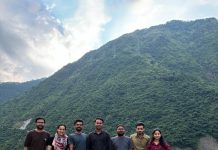













Last November, the Supreme Court made a quiet decision about the Aravalli Hills that’s turned into a full-blown environmental firestorm. By setting a 100-metre height cutoff, the Court has effectively decided which parts of the Aravallis count as protected and which don’t. It may sound like a technical call, but the response has been loud. Scientists are worried, environmental groups are protesting, and state governments are trying to make sense of the impact. At the core is a basic question: can a mountain range really be protected by boiling it down to a single number?
The Hill Range That Shaped Northwest India
Stretching roughly 650–700 kilometres from Delhi down to Gujarat via Haryana and Rajasthan, the Aravallis are among the planet’s oldest mountain ranges, older than most life forms we know today. Time has worn them down into low, rugged hills rather than sharp peaks, giving them a plain, almost forgettable look.
That appearance hides how much they do. The Aravallis help steady regional weather, hold back the advance of the Thar Desert, and allow rainwater to seep into the ground across dry landscapes. They support forests, wildlife, and communities that have lived alongside them for generations. Simply put, they act as a natural defence for north and west India, protecting cities like Delhi from desert spread, feeding river systems, and keeping fragile ecosystems alive.
The New Definition Problem
On November 20, 2025, the Supreme Court adopted a uniform definition of the Aravalli Hills as hills 100 meters or higher above local ground. This sounds straightforward, but the consequences are enormous.
Out of more than 12,000 mapped hill features across the Aravalli landscape, fewer than 1,100 meet the 100-metre criterion. In effect, over 90 per cent of the terrain historically recognised by geologists, ecologists and local communities as part of the Aravallis risks falling outside formal legal protection.
The problem is that ecological systems don’t follow neat numerical thresholds. The “excluded” features function as windbreaks that reduce dust transport from the Thar Desert, as micro-catchments that enable groundwater recharge in water-scarce districts, and as corridors that connect fragmented wildlife habitats across Rajasthan and Haryana.
Why This Happened
The Court’s move wasn’t random. During hearings in two long-running environmental cases in January 2024, disputes emerged over whether certain mining operations fell within the Aravalli hills, as different states relied on different definitions, while Haryana had no official definition at all. The Court ordered a committee to develop a single, consistent definition to settle this confusion.
What the government acknowledges about this definition is significant. It ties directly to ecological safeguards such as protected areas, tiger reserves, eco-sensitive zones, wetlands, and other conserved land, where the law already bars mining and development. Besides that, the government suspended the granting of new mining leases for a period until the sustainability plans are finalised.
The Real Concern
However, environmentalists and scientists are not convinced. Critics say that many low-lying areas of the Aravalli, in particular those in Delhi-NCR and Rajasthan, might lose their protection, and that derecognition could lead to construction, urbanisation and real estate development even if mining is restricted.
Government officials have on numerous occasions assured that only a very small part of the land might be used for mining based on the new definition. Nevertheless, government records and parliamentary disclosures make this assurance somewhat complicated. A number of experts have challenged the government’s statement that only 0.19 per cent of the land would be impacted, saying that the number is not backed up by scientific evidence.
Experts are highlighting that increased water shortage, heat waves, dust storms and loss of species diversity could be some of the consequences of breaking up the protected areas through such policies.
Once these areas are stripped of formal recognition, they become vulnerable to development and land-use changes of all kinds.
The Broader Picture
The controversy reveals a deeper tension. The Aravallis are increasingly discussed not as a living ecological system but as an administrative category: something to be narrowly defined, selectively protected and strategically exploited.
Recent reports paint a bleak picture on the ground. Parts of Haryana have seen licensed and illegal mining wipe out large stretches of the two-billion-year-old range. Groundwater levels in some areas have plummeted to 1,500-2,000 feet deep. The damage, once done, is rarely reversible.
What Happens Next
The controversy is far from over. Citizen collectives launched an online petition in December, urging the Supreme Court to recall the ruling, calling it an “existential crisis” for the Aravallis. The government, meanwhile, maintains that environmental safeguards remain intact.
The real question isn’t just about meters and maps. It’s whether a technical definition—however uniform—can serve the complex, living reality of an ancient ecological system. The Aravallis have survived three billion years. Whether they’ll survive this judgment is what now hangs in the balance.