Hinglish, Tanglish, Benglish, Manglish… with 1.2 billion Indian people speaking a version of the Queen’s English, it’s not surprising that Desi English is now finding its way to the Oxford Dictionary. But is our English all that different? Aparna Sundaresan reads between the lines
Quick puzzle: spot the uniquely Indian words and phrases that are not used in English anywhere else in the world –
Dear Sir,
I have a doubt. Since I was out of station for two weeks, I developed loose motion because of which I cannot come to the office for a few days. I believe the Director wanted to prepone the board meeting but I cannot attend it because of my illness. Will you be able to persuade him to postpone it instead? Kindly do the needful.
Regards…
Let’s check your answers: doubt, out of station, loose motion, prepone, kindly do the needful.
Confused how that’s possible seeing as we use these phrases regularly? Don’t be. While they are not used internationally, they are not grammatically incorrect either. Rather, they have their roots in archaic British English, which is not surprising since it was the British who introduced the language to India by way of a century plus of colonisation. But the language they brought with them was the 18th and 19th century version of English which they have since stopped using themselves. For us Indians, however, it is the mainstay of our parlance.
If a British or American person were to reword that above letter, how would they do it?
Whether it is wrong that the English we speak has been outdated for over 50 years is debatable. One could argue that since the language itself has had many histories (for instance, Old English, which is the language of the epic poem Beowulf, is nothing like Modern English) in which each version was replaced with a newer one, Indian English too must evolve from its colonial clutches. But the reality is that English today is too vast, too colourful and too disparate to become a single, standardised language. No two countries speak the same kind of English. American and British English are obviously not the same, but neither are Australian English, New Zealand English, South African English and, of course, Indian English. Each has been influenced by (and has borrowed from) the native and local languages of the respective countries, resulting in a ‘bhel puri’ of a language.
We are Speaking the English
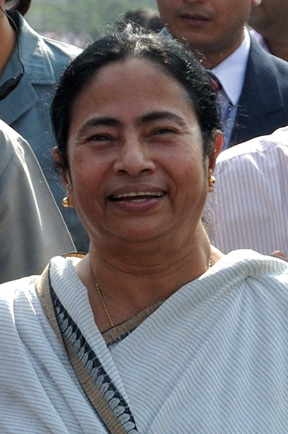
The other end of the Indian English spectrum is broken English. Speakers of broken English are usually those who have studied in local language schools; therefore, they speak fluently in the language of instruction, but poorly in English. Mamata Banerjee, Chief Minister of West Bengal, is infamous for her broken English. In a television interview earlier this year, she explained, “We are from the very middle class family. We have not come from the English medium school. We came from our regional languages school.” [sic] She went on to say that as a “commoner”, she naturally spoke the language of the masses, and not English, the language of the elite. There is certainly some truth to her words, at least in her profession where politicians need to connect with the larger population.
But how long will English remain the language of the elite in India? Given the popularity of English-medium schools and the acknowledgement of English as an ‘empowering’ language for job-seeking youths, English – Indian English or maybe even broken Indian English – might become the language of the masses soon enough.
A Guide to Angrezi: English Worlds and Phrases Unique to India
Desi English
bogie
cent per cent
club (as in “I want to club these two offers”)
cooling glass
dickey
eve teasing
pass out (as in “I have passed out of college”)
pindrop silence
shift (as in “He is shifting from Delhi to Agra”)
stepney
tight slap
Where are you put up?
International Equivalent
carriage/coach
100%
merge/put together
sunglass
trunk/boot
sexual harassment/molestation of women
graduate (to pass out actually means to faint)
complete silence (enough to hear a pin drop)
relocate
spare tyre (Welsh company Stepney Spare Motor Wheel
manufactured spare tyres at one time)
hard slap
Where do you live?
Indian Words in the Oxford English Dictionary
English is an expressive language, but sometimes its vocabulary is just not enough to describe the diversity and chaos that underlines all things Indian. However, English is also a dynamic language – it never shies from adding new words from different languages to its vocabulary. Here are some words from Indian languages that are now considered English:
Indian Word
aloo
bandana
bhajan
cummerbund
gherao
guru
juggernaut
loot
mantra
pariah
pundit
tamasha
English Meaning
potato
a large, brightly coloured handkerchief
devotional hymn
a broad, pleated sash worn in formal wear
circumvent or besiege
teacher/mentor/guide
a force that crushes everything in its path
rob/burgle
catchword/oft repeated word or phrase
an outcast
an expert
show/entertainment
Volume 2 Issue 5
Anniversaries are a time to celebrate your love, but sometimes life gets in the way.…
In light of the geopolitical tensions in West Asia mainly in the strait of Hormuz,…
Over the years, the beauty industry has continuously evolved, with new trends emerging and fading…
In recent years, sports have evolved far beyond just practice, talent, and competition. Today, science…
India is one of the fastest-urbanising countries in the world. New highways, metro systems, housing…
Summer in India brings bright sunshine, longer days, and the joy of seasonal fruits like…